Filmmakers

|
Filmmakers
|
|
 |
 |
 |
|
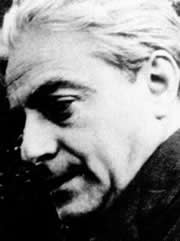 RENE
CLEMENT
RENE
CLEMENT
Born in Bordeaux in 1913, Clément first studied architecture before turning to the movies. After serving as a cameraman in the French Army’s cinematography branch, he made around thirty short documentaries, of which the best known are At Islam’s Door (1934), The Albegensian (1935), The Upper Garonne (1935), The Marshalling Yard (1936), Watch Your Left (1936, with Jacques Tati), La Grande Chartreuse (1937), Forbidden Arabia (1938), La Grande Pastorale (1942), and Those of the Rails (1943).
Clément’s last short subject, a documentary on the life of railroad workers, served as a prelude to his first feature film, Battle of the Rails (1945), which chronicles one aspect of the French Resistance. This quasi-documentary fiction film is part of the postwar current of neo-realism most prominent in Italy. It launched Clément’s career as a major filmmaker when it received the award for Best Director and the Special Jury Prize at Cannes in 1946. Clément served as Jean Cocteau’s technical advisor during the shooting of Beauty and the Beast the same year, before making three films of modest success, The Damned (1947), Beyond the Gates (1948, with Jean Gabin), and The Glass Castle (1950, with Michelle Morgan and Jean Marais). At the Academy Awards in Hollywood Beyond the Gates won the Oscar for the Best Foreign Film in 1948, as will Clément’s most famous film and certainly his masterpiece, Forbidden Games, in 1952. The latter film is about a little Parisian girl who lands in a peasant family when her parents are killed during the exodus toward the south of France in June 1940 after the quick defeat by the German army.
Among the films that Clément made during the fifties, several will be relatively successful: Monsieur Ripois (1954, with Gérard Philippe), which won an award at the Cannes Film Festival, Gervaise (1956), an adaptation of Emile Zola’s famous novel L’Assomoir, and Purple Noon (1960), an adaptation of a novel by Patricia Highsmith which reveals a young actor destined to have a remarkable career in film, Alain Delon. Clément made a few more films in the sixties and seventies, consistently exhibiting the same technical mastery but without great success. His reputation was permanently sullied by the monumental flop of his most ambitious film, Is Paris Burning? (1966), a war film starring a crowd of big international stars in the manner of Hollywood spectaculars.
Whether it be in the genres of neo-realism, poetic realism, or psychological realism, critics tend to praise Clément’s stylistic subtlety and the quality of his photography, while deploring the lack of inspiration as regards the content of his films. Forbidden Games, on the other hand, was generally recognized as “one of the major works of postwar French cinema.” René Clément died in 1976, a year after his last film, La Baby Sitter.
Selected Filmography
1945 Battle of the Rails
1947 The Damned
1948 Beyond the Gates
1950 The Glass Castle
1952 Forbidden Games
1953 Knave of Hearts or Lover Boy
1955 Gervaise
1958 This Angry Age
1959 Purple Noon
1960 What Joy of Living
1962 The Day and the Hour
1964 The Big Cats
1967 Is Paris Burning?
1970 The Passenger in the Rain
1971 The House Beneath The Trees
1973 And Hope To Die
1975 La Baby Sitter