The Hackett Signature Editions Collection Featuring Premium Hardcovers of Hackett Classics - Learn More Here.

Black Protagonists of Early Modern Spain Maps:
Note on the Maps:
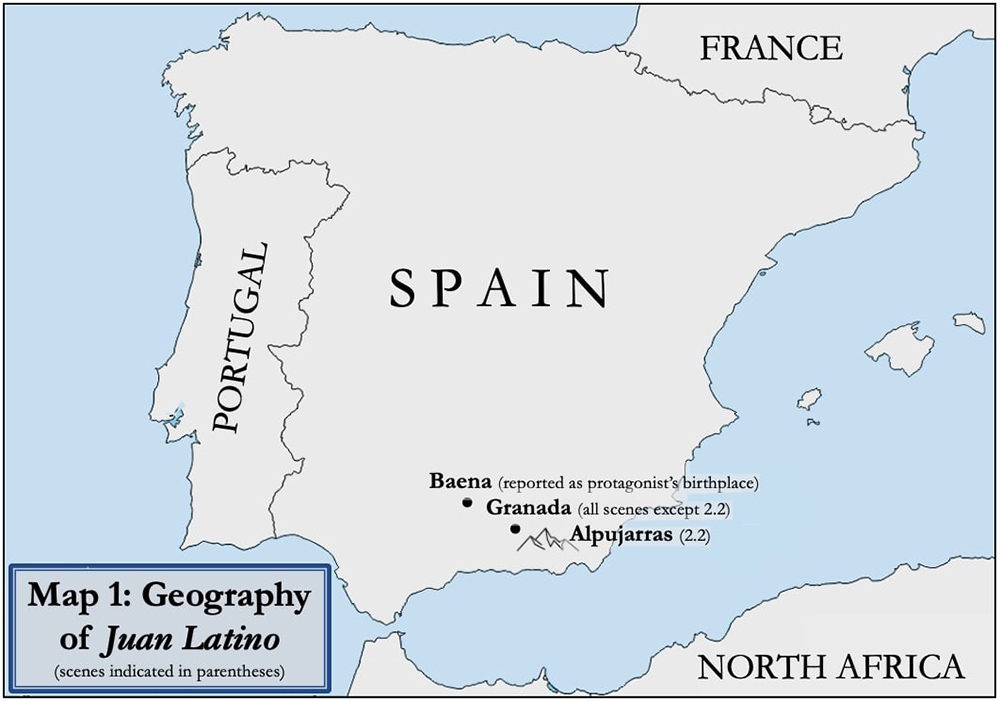
The maps depicted below recreate as best as possible the settings of the Triad plays, taking into account that geographical and historical knowledge in the period was often imprecise and even fantastical. The most careful of the three authors in this regard was Diego Jiménez de Enciso, who, as a native of southern Spain, demonstrates a solid understanding of Granada and the Alpujarras in Juan Latino (Map 1).
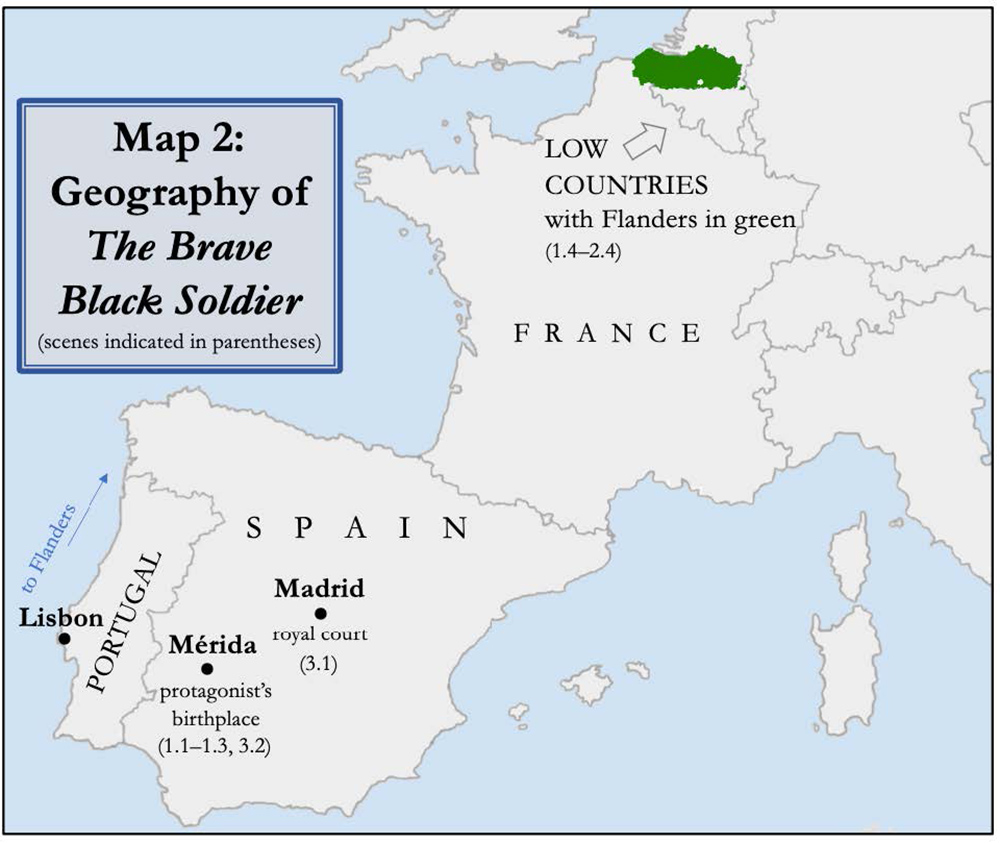
Similarly, Andrés de Claramonte shows a good grasp of the Spanish settings of The Brave Black Soldier (Map 2), but what he understood as Flanders seems to vary wildly from present-day Belgium (a mostly accurate correlation) to the Netherlands (inaccurate but understandable given its historical association with Belgium) to an ill-defined Germany or “Teutonic” realm.
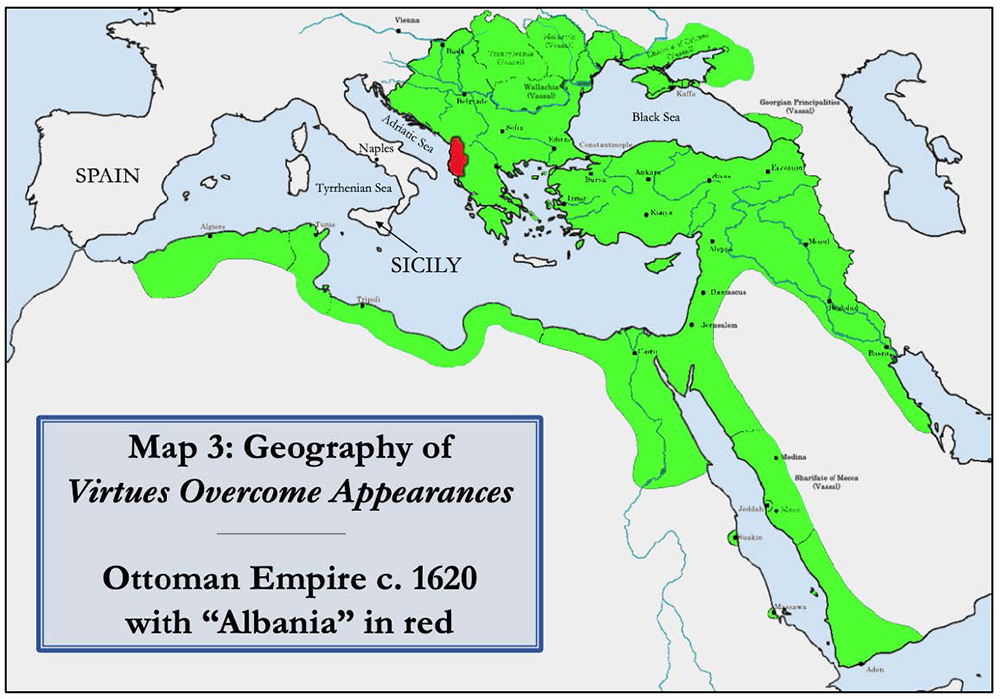
In Virtues Overcomes Appearances, Luis Vélez de Guevara is the least concerned of the Triad authors with historical accuracy. His “Albania” did not even exist at the time the play was written, having been almost entirely absorbed into the Ottoman Empire in the fifteenth century (Map 3). The setting plays a mostly symbolic role related to the Latin root of Albania (albus or “white”) and perhaps inspired by a curious entry in the contemporaneous lexicon of Sebastián de Covarrubias:
ALBANIA: a region in the East between Colchos and Armenia, named thus from the color white (albo), inasmuch as its inhabitants are born with white hair. The dogs of Albania are most ferocious, killing bulls and lions, and the breed we call Alanos, according to some, should be pronounced Albanos, as explained in the definition of Alano. There is a city called Albania and a river named Albanio. Besides having white hair, the Albanians have light blue eyes, are somewhat shortsighted, and see better at night than during the day. Pliny (bk. 7, ch. 2) also notes that the island of Britain which the Latins call Scocia was in ancient times called Albania and Albion. Albania is also a city in Greater Armenia where Saint Bartholomew the Apostle suffered martyrdom.
It should be noted that Portugal and all its overseas territories had been annexed by Spain following a succession crisis in 1580. Though administratively distinct as depicted in Maps 1 and 2, Portugal remained under Spanish authority at the time of the Triad plays, regaining independence only in 1640.
See the Introduction and Glossary in Black Protagonists of Early Modern Spain for additional notes and analysis of the plays’ settings.
Map 1:
Map 2:
Map 3:
Return to the Black Protagonists of Early Modern Spain title support page.