The Hackett Signature Editions Collection Featuring Premium Hardcovers of Hackett Classics - Learn More Here.

New in History
-
![]() NEWTraveling to the "Tartars"
NEWTraveling to the "Tartars"Forthcoming - September 2026
“This outstanding work provides not only new and updated translations of six important accounts of the Franciscan and Dominican missions to different Mongol courts in the mid-thirteenth century, but also fully explains the fascinating historical context in which they were written and transmitted. In short, this is a remarkable resource for both scholars and students to explore and understand this pivotal moment of East-West exchange.”
Learn More
—Johan Elverskog, Southern Methodist University -
![]() World in Motion: A Dynamic History of Humankind (Volumes 1 & 2)
World in Motion: A Dynamic History of Humankind (Volumes 1 & 2)Forthcoming - September 2026
"World in Motion tells the story of ‘How did we get here?’ with a wry sense of humor of which Mark Twain would be proud. It is an eminently teachable, highly readable source and text for a course in world history."
Learn More
—Andrew Barnes, Arizona State University -
![]() NEWWorld in Motion: A Dynamic History of Humankind (Volume 2: 1500 to the Present)
NEWWorld in Motion: A Dynamic History of Humankind (Volume 2: 1500 to the Present)Forthcoming - September 2026
"An excellent overview of a wide range of significant developments in technology, cultural practices, the environment, the global economy, and political power. Chapters are clearly organized and touch on such engaging topics as culinary and music history. Instructors and students alike will appreciate the many stimulating questions scattered through the volume, which guide readers to think more deeply about how our world has evolved since 1500."
Learn More
—Kristin Stapleton, University at Buffalo -
![]() NEWWorld in Motion: A Dynamic History of Humankind (Volume 1: Prehistory to 1500)
NEWWorld in Motion: A Dynamic History of Humankind (Volume 1: Prehistory to 1500)Forthcoming - September 2026
"Packed with features and written in Reynolds’s and Gilbert’s signature, accessible style, World in Motion delivers on the vision of a world history that recognizes the never-ending movement of people, things, identities, and even our understanding of history. It is a startling achievement, many years in the making, and one that will speak to this generation of students."
Learn More
—Trevor Getz, San Francisco State University -
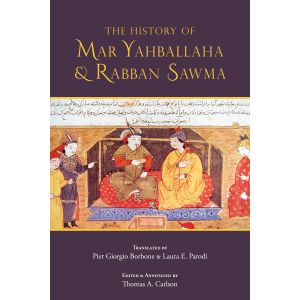
![]() The History of Mar Yahballaha and Rabban Sawma
The History of Mar Yahballaha and Rabban Sawma"For anyone interested in the extraordinary journey of Rabban Sauma from 13th-century China to Latin Christian Europe, Thomas A. Carlson's The History of Mar Yabhallaha & Rabban Sawma is a godsend. Based on Pier Giorgio Borbone's and Laura E. Parodi's magisterial edition and translation, Carlson’s new text is excellent for courses in world literature, travel literature, medieval biography, church history, comparative Christianities, global pilgrimage studies, religious studies, and even hagiographic writing. The book's lively, engaging introduction supplies important background on the history of the Mongols, Eurasia, Central Asia, the Church of the East, the peoples of the steppe, the Ilkhanate of West Asia, and key historical events of the 13th and early 14th centuries, making what might seem esoteric and strange crystal clear and easy to understand. This book is indispensable for teaching, as well as a delight and pleasure for the general reader."
Learn More
—Geraldine Heng, author of The Global Middle Ages: An Introduction, and The Invention of Race in the European Middle Ages -
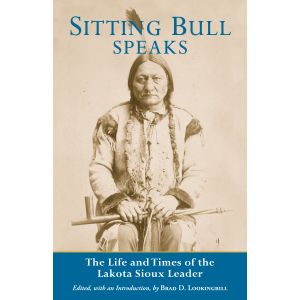
![]() Sitting Bull Speaks
Sitting Bull Speaks“Sitting Bull is arguably one of the best-known Native American leaders, and his life has been extensively documented. In Sitting Bull Speaks, Brad Lookingbill doesn’t aim to retell these familiar stories. Instead, he allows Sitting Bull to speak for himself. Drawing from various archives and sources, the book weaves a compelling and well-researched narrative centered on Sitting Bull’s own words and thoughts. Lookingbill introduces each document with thoughtful commentary, guiding the reader through the historical context. Though the title Sitting Bull Speaks echoes that of Neihardt’s classic Black Elk Speaks, this work goes further by presenting an authentic account of Sitting Bull’s voice. It offers a deeper understanding not only of the man himself but also of the Lakota world in which he lived.”
Learn More
—Rani-Henrik Andersson, University of Helsinki -
![]() The End of the Ottoman Empire and the Forging of the Modern Middle East
The End of the Ottoman Empire and the Forging of the Modern Middle East"In one hundred and twenty pages this book provides a compelling account of the shaping of the modern Middle East, and the critical part played in that process by the Ottoman Empire, even as it fell apart. It offers a mine of background information for anyone wishing to understand the current scene. Thirty-four well-chosen documents, mainly culled from the archives, buttress and illuminate the story."
Learn More
—Jonathan Schneer, Georgia Institute of Technology, author of The Balfour Declaration: The Origins of Arab-Israeli Conflict -
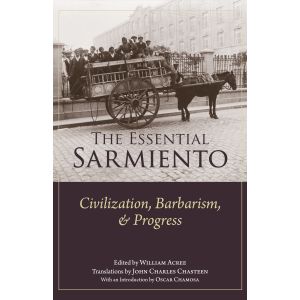
![]() The Essential Sarmiento: Civilization, Barbarism, and Progress
The Essential Sarmiento: Civilization, Barbarism, and Progress"Domingo Sarmiento is a rhetorical and political giant whose garrulous, colorful, and troubling ideas about race, violence, politics, and literature have fascinated Spanish-language readers for over a hundred and fifty years. Thanks to William Acree's brilliant selection of writings and annotations, the sparkling translations of John Charles Chasteen, and Oscar Chamosa's excellent critical Introduction, readers of English can finally encounter this larger-than-life writer who was deeply committed to documenting his historical moment and assessing social and political ills. This book is a major—and long overdue—contribution to Latin American Studies."
Learn More
—Christopher B. Conway, The University of Texas at Arlington -
![]() Congressional DeliberationFrom John Adams’s 1774 diary entries on debates in the Continental Congress to the first ouster of a seated Speaker of the House in U.S. history in 2023, Jordan T. Cash and Kevin J. Burns’s Congressional Deliberation offers an edited and historically contextualized selection of primary sources highlighting key turning points in the history of the U.S. Congress. Via its diverse documentary record—and often by way of showcasing the lively cut-and-thrust of historic House and Senate debates—Congressional Deliberation sheds light on such formative issues in Congressional history as war powers and foreign policy, impeachment, civil rights, representation and apportionment, filibusters, federalism, oversight and investigation, legislative leadership, and many more. It will prove a valuable resource to all students of the U.S. Congress and of representative government.
Congressional DeliberationFrom John Adams’s 1774 diary entries on debates in the Continental Congress to the first ouster of a seated Speaker of the House in U.S. history in 2023, Jordan T. Cash and Kevin J. Burns’s Congressional Deliberation offers an edited and historically contextualized selection of primary sources highlighting key turning points in the history of the U.S. Congress. Via its diverse documentary record—and often by way of showcasing the lively cut-and-thrust of historic House and Senate debates—Congressional Deliberation sheds light on such formative issues in Congressional history as war powers and foreign policy, impeachment, civil rights, representation and apportionment, filibusters, federalism, oversight and investigation, legislative leadership, and many more. It will prove a valuable resource to all students of the U.S. Congress and of representative government."Congressional Deliberation provides readers with valuable insights into many of the most consequential historical debates and hinge points in the American experience by offering access to crucial primary source materials. The descriptive summaries provided by the editors explain and contextualize the complex topics admirably, making this volume a valuable source for instructors in government, civics, and history. Many of the historic disputes included have a very contemporary resonance that will help prompt lively class discussions while also providing valuable primary material for research purposes."
Learn More
—John A. Lawrence, PhD, Arc of Power: Inside Nancy Pelosi's Speakership 2005–2010 and The Class of '74: Congress after Watergate and the Roots of Partisanship -
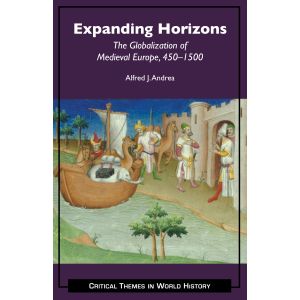
![]() Expanding Horizons
Expanding Horizons"A trailblazer in the field of premodern global history, Andrea here guides readers through the medieval expansion of the 'first Europe' from the fifth to the fifteenth centuries. Ranging from Ireland to Ethiopia, from the Mongol Empire to the so-called New World, Expanding Horizons demolishes any lingering sense that European societies remained isolated from the wider world before the modern age. Complete with maps, excerpts from primary source documents, and suggestions for further reading, this book will be an ideal resource for anyone planning to build a course around themes of global travel, exploration, and colonialism."
—Brett E. Whalen, The University of North Carolina at Chapel Hill"Andrea takes the reader on a journey over 1,000 years and around the world. By weaving a masterpiece of historical narrative and inquiry he demonstrates that Medieval Europe was very much part of world history while dispelling myths and misconceptions along the way. It is the type of book that awakens the mind and demonstrates the importance of historical study."
Learn More
—Timothy May, University of North Georgia -
![]() Mexico, Slavery, Freedom
Mexico, Slavery, FreedomWinner of the American Historical Association's 2025 J. Franklin Jameson Award for outstanding achievement in the editing of historical sources.
"A welcome tome for the study of slavery and freedom in the African Diaspora. An extensive, and often difficult to access repository of documents has been made available in a bilingual edition that will richly benefit scholars and students alike to better understand the complexities of the Black experience in colonial and early national Mexico. Bridging normal historical chronologies, and featuring sweeping sets of documents ranging from politics, religion, economics, and social life, there is little ground left uncovered for providing windows and glimpses of the evolution of blackness in Mexico. Expertly curated, marvelously framed, and diligently translated, this is a jewel of a book for historians."
Learn More
—Ben Vinson III, Distinguished Historian of Latin America and former President of Howard University -
![]() The Suriname Writings of John Gabriel Stedman
The Suriname Writings of John Gabriel Stedman“Jared Ross Hardesty's new critical edition, The Suriname Writings of John Gabriel Stedman, makes an important and necessary intervention into the study of eighteenth-century Caribbean travel writing and natural history by foregrounding the previously unpublished diary entries Stedman authored in Suriname, rather than focusing solely on his writings printed in the metropoles of Europe. Hardesty's edition is especially useful because it includes both a transcription of Stedman's Suriname diary and a detailed appendix tracking key discrepancies between the diary and Stedman's heavily revised printed natural history. This focus on genre and the editorial process in the production of Anglophone transatlantic writing is an excellent resource for students and scholars of the eighteenth-century Caribbean and the Atlantic World. I can see this being a helpful resource in an early American or eighteenth-century history or literature course, as it would enable students to easily compare differing editions of Stedman's Suriname writings. What Hardesty's edition of The Suriname Writings of John Gabriel Stedman offers is a more accessible study of how eighteenth-century writing on maroonage, slavery, science, and abolition was heavily mediated in the print and production process, as this compiled edition offers critical insight into the gendered and racial politics of life in the colonial Caribbean as well as how printers in the metropole attempted to alter the writing of colonizing authors like Stedman.”
—Elizabeth Polcha, Drexel University
Learn More -
![]() Afonso I Mvemba a Nzinga, King of Kongo
Afonso I Mvemba a Nzinga, King of Kongo“John K. Thornton’s new book is another must-read. It contains both translations of the extant letters of the most significant king of Kongo’s history, Afonso I (r. 1506–1542), and a powerful, learned, and highly readable analysis of what these letters tell us about the life and times of one of the most important rulers anywhere in the world during the sixteenth century. This book will be essential reading for scholars, teachers, and students engaged with the history of the Kingdom of Kongo.”
Learn More
—Toby Green, King’s College London