The Hackett Signature Editions Collection Featuring Premium Hardcovers of Hackett Classics - Learn More Here.

Classical Studies



-
![]() Complete Poems and Fragments
Complete Poems and Fragments"In this expanded edition of his distinguished Sappho: Poems and Fragments (2002), Stanley Lombardo offers over 100 fragments not included in the original edition, as well as the new poems discovered in 2004 and 2014. His translation of this latter material yields fresh insights into Sappho’s representations of old age, two of her brothers, and her special relationship with Aphrodite. Pamela Gordon’s engaging, balanced, and informative Introduction has been revised to incorporate discussion of the new fragments, which subtly alter our previous understanding of the archaic poet’s corpus. Complete Poems and Fragments also offers a useful updated bibliography, as well as a section on ‘Elegiac Sappho’ that presents the reception of the Lesbian poet in later Greek and Latin elegiac poems. A wonderful find for any Greekless reader searching for a complete and up-to-date Sappho."
Learn More
—Patricia A. Rosenmeyer, Department of Classics, University of Wisconsin-Madison -
![]() Achilleid
Achilleid"One of the most entertaining short narratives of all time, the Achilleid is a stand-alone work of compelling contemporary interest that moves with great rapidity and clarity. Its compact narrative, which encompasses a brutish childhood, an overprotective mother, temporary gender bending, sexual violence, and a final coming to manhood with the promise of future military prowess, may be unparalleled in a single narrative of such brevity. . . . Until now, however, it has been virtually impossible to get a sense of the work if one did not know Latin—recent translations notwithstanding. Stanley Lombardo’s translation of the Achilleid is a dream: it’s sound, enthralling, and will fully engage readers with this enticing, perplexing, at times distressing, but ultimately rewarding work."
Learn More
—Marjorie Curry Woods, The University of Texas at Austin -
![]() Civil War
Civil War"Brian Walters has given us what too few translators of classical poetry do—an authorial presence. Here is Lucan himself in all his drastic modes—everything from his enraged indignation to his paradoxical aphorisms—recreating the ruptured Neronian world he lived in as he recounts the nefarious civil war that destroyed the Roman Republic."
Learn More
—Stanley Lombardo, University of Kansas -
![]() Roman Lives, Corrected Edition
Roman Lives, Corrected Edition"It is humbling to encounter 'real' Latin, in letters inscribed on a building or tombstone, and to be utterly at a loss beyond the obvious. Yet, as Roman Lives demonstrates. . . much of this material can be relatively easy to decode. Furthermore, this book shows how epigraphy can open a window onto ancient lives and their humanity. This book should thus prove a rich resource for teachers of Latin and Roman civilization."
Learn More
—The Classical Outlook -
![]() Seneca: Selected Dialogues and Consolations
Seneca: Selected Dialogues and Consolations"Were I to include Seneca in a course on the Renaissance or on the Roman origins of our liberal arts ideal I would use Peter Anderson's new translation. The Introduction is excellent: readable and comprehensive. I especially like his discussion of the challenge of translating what he calls Seneca's six key words and their cognates. His lucid overview of the philosophical ideas that informed Seneca's thinking will help readers ponder nature and humanity, the cosmos and the polis, from within Seneca's mind and times. The translation can on occasion be nicely graphic, and thus likely to engage first-time readers, as for example in one of the opening lines of the Consolation to His Mother Helvia: '. . . I kept crawling along (reptare), trying to bind your wounds while I used one hand to keep pressure on mine (manu super plagam meam imposita).'" —Robert E. Proctor, Joanne Toor Cummings '50 Professor of Italian, Connecticut College
"An excellent tool for students and teachers of Latin literature and Stoic philosophy." —Aldo Dinucci, in Archai
Learn More -
![]() Terence Andria
Terence AndriaThe 2-volume print edition of Terence Andria in the Bryn Mawr Commentaries (Greek) series is now out of print and available only as a free PDF download. Click the learn more link below to visit the title page and download the free eBook.
Learn MoreOut of stock -
![]() Theophrastus Characters
Theophrastus CharactersThe print edition of Theophrastus Characters in the Bryn Mawr Commentaries (Greek) series is now out of print and available only as a free PDF download. Click the learn more link below to visit the title page and download the free eBook.
Bryn Mawr Commentaries provide clear, concise, accurate, and consistent support for students making the transition from introductory and intermediate texts to the direct experience of ancient Greek and Latin literature. They assume that the student will know the basics of grammar and vocabulary and then provide the specific grammatical and lexical notes that a student requires to begin the task of interpretation.
Hackett Publishing Company is the exclusive distributor of the Bryn Mawr Commentaries in North America, the United Kingdom, and Europe.
Learn MoreOut of stock -
![]() Euripides Heraclidae
Euripides HeraclidaeThe print edition of Euripides Heraclidae in the Bryn Mawr Commentaries (Greek) series is now out of print and available only as a free PDF download. Click the learn more link below to visit the title page and download the free eBook.
Bryn Mawr Commentaries provide clear, concise, accurate, and consistent support for students making the transition from introductory and intermediate texts to the direct experience of ancient Greek and Latin literature. They assume that the student will know the basics of grammar and vocabulary and then provide the specific grammatical and lexical notes that a student requires to begin the task of interpretation.
Hackett Publishing Company is the exclusive distributor of the Bryn Mawr Commentaries in North America, the United Kingdom, and Europe.
Learn MoreOut of stock -
![]() Minor Authors of the Corpus Tibullianum
Minor Authors of the Corpus TibullianumThe print edition of Minor Authors of the Corpus Tibullianum in the Bryn Mawr Commentaries (Latin) series is now out of print and available only as a free PDF download. Click the learn more link below to visit the title page and download the free eBook.
Bryn Mawr Commentaries provide clear, concise, accurate, and consistent support for students making the transition from introductory and intermediate texts to the direct experience of ancient Greek and Latin literature. They assume that the student will know the basics of grammar and vocabulary and then provide the specific grammatical and lexical notes that a student requires to begin the task of interpretation.
Hackett Publishing Company is the exclusive distributor of the Bryn Mawr Commentaries in North America, the United Kingdom, and Europe.
Learn MoreOut of stock -
![]() Statius Silvae (Selections)
Statius Silvae (Selections)The print edition of Statius Silvae (Selections) in the Bryn Mawr Commentaries (Latin) series is now out of print and available only as a free PDF download. Click the learn more link below to visit the title page and download the free eBook.
Bryn Mawr Commentaries provide clear, concise, accurate, and consistent support for students making the transition from introductory and intermediate texts to the direct experience of ancient Greek and Latin literature. They assume that the student will know the basics of grammar and vocabulary and then provide the specific grammatical and lexical notes that a student requires to begin the task of interpretation.
Hackett Publishing Company is the exclusive distributor of the Bryn Mawr Commentaries in North America, the United Kingdom, and Europe.
Learn MoreOut of stock -
![]() The Secret History
The Secret History"This translation will be especially useful in undergraduate classes because, in the final section, Kaldellis appends translations of related passages from Prokopios's longer History of the Wars, from Justinian's legislation, and from other sixth-century primary sources. Students can use these passages to judge for themselves how accurately the Secret History portrayed Justinian's career as well as that of this controversial empress. Summing up: Essential."
Learn More
—T. S. Miller, Salisbury University, in CHOICE -
![]() Aeneid: Book 5
Aeneid: Book 5Aeneid: Book 5, part of the the Focus Vergil Aeneid commentaries series, includes an introduction, Latin-language text, commentary, and other student materials. It is designed for the intermediate Latin-language student in upper division courses teaching the Aeneid in departments of Classics or Latin Language.
Learn More -
![]() Aristophanes and Menander: Three Comedies
Aristophanes and Menander: Three Comedies"No one, but no one, ever translated ancient comedy like Douglass Parker, and his death left a chasm in the landscape. This posthumous publication of three of Greek theatre's wildest plays, edited and presented by a scholar as eminent and learned as Timothy Moore, is not just something to welcome, it is something to celebrate."
Learn More
—William Levitan, Grand Valley State University -
![]() The Wars of Justinian
The Wars of Justinian"At last . . . the translation that we have needed for so long: a fresh, lively, readable, and faithful rendering of Prokopios' Wars, which in a single volume will make this fundamental work of late ancient history-writing accessible to a whole new generation of students."
Learn More
—Jonathan Conant, Brown University -
![]() A Student Handbook of Latin and English Grammar
A Student Handbook of Latin and English GrammarA Student Handbook of Latin and English Grammar offers a student-friendly comparative exposition of English and Latin grammatical principles that will prove a valuable supplement to a wide range of beginning Latin textbooks as well as a handy reference for those continuing on to upper-level courses.
Learn More -
![]() Greek Tragedy: A First Reading
Greek Tragedy: A First ReadingGreek Tragedy: A First Reading is an intermediate to advanced textbook that includes selections from the Electra plays of both Euripides and Sophocles. It is designed to provide students with a structured access to reading interesting Greek at the advanced level, and as it appears in works of Greek tragedy. It provides a careful introduction to the language of tragedy, Greek poetry as found in Electra, and to the nature and forms of Greek tragedy. The book focuses on material relevant for translation and understanding the unique form of drama through translation.
Learn More -
![]() Lingua Latina: Petronius: Cena Trimalchionis
Lingua Latina: Petronius: Cena TrimalchionisPresented via the natural method by Hans Ørberg, Petronii Cena Trimalchionis is an abridged and annotated edition of Petronius' Satryrion, with introduction and marginal notes in Latin. This text may be used as a supplemental reader in Hans Ørberg's Lingua Latina per se illustrate series. This can be read by students who have finished the book Lingua Latina per se Illustrata, Familia Romana, Pars I or anyone using the Lingua Latina Ørberg method to learn Latin.
Learn More -
![]() Lingua Latina: Sallustius & Cicero: Catilina
Lingua Latina: Sallustius & Cicero: CatilinaThis text is a supplemental reader for the Lingua Latina series that includes selections from Sallust's Catilina and Cicero's Catilinarian Speeches I and III for students who have finished Part I, Familia Romana or anyone interested in learning Latin using the Lingua Latina Hans Ørberg method.
Learn More -
![]() Ancient Rome
Ancient Rome"Terrific . . . exactly the sort of collection we have long needed: one offering a wide range of texts, both literary and documentary, and that—with the inclusion of Sulpicia and Perpetua—allows students to hear the voices of actual women from the ancient world. The translations themselves are fluid; the inclusion of long extracts allows students to sink their teeth into material in ways not possible with traditional source books. The anonymous texts, inscriptions, and other non-literary material topically arranged in the 'Documentary' section will enable students to see how the documentary evidence supplements or undermines the views advanced in the literary texts. This is a book that should be of great use to anyone teaching a survey of the history of Ancient Rome or a Roman Civilization course. I look forward to teaching with this book which is, I think, the best source book I have seen for the way we teach these days."
Learn More
—David Potter, University of Michigan -
![]() Philoctetes
Philoctetes"Peter Meineck has given us a superbly vivid rendering of the play, informed throughout by his practical experience in the theater. His is a Philoctetes that is supremely alive, from start to finish. . . . [I]deal for classroom use. . . . accompanied by a new and thoughtful introduction from philosopher and classicist Paul Woodruff. Woodruff anchors the play in the complex web of fears and anxieties of 409 BCE, as both Sophocles' life and Athens' imperial heyday drew to a close. . . . [A]n exceptionally fine work of translation and scholarship that will go far toward demolishing dismissals of the play as inaccessible or unengaging for the modern reader. Sophocles, Meineck and Woodruff eloquently remind us, speaks to every age, not least our own."
Learn More
—Thomas R. Keith, Loyola University Chicago in CJ-Online -
![]() Histories
Histories"This edition reproduces the fluent pace and readability of Herodotus' world-encompassing work. Mensch has produced a close translation of Herodotus' Greek that is also an engrossing read in English. As an old-time Herodotean, I found myself drawn into Herodotus' universe of history and story all over again. Combined with Romm's elegant introduction, which conveys the lure of Herodotus' work, the lucid maps and tables, and the pertinent, uncluttered notes, this is an edition to read for pleasure and for education. I recommend it to future students of Herodotus and their instructors, and to any reader who wants to discover and rediscover Herodotus in a vibrant new translation."
Learn More
—Emily Greenwood, Yale University -
![]() Daily Life of the Ancient Greeks (Second Edition)
Daily Life of the Ancient Greeks (Second Edition)Significantly expanded and updated in light of the most recent scholarship, the second edition of Garland's engaging introduction to ancient Greek society brings this world vividly to life—and, in doing so, explores the perspectives and morals of typical ancient Greek citizens across a wide range of societal levels. Food and drink, literacy, the plight of the elderly, the treatment of slaves, and many more aspects of daily life in ancient Greece also come into sharp focus. More than sixty illustrations are included, as are maps, a chronology, a glossary of Greek terms, and suggestions for further reading.
Learn More -
![]() Lingua Latina: Plautus: Amphitryo Comoedia
Lingua Latina: Plautus: Amphitryo ComoediaAmphitryo Comoedia is an abridged edition with an introduction and marginal notes in Latin. It is designed for students who have finished Part I, Familia Romana or anyone interested in learning Latin using the Lingua Latina Hans Orberg method.
Learn More -
![]() Forty-Six Stories in Classical Greek
Forty-Six Stories in Classical GreekThese forty-six Classical Greek readings provide entertaining and thought-provoking passages, in increasing difficulty, from the great authors of Classical Greece, from Plato and Xenophon to Aesop, Aristophanes, and Thucydides. Forth-Six Stories can be used for translation, reading, exploring Greek culture, and reviewing grammar and vocabulary. Course instructors: An electronic translation key (PDF) for Forty-Six Stories in Classical Greek (PDF only) is available for qualified adopters. If you have adopted the text, click here to request the translation key.
Learn More -
![]() Race and Ethnicity in the Classical World
Race and Ethnicity in the Classical World"This highly affordable, lively and wide-ranging anthology will be an invaluable study resource for courses on ancient identities and ideas about foreigners. . . . It will also appeal to the general reader interested in exploring what Greeks and Romans thought and wrote about peoples often styled 'barbarian,' not least because knowledge of such material was instrumental in the formation of the modern disciplines of anthropology, ethnography and geography. Both the high quality of the translation and the fact that it presents sizable chunks of text for students to ponder make it an ideal teaching text. Wild flights of fancy, tales of mythical monstrosity and cruel/bizarre stereotypes sit side-by-side. Dicaeopolis's response seems the most apt: 'Wowzers!'" —Journal of Classics Teaching
Learn More -
![]() A Student Handbook of Greek and English Grammar
A Student Handbook of Greek and English GrammarA Student Handbook of Greek and English Grammar offers a student-friendly comparative exposition of English and ancient Greek grammatical principles that will prove a valuable supplement to a wide range of beginning Greek textbooks as well as a handy reference for those continuing on to upper-level courses.
Learn More -
![]() From Alpha to Omega: Ancillary Exercises (Second Edition)
From Alpha to Omega: Ancillary Exercises (Second Edition)Designed to accompany Anne H. Groton’s From Alpha to Omega, Fourth Edition, this book of ancillary exercises reinforces grammatical and syntactical knowledge, helps develop an operational vocabulary, and improves oral proficiency. Ancillary Exercises presents concepts from the textbook in new ways, helping students overcome any problem-areas. Instructors can use the exercises in class, or since answers are provided in the back of Ancillary Exercises, students can practice on their own time and at their own pace.
Learn More -
![]() Lingua Latina: Pars I: Glossarium
Lingua Latina: Pars I: GlossariumA convenient, single-volume vocabulary reference for Pars I of the Lingua Latina per se illustrata series by Hans H. Ørberg. This Latin-to-English glossary includes all of the vocabulary which a first-year student can be expected to encounter, namely the vocabulary used in Familia Romana, Colloquia Personarum, Fabellae Latinae, and Fabulae Syrae. Includes 2,435 words with their English equivalents.
Learn More -
![]() Introduction to Latin (Second Edition): A Workbook
Introduction to Latin (Second Edition): A WorkbookDeHoratius' Introduction to Latin: A Workbook, Second Edition is an essential companion to Introduction to Latin, Second Edition, providing additional innovative exercises of the type found in the textbook that help students build reflexes in the Latin language.
Learn More -
![]() The Orestes Plays
The Orestes PlaysFeaturing Cecelia Eaton Luschnig's annotated verse translations of Euripides' Electra, Iphigenia among the Tauri, and Orestes, this volume offers an ideal avenue for exploring the playwright's innovative treatment of both traditional and non-traditional stories concerning a central, fascinating member of the famous House of Atreus.
Learn More -
![]() Introduction to Latin (Second Edition)
Introduction to Latin (Second Edition)Introduction to Latin, Second Edition is a complete introductory Latin text specifically designed for college level courses taught for three hours credit over a two semester period. The text is designed as a streamlined and uncluttered approach to Latin and grammar, providing a complete course, but without the nuance of more advanced explanations that hinder the first year student's mastery of the material. It covers all aspects of Latin grammar in a familiar pedagogical flow, with English grammar explained as needed, providing students with an in text reference point for new Latin material. Course Instructors: An electronic answer key for the textbook (PDF only) is available for qualified adoptors. If you have adopted the text, click here to request the answer key.
Learn More -
![]() Aeneid: Books 1–6
Aeneid: Books 1–6Vergil, Aeneid Books 1–6 is the first of a two-volume commentary on Vergil's epic designed specifically for today’s Latin students. These editions navigate the complexities of Vergil’s text and elucidate the stylistic and interpretive issues that enhance and sustain appreciation of the Aeneid. Editions of individual books of the Aeneid with expanded comments and vocabulary are also available from Hackett.
Learn More -
![]() Lingua Latina: Vergil: Aeneis Libros I et IV
Lingua Latina: Vergil: Aeneis Libros I et IVPresented via the natural method by Hans Ørberg, Vergilii Aeneis Libros I et IV allows students to read lightly altered Latin texts. It includes extensive selections from the text of the Aeneid Books 1 and 4, along with indices of vocabulary and names, and marginal notes in Latin. This text is suitable for use in conjunction with Ørberg’s second-year text Roma Aeterna. (Lingua Latina Pars II), also available from Hackett, or any third year Latin course that studies Vergil.
Learn More -
![]() Lives that Made Greek History
Lives that Made Greek HistoryIn this compilation from Plutarch's Greek Lives, James Romm gathers the material of greatest historical significance from fifteen biographies, ranging from Theseus in earliest times to Phocion in the late fourth century BCE. While preserving the outlines of Plutarch's character portraits, Romm focuses on the central stories of classical Greece: the rivalry between Athens, Sparta, and Thebes, the rise of Macedon, and the conflicts between these European states and the Achaemenid Persian empire. Bridging Plutarch’s gaps with concise summaries, Romm creates a coherent narrative of the classical Greek world.
Learn More -
![]() Satires
Satires"This work will be a welcome addition to course reading lists, as it does justice to Horace's misleadingly simple verse. Svarlien’s rhythmic lines go down lightly and easily—as he renders Horace's phrase, he 'writes like people talk,' yet it is a talk that jars and provokes. Mankin's concise and highly readable notes will be as useful to scholars as to new readers of Horace: they are packed with cultural background, stylistic commentary, useful cross-references, and appealing suggestions on interpretation." —Catherine Keane, Department of Classics, Washington University in St. Louis
Learn More -
![]() A Plato Reader
A Plato ReaderA Plato Reader offers eight of Plato's best-known works—Euthyphro, Apology, Crito, Meno, Phaedo, Symposium, Phaedrus, and Republic—unabridged, expertly introduced and annotated, and in widely admired translations by C. D. C. Reeve, G. M. A. Grube, Alexander Nehamas, and Paul Woodruff.
"These beautifully wrought student-friendly translations are a most welcome addition to the large literature by and about Plato."
Learn More
—Terence Ball, Arizona State University -
![]() Lingua Latina: Ovidii Nasonis: Ars Amatoria
Lingua Latina: Ovidii Nasonis: Ars AmatoriaPresented via the natural method by Hans Ørberg, Ars Amatoria (The Art of Love) allows students to read lightly altered Latin texts. The text is a poem in three books by Ovid. The first two books consist of instructions to men on the wooing of women of easy virtue; the third, of instructions to woman on seduction of men. The work is full of humor and charm, and contains interesting glimpses of Roman life and manners—the circus, the theatre, the banquet. It was perhaps partly on account of its immorality that Augustus banished the poet to Tomi by the Black Sea. These poems can be read by students who have completed the first five chapters of Ørberg's second-year text Roma Aeterna, (Lingua Latina Pars II), also available from Focus.
Learn More -
![]() Lingua Latina: Sermones Romani
Lingua Latina: Sermones RomaniPresented via the natural method by Hans Ørberg, Sermones Romani allows introductory students to read lightly altered Latin texts. Through his innovative system of marginal notes, Hans Ørberg introduces the reader to the language and thought of ancient Rome through short readings by Cicero, Tacitus, Martial and others. Sermones Romani can be read immediately following Ørberg’s first year elementary text, Familia Romana (Lingua Latina Pars I).
Learn More -
![]() Politics (Sachs Edition)
Politics (Sachs Edition)“Joe Sachs has an extraordinary ability to render ancient Greek into English sentences that are so clear and direct that they help readers to look past Aristotle's technical terminology and reflect on the philosophical issues in the text. For beginning students Sachs's translations are an ideal vehicle through which to engage Aristotle's philosophy. For those of us who are more advanced, they are sufficiently different from the traditional translations to open fresh ways of thinking about the texts. Sachs does a fine job with the Politics. The translation is very readable and accurate, and the notes and glossary are insightful. The introductory essay by Lijun Gu valuably emphasizes the importance of book IV."
Learn More
—Edward Halper, University of Georgia -
![]() Prometheus Bound
Prometheus Bound“This is the best Prometheus Bound in English. Deborah Roberts’ translation is accurate, readable, and true to the original in idiom, imagery, and the combination of a high style with occasional colloquialism. The informative notes and perceptive Introduction will help readers to experience the play with heightened pleasure and understanding.” —Seth L. Schein, Professor of Comparative Literature, University of California, Davis
"This is an outstandingly useful edition of Prometheus Bound. The translation is both faithful and graceful, and the introduction to this difficult play is a model of clarity, intelligence, and a profound familiarity with the workings of Greek myth, Greek literature, and literature in general." —Rachel Hadas, Department of English, Rutgers University
"The language is rich and poetic without being overly stylized. The result is a beautiful rendition of the tragic language. . . . The Introduction provides everything one would want and expect to find for this play." —Kathryn Mattison, McMaster University, in Mouseion
Learn More -
![]() Andromache, Hecuba, Trojan Women
Andromache, Hecuba, Trojan WomenDiane Arnson Svarlien’s translation of Euripides’ Andromache, Hecuba, and Trojan Women exhibits the same scholarly and poetic standards that have won praise for her Alcestis, Medea, Hippolytus. Ruth Scodel’s Introduction examines the cultural and political context in which Euripides wrote, and provides analysis of the themes, structure, and characters of the plays included. Her notes offer expert guidance to readers encountering these works for the first time.
Includes the unabridged text of Diane Arnson Svarlien's Hecuba, a translation featured in Patrick Wang's critically acclaimed film, A Bread Factory.
"Wang tracks a scene from a Bread Factory production of Hecuba from an uncertain rehearsal, to a breakthrough for its actors, to a searching discussion of the text and the characters, to a final performance so thrilling that I found myself wishing, while watching, that Wang would just shoot the whole play. Happily, he lets this Hecuba keep going." —Alan Scherstuhl, LA Weekly
To see Patrick Wang's article "Hecuba: A Film Record" in Didaskalia, click here. To see clips from the Arnson Svarlien Hecuba featured in A Bread Factory, click here.
Learn More -
![]() Aeneid: Book 6
Aeneid: Book 6"This is an admirable commentary, with Latin text, vocabulary, and appendix on Vergil’s meter, offering students of Vergil at the intermediate level or higher succinct grammatical, stylistic, and contextual help towards a rich understanding of the poet’s profound portrayal of Aeneas’ descent into the lower world. It is prefaced by an enticing introduction to the role played by this book in the narrative of the epic as a whole, and sections of the commentary have bibliographical references for further reading."
Learn More
—Raymond J. Clark, University of Ottawa, Canada -
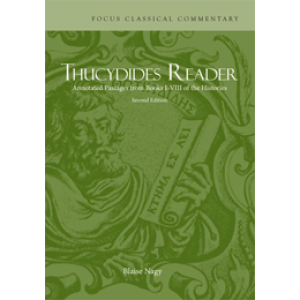
![]() Thucydides Reader: Annotated Passages from Books I-VIII of the Histories (Second Edition)
Thucydides Reader: Annotated Passages from Books I-VIII of the Histories (Second Edition)Annotated and illustrated, Focus Classical Commentary’s Thucydides Reader contains passages from Books I-VIII of the Histories with introductory material, commentary, and grammatical notes for each of the eight books. An easy-to-reference, complete glossary—new to the second edition—is also included. Thucydides Reader is well suited for a course in Intermediate Greek, as well as for secondary school students who want to tackle the works of a popular but challenging author. This book is a standard text for any college course in reading Thucydides in Greek.
Learn More -
![]() Statesman (Brann, Kalkavage, & Salem Edition)
Statesman (Brann, Kalkavage, & Salem Edition)"This will be the preferred edition of Plato’s Statesman for teachers and students who are serious not only about reading the text in good translation, but also about working through its arguments." —Dustin Gish, College of the Holy Cross
"Having taught Plato's dialogues in my classes over the past forty-three years to upper level undergraduates, I can especially appreciate the value of this new edition of Plato's Statesman. The three translators have paid very close attention to the amazing fecund versatility of the Greek text, producing a translation that is as accurate and lively as possible and the best currently available for classroom use. The interpretative essay is unique in its highlighting of all of the issues that a thoughtful reader should be led to consider concerning this work. As has been the case with other works by these translators, the glossary leads any Greek-less reader as close as possible to the interconnections of the major words that sustain the flow and eddies of this perennially fascinating work." —Donald Lindenmuth, The Pennsylvania State University
Learn More -
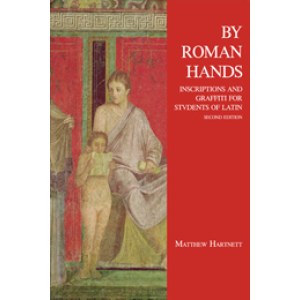
![]() By Roman Hands (Second Edition)
By Roman Hands (Second Edition)By Roman Hands, Second Edition takes Latin out of the textbook and allows students to see and translate Latin as it actually appeared on Roman monuments, walls, and tombs. The first collection of entirely authentic and un-adapted inscriptions and graffiti accessible to beginning and intermediate students of Latin, By Roman Hands unites the study of language and culture in a novel and compelling way and at a level that the Latin can be grasped and discussed by early Latin learners. Ranging from a love letter hastily scratched on a Pompeian wall to the proclamation of an emperor's achievements formally inscribed on a monumental arch, these carefully selected texts afford fascinating glimpses into the lives and minds of the Romans, even as they illustrate and reinforce the basic elements of the Latin language.
Learn More -
![]() New Third Steps in Latin, Revised and Corrected
New Third Steps in Latin, Revised and CorrectedNew Third Steps in Latin is the third book in a three-book series designed specifically for middle or high school students. The texts employ a minimum of explanation of grammatical principles, concentrate on essential grammar and morphology and on the syntax of simple, compound, and complex sentences. The focus on learning is through numerous examples. The series offers students a complete graded introduction to Latin and grammar. It can be used alone, as a main text supplemented by readings and cultural material, or as a supplementary grammatical work text for a reading-oriented course.
Course instructors: click here to request PDF instructor's materials.
Learn More -
![]() The Essential Metamorphoses
The Essential MetamorphosesThe Essential Metamorphoses, Stanley Lombardo’s abridgment of his translation of Ovid’s Metamorphoses, preserves the epic frame of the poem as a whole while offering the best-known tales in a rendering remarkable for its clarity, wit, and vigor. While making no pretense of offering an experience comparable to that of reading the whole of Ovid’s self-styled history “from the world’s first origins down to my own time,” this practical and judicious selection of myths at the heart of Roman mythology and literature yet manages to relate many of the most fascinating episodes in that world-historical march toward the Age of Augustus—and is accompanied by an Introduction that deftly sets them in their cosmological, theological, and Augustan contexts.
Learn More -
![]() The Roman History
The Roman History"[A] well-vetted, well-thought-out, and much overdue updated English translation. It will make Velleius accessible to undergraduates, who previously may have only read Livy, Sallust, or Tacitus. Perhaps the greatest merit of the book is its thorough notation throughout the translation. . . . a necessity for nonspecialist readers."
Learn More
—Nikolaus Overtoom, Louisiana State University in H-Net: Humanities and Social Science Reviews Online -
![]() Aeneid: Book 4
Aeneid: Book 4"The commentary itself is a gem, and students and teachers of Aeneid 4 alike will be very grateful to James O’Hara for the excellent job he has done to balance comments that help with translation and comprehension alongside those that allow students to engage with current scholarly debates about the interpretation of the Aeneid, as well as with Virgil's literary, philosophical and cultural contexts. . . . In conclusion, this is an engaging, learned and extremely useful commentary. It is well-directed to its intended audience of intermediate students but is also a useful resource for more advanced readers, particularly those wanting insight into the current state of scholarship on the Aeneid and significant recent debates about Book 4. It is lucid and well edited, and I highly recommend it."
Learn More
—Anne Rogerson, University of Sydney, in Bryn Mawr Classical Review -
![]() Lingua Latina: Fabulae Syrae
Lingua Latina: Fabulae SyraeThe collection begins with the adventure of Pygmalion, the Cypriot sculptor who carved a woman out of ivory, and ends with nearly 200 verses of original Latin from books two and three of Ovid's Metamorphoses. The vignettes are annotated with helpful margin notes and are accompanied by beautiful historic woodcut illustrations. The volume contains two appendices: a list of vocabulary and a glossary of proper names. Fabulae Syrae can be used concurrently with Familia Romana for further enrichment or as a review text after completing Familia Romana. It is, however, also a stand-alone work and could also be used as a reader in mythology separate from the Lingua Latina per se Illustrata series. New vocabulary is kept to an absolute minimum, so the reader can truly enjoy the readings, while focusing on a mastery of the grammar and essential vocabulary taught in the Familia Romana.
Learn More










Filter