The Hackett Signature Editions Collection Featuring Premium Hardcovers of Hackett Classics - Learn More Here.

Classical Studies


-
![]() On the War for Greek Freedom
On the War for Greek FreedomDesigned for students with little or no background in ancient Greek language, history, and culture, this new abridgment presents those selections that comprise Herodotus’ historical narrative. These are meticulously annotated, and supplemented with a chronology of the Archaic Age, Historical Epilogue, glossary of main characters and places, index of proper names, and maps.
Learn More -
![]() Lysistrata (Ruden Edition)
Lysistrata (Ruden Edition)"Presents a readable, clear translation with the assistance students will need to understand this play and the society that produced it. . . . A worthy addition to Hackett's growing series of translations of classical literature in accessible editions."
Learn More
—Anne Mahoney, New England Classical Journal -
![]() Athenian Funeral Orations
Athenian Funeral OrationsThis volume collects all of the surviving state funeral orations from Athens, including Thucydides, Gorgias, Lysias, Plato Menexenus, Demosthenes, and Hyperides. To stimulate student discussion and comparison, Lincoln's address at Gettysburg is included in an appendix. Translations are in English, including introduction and notes, as well as literary and historical commentary.
Learn More -
![]() Plato's Euthyphro & Clitophon
Plato's Euthyphro & ClitophonText in Greek with extensive commentary in English, including a general introduction, and introductions to each of the two texts, appendices, glossary, and vocabulary. The Euthyphro and the Clitophon provide an ideal, exciting introduction to Plato and Greek prose. Even a student fresh out of introductory ancient Greek can expect to finish these works within a semester, because the Greek of the Euthyphro is clear and easy to follow, but not overly simple.
Learn More -
![]() The People of Plato
The People of Plato"A treasure-house of vital information, exhaustively and meticulously researched, presented with clarity and verve. Students of Plato's dialogues—and other Socratic writings—will no longer be frustrated by wading through dispersed and difficult to use scholarly tomes to find out about Meno's family and career or Plato's brothers or uncles or who Thucydides son of Melesias was, and his relation to the historian. With philosophical readers foremost in mind, Nails tells all. From now on, anyone reading Plato will always have this book nearby."
Learn More
—John M. Cooper, Princeton University -
![]() Substantial Knowledge
Substantial Knowledge"C.D.C. Reeve has made a remarkable contribution to the study of Aristotle’s metaphysics, not least because his interpretation restores Aristotle’s theology to its central place. His book will be important reading not only for scholars engaged in debate about Aristotle’s text, but also for the rest of us, because it is both an interpretation of Aristotle and a significant metaphysical inquiry in its own right."
Learn More
—Alasdair MacIntyre, Duke University -
![]() Oidipous at Colonus
Oidipous at ColonusThis is an English translation of Sophocles' tragedy of Oedipus who is banished from Thebes and confronts an array of obstacles that stand between him and the death he craves. Focus Classical Library provides close translations with notes and essays to provide access to understanding Greek culture. Includes maps, essays and suggestions for further reading.
Learn More -
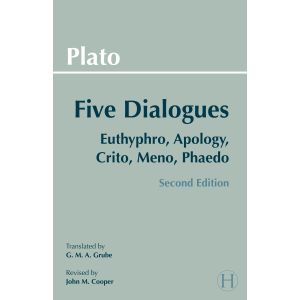
![]() Five Dialogues (Second Edition)
Five Dialogues (Second Edition)The second edition of Five Dialogues presents G. M. A. Grube’s distinguished translations, as revised by John Cooper for Plato, Complete Works. A number of new or expanded footnotes are also included along with an updated bibliography.
Learn More -
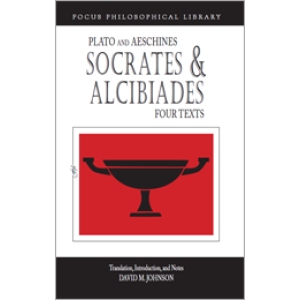
![]() Socrates & Alcibiades: Four Texts
Socrates & Alcibiades: Four TextsSocrates and Alcibiades: Four Texts gathers together translations our four most important sources for the relationship between Socrates and the most controversial man of his day, the gifted and scandalous Alcibiades. In addition to Alcibiades’ famous speech from Plato’s Symposium, this text includes two dialogues, the Alcibiades I and Alcibiades II, attributed to Plato in antiquity but unjustly neglected today, and the complete fragments of the dialogue Alcibiades by Plato’s contemporary, Aeschines of Sphettus. These works are essential reading for anyone interested in Socrates’ improbable love affair with Athens’ most desirable youth, his attempt to woo Alcibiades from his ultimately disastrous worldly ambitions to the philosophical life, and the reasons for Socrates’ failure, which played a large role in his conviction by an Athenian court on charges of impiety and corrupting the youth.
Learn More -
![]() Poems and Fragments
Poems and Fragments"I have long been an admirer of Stanley Lombardo's translations of Homer, and I was curious to see how he would adapt his fast-paced, lively style to Sappho. He has succeeded admirably. His translation of 73 poems of Sappho is clear, energetic, and close to the Greek. Pamela Gordon's Introduction gives a lucid and useful guide for the non-specialist to the last fifty years of scholarly debate on Sappho. This edition will be particularly useful for instructors of courses in translation seeking an introduction to Sappho for the Greekless student. It is also a pleasure to read."
Learn More
—Laurel Bowman, The Classical Bulletin -
![]() The Trials of Socrates
The Trials of SocratesLampooned in 406 B.C.E. in a blistering Aristophanic satire, Socrates was tried in 399 B.C.E. on a charge of corrupting the youth, convicted by a jury of about five hundred of his peers, and condemned to death. Glimpsed today through the extant writings of his contemporaries and near-contemporaries, he remains for us as compelling, enigmatic, and elusive a figure as Jesus or Buddha. Although present-day (like ancient Greek) opinion on "the real Socrates" diverges widely, six classic texts that any informed judgment of him must take into account appear together, for the first time, in this volume. Those of Plato and Xenophon appear in new, previously unpublished translations that combine accuracy, accessibility, and readability; that of Aristophanes' Clouds offers these same qualities in an unbowdlerized translation that captures brilliantly the bite of Aristophanes' wit. An Introduction to each text and judicious footnotes provide crucial background information and important cross-references.
Learn More -
![]() Georgics
Georgics"Chew's translation is, both in aesthetic and scholarly terms, an excellent piece of work. I find her approach refreshing and true to the spirit of the Georgics; her adventurousness strikes me as just the thing to rescue the poem from the appearance of blandness that a more straightforward style of translationese would inevitably, but misleadingly, impose upon it. This Georgics does not read much like any previous version of it. Chew helps the English reader to get a sense of Virgil's avant-garde poetics, which is the main thing that almost all translators of the Georgics work to eliminate, if indeed they are even aware of it.
Learn More
First-rate."
—Joseph Farrell, Professor of Classical Studies, University of Pennsylvania -
![]() Medea, Hippolytus, Heracles, Bacchae
Medea, Hippolytus, Heracles, BacchaeDrawn from four titles in the Focus Classical Library, this anthology includes four outstanding translations of plays by Euripides as well as a general introduction, extensive footnotes, and two interpretive essays. Included are Anthony J. Podecki’s translation of Medea, Michael R. Halleran's translation of Hippolytus and Heracles and Stephen Esposito’s translation of Bacchae.
Learn More -
![]() On the Nature of Things (Englert Edition)
On the Nature of Things (Englert Edition)"Englert's translation of the poem is indeed accurate and readable. He knows the poem as thoroughly as he knows the scholarship that bears on it . . . an admirable translation, admirably supported by scholarly tools."
Learn More
—W.R. Johnson, University of Chicago -
![]() King Oidipous
King OidipousThis is an English translation of Sophocles' famous tragedy of Oedipus and the fate he so much tries to avoid. Focus Classical Library provides close translations with notes and essays to provide access to understanding Greek culture.
Learn More -
![]() Nicomachean Ethics (Sachs Edition)
Nicomachean Ethics (Sachs Edition)"Sachs's translations of Aristotle are truly exemplary. They combine a rare sensitivity to Aristotle's use of the Greek language with an English style that is straightforward and imaginative. But what makes Sachs's translations even more noteworthy is their attunement born of profound awareness of the untranslatability of this thought into modern philosophical concepts. For anyone seriously interested in Aristotle's philosophy, Sachs's translations are indispensable."
Learn More
—Burt Hopkins, Seattle University -
![]() Theban Plays (Blondell Edition)
Theban Plays (Blondell Edition)This anthology includes English translations of three plays of Sophocles' Oidipous Cycle: Antigone, King Oidipous, and Oidipous at Colonus. The trilogy includes an introductory essay on Sophocles life, ancient theatre, and the mythic and religious background of the plays. Each of these plays is available from Focus in a single play edition. Focus Classical Library provides close translations with notes and essays to provide access to understanding Greek culture.
Learn More -
![]() Consolation of Philosophy
Consolation of Philosophy"Entirely faithful to Boethius' Latin; Relihan's translation makes the philosophy of the Consolation intelligible to readers; it gives equal weight to the poetry—in fact, Relihan's metrical translation of Boethius' metra are themselves contributions of the first moment to Boethian studies. Boethius finally has a translator equal to his prodigious talents and his manifold vision."
Learn More
—Joseph Pucci, Brown University -
![]() Antigone (Woodruff Edition)
Antigone (Woodruff Edition)"A lucid, well-paced translation, natural enough sounding in the dialogue to make a good acting version, and remarkably successful in making the choruses clear, lyrical, and yet part of the dramatic movement. Woodruff’s rendering of the choruses especially impresses me by the way he manages to render complex syntax and imagery of the original—often tangled and occasionally obscure in its allusiveness—into clear and genuinely poetic English."
Learn More
—Joseph Russo, Haverford College -
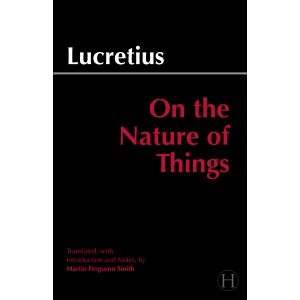
![]() On the Nature of Things (Smith Edition)
On the Nature of Things (Smith Edition)"Martin Ferguson Smith has for many years been one of the leading Lucretian scholars in the world. . . . We should expect from the beginning then that we are in the hands of a wise and learned guide as soon as we open his Lucretius, and this expectation is certainly borne out by the quality of this sensitive and thoughtful edition. . . . The Introduction . . . is excellent. Smith outlines in a highly accessible manner what little is known of Lucretius' life and times, the poem's position and status in the Epic and Didactic tradition, and the philosophy of Epicurus that Lucretius puts forward, but also manages to include some of the most up-to-date research, including recent scholarship on the Herculaneum papyri. . . . But of course, the translation is the most important part of the work . . . [and] it is streets ahead of the competition. . . . I can recommend this book unreservedly."
Learn More
—Gordon Campbell, Hermathena -
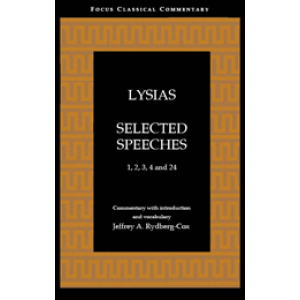
![]() Lysias: Selected Speeches
Lysias: Selected SpeechesThis text is a commentary in the original Greek, with an introductory essay, notes, a complete vocabulary and an introduction to how to use the resources in the Perseus Digital Library. The speeches in this text (1, 2, 3, 4, and 24) show the best and worst of Classical Athens, from tawdry affairs aired in the law courts to Athens' heroic self-image portrayed in the Funeral Oration.
Learn More -
![]() The Older Sophists
The Older Sophists"Will be of interest both to those who know Greek and to those who do not, and, it is hoped, will provide a contribution to the serious study of the sophist movement. . . . Fascinating reading."
Learn More
—The Classical Review -
![]() The Foundations of Socratic Ethics
The Foundations of Socratic EthicsGómez-Lobo argues that behind the facade of Socratic irony lies a strictly deductive system of ethics suspended from two axioms—one governing practical rationality and the other specifying the ingredients of the good life. In the Gorgias, the author contends, Plato tries to found Socratic ethics on a metaphysical principle about goodness in general, from which the axiom concerning the good life can be derived.
Learn More -
![]() Homeric Dictionary
Homeric DictionaryA Greek language reference of Homeric terms and allusions for students of Greek at the third and fourth year of study, the Homeric Dictionary features the most common 9,000 words used in the Iliad and Odyssey, with grammatical forms and illustrations.
Learn More -
![]() Archaic Latin Verse
Archaic Latin VerseArchaic Latin Verse offers text and commentary of the earliest surviving Latin work including selections from oral verse, Livius, Naevius, Ennius, and others (Caecilius, Accius, Pacuvius, and Lucilius). For 3rd or 4th year college Latin literature survey courses that incorporate source material in Latin.
Learn More -
![]() Hippolytus
HippolytusNo play of Euripides is more admired than Hippolytus. The tale of a married woman stirred to passion for a younger man was traditional, but Euripides modified this story and blended it with one of divine vengeance to create a masterpiece of tension, pathos, and dramatic power. In this play, Phaedra fights nobly but unsuccessfully against her desire for her stepson Hippolytus, while the young man risks his life to keep her passion secret. Both of them, constrained by the overwhelming force of divine power and human ignorance, choose to die in order to maintain their virtue and their good names.
Learn More -
![]() Roman Sports and Spectacles
Roman Sports and SpectaclesRoman Sports and Spectacles: A Sourcebook contains numerous translations from the Latin, including famous authors, such as Cicero, Seneca, Tertullian and Augustine, and the not so famous, including graffiti, advertisements and tombstones to paint a world view of what sports Romans played and what they thought of them. The world of Roman sports was similar in many ways to our own, but there were significant differences. For one thing Roman sports centered during religious festivals and the participants were most often slaves. Roman sports were not team sports, but individual competitions. And sports like chariot racing and gladiatorial competitions were very dangerous. Each document includes an introduction to the source material.
Learn More -
![]() Allen & Greenough's New Latin Grammar
Allen & Greenough's New Latin GrammarBased on the 1903 edition, this attractive, newly typeset reprint of the classic work in Latin Grammar has some updating of the material on meter. The key system widely used to reference grammar in numerous Latin texts has been retained. Available in hardcover or paperback.
Learn More -
![]() Classical Mythology in Literature, Art, and Music
Classical Mythology in Literature, Art, and MusicOriginally published in the 1960s, this standard illustrated work covers the gods and heroes of the Classical world, with special emphasis on the influence Classical mythology has had on literature, art and music in Western civilization.
Learn More -
![]() Sidgwick's Greek Prose Composition
Sidgwick's Greek Prose CompositionThis reprint of the classic text contains brief explanations of Greek grammar as they pertain to various aspects of writing and usage, numerous exercises that cover issues in accidence, syntax and idiom and also allow for discussion of Greek grammar in relationship to English usage.
Learn More -
![]() Roman Religion: A Sourcebook
Roman Religion: A Sourcebook"Professor Warrior's book is a useful anthology of readings which, diligently chosen and intelligently arranged, display the essential elements of Roman religion in its most interesting period." —Christopher McDonough, Boston College
"I am currently using Valerie M. Warrior’s Greek Religion: a Sourcebook and her Roman Religion: a Sourcebook for my class on Paganism. They are absolutely outstanding, in terms of the selection, the range of topics, and the level of detail provided. I will keep using these as long as I keep teaching the class (I hope for decades!). I would recommend them to anyone. Perfect to supplement a class based mainly on lectures, and to get students digging into the real sources of our knowledge and engaging with them." —Jack Mitchell, Department of Classics, Dalhousie University
Learn More -
![]() The Trial and Death of Socrates (Third Edition)
The Trial and Death of Socrates (Third Edition)The third edition of The Trial and Death of Socrates presents G. M. A. Grube’s distinguished translations, as revised by John Cooper for Plato, Complete Works. A number of new or expanded footnotes are also included along with a Select Bibliography.
Learn More -
![]() The Essential Homer
The Essential Homer"Not only does one get an excellent translation of both Homer's Iliad and Odyssey under one cover, but the selections included are infinitely better and longer than what one normally gets in anthologies of Greek literature. For courses in which entire texts cannot be used, this is by far the best choice available today." —Kostas Myrsiades, Westchester University
"A good idea—its utility far outweighs qualms purists have about students not reading every last item in the catalogue of ships. The translation is vigorous and readable." —Andrew Ford, Princeton University
"The Essential Homer fills a long-felt need for an edition that offers a sizable selection of the books and passages most likely to be used in undergraduate courses. It's a wonderful help." —Richard P. Martin, Stanford University
Learn More -
![]() The Essential Iliad
The Essential IliadWhile preserving the basic narrative of the Iliad, this selection also highlights the epic's high poetic moments and essential mythological content, and will prove especially useful in surveys of world literature.
Learn More -
![]() Homeric Hymns (Shelmerdine Edition)
Homeric Hymns (Shelmerdine Edition)This is a collection of the standard texts of ancient Greek which are important components of what we know about Greek myth, religion, language and culture. All of the works collectively known as the Homeric Hymns are collected and translated here in their entirety, and the work includes ample notes and an introduction to provide information on the works' historic importance, a chronological table, genealogical chart, maps of Greece and the Aegean Islands, and illustrations of vase paintings with mythological themes.
Learn More -
![]() Timaeus (Zeyl Edition)
Timaeus (Zeyl Edition)“Donald Zeyl’s fresh and faithful translation and his lucid, comprehensive commentary will bring the sublime Timaeus to life for contemporary students of cosmology, metaphysics, history of science, and philosophy.”
Learn More
—Sarah Broadie, Princeton University -
![]() Clouds (Meineck Edition)
Clouds (Meineck Edition)"Since the appearance of Sommerstein’s very successful literal translation less than twenty years ago, there have been at least five further new published attempts at rendering the play into English. It is certainly a bold enterprise to introduce yet one more translation onto the scene, but Peter Meineck has risen well to the challenge. The translation is straightforward and idiomatic, as well as well-paced and funny. . . Ian Storey’s Introduction is perfect for undergraduates.” —Max Nelson, Bryn Mawr Classical Review
Learn More -
![]() Readings in Classical Political Thought
Readings in Classical Political Thought“A distinctive and superior collection of texts suitable for both graduate and undergraduate courses. There is nothing like it elsewhere. Steinberger’s commentary is succint, accurate, and very useful.”
Learn More
—Dr. Melvin Kulbicki, York College of Pennsylvania -
![]() Satyricon
Satyricon"[Ruden] has caught, better than any translator known to me, both the conversational patterns of Petronian dialogue and the camera-sharp specificity and color of the Satyricon's descriptive passages.... A quite extraordinary achievement against heavy odds."
Learn More
—Peter Green, The Los Angeles Times Book Review -
![]() Odyssey
Odyssey"[Lombardo] has brought his laconic wit and love of the ribald. . . . to his version of the Odyssey. His carefully honed syntax gives the narrative energy and a whirlwind pace. The lines, rhythmic and clipped, have the tautness and force of Odysseus' bow." —Chris Hedges, The New York Times Book Review
"The definitive English version of Homer for our time." —The Common Review: The Magazine of the Great Books Foundation
"Lombardo weaves his cherished idioms into important patterns of repetition and transformation so familiar to the telling of the Odyssey. . . . Above all, such familiar phrases serve to remind us of the oral character of the original Odyssey, providing the reader with an uncanny immediacy and relevance." —Christina Zwarg, The Bryn Mawr Classical Review
Learn More -
![]() Oedipus Tyrannus
Oedipus Tyrannus"A clear, vigorous, spare, actable translation, and with it, excellent apparatus (Intro., notes, bibliography); all in a slim and affordable volume. I will use when I next teach Oedipus. Hackett is an invaluable resource!” —Rachel Hadas, Rutgers University
"I have enjoyed all of the recent Hackett editions of translations of Greek literature and "Oedipus Tyrannus” is certainly no exception. Meineck and Woodruff got things just right, from employing "Tyrannus” instead of "Rex” in the title (as has become traditional, though it lends an erroneous sense to the play from the outset) to Woodruff’s very fine and accessible Introduction to the suspenseful, poetic and powerful rendering of the play itself. Meineck’s theatrical sensibility and knowledge are evident, yet the text never becomes too "stagey” nor wanders far from the Greek. I will definitely use this text along with other terrific Hackett editions in my courses." —Lisa Rengs George, Arizona State University
Learn More -
![]() A Primer of Greek Grammar
A Primer of Greek GrammarThis is a reprint of a classic primer that introduces the complete range of Greek grammar through short explanations and grammatical examples and includes both accidence and syntax.
Learn More -
![]() Lingua Latina: Pars II: Instructions
Lingua Latina: Pars II: InstructionsInstructions is student guide in English for Lingua Latina: Part II: Roma Aeterna and provides an overview of the chapter readings and grammar found in each chapter.
Learn More





















Filter