The Hackett Signature Editions Collection Featuring Premium Hardcovers of Hackett Classics - Learn More Here.

Classical Studies



-
![]() The Roman History
The Roman History"[A] well-vetted, well-thought-out, and much overdue updated English translation. It will make Velleius accessible to undergraduates, who previously may have only read Livy, Sallust, or Tacitus. Perhaps the greatest merit of the book is its thorough notation throughout the translation. . . . a necessity for nonspecialist readers."
Learn More
—Nikolaus Overtoom, Louisiana State University in H-Net: Humanities and Social Science Reviews Online -
![]() New First Steps in Latin, Revised and Corrected
New First Steps in Latin, Revised and CorrectedNew First Steps in Latin is the first book in a three-book series designed specifically for middle or high school students. The texts employ a minimum of explanation of grammatical principles, concentrate on essential grammar and morphology and on the syntax of simple, compound, and complex sentences. The focus on learning is through numerous examples. The series offers students a complete graded introduction to Latin and grammar. It can be used alone, as a main text supplemented by readings and cultural material, or as a supplementary grammatical work text for a reading-oriented course.
Course instructors: click here to request PDF instructor's materials.
Learn More -
![]() New Second Steps in Latin, Revised and Corrected
New Second Steps in Latin, Revised and CorrectedNew Second Steps in Latin is the second book in a three-book series designed specifically for middle or high school students. The texts employ a minimum of explanation of grammatical principles, concentrate on essential grammar and morphology and on the syntax of simple, compound, and complex sentences. The focus on learning is through numerous examples. The series offers students a complete graded introduction to Latin and grammar. It can be used alone, as a main text supplemented by readings and cultural material, or as a supplementary grammatical work text for a reading-oriented course.
Course instructors: click here to request PDF instructor's materials.
Learn More -
![]() Lingua Latina: Epitome Historiae Sacrae
Lingua Latina: Epitome Historiae SacraeEntirely in Latin (with vowel lengths marked), this book includes 209 readings from the Old Testament Books. There are also engaging exercises, including crosswords and matching. Epitome Historiae Sacrae been edited according to the Lingua Latina per se Illustrata series, is ideal for students who have completed Familia Romana as it drills and reviews grammar while adding more than 1,300 words to their vocabulary and modeling excellent Latin prose style.
Course Instructors: The PDF-only Epitome Historiae Sacrae answer key and marginal notes (by Frank Nitsche-Robinson) eBook is available for qualified adopters. If you have adopted the text, click here to request the PDF answer key and marginal notes file.
Learn More -
![]() The Caesars
The Caesars"Donna Hurley has done a sterling job in providing us with both an Introduction to Suetonius and a translation of The Caesars that we can confidently recommend to students. Her Introduction summarizes a complex topic succinctly and is informative without being overwhelming, set at an ideal level for the student and intelligent enthusiast. Her translation is accurate and contemporary. Her primary goal is faithfulness to the original, which she achieves, but at the same time she recognizes the need to make her text clear, entertaining, and comprehensible to the modern reader, and she strikes exactly the right balance." —Anthony Barrett, Emeritus, University of British Columbia
“Hurley, who has written extensively and with authority on Suetonius, knows her author and his text thoroughly, and her Introduction to them is a model of presentation. Annotation (footnotes, not endnotes) is concise and to the point; essential background is gracefully sketched in a preliminary section on Roman institutions; maps and plans are clear and full. This thoughtful concern for the reader’s needs justifies confidence in the translation itself: for its combination of accuracy, clarity, and readability, it is the best.” —Edward Champlin, Princeton University
Learn More -
![]() Electra, Phoenician Women, Bacchae, & Iphigenia at Aulis
Electra, Phoenician Women, Bacchae, & Iphigenia at AulisThe four late plays of Euripides collected here, in beautifully crafted translations by Cecelia Eaton Luschnig and Paul Woodruff, offer a faithful and dynamic representation of the playwright’s mature vision.
Learn More -
![]() Philosophy Before Socrates (Second Edition)
Philosophy Before Socrates (Second Edition)The second edition of Philosophy Before Socrates has been updated and expanded to reflect important new discoveries and the most recent scholarship. Changes and additions have been made throughout, the most significant of which are found in the chapters on the Pythagoreans, Parmenides, Zeno, Anaxagoras, and Empedocles, and the new chapter on Philolaus. The translations of some passages have been revised, as have some interpretations and discussions. A new Appendix provides translations of three Hippocratic writings and the Derveni papyrus.
Learn More -
![]() A Presocratics Reader (Second Edition)
A Presocratics Reader (Second Edition)"Curd and McKirahan's A Presocratics Reader is by far the best sourcebook for the Presocratics I've ever used in forty years of teaching ancient philosophy. Pieces I used to have to translate myself, such as the Dissoi Logoi, and Gorgias' Encomium of Helen, are included in the text, in much more skilled translation. The enlarged 2nd edition made a good book better."
Learn More
—Samuel C. Wheeler III, University of Connecticut -
![]() Legal Speeches of Democratic Athens
Legal Speeches of Democratic Athens“An excellent, wide-ranging collection of Athenian speeches illuminating central topics of political, social, and legal history, including male and female sexuality, the ancient economy, Greek law, and major episodes of civic strife. Both accurate and faithful to the orators’ prose style, Wolpert and Kapparis’ new translations come accompanied by informative introductions and notes, a glossary of legal terms, and a helpful bibliography. Highly recommended for courses in the history of classical Athens, ancient rhetoric, and Greek law.” —Robert W. Wallace, Northwestern University
Learn More -
![]() Lingua Latina: Pars I: Familia Romana (Second Edition, with Full-Color Illustrations)
Lingua Latina: Pars I: Familia Romana (Second Edition, with Full-Color Illustrations)Familia Romana (the main book of Pars I of the Lingua Latina per se illustrata series) contains thirty-five chapters and describes the life of a Roman family in the 2nd century A.D. It culminates in readings from classical poets and Donatus's Ars Grammatica, the standard Latin school text for a millennium. Each chapter is divided into two or three lessons (lectiones) of a few pages each followed by a grammar section (Grammatica Latina) and three exercises (Pensa). Hans Ørberg's impeccable Latin, humorous stories, and the Peer Lauritzen illustrations, reproduced in full color, make this work a classic. The book also includes a table of declensions, a Roman calendar, and a word index (index vocabulorum).
"Familia Romana and A Companion to Familia Romana came as a complete revelation. I'd heard they were unique, but they are literally nothing less than a work of genius. They would completely revolutionize the classroom, and I would urge all teachers of first-year Latin at universities and all high school teachers to seriously consider adopting this radical approach to learning Latin. The companion volume provides all the traditional exposure you would want, but the main volume shows every prospect of genuinely internalizing Latin in the learner's brain as a living language, calling on a whole set of language-acquisition skills and instincts normally neglected in the teaching of a dead language. Mind-blowing." —Jack Mitchell, Department of Classics, Dalhousie University
Familia Romana Essentials Online online courseware is also available. More information can be found in the links below:
COURSE INSTRUCTORS: Request free instructor preview access and learn more here.
INDIVIDUAL LEARNERS: See purchasing options and FAQs about the self-paced learner version of the course here.
Learn More -
![]() First Greek Course
First Greek CourseThis text is designed for courses in the introduction to classical Greek using the "direct method" of learning. This method is a near immersion method in which much of the course and the book as possible is done in Greek, relying less on translation and more on acquiring skills in reading, speaking and thinking in the target language. Rouse's classic book has been thoroughly revised for the modern students by Anne Mahoney. The Greek reader, Rouse's Greek Boy, is a companion that carefully follows the progression of this text.
Learn More -
![]() Metamorphoses (Lombardo Edition)
Metamorphoses (Lombardo Edition)"Stanley Lombardo successfully matches Ovid’s human drama, imaginative brio, and irresistible momentum; and Ralph Johnson’s superb Introduction to Ovid's 'narratological paradise' is a bonus to this new and vigorous translation that should not be missed. Together, Introduction and text bring out the delightful unpredictability of Ovid’s 'history of the world' down to his times."
—Elaine Fantham, Giger Professor of Latin, Emerita, Princeton University"Lombardo’s translation is the most readable I’ve seen. . . . Its language is modern, accessible, and unpretentious. . . . I can imagine reading all the way through this version with students. I also admire the catalog of transformations . . . and, as usual, an Introduction by Ralph Johnson is worth the price of the book." —Margaret Musgrove, University of Central Oklahoma
Learn More -
![]() Herodotus Reader
Herodotus Reader"There are few Greek readers on the market for so crucial an author as Herodotus, and this text with its extensive selections . . . and helpful glosses admirably fills that void."
Learn More
—Mary English, Montclair State University -
![]() De Anima (Shiffman Edition)
De Anima (Shiffman Edition)"Shiffman's fidelity both to Aristotle's text and to opening the complex thought contained therein to the contemporary reader is evident throughout this translation. It neither attempts to resolve difficulty nor drown the reader in obscurity; instead, it invites the reader to puzzle through this magnificent and difficult text herself. The wonderful introduction supplies any number of tools to do so and is a model of the rigorous and restrained articulation of essential themes and contemporary resonances. The glossary contains an indispensable and illuminating discussion of terms. Readable and thought-provoking, this translation is particularly well-suited for the classroom. Students at all levels will benefit from its lucidity and provocation to thought."
Learn More
—Sara Brill, Fairfield University -
![]() Socrates and the Sophists
Socrates and the SophistsThis is an English translation of four of Plato’s dialogues (Protagoras, Euthydemus, Hippias Major, and Cratylus) that explores the topic of sophistry and philosophy, a key concept at the source of Western thought. Includes notes and an introductory essay.
"Perhaps more than any other dialogue, the Cratylus has been in need of retranslation. Yet because it is a dialogue about words that is also replete with plays on words, with pretended etymologies, and perhaps with more comedy than any other dialogue, translating it is a daunting task. There is no one better suited for this task than Joe Sachs. His translations of Greek philosophical classics are widely acclaimed both for their truthfulness to the original Greek text and for their sensitivity to every nuance of the text. Sachs’s translation of the Cratylus is a rare achievement and no doubt will do much to restore to this dialogue its rightful status as one of the major Platonic dialogues." —John Sallis, Boston College
Learn More -
![]() Odysseus at Troy
Odysseus at TroyOdysseus at Troy is centered on the mythological Greek warrior, Odysseus, hero of the Trojan War. This book contains three plays: Sophocles' Ajax, Euripides' Hecuba, and Euripides' Trojan Women. The plays are complete, with notes and introductions for each. An additional introduction to the volume gives background on this popular theme, and on Ajax, one of the most written-about hero in Greek literature.
Learn More -
![]() Euthydemus (McBrayer & Nichols Edition)
Euthydemus (McBrayer & Nichols Edition)English translation of Plato's dialogue of Socrates with two prominent Sophists, Euthydemus and Dionysodorus, and their conflicting philosophical views, in which Plato satirizes the logical fallacies of the Sophists. With notes, introduction, interpretive essay, and a glossary of important words.
Learn More -
![]() Rouse's Greek Boy: A Reader
Rouse's Greek Boy: A ReaderRouse’s Greek Boy is a slight revision of Rouse’s original Greek language reader, A Greek Boy at Home. Although designed to accompany Rouse’s grammar text, it is a useful reader for beginning Greek course. It begins with simple grammar and builds in complexity as the course continues. This edition includes revised and modernized hints for using the book and is intended to be used with Anne Mahoney's First Greek Course.
Learn More -
![]() Classical Latin: An Introductory Course, Text and Workbook Set
Classical Latin: An Introductory Course, Text and Workbook SetCompanion Website: A free Classical Latin companion website with exercises, audio, flashcards, and more is available here.
"The publication of McKeown's Classical Latin is very exciting. It is going to be fun to teach from! It is thorough yet not pedantic; it covers all the important material in a logical fashion, and it does not have the silliness that is found in some elementary Latin texts. I am planning to adopt it for Elementary Latin (a year course, in which I think McKeown will fit very nicely) the next time I teach the class. It will be a great improvement over the text I have used for years and years."
Learn More
—Jane Crawford, Professor of Classics, University of Virginia -
![]() Classical Latin: An Introductory Course
Classical Latin: An Introductory CourseCompanion Website: A free Classical Latin companion website with exercises, audio, flashcards, and more is available here.
"To all my Latin colleagues: switch to this book! I have taught from half a dozen different Latin texts over the years, and have always wished there was something else I could be using. Finally that something else has arrived! I was pleasantly surprised at its accessibility, liveliness, and clarity. I have used it for two years now at the University of Delaware with great results. It fits extremely well into a two-semester elementary program. Each chapter features clear explanations of a manageable amount of material, with a variety of exercises ranging from simple to difficult, so the instructor can select what to give the students. The most capable students can do more difficult exercises, the average student is challenged but not overwhelmed, and the students with weaker language abilities are able to make it through the language requirement successfully. I have told all my friends in the field to try this book!" —Lynn Sawlivich, University of Delaware
Learn More -
![]() Classical Latin: An Introductory Course Workbook
Classical Latin: An Introductory Course WorkbookCompanion Website: A free Classical Latin companion website with exercises, audio, flashcards, and more is available here.
Designed to reinforce JC McKeown's Classical Latin: An Introductory Course, this innovative workbook offers a wide range of exercises, accommodating a wide range of learning styles, to help students master Latin morphology and vocabulary. Included are exercises involving parsing, correcting mistakes, completing sentences by providing the correct inflected word ending, distinguishing words within an unbroken series of letters, recognizing word forms, unscrambling anagrams, and more. A superb supplement to a brilliant Introductory Latin textbook.
Learn More -
![]() Two Novels from Ancient Greece
Two Novels from Ancient Greece"Since [Chariton's Callirhoe and Xenophon of Ephesos' An Ephesian Story] first found their way into the mainstream of Classics instruction twenty years ago, the need for new translations has become obvious, not only because of the textual and theoretical advances made in the interim, but because of demand for examining them in broader contexts. For both surveys of Greek and Roman literature and courses on the history of prose fiction, that demand has now been elegantly met. Trzaskoma's translation, based on greatly improved Greek texts, shows a sophisticated appreciation of the range in vocabulary and tone within Chariton, and similarities and differences in style between Chariton and Xenophon become easily apparent. . . . The Chariton and Xenophon I thought I knew have become much richer and more compelling texts. Any student of the ancient novel, and any teacher wanting to create more students of the ancient novel, needs to read this book."
Learn More
—Joel C. Relihan, Professor of Classics, Wheaton College (Norton, Mass.) -
![]() Roman Comedy: Five Plays by Plautus and Terence
Roman Comedy: Five Plays by Plautus and TerenceThis anthology contains English translations of five plays by two of the best practitioners of Roman comedy, Plautus and Terence. The plays Menaechmi, Rudens, Truculentus, Adelphoe, and Eunuchus, provide an introduction to the world of Roman comedy. As with all Focus translations, the emphasis is on a handsomely produced, inexpensive, readable edition that is close to the original, with an extensive introduction, notes and appendices.
Learn More -
![]() Pro Caelio
Pro CaelioKeitel and Crawford have produced a college level commentary of Cicero's great speech which provides insights into Roman life and culture, the nature and tools of Roman rhetoric, and, through the inclusion of correspondence and other texts, the life and friendships of Cicero himself. This volume includes the Latin text with vocabulary, exercises, notes, and an extensive introduction.
Learn More -
![]() Ten Speeches
Ten Speeches"This volume is a most welcome and much needed resource for the classroom, and a marked improvement over the Penguin editions of Cicero's selected speeches and selected political speeches, which it should supersede. A very well-chosen selection of speeches, accurately and fluidly translated, and handsomely produced. I especially appreciate the inclusion of clear maps and the section "Roman institutions and offices" which should prove especially useful for students."
Learn More
—Amanda Wilcox, Williams College -
![]() Aeneid: Book 3
Aeneid: Book 3"This commentary combines grammatical assistance with analysis of the text in ways which make reading easier and encourage interpretation. It also introduces current debates in Virgilian scholarship clearly and helpfully, and promotes and provides guidance for further reading. Perkell has provided valuable support for those wishing to teach Aeneid 3 at an intermediate level, and I look forward to the other volumes in this series."
Learn More
—Anne Rogerson, University of Sydney, in Bryn Mawr Classical Review -
![]() The Tale of Cupid and Psyche
The Tale of Cupid and Psyche"Joel Relihan's playful and exuberant translation of Apuleius' Golden Ass has already won admiration for its ability to give an English-reading audience some sense of what it's like to experience this often astonishing writer in the original Latin. By presenting The Tale of Cupid and Psyche with its narrative frame and by supplementing it with key passages from other writers, he here provides the reader with the materials needed for an informed and complex engagement with this text; his carefully nuanced 'Afterthoughts' enrich that process further. This volume will appeal to anyone with interests in myth, religion, and folklore, and will surely find its place in a wide range of courses."
Learn More
—James B. Rives, University of North Carolina at Chapel Hill -
![]() The Electra Plays
The Electra Plays"Once again, Peter Meineck and Paul Woodruff team up (this time with Cecelia Eaton Luschnig) to produce a thoroughly engaging text with lively translations that prove to be of great value to the college classroom. . . . The clarity of the translations, the unburdensome thoroughness of the introduction, and the judicious selection of footnotes, however, combine to allow students both within and outside the pertinent disciplines to appreciate how The Electra Plays speak directly to the world."
Learn More
—Mitchell M. Harris, Augustana College -
![]() Lingua Latina: Caesar: De Bello Gallico, From Books I, IV & V
Lingua Latina: Caesar: De Bello Gallico, From Books I, IV & VDe Bello Gallico is a supplemental reader in the Lingua Latina series. This text includes abridged annotated versions of Julius Caesar's firsthand account of the Gallic Wars Books I, IV and V designed for students who have finished Part I, Familia Romana or anyone interested in learning Latin using the Lingua Latina Hans Orberg method.
Learn More -
![]() Nunc Loquamur: Guided Conversations for Latin (Second Edition)
Nunc Loquamur: Guided Conversations for Latin (Second Edition)Nunc Loquamur is an illustrated text for students new to Latin who want to incorporate speaking Latin into their study. Through rich drawings by the author, students are provided situations common to the classroom and their lives in which to speak to one another, along with clues and vocabulary necessary for basic conversations. Additional Resources: Free audio and interactive software for Nunc Loquamur is available online at: http://www.discamus.com/nunc/
Learn More -
![]() Greek Religion: A Sourcebook
Greek Religion: A Sourcebook"Warrior's text fills a long-acknowledged void for teaching Ancient Religion. There is no real alternative. The best recommendation for her book comes from my students, who voted her Greek and Roman Sourcebooks their favorite texts in my Greek and Roman Religion course."
Learn More
—Randall M. Colaizzi, Ph.D., University of Massachusetts, Boston -
![]() Aeneid: Book 1
Aeneid: Book 1"The new Vergil commentaries from Focus are an exciting resource for almost anyone reading the Aeneid in Latin. . . . The editors recognize that developing core reading skills and involving students in the interpretive questions raised by the poem are not separate objectives. This recognition has resulted in commentaries that enticingly present basic information in a wider setting of observation and enquiry. . . . All in all, the Focus series balances simplicity and subtlety, reminding students at all levels that increasing technical precision and stretching one's interpretive curiosity are—fundamentally—one endeavor."
Learn More
—Antonia Syson, Purdue University, in Teaching Classical Languages (CAMWS) -
![]() Plato: Gorgias & Aristotle: Rhetoric
Plato: Gorgias & Aristotle: RhetoricBy pairing translations of Gorgias and Rhetoric, along with an outstanding introductory essay, Joe Sachs demonstrates Aristotles response to Plato. If in the Gorgias Plato probes the question of what is problematic in rhetoric, in Rhetoric, Aristotle continues the thread by looking at what makes rhetoric useful. By juxtaposing the two texts, an interesting "conversation" is illuminated—one which students of philosophy and rhetoric will find key in their analytical pursuits.
Learn More -
![]() The Stoics Reader
The Stoics ReaderThis volume gathers together the most important evidence about Stoic thought surviving from the ancient world. It is an expanded version of the section on Stoicism in Inwood and Gerson's Hellenistic Philosophy, consolidating related texts into larger, more continuous selections, adding material on the skeptical attack on Stoicism, and a short section that introduces the reader to some of the more interesting texts on Stoic ethics from the Roman imperial period.
Learn More -
![]() Studies in Etymology (Second Edition)
Studies in Etymology (Second Edition)Studies in Etymology is a standard introduction to the Classical etymology of the English language with equal coverage of Latin and Greek roots. The book is ideal for college-level classics or humanities courses of all designs. The book includes extensive exercises for each chapter, additional words for study, and indexes of prefixes, suffixes, and word stems.
Learn More -
![]() Theogony & Works and Days (Caldwell & Nelson Edition)
Theogony & Works and Days (Caldwell & Nelson Edition)This edition includes an annotated translation, by Richard Caldwell, of Hesiod’s Theogony together with annotated translation, by Stephanie Nelson, of Hesiod’s Works & Days. Introductions by the translators are also included, as is an essay by Caldwell entitled “The Psychology of the Succession Myth."
Learn More -
![]() An Ovid Reader
An Ovid ReaderGeared toward the advanced high school or intermediate college Latin student, An Ovid Reader covers a selection of works by the great Roman poet Ovid. Passages from Amores and Metamorphoses are arranged in ways that connect for the reader, and innovative discussion questions prompt thoughtful insights into the tales.
Learn More -
![]() Electra
ElectraThis is an English translation of Sophocles' tragedy of Electra, and the vengeance that she and her brother Orestes take on their mother and step father for the murder of their father. This edition also includes an "afterlife" essay that discusses adaptations of the play, as well as touches on other ways Electra has had influence (Jung's identification of the Electra Complex, O'Neill's Mourning Becomes Electra). Focus Classical Library provides close translations with notes and essays to provide access to understanding Greek culture.
Learn More -
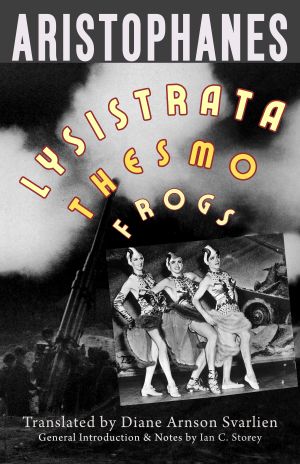
![]() Frogs (Henderson Edition)
Frogs (Henderson Edition)"Overall . . . I find this translation of the Frogs to be entertaining and very readable. Furthermore, Henderson's comprehensive introduction makes this translation quite useful for general readers or students at any level."
Learn More
—Erin K. Moodie, Bryn Mawr Classical Review -
![]() Medea (Svarlien Edition)
Medea (Svarlien Edition)"This is the Medea we have been waiting for. It offers clarity without banality, eloquence without pretension, meter without doggerel, accuracy without clumsiness. No English Medea can ever be Euripides', but this is as close as anyone has come so far, and a good deal closer than I thought anyone would ever come. Arnson-Svarlien has shown herself exceedingly skillful in making Euripides sound Euripidean." —David M. Schaps, Bryn Mawr Classical Review
"Fluid, lively, and accurate!" —Amy Vail, Department of Classics, Baylor University
Learn More -
![]() Plautus: Casina, Amphitryon, Captivi, & Pseudolus
Plautus: Casina, Amphitryon, Captivi, & Pseudolus"Christenson has offered readers a useful and informative edition of four Plautine plays in neutral, accessible English that, unlike some recent Plautus translations, reaches out to a wide modern audience, both classicist and general, both in Anglophone countries and elsewhere in the world. Within the range of Plautus translations as currently available, this is certainly a most welcome contribution. Christenson's thematical focus on some of Plautus' more serious plays, in which he seems almost like a social critic, is interesting and provides food for thought."
Learn More
—Vincent Hunink, in Bryn Mawr Classical Review -
![]() Greek Paradigm Handbook
Greek Paradigm HandbookThis is a handy pocket reference of morphological forms for Classical Greek and places the parts of speech in charts/tables for quick reference. This is designed to serve as a source for drill and memorization for students learning Greek. Coil binding makes it possible to lay the book flat or fold it back for easier reading.
Learn More -
![]() Aeneid: Book 2
Aeneid: Book 2"His introductory commentary on book II of the Aeneid, designed for students starting from an intermediate knowledge of Latin, offers the essential tools for a full understanding, correct translation, and appropriate interpretation of Vergil’s text."
Learn More
—Beatrice Larosa, Università della Calabria, in Bryn Mawr Classical Review -
![]() Reading Course in Homeric Greek, Book 2 (Third Edition)
Reading Course in Homeric Greek, Book 2 (Third Edition)A Reading Course in Homeric Greek, Book 2, the revised version by Leslie Edwards for Focus Publishing. This text provides an introduction to Greek language as found in the Greek of Homer using Odyssey books 6 and 12.
Learn More -
![]() Alcestis, Medea, Hippolytus
Alcestis, Medea, HippolytusThis new volume of three of Euripides' most celebrated plays offers graceful, economical, metrical translations that convey the wide range of effects of the playwright's verse, from the idiomatic speech of its dialogue to the high formality of its choral odes.
"Many scholars translate the works of Euripides as they should be, but Diane Arnson Svarlien translates them as they are. . . . Arnson Svarlien shows admirable modesty and restraint in avoiding . . . pitfalls, and makes choices that reveal the meaning of the text she is translating with the least imposition of her own personality. The ambiguity of Euripides is transmitted to us but not imposed on us by [her] translation. . . . The translations are both readable and playable." —Edmond Chibeau, New England Theatre Journal
Learn More -
![]() An Introduction to Ancient Greek (Second Edition)
An Introduction to Ancient Greek (Second Edition)C.A.E. Luschnig's An Introduction to Ancient Greek: A Literary Approach prepares students to read Greek in less than a year by presenting basic traditional grammar without frills and by introducing real Greek written by ancient Greeks, from the first day of study. The second edition retains all the features of the first but is more streamlined, easier on the eyes, more gender-inclusive, and altogether more 21st century.
Companion Website: http://worldwidegreek.com/. Please note that the audio files originally found on the companion website are now available for free here on Soundcloud. Instructor resources: PDF-only answer keys to the even-numbered exercises are also available by request. If you are a course instructor please use this form to request the answer keys.
Learn More -
![]() The Essential Odyssey
The Essential OdysseyThis generous abridgment of Stanley Lombardo’s translation of the Odyssey offers more than half of the epic, including all of its best-known episodes and finest poetry, while providing concise summaries for omitted books and passages. Sheila Murnaghan’s Introduction, a shortened version of her essay for the unabridged edition, is ideal for readers new to this remarkable tale of the homecoming of Odysseus.
Learn More










Filter