The Hackett Signature Editions Collection Featuring Premium Hardcovers of Hackett Classics - Learn More Here.

Browse All
-
![]() Political Treatise
Political TreatiseThe Political Treatise, Spinoza’s final work, is a largely theoretical inquiry into the fundamental principles of political philosophy. This edition offers an exceptional translation by Samuel Shirley and a prefatory essay by Douglas Den Uyl that discusses why the Political Treatise deserves the attention of contemporary scholars. Steven Barbone and Lee Rice provide ample notes, a substantial bibliography, complete indexes of names and terms, and a comprehensive general introduction, which considers the evolution of Spinoza’s political thought in the context of the political and intellectual turmoil of the times, the relationship between the Political Treatise and the Theological-Political Treatise, and the importance of the Political Treatise to a full understanding of Spinoza’s political philosophy.
Learn More -
![]() Walden Two
Walden TwoThis fictional outline of a modern utopia has been a center of controversy ever since its publication in 1948. Set in the United States, it pictures a society in which human problems are solved by a scientific technology of human conduct.
Learn More -
![]() Practical Screenwriting
Practical ScreenwritingPractical Screenwriting is a structured guide for the novice screenwriter that provides exercises in writing as well as practical guides to analyzing major films in ways that will provide insight into the screenwriting process. It is, first and foremost, a guide to writing clean, crisp, clear scripts that will get read in the crowded contemporary marketplace.
Learn More -
![]() L'enfant noir
L'enfant noirThe Focus Student Editions are designed for French language courses in literature and culture. Prepared with non-native French speakers in mind, these editions include an introduction (in French), the complete work, and linguistic and cultural notes in French, a current bibliography and study questions. A masterwork of modern francophone African literature, L’enfant noir has the artistry of a novel and the authenticity of an autobiography. This prizewinning 1954 tale describes the narrator’s journey from childhood in Kouroussa, in northwestern Guinea, to France, and the conflict of sacred traditions with the ways of the modern world.
Learn More -
![]() Lingua Latina: Pars I: Exercitia Latina I
Lingua Latina: Pars I: Exercitia Latina IThis workbook contains supplemental grammatical exercises for each of the 133 lectiones (lessons) in Familia Romana (the main book of Pars I of the Lingua Latina per se illustrata series).
Learn More -
![]() Amphitryo
AmphitryoA thorough and modern commentary on Plautus' classic comedy Amphitryo, including the 15th-century supplement for the lost scenes. With vocabulary and brief notes on meter.
Learn More -
![]() A Handbook of Russian Verbs
A Handbook of Russian VerbsA reference guide in Russian about Russian verbs with exercises for guided practice.
Learn More -
![]() Introducción a la literatura Latinoamericana
Introducción a la literatura LatinoamericanaThis text is part of a series of student editions in Spanish designed for students of Spanish and general readers who are not native speakers. Each book carries the full text, notes, introduction and questions in the manner of Advanced Literature Placement examination questions. All are in Spanish and are designed to help the reader approach the materials with both linguistic, literary and cultural issues.
"This is an excellent book for use in AP Spanish literature and culture classes, and also for use at the college level. The readers' guides and historical and cultural overviews of Spain are especially useful." —Patricia Smith, Tufts University
Learn More -
![]() El Burlador de Sevilla
El Burlador de SevillaEl burlador de Sevilla y convidado de piedra was first published in Spain around 1630 by Gabriel Tellez, a Spanish Baroque dramatist, poet and a Roman Catholic monk who used the name Tirso de Molina. The earliest adaptation of the legend of Don Juan, the personification of youthful indifference and all that is sinful, Tirso’s tale set in the 14th century confronts evil masquerading as honor. The Focus Student Editions are appropriate as introductory texts for Spanish language courses in literature and culture. They have been designed to help students approach the original Spanish text through an introductory essay, vocabulary and cultural notes, and study questions. All material is in Spanish, and complete in one volume.
Learn More -
![]() The Trojan Women
The Trojan WomenEnglish translation, with introduction, notes and appendices. The Trojan Women is a play on the consequences of war and the fate of those defeated in war and their victors.
Learn More -
![]() La casa de Bernarda Alba
La casa de Bernarda AlbaFederico García Lorca's 1945 drama is set in a small Spanish village, where the five daughters of a tyrannical mother struggle against her strict control. The play explores themes of repression, passion, and conformity, and the effects of love upon men upon women. This edition is designed to help students approach the original Spanish text through an introductory essay, vocabulary and cultural notes, and study questions. All material is in Spanish, and complete in one volume, appropriate as an introductory text for Spanish language courses in literature and culture.
Learn More -
![]() Ciak . . . si parla italiano: Cinema for Italian Conversation
Ciak . . . si parla italiano: Cinema for Italian ConversationCiak si parla italiano is a new text designed specifically for courses in Italian conversation that focus on cinema as the context for discussion. This text covers sixteen films ranging from Pietro Germi's Divorzio all'italiana to Pupi Avati's Il cuore altrove. They cover a broad range of genres: comedy, drama, science fiction, historical, political, social. They are films that students and instructors find interesting and engaging. The readings which accompany each film vary, and augment the film screenings and class discussions. There are five types of readings: background information on the director and film, cultural explications, scene transcriptions, directors comments, and poetry. While the first two serve to orient and contextualize the films for the students, the transcriptions allows for a more detailed linguistic analysis of a particular scene. The directors comments provide an insightful interpretation to stimulate discussion. The poetry readings were inspired by filmic references and inspire students to expand their insights beyond the specific film.
Learn More -
![]() Survey of French Literature, Volume III: The 18th Century (Third Edition)
Survey of French Literature, Volume III: The 18th Century (Third Edition)A new edition of a classic anthology, published in five convenient and inexpensive volumes, updated for the modern student. Selections in French, with introductory material and notes in English. Includes time lines, introductions to each period and its culture, and short biographies of the authors.
Learn More -
![]() Literary Heimat
Literary Heimat". . . a most valuable project. It will provide a much-needed tool to college and university professors who teach courses on minority literature in general; however, most notably Jewish German and Austrian culture."
Learn More
—Dagmar C.G. Lorenz, University of Illinois at Chicago -
![]() Survey of French Literature, Volume I: The Middle Ages and 16th Century (Third Edition)
Survey of French Literature, Volume I: The Middle Ages and 16th Century (Third Edition)A new edition of a classic anthology, published in five convenient and inexpensive volumes, updated for the modern student. Selections in French, with introductory material and notes in English. Includes time lines, introductions to each period and its culture, and short biographies of the authors.
Learn More -
![]() Survey of French Literature, Volume II: The 17th Century (Third Edition)
Survey of French Literature, Volume II: The 17th Century (Third Edition)A new edition of a classic anthology, published in five convenient and inexpensive volumes, updated for the modern student. Selections in French, with introductory material and notes in English. Includes time lines, introductions to each period and its culture, and short biographies of the authors.
Learn More -
![]() Pensées
PenséesThis eloquent and philosophically astute translation is the first complete English translation based on the Sellier edition of Pascal’s manuscript, widely accepted as the manuscript that is closest to the version Pascal left behind on his death in 1662. A brief history of the text, a select bibliography of primary and secondary sources, a chronology of Pascal’s life and works, concordances between the Sellier and Lafuma editions of the original, and an index are provided.
Learn More -
![]() The Canterbury Tales in Modern Verse
The Canterbury Tales in Modern Verse"This version of The Canterbury Tales is indeed 'fast-paced and entertaining'. It includes translations of most of the tales (certainly all of the most popular ones) and abridgments and summaries of a few others. Glaser's main innovation in this translation is a rather striking decision to render Chaucer's standard iambic pentameter line in iambic tetrameter. . . . Those who read his translation of The Canterbury Tales will likely be motivated to tackle a linguistically more challenging, yet more rewarding Middle English edition. Those who lack the time for such a task will still be able to appreciate the humor and variety of one of Chaucer's greatest works and will, through the basic and clear Introduction, get a sense of the historical and literary background of Chaucer, his times, and his works. The near conversational tone of the Introduction, furthermore, makes for an unintimidating encounter with a period of literature that, for many, is foreign and remote. As a kind of gateway text, therefore, Glaser's new translation of The Canterbury Tales will be much appreciated and valued by a non-specialist audience." —Jennifer A. Smith, Comitatus
Learn More -
![]() Alexander The Great
Alexander The GreatComprising relevant selections from the four ancient writers whose portraits of Alexander the Great still survive—Arrian, Diodorus, Plutarch, and Quintus Curtius—this volume provides a complete narrative of the important events in Alexander's life. The Introduction sets these works in historical context, stretching from the conclusion of the Peloponnesian War through Alexander's conquest of Asia, and provides an assessment of Alexander's historical importance as well as a survey of the central controversies surrounding his personality, aims and intentions. This edition includes a timeline, maps, a bibliography, a glossary, and an index.
Learn More -
![]() Doctor Faustus: With The English Faust Book
Doctor Faustus: With The English Faust Book"This is an excellent edition; I really appreciate the clear Introduction and the exceptionally useful notes. I look forward to using this text with a freshman literature class who will really benefit from the helpful textual apparatus." —Charlotte England, Department of English, Salisbury University
"The inexpensive paperback will allow this student-friendly text to be added to the reading list of a variety of high-school and college courses. Teachers as well as students will find the Introduction here very useful." —Bibliothèque d'Humanisme et Renaissance
Learn More -
![]() Aeneid (Lombardo Edition)
Aeneid (Lombardo Edition)"Crisp, idiomatic, and precise, this is a translation for our era. The list of further reading, grounded in the writings of W.R. Johnson (who also wrote the Introduction) and Michael C. J. Putnam, suggests the context that informs the translation: here, as the translator says in the Preface, you will find an Aeneid that works more in the shadows than in the light. . . . This translation would be excellent for classroom use: not only would it incite fascinating discussions about issues of war and empire, but it also reads well aloud. . . . Together with Johnson's Introduction, this volume offers the Aeneid in terms that will resonate strongly with the general reader of today." —Sarah Spence, New England Classical Journal
"Adapting words of the ancient critic Longinus, [Lombardo] refers to the intense light of noon of the Iliad, the magical glow of the setting sun in the Odyssey, and the chiaroscuro of the Aeneid, a darkness visible. This latter phrase is the title of a famous interpretation of the Aeneid by W. R. Johnson, who contributes a splendid essay to the translation. Whether recited or read, the present volume stands as another fine performance on Lombardo's part. Summing up: Highly recommended."
—C. Fantazzi, CHOICE"Lombardo...tends to let Virgil be Virgil, and so avoids imposing unwarranted interpretation on the unwary reader. . . . [W.R. Johnson's] introduction is masterful and illuminating." —Hayden Pelliccia, The New York Review of Books
Learn More -
![]() Faith, Myth, and Reason in Han China
Faith, Myth, and Reason in Han ChinaIn his classic study of the cultural history of Han China, Michael Loewe uses both archaeological discoveries and written records to sketch the conceptual background of various artifacts of the Han period, and shows how ancient Chinese thought is as much informed by mythology as it is dependent on reason.
Learn More -
![]() Everyday Life in Early Imperial China
Everyday Life in Early Imperial ChinaIn this lively and accessible account, with illustrations on nearly every page, Michael Loewe gives us a vivid picture of the lives of peasants working the land, the lives of town inhabitants, and the elaborate hierarchy of institutions and civil servants that sustained the vast imperial government. In a new Preface and an updated Bibliography, Loewe calls our attention to the significance of scholarly research and discoveries since the original publication of his classic work.
Learn More -
![]() Reading Plato's Theaetetus
Reading Plato's Theaetetus"Timothy Chappell's Reading Plato's Theaetetus offers a translation of the Theaetetus, presented in small chunks of texts preceded by a summary and followed by in-depth analysis of the passages. The text would be an excellent companion to an upper level undergraduate course or graduate course on the Theaetetus, and is an invaluable resource for anyone working in this range of Plato's dialogues. . . . This translation is a major accomplishment in terms of style and accuracy, and it is a pleasure to read. . . . Timothy Chappell's Reading Plato's Theaetetus is a first-rate piece of scholarship that will be of great service to students of the dialogue for years to come."
Learn More
—G. S. Bowe, Bryn Mawr Classical Review -
![]() English in Blue & White
English in Blue & WhiteDesigned for middle school courses in English teaching a balance between grammar, composition and literature. Course Instructors: An electronic answer key (PDF only) is available for qualified instructors who have adopted this text for course use. Click here to request the PDF answer key.
Learn More -
![]() Doctor Faustus (Lake & Ribner Edition)
Doctor Faustus (Lake & Ribner Edition)An annotated version of Doctor Faustus, with modernized spelling and punctuation, of the 1616 B-text. James H. Lake's Introduction discusses the play’s historical and dramatic contexts, but focuses on its performance history from the Elizabethan era to our own, including film productions. Textual notes discuss variations between the A and B texts. Interviews with Ralph Alan Cohen of Shenandoah Shakespeare and Andreas Teuber (Mephistopheles in the Richard Burton production) as well as illustrations from theatre and film performances included.
Learn More -
![]() The Worlds of Roman Women
The Worlds of Roman WomenThe Worlds of Roman Women is a Latin reader on the theme of women in the ancient world for Intermediate Latin students. It contains introductions of each selection, notes, a glossary and an index. A companion website has been designed by the authors to be used in conjunction with the text.
Learn More -
![]() The Federalist
The Federalist"The Federalist Papers are by far the most significant resource for historical argument in construing the U.S. Constitution. J. R. Pole has given us a new edition that winningly combines his exceptional mastery of the politics of the Federalist period with an acute appreciation of the historical and philosophical background of the Papers. In crisp, lucid English prose he provides guidance for students—including lawyers, journalists, and judges—who want to understand the context within which the Federalist Papers were created. There is no more important work of American political philosophy; there is no one better to explicate its historical and political sources than J. R. Pole; it is unlikely there will be a better edition than his."
Learn More
—Philip Bobbitt, University of Texas at Austin School of Law -
![]() San Manuel Bueno, mártir
San Manuel Bueno, mártirUnamuno's thought-provoking 1931 novella of a village priest who remains devoted to his people while he struggles with religious disillusionment touches on Spanish tradition as well as existential and religious philosophy. The Focus Student Editions are appropriate as introductory texts for Spanish language courses in literature and culture. They have been designed to help students approach the original Spanish text through an introductory essay, vocabulary and cultural notes, and study questions. All material is in Spanish, and complete in one volume.
Learn More -
![]() Cinema for Russian Conversation, Volume 1
Cinema for Russian Conversation, Volume 1This is the first in a two-volume series of books designed to facilitate discussion in Russian of Russian language films. Each chapter concentrates on one film and includes assignments for students training from Intermediate to Advanced Plus proficiency according to the ACTFL guidelines. The book has a modular structure that allows instructors to select the films according to the students' interests and goals of the class. The book can be used on its own as a textbook or as a supplemental material for classes at various levels. While the book's main purpose is the development of students' conversation skills, each chapter includes texts for reading comprehension and exercises that focus on the acquisition of written skills and grammatical accuracy.
Learn More -
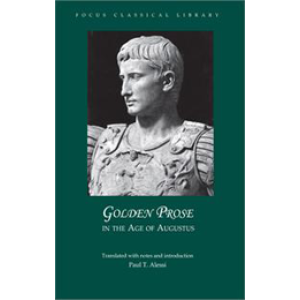
![]() Golden Prose in the Age of Augustus
Golden Prose in the Age of AugustusGolden Prose in the Age of Augustus is an anthology containing fresh, accurate and readable translations of the seven great prose writers from the Augustan period and covers a broad range of prose writing with introduction, maps, chronology, glossary, bibliography and notes.
Learn More -
![]() Medicine on Trial
Medicine on TrialThrough close examination of legal, historical, and medical sources, this volume sheds light on the evolution of U.S. law as it bears on bio-ethical issues, advances in medical technology, and the changing role of medicine in the American courtroom during the last 150 years. In doing so, it provides a clear, accessible introduction to such major medical and legal controversies as the "right to die," assisted suicide, bioengineering, reproductive rights, and DNA testing. An extensive collection of important documents is included, along with a glossary of key people, events, and concepts; a chronology; a table of cases cited; an annotated bibliography; and a comprehensive index.
Learn More -
![]() A Debate on Jewish Emancipation and Christian Theology in Old Berlin
A Debate on Jewish Emancipation and Christian Theology in Old Berlin"One of the most fascinating and, indeed, seminal debates in the protracted struggle of German Jewry to gain full citizenship and civic equality. As the translators make clear in their learned and generally lucid Introduction, this debate illuminates the enduring difficulty of modern nation states to establish a civic society that is, if not religiously neutral, at least inclusive. . . . It will surely enter the canon of standard works in the study of modern Jewish history."
Learn More
—Paul Mendes-Flohr, Hebrew University -
![]() The Human Body on Trial
The Human Body on TrialSince the mid-nineteenth century, the U.S. courts have attempted, in a series of landmark cases, to resolve bitter conflicts over an individual’s right to bodily autonomy. In this introductory volume, Lynne Curry draws on close readings of U.S. Supreme Court and other twentieth-century legal decisions, supporting case materials, public health records, and legal and medical theories to trace the ways in which the courts’ rulings have shaped the development of such controversial issues as mandatory vaccination, abortion and the right to die.
Learn More -
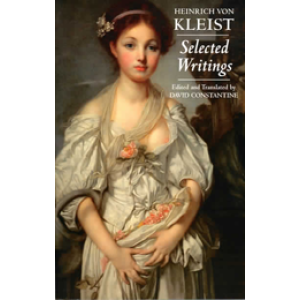
![]() Kleist: Selected Writings
Kleist: Selected Writings“If ever a literary work was a sleep of reason, bruised by menacing shapes, it is Kleist’s. He was one of the first of a line of German writers whose inwardness is so intense it seems to dissolve the weak bonds of his society. . . . Even as order and paternalism struggled to assert themselves in the private and public life of the nineteenth century, Kleist was introducing scenes of mob violence, cannibalism, and less than benevolent fathers. . . . David Constantine, a distinguished poet and Germanist, and a translator of Hölderlin, has taken pains to give us a literary Kleist, ‘a writer we cannot do without.’ . . . This book, containing all the stories and three key plays, provides a compelling view of a misfit genius who, in one of his last notes, remarked ‘the world is a strange set-up.’”
Learn More
—Iain Bamforth, The Times Literary Supplement -
![]() Republic (Reeve Edition)
Republic (Reeve Edition)"Reeve's new translation of Republic is the one to order for students. . . . Reeve draws on his thorough understanding of Plato's central work to provide an informed translation and properly brief supporting apparatus. A highlight is the concise, substantive Introduction that usefully encapsulates much of Reeve's own scholarship." —P.W. Wakefield, CHOICE
"Taking full advantage of S. R. Slings' new Greek text of the Republic, Reeve has given us a translation both accurate and limpid. Loving attention to detail and deep familiarity with Plato's thought are evident on every page. Reeve's brilliant decision to cast the dialogue into direct speech produces a compelling impression of immediacy unmatched by other English translations currently available." —Lloyd P. Gerson, University of Toronto
Learn More -
![]() Annals
Annals"An elegant addition to Tacitean scholarship. . . . The appendices are comprehensive and extremely useful for students, covering political and military terms that are cross-referenced to the text, the deployment of the army which can be confusing in the Annals, Rome, geographical and tribal names, and maps as well as a good index of names. . . . This translation has many eminently practical features, including clear layout, the use of footnotes, and numbering of the text. . . . The Introduction is very accessible and, coupled with the text, will be very useful for students."
Learn More
—Alisdair Gibson, Journal of Classics Teaching -
![]() Sunjata
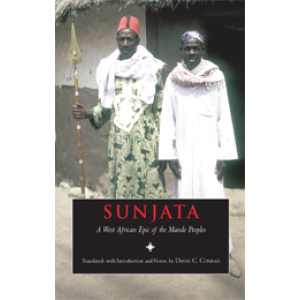
Sunjata"Thanks to his careful editing and translating of Condé's narrative, Conrad offers a highly readable version of the epic that is about a third of its original length. The translation communicates not only the poetic qualities and the essential events of the Sunjata legend but also the master bard's performance values. Thus, this rendering will fascinate those who already know the story and culture and those coming to the epic for the first time. Conrad provides an excellent introduction to Mande oral tradition, the role of the griot, and the Manding belief system. Though he makes no claim for this as the complete scholarly edition, he does provide helpful scholarly notes, a glossary, and a good bibliography. . . . Summing up: Highly recommended." —L. W. Yoder, CHOICE
Learn More -
![]() Lingua Latina: Latine Doceo: A Companion for Instructors
Lingua Latina: Latine Doceo: A Companion for InstructorsLingua Latina Latine Doceo is designed to provide background to the methodology and philosophy of the Lingua Latina series. It includes the prefaces of many earlier editions and to some of the worldwide editions of Lingua Latina. It also includes a wealth of teaching tips and strategies for the book as a whole and for each of the specific chapters in the first book. It is an invaluable for instructors at colleges, schools and at home.
Learn More -
![]() Spinoza's Theologico-Political Treatise
Spinoza's Theologico-Political TreatiseA complete translation in English of this modern text, with substantive apparatus to allow the student and serious reader to grapple in a meaningful way with this seminal text. The text includes ample footnotes, Spinoza's annotations, an interpretative essay, glossary and other indices.
Learn More -
![]() Apprentissage du cinéma français
Apprentissage du cinéma françaisApprentissage du cinema francais is an introduction to French cinema, in French, for American college students. This text includes the history of the origins of French film, an explanation of how to analyze a film, a lexicon of French cinema terms, and an analysis of 17 major masterpieces of French filmmaking. A parallel English version of this text, French Cinema: The Student's Book, is also available, so the same course can be taught to students of French culture as well as students of French language.
Additional Resources: Apprentissage du cinema francais Companion website.
Learn More -
![]() The Founding of a Nation
The Founding of a Nation"This wonderfully rich volume challenges those who claim that political history is arid, narrow, or worse, irrelevant to our own concerns. Jensen's study explores popular political mobilization on the eve of American independence. It reconstructs the complex decisions that slowly, often painfully transformed a colonial rebellion into a genuine revolution. Jensen's well-paced narrative never loses sight of the ordinary men and women who confronted the most powerful empire in the world."
Learn More
—T.H. Breen, William Smith Mason Professor of American History, Northwestern University -
![]() Principles of Political Economy: With Some of Their Applications to Social Philosophy (Abridged)
Principles of Political Economy: With Some of Their Applications to Social Philosophy (Abridged)Stephen Nathanson’s clear-sighted abridgment of Principles of Political Economy, Mill’s first major work in moral and political philosophy, provides a challenging, sometimes surprising account of Mill’s views on many important topics: socialism, population, the status of women, the cultural bases of economic productivity, the causes and possible cures of poverty, the nature of property rights, taxation, and the legitimate functions of government. Nathanson cuts through the dated and less relevant sections of this large work and includes significant material omitted in other editions, making it possible to see the connections between the views Mill expressed in Principles of Political Economy and the ideas he defended in his later works, particularly On Liberty. Indeed, studying Principles of Political Economy, Nathanson argues in his general Introduction, can help to resolve the apparent contradiction between Mill’s views in On Liberty and those in Utilitarianism, making it a key text for understanding Mill’s philosophy as a whole.
Learn More -
![]() The Vocation Lectures
The Vocation Lectures"[Owen and Strong] beautifully weave together the historical, philosophical, academic and personal circumstances that shaped Weber's world-view and these efforts reward the reader with a nuanced and thorough understanding. . . . Students, and even established academics, will benefit tremendously from this new edition. Rating: *****"
Learn More
—Jeffrey Roberts, University of Kent, in Political Studies Review -
![]() Another Philosophy of History and Selected Political Writings
Another Philosophy of History and Selected Political Writings"Evrigenis and Pellerin should be congratulated for editing this volume, which publishes Herder's smaller and early work, Another Philosophy of History, including six smaller essays on the same topic. This volume offers the opportunity to introduce Herder to students in a survey of the history of political thought, along with his better-known contemporaries such as Rousseau, Kant, Burke, and Hegel, as well as their predecessors Machiavelli, Locke, and Hobbes. Evrigenis and Pellerin's edition gives the reader a fine introduction to Herder and his thought. The selections of the smaller essays are very helpful in allowing someone unfamiliar with Herder to see how his important thoughts could be responsible in shaping how thinkers in the later half of the 19th Century thought about the nation and the role of politics in general. Rating: * * * * *"
Learn More
—Clifford Angell Bates, Jr., Political Studies Review -
![]() The Mangy Parrot
The Mangy Parrot“Finally, an engaging, full-fledged rendition of the first Latin American novel ever—and still one of the savviest. José Joaquin Fernández de Lizardi invented Mexico . . . and David Frye shows us how.”
Learn More
—Ilan Stavans -
![]() Memorable Deeds and Sayings
Memorable Deeds and Sayings“The publication of Henry John Walker’s translation of Memorable Deeds and Sayings ensures a wider readership for Valerius’ great compendium of Greco-Roman lore. Of the many merits of Walker’s translation, I would cite especially its readability. Walker has produced a version of Valerius Maximus that reflects the original’s wide sweep, but in Walker’s hands Valerius tells a seamless story in multiple parts. This translation will be easily used by students in the classroom and by scholars. It is a substantial accomplishment: a superior new translation that renders a monument of Latin literature accessible in every way to multiple audiences.”
Learn More
—Joseph Pucci, Brown University -
![]() Neoplatonic Philosophy
Neoplatonic PhilosophyThe most comprehensive collection of Neoplatonic writings available in English, this volume provides translations of the central texts of four major figures of the Neoplatonic tradition: Plotinus, Porphyry, Iamblichus, and Proclus. The general Introduction gives an overview of the period and takes a brief but revealing look at the history of ancient philosophy from the viewpoint of the Neoplatonists. Historical background—essential for understanding these powerful, difficult, and sometimes obscure thinkers—is provided in extensive footnotes, which also include cross-references to other works relevant to particular passages.
Learn More -
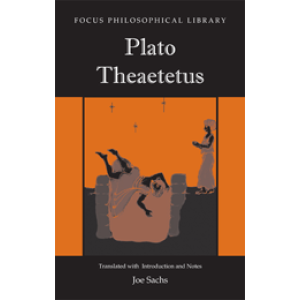
![]() Theaetetus (Sachs Edition)
Theaetetus (Sachs Edition)"Sachs's outstanding new translation of Plato's Theaetetus is lucid, readable, and faithful to the original. More than that, it is a translation for the thoughtful reader. Through his striking translations of key terms, Sachs compels the reader to think more deeply about Plato's intent. He shows that Plato's return within the dialogue to the same word or to its cognates is no accident but signals a philosophical trope in Plato's thought. The work's introduction avoids presenting a stock summary of the topics covered or a rehearsal of the failed arguments. Instead, it makes the case for regarding the Theaetetus as Plato's 'missing' work on The Philosopher. Through the 'variety of attempts, errors, new beginnings, and false turns that the dialogue presents,' Sachs argues, Socrates provokes his interlocutors and Plato's readers to strive to cross the boundary between mere opinion and the kind of thinking that is philosophy."
Learn More
—Roslyn Weiss, Lehigh University