The Hackett Signature Editions Collection Featuring Premium Hardcovers of Hackett Classics - Learn More Here.

Browse All
-
![]() Readings In Modern Philosophy, Vol. 1
Readings In Modern Philosophy, Vol. 1This anthology offers the key works of Descartes, Spinoza, and Leibniz in their entirety or in substantial selections, along with a rich selection of associated texts by other leading thinkers of the period.
Learn More -
![]() Three Conversations about Knowing
Three Conversations about KnowingIn Jay Rosenberg’s lively and accessible introductory dialogue, four bright students explore a number of the central topics and problems of contemporary epistemology—skepticism and certainty, internalism and externalism, foundationalism and coherentism, and the nature and limits of justification. Their wide-ranging discussion highlights many of the vivid and imaginative thought-experiments that have shaped both classical and contemporary reflections on the scope and character of our knowledge of the world.
Learn More -
![]() Candide
Candide"Along with a brisk and very readable rendition of the text, this edition provides the material necessary for understanding the point of Voltaire’s satire. Wootton’s Introduction gives an excellent account of the dispute over optimism, and the supplementary texts show both the opposing points of view in this dispute, and its development on other texts of Voltaire."
Learn More
—Christopher J. Kelly, co-editor, The Collected Writings of Rousseau -
![]() Treatise on Law
Treatise on Law“A convenient one-volume translation of the essential texts from the Summa Theologiae on law. Regan’s translation is careful, idiomatic, and reliable. With its good Introduction and explanatory notes, this volume should prove to be a popular one among teachers and students of politics and ethics, not to mention those working in medieval philosophy.”
Learn More
—Brian Davies, author of The Thought of Thomas Aquinas, Oxford, 1992 -
![]() Philosophical and Theological Writings
Philosophical and Theological WritingsThis volume brings together Rosenzweig’s central essays on theology and philosophy, including two works available for the first time in English: the conclusion to Rosenzweig’s book Hegel and the State, and Rosenzweig’s famous letter to Rudolph Ehrenberg known as the “Urzelle of the Star of Redemption,” an essential work for understanding Rosenzweig, Weimar theology and philosophy, and German idealism and the existential reaction of the period. Additional selections are presented in new or revised translations. Introduction and notes by Franks and Morgan set Rosenzweig’s works in context and illuminate his role as one of the key thinkers of the period.
Learn More -
![]() Knowledge, Mind, and the Given
Knowledge, Mind, and the Given“Sellars’ s argument in EPM is enormously rich, subtle, and compelling. It is also, for the uninitiated, extraordinarily dense. Willem deVries and Timm Triplett’s comprehensive commentary Knowledge, Mind, and the Given provides a much needed guide. Beginning with a general overview to introduce some main themes and difficulties, deVries and Triplett take the reader step by step through the sixteen parts of the essay, providing at each stage necessary background, illuminating connections, and insightful clarifications of the main lines of argument. . . . deVries and Triplett have written a fine introduction to Sellars’s most important work.”
Learn More
—Danielle Macbeth, The Philosophical Review -
![]() Materialism and the Mind-Body Problem (Second Edition)
Materialism and the Mind-Body Problem (Second Edition)Expanded and updated to include a wide range of classic and contemporary works, this new edition of David Rosenthal's anthology provides a selection of the most important and influential writings on materialism and the mind-body problem.
Learn More -
![]() Homeric Hymns (Shelmerdine Edition)
Homeric Hymns (Shelmerdine Edition)This is a collection of the standard texts of ancient Greek which are important components of what we know about Greek myth, religion, language and culture. All of the works collectively known as the Homeric Hymns are collected and translated here in their entirety, and the work includes ample notes and an introduction to provide information on the works' historic importance, a chronological table, genealogical chart, maps of Greece and the Aegean Islands, and illustrations of vase paintings with mythological themes.
Learn More -
![]() Democracy in America
Democracy in America"A handy paperback edition offered primarily to teachers and students who can make no pretense of reading the entirety of the large work, but who want to sample some of its chief delights. . . . [Grant gives us an] exemplary translation . . . marked above all by great accuracy and fidelity to Tocqueville’s text. . . . Kessler’s editor’s Introduction is a model introduction to a classic text for today’s students. It is clearly written, compact (without being too short or dense), and nicely structured. . . . A tour—and translation—well worth the price of admission." —Paul Seaton, Perspectives on Political Science
Learn More -
![]() Clouds (Meineck Edition)
Clouds (Meineck Edition)"Since the appearance of Sommerstein’s very successful literal translation less than twenty years ago, there have been at least five further new published attempts at rendering the play into English. It is certainly a bold enterprise to introduce yet one more translation onto the scene, but Peter Meineck has risen well to the challenge. The translation is straightforward and idiomatic, as well as well-paced and funny. . . Ian Storey’s Introduction is perfect for undergraduates.” —Max Nelson, Bryn Mawr Classical Review
Learn More -
![]() Philosophical Essays and Correspondence
Philosophical Essays and CorrespondenceA superb text for teaching the philosophy of Descartes, this volume includes all his major works in their entirety, important selections from his lesser known writings, and key selections from his philosophical correspondence. The result is an anthology that enables the reader to understand the development of Descartes’s thought over his lifetime. Includes a biographical Introduction, chronology, bibliography, and index.
Learn More -
![]() Readings in Classical Political Thought
Readings in Classical Political Thought“A distinctive and superior collection of texts suitable for both graduate and undergraduate courses. There is nothing like it elsewhere. Steinberger’s commentary is succint, accurate, and very useful.”
Learn More
—Dr. Melvin Kulbicki, York College of Pennsylvania -
![]() Virtue, Nature, and Moral Agency in the Xunzi
Virtue, Nature, and Moral Agency in the XunziThis volume collects some of the most accessible and important contemporary essays on the thought of Xunzi, with an Introduction that provides historical background, philosophical context, and relates each of the selections to Xunzi's philosophy as a whole and to the themes of virtue, nature, and moral agency. These themes are also discussed in relation to Western philosophical concerns.
Learn More -
![]() Between Kant and Hegel
Between Kant and HegelThis volume fills a lamentable gap in the philosophical literature by providing a collection of writings from the pivotal generation of thinkers between Kant and Hegel. It includes some of Hegel’s earliest critical writings—which reveal much about his thinking before the first mature exposition of his position in 1807—as well as Schelling’s justification of the new philosophy of nature against skeptical and religious attack. This edition contains George di Giovanni’s extensive corrections, new preface, and thoroughly updated bibliography.
Learn More -
![]() Thirty-Two Stories
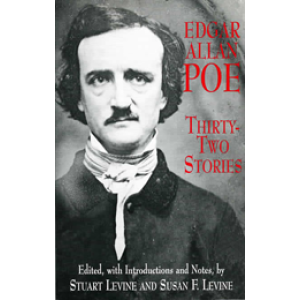
Thirty-Two Stories"Thirty-Two Stories appears in an attractive and readable format, with the 1848 ‘Ultima Thule’ daguerrotype of Poe featured prominently on the front cover. Gone are the double-column pages, endnote style, and thematic organization of material that made the 1976 edition clumsy. Instructors and students will not have to battle with an arbitrary conceptual framework, since the stories in the new edition are presented in order of their first publication, and they will find the annotations more accessible at the bottom of the page. The typefaces are larger and bolder and many of the illustrations that graced the 1976 edition have been enlarged. . . . For college instructors and general readers interested in a fully annotated selection of Poe’s tales, attractively presented in a one-volume paperback edition, Thirty-Two Stories is the best thing on the market.”
Learn More
—Bruce I. Weiner, The Edgar Allan Poe Review -
![]() The Idea of Race
The Idea of RaceA survey of the historical development of the idea of race, this anthology offers pre-twentieth century theories about the concept of race, classic twentieth century sources reiterating and contesting ideas of race as scientific, and several philosophically relevant essays that discuss the issues presented. A general Introduction gives an overview of the readings. Headnotes introduce each selection. Includes suggested further readings.
Learn More -
![]() Timaeus (Zeyl Edition)
Timaeus (Zeyl Edition)“Donald Zeyl’s fresh and faithful translation and his lucid, comprehensive commentary will bring the sublime Timaeus to life for contemporary students of cosmology, metaphysics, history of science, and philosophy.”
Learn More
—Sarah Broadie, Princeton University -
![]() Confucian Moral Self Cultivation (Second Edition)
Confucian Moral Self Cultivation (Second Edition)A concise and accessible introduction to the evolution of the concept of moral self-cultivation in the Chinese Confucian tradition, this volume begins with an explanation of the pre-philosophical development of ideas central to this concept, followed by an examination of the specific treatment of self cultivation in the philosophy of Kongzi ("Confucius"), Mengzi ("Mencius"), Xunzi, Zhu Xi, Wang Yangming, Yan Yuan and Dai Zhen. In addition to providing a survey of the views of some of the most influential Confucian thinkers on an issue of fundamental importance to the tradition, Ivanhoe also relates their concern with moral self-cultivation to a number of topics in the Western ethical tradition. Bibliography and index are included.
Learn More -
![]() Leibniz and Clarke: Correspondence
Leibniz and Clarke: CorrespondenceFor this new edition, Roger Ariew has adapted Samuel Clarke’s edition of 1717, modernizing it to reflect contemporary English usage. Ariew’s introduction places the correspondence in historical context and discusses the vibrant philosophical climate of the times. Appendices provide those selections from the works of Newton that Clarke frequently refers to in the correspondence. A bibliography is also included.
Learn More -
![]() Satyricon
Satyricon"[Ruden] has caught, better than any translator known to me, both the conversational patterns of Petronian dialogue and the camera-sharp specificity and color of the Satyricon's descriptive passages.... A quite extraordinary achievement against heavy odds."
Learn More
—Peter Green, The Los Angeles Times Book Review -
![]() Equality
EqualityOrganized around such themes as equality before the law, equality of opportunity, and equality of result, the selections included in this anthology range from Plato to the present, treating a topic of fundamental importance to political theory. North American rights only.
Learn More -
![]() Odyssey
Odyssey"[Lombardo] has brought his laconic wit and love of the ribald. . . . to his version of the Odyssey. His carefully honed syntax gives the narrative energy and a whirlwind pace. The lines, rhythmic and clipped, have the tautness and force of Odysseus' bow." —Chris Hedges, The New York Times Book Review
"The definitive English version of Homer for our time." —The Common Review: The Magazine of the Great Books Foundation
"Lombardo weaves his cherished idioms into important patterns of repetition and transformation so familiar to the telling of the Odyssey. . . . Above all, such familiar phrases serve to remind us of the oral character of the original Odyssey, providing the reader with an uncanny immediacy and relevance." —Christina Zwarg, The Bryn Mawr Classical Review
Learn More -
![]() Oedipus Tyrannus
Oedipus Tyrannus"A clear, vigorous, spare, actable translation, and with it, excellent apparatus (Intro., notes, bibliography); all in a slim and affordable volume. I will use when I next teach Oedipus. Hackett is an invaluable resource!” —Rachel Hadas, Rutgers University
"I have enjoyed all of the recent Hackett editions of translations of Greek literature and "Oedipus Tyrannus” is certainly no exception. Meineck and Woodruff got things just right, from employing "Tyrannus” instead of "Rex” in the title (as has become traditional, though it lends an erroneous sense to the play from the outset) to Woodruff’s very fine and accessible Introduction to the suspenseful, poetic and powerful rendering of the play itself. Meineck’s theatrical sensibility and knowledge are evident, yet the text never becomes too "stagey” nor wanders far from the Greek. I will definitely use this text along with other terrific Hackett editions in my courses." —Lisa Rengs George, Arizona State University
Learn More -
![]() Lingua Latina: Pars II: Instructions
Lingua Latina: Pars II: InstructionsInstructions is student guide in English for Lingua Latina: Part II: Roma Aeterna and provides an overview of the chapter readings and grammar found in each chapter.
Learn More -
![]() Latin Prose Composition
Latin Prose CompositionThis classic text has been reset and reprinted based on the classic North and Hillard text. It includes all common words and constructions, special vocabularies, rules for the orders of words, list of synonyms and prepositional phrases, and more. Course Instructors: An electronic (PDF) answer key available to qualified course instructors who have adopted this text for their course, (not available for sale to students). If you have adopted this text, click here to request a copy of the answer key.
Learn More -
![]() Magic, Reason and Experience
Magic, Reason and ExperienceThis study of the origins and progress of Greek science focuses especially on the interaction between scientific and traditional patterns of thought from the sixth to the fourth century BC. It begins with an examination of how particular Greek authors deployed the category of "magic," sometimes attacking its beliefs and practices; these attacks are then related to their background in Greek medicine and philosophical thought. In his second chapter Lloyd outlines developments in the theory and practice of argument in Greek science and assesses their significance. He next discuses the progress of empirical research as a scientific tool from the Presocratics to Aristotle. Finally, he considers why the Greeks invented science, their contribution to its history, and the social, economic, ideological and political factors that had a bearing on its growth.
Learn More -
![]() Science, Folklore and Ideology
Science, Folklore and Ideology"[A] model of eclectic methodology, giving a fascinating picture of ancient views of animals, man, and medicine at the interface of popular belief and philosophy, of folklore and science, of ideology and criticism."
Learn More
—Helen King, Medical History -
![]() The Persian Letters (Healy Edition)
The Persian Letters (Healy Edition)Based on the 1758 edition, this translation strives for fidelity and retains Montesquieu’s paragraphing. George R. Healy’s Introduction discusses The Persian Letters as a kind of overture to the Enlightenment, a work of remarkable diversity designed more to explore a problem of great urgency for eighteenth century thought than to resolve it: that of discovering universals, or at least the pragmatic constants, amid the diversity of human culture and society, and of confronting the proposition that there are no values in human relationships except those imposed by force or agreed upon in self-interested conventions.
Learn More -
![]() War and the Intellectuals
War and the IntellectualsAlthough he died at the age of thirty-two, Randolph Bourne (1886-1918) left a body of writing on politics, culture, and literature that made him one of the most influential public intellectuals of the twentieth century, and a hero of the American left. The twenty-eight essays of this volume—among them, “War and the Intellectuals”, the analysis of the warfare state that made Bourne the foremost critic of American entry into World War 1, and “Trans-National America”, his manifesto for cultural pluralism in America — show Bourne at his most passionate and incisive as they trace his search for the true wellsprings of nationalism and American culture.
Learn More -
![]() An Introduction to Metaphysics
An Introduction to Metaphysics“With its signal distinction between ‘intuition’ and ‘analysis’ and its exploration of the different levels of Duration (Bergson’s term for Heraclitean flux), An Introduction to Metaphysics has had a significant impact on subsequent twentieth century thought. The arts, from post-impressionist painting to the stream of consciousness novel, and philosophies as diverse as pragmatism, process philosophy, and existentialism bear its imprint. Consigned for a while to the margins of philosophy, Bergson’s thought is making its way back to the mainstream. The reissue of this important work comes at an opportune time, and will be welcomed by teachers and scholars alike.”
Learn More
—Peter A. Y. Gunter, University of North Texas -
![]() Dialogue on Good, Evil, and the Existence of God
Dialogue on Good, Evil, and the Existence of God"Perry’s work is an engaging, highly readable introduction to the problem of natural and moral evil with respect to belief in an omniscient, omnipotent, and morally perfect God. This dialogue would work well as a supplement in either an introduction to philosophy or philosophy of religion course. . . . Perry is to be commended for taking a very difficult subject and making it accessible to a more general audience.”
Learn More
—Jeff Wisdom, Biola University -
![]() Plautus and Terence: Five Comedies
Plautus and Terence: Five Comedies"This is a book worthy of high praise. . . . All versions are exceedingly witty and versatile, in verse that ripples from one’s lips, pulling all the punches of Plautus, the knockabout king of farce, and proving that the more polished Terence can be just as funny. Accuracy to the original has been thoroughly respected, but look at the humour in rendering Diphilius’ play called Synapothnescontes as Three’s a Shroud. . . . Students in schools and colleges will benefit from short introductions to each play, to Roman stage conventions, to different types of Greek and Roman comedy, and there is a note on staging, with a diagram illustrating a typical Roman stage and further diagrams of the basic set for each play. The translators have paid more attention to stage directions than is usually given in translations, because they aim to show how these plays worked. This is a book to be used and enjoyed.”
Learn More
—Raymond J. Clark, The Classical Outlook -
![]() Bacon: Selected Philosophical Works
Bacon: Selected Philosophical Works"It is a great service to teaching at both the graduate and undergraduate level to have such a fine collection of Bacon’s texts available with an introduction by Rose-Mary Sargent. This is the kind of “essential Bacon” we need for teaching purposes. I was particularly pleased to see the “Natural Histories” and New Atlantis included."
Learn More
—Phillip R. Sloan, University of Notre Dame -
![]() Discourse on Method and Meditations on First Philosophy (Fourth Edition)
Discourse on Method and Meditations on First Philosophy (Fourth Edition)This edition contains Donald Cress's completely revised translation of the Meditations (from the corrected Latin edition) and recent corrections to Discourse on Method, bringing this version even closer to Descartes's original, while maintaining the clear and accessible style of a classic teaching edition.
Learn More -
![]() On the Basis of Morality
On the Basis of Morality"Schopenhauer’s On the Basis of Morality deserves to be a standard text for courses in religious ethics. It doesn’t fit into the prevalent genealogies of virtue ethics and utilitarianism, thus reminding us of other genealogies (pessimism, Nietzsche, Buddhism). It poses fundamental questions about the monotheistic background to the dominant ethical systems of the day as virtually no other work does. I have found that reading it after an intensive study of Kant’s ethical and religious writings leads to fantastic discussions, which open the floor for great insights into the relation of religion and ethics.”
Learn More
—Mark Larrimore, Princeton University -
![]() Statesman (Rowe Edition)
Statesman (Rowe Edition)“The original publication of Rowe’s translation in 1995 was a landmark event in the study of this fascinating but enigmatic dialogue. Based on a careful and convincing revised Greek text, the contemporary English of this unpretentious, clear, and—above all—accurate revised version make it by far the best available. In fact, Rowe’s translation is now and will surely remain the only acceptable choice.”
Learn More
—John Cooper, Princeton University -
![]() The Good Life
The Good Life"I recently used The Good Life for my course Philosophy Through Film. I was pleasantly surprised by the development of the students' excitement for and interest in the assigned readings. Throughout the semester the students commented on the helpfulness of the editor's introductions for each reading, and they became increasingly interested in philosophy. The book was a huge success!" —Megan Altman, Florida Gulf Coast University
Learn More -
![]() Critique of Pure Reason, Abridged
Critique of Pure Reason, Abridged“Eric Watkins has done a fine job of abridging the Critique to a manageable size while preserving those sections most often assigned in a survey course, including enough of the Analytic to provide a continuous argument. Students will get a good sense of the whole from the parts he includes. I recommend it enthusiastically.”
Learn More
—Kenneth R. Winkler, Wellesley College -
![]() Metaphysical Elements of Justice (Second Edition)
Metaphysical Elements of Justice (Second Edition)This volume offers the complete text of Kant’s Metaphysics of Morals, Part I, translated by John Ladd, along with Ladd’s illuminating Introduction to the first edition, expanded to include discussion of such issues as Kant’s conception of marriage and its relevance to his view of women. An updated bibliography, glossary, and index are also provided.
Learn More -
![]() Introduction to the Philosophy of Science
Introduction to the Philosophy of Science“The overall standard of the volume is extraordinarily high, and I have no doubt that this will be the text in philosophy of science for a couple of decades. The coverage is remarkable both in breadth and depth. . . . an amazingly good book. . . . written by an all-star team. . . . “
Learn More
—Philip Kitcher, Columbia University -
![]() On Faith and Reason
On Faith and Reason"Stephen Brown of Boston College has done an extremely useful service in providing this anthology of appropriate readings on Aquinas and his views on ‘faith and reason.’ The selections are intelligently chosen; the introduction to the book is excellent, especially the section locating Aquinas over against Augustine."
Learn More
—Ian Markham, Theological Book Review -
![]() On Human Nature
On Human Nature“The substantial Introduction and the selection have been done . . . extremely well. The Introduction makes illuminating connections between the thought of Aquinas and Descartes. . . . The book’s usefulness is enhanced by the bibliography.”
Learn More
—Ian Markham, Theological Book Review -
![]() Utopia
Utopia“In addition to its elegant and precise translation of Utopia, this edition offers the prefatory material and postscripts from the 1518 edition, and More’s letter to Giles form the 1517 edition. Mr. Wootton has also added Erasmus’s ‘The Sileni of Alcibiades,’ which is crucial for the interpretation he gives in his Introduction of the many ambiguities and contradictions in More’s text as well as his life. The Introduction is a most valuable guide for understanding this man who was a proponent of toleration and a persecutor of heretics, a courtier full of worldly ambition ending as a fearless martyr. The contradictions of the man translated into a complicated and contradictory historiography to which Mr. Wootton’s Introduction is a most intelligent guide. A welcome addition to the More literature.”
Learn More
—J. W. Smit, Professor of History, Columbia University -
![]() Considerations on the Causes of the Greatness of the Romans and their Decline
Considerations on the Causes of the Greatness of the Romans and their Decline“It is wonderful to have David Lowenthal’s splendid translation of Montesquieu’s Considerations on the Causes of the Greatness of the Romans and their Decline back in print. This neglected masterpiece deserves attention from all who are concerned with self-government—whether their focus is on history or on its prospects in our own time.”
Learn More
—Paul A. Rahe, University of Tulsa -
![]() Lingua Latina: Indices
Lingua Latina: IndicesIndices contains list of Roman consuls and their triumphs (Fasti consulares and Fasti triumphales), a name index (Index nominum) and a word index (Index vocabulorum) of all the words used in both parts of the course. An integral supplement to Roma Aeterna.
Learn More