The Hackett Signature Editions Collection Featuring Premium Hardcovers of Hackett Classics - Learn More Here.

Browse All
-
![]() Daily Life in Ancient Rome
Daily Life in Ancient Rome"There’s a tremendous amount to admire in Brian Harvey’s new Daily Life in Ancient Rome: A Sourcebook. And it stands out as a superior work against all the competing texts. Specifically, much careful thought, attention, and effort has gone into ensuring that the work is ideal for students and interested non-professionals. The texts are all translated into clear, accurate English. They are also thoroughly contextualized, both in categories as well as individually. This insistence on the historicity of the sources sets the book apart from the norm. The book also benefits from Harvey’s extensive, almost encyclopedic, knowledge of inscriptions, which are used as important sources along with the literary excerpts. Finally, the many photos by the author himself augment the texts and are themselves analyzed as unique sources."
Learn More
—Steven L. Tuck, Miami University, Ohio -
![]() Lying and Truthfulness
Lying and TruthfulnessThis anthology provides a set of distinctive selections that explore both Western and Eastern views of lying and truthfulness, including selections from Augustine, Grotius, Aristotle, the Mahābhārata, Confucius, Kant, Plato, Sunzi, Han Feizi, Aquinas, the Lotus Sutra, Hobbes, Hume, Locke, Bacon, Nietzsche, and more.
Hackett Readings in Philosophy is a versatile series of compact anthologies, each devoted to a topic of traditional interest in philosophy or political theory. Selections are chosen for their accessibility, significance, and ability to stimulate thought and discussion.
Learn More -
![]() The Hippocrates Code: Unraveling the Ancient Mysteries of Modern Medical Terminology
The Hippocrates Code: Unraveling the Ancient Mysteries of Modern Medical Terminology"Innovative, well-conceived, and with real pedagogical, intellectual, and historical value—a very rare combination of merits in the ocean of available options for teaching medical terminology. An additional advantage of the book is the engaging, down-to-earth style of presentation. The abundance of curious facts about ancient medical practice and modern day references will appeal to the savvy and to-the-point pre-med student who does not have much time for highfalutin speech but is nevertheless hungry for new, less well-known information. Wholeheartedly recommended."
—Svetla Slaveva-Griffin, Dept. of Classics, Florida State UniversityThe Hippocrates Code companion website: www.hippocratescode.com
Learn More -
![]() Metaphysics (Reeve Edition)
Metaphysics (Reeve Edition)Series: The New Hackett Aristotle
"C. D. C. Reeve adds to his already remarkable series of translations of Plato and Aristotle another stellar accomplishment: a full translation of Aristotle’s daunting Metaphysics. He has managed to present Aristotle’s often ungainly Greek into perfectly flowing English syntax without sacrificing the core meaning of the text. Any translator of Aristotle will recognize what an impressive achievement this is. All readers will benefit from the over 1,600 explicative notes accompanying the translation: Reeve has a discerning eye for determining what requires amplification for the purposes of understanding and an admirable gift for saying just as much as needs to be said in order to achieve it." —Christopher Shields, George N. Shuster Professor of Philosophy, University of Notre Dame
Learn More -
![]() Reason in the Balance (Second Edition)
Reason in the Balance (Second Edition)Unlike most texts in critical thinking, Reason in the Balance focuses broadly on the practice of critical inquiry, the process of carefully examining an issue in order to come to a reasoned judgment. Although analysis and critique of individual arguments have an important role to play, this text goes beyond that dimension to emphasize the various aspects that go into the practice of inquiry, including identifying issues and relevant contexts, understanding competing cases, and making a comparative judgment. Click here to view a PDF of the complete Table of Contents.
Learn More -
![]() Three Other Theban Plays
Three Other Theban PlaysThough now associated mainly with Sophocles’ Theban Plays and Euripides’ Bacchae, the theme of Thebes and its royalty was a favorite of ancient Greek poets, one explored in a now lost epic cycle, as well as several other surviving tragedies. With a rich Introduction that sets three of these plays within the larger contexts of Theban legend and of Greek tragedy in performance, Cecelia Eaton Luschnig’s annotated translation of Aeschylus’ Seven Against Thebes, Euripides’ Suppliants, and Euripides’ Phoenician Women offers a brilliant constellation of less familiar Theban plays—those dealing with the war between Oedipus’ sons, its casualties, and survivors.
Learn More -
![]() Exemplary Novellas
Exemplary Novellas"Michael Harney's translation of Cervantes's Novelas ejemplares is the most authoritative and accurate rendering of Cervantes's classic tales to date and promises to be the translation against which future translations will be measured. Harney skillfully portrays the nuanced and complex world of the Exemplary Novellas in a translation that is faithful to the letter and spirit of the original. An erudite and informative Introduction presents a general overview of sixteenth- and seventeenth-century Spain, the life of Cervantes, and a detailed analysis of the Exemplary Novellas. Before each story, Harney provides a brief synopsis, an analysis of the novella’s themes, motifs, and generic affinities, and a bibliography for further reading. In addition, numerous footnotes complement the background information Harney provides in the Introduction and prior to each novella."
Learn More
—Michael J. McGrath, Georgia Southern University -
![]() The Description of the World
The Description of the World"Marco Polo’s account provided both what was thought to be a reliable guide to East Asia—Columbus carried with him a heavily annotated copy of Marco Polo’s work during his own expedition to the Americas—and an intriguingly fantastical account that for centuries has continued to fuel the imagination of poets and artists. Kinoshita’s superb, groundbreaking translation brilliantly renders into modern English this crucial text of the Middle Ages. Indispensable in the undergraduate and graduate classroom, The Description of the World will also appeal to a wide range of readers curious about the medieval encounter of East and West."
Learn More
—Suzanne Conklin Akbari, University of Toronto -
![]() Two Treatises of Government
Two Treatises of GovernmentDesigned to serve the needs of students confronting Locke’s political thought for the first time, Lee Ward’s edition offers a faithful text of Two Treatises of Government with modernized spelling and punctuation. Its Editor’s Introduction outlines the main arguments of these works, illustrates the conceptual thread uniting the less frequently read First Treatise with the far more famous Second Treatise, and locates Locke’s work amid the turbulent constitutional battles of 1690s England. Helpful notes at the foot of the page, a Thematic Index, and an up-to-date Bibliography are also provided.
Learn More -
![]() Timaeus (Kalkavage, Second Edition)
Timaeus (Kalkavage, Second Edition)"Kalkavage’s translation and commentary provide invaluable assistance to students of Plato’s Timaeus. The translation is accurate, but readable. And Kalkavage packs a great deal of relevant historical, musical, and mathematical information into his notes."
Learn More
—Catherine Zuckert, Nancy Reeves Dreux Professor of Political Science, University of Notre Dame -
![]() Complete Poems and Fragments
Complete Poems and Fragments"In this expanded edition of his distinguished Sappho: Poems and Fragments (2002), Stanley Lombardo offers over 100 fragments not included in the original edition, as well as the new poems discovered in 2004 and 2014. His translation of this latter material yields fresh insights into Sappho’s representations of old age, two of her brothers, and her special relationship with Aphrodite. Pamela Gordon’s engaging, balanced, and informative Introduction has been revised to incorporate discussion of the new fragments, which subtly alter our previous understanding of the archaic poet’s corpus. Complete Poems and Fragments also offers a useful updated bibliography, as well as a section on ‘Elegiac Sappho’ that presents the reception of the Lesbian poet in later Greek and Latin elegiac poems. A wonderful find for any Greekless reader searching for a complete and up-to-date Sappho."
Learn More
—Patricia A. Rosenmeyer, Department of Classics, University of Wisconsin-Madison -
![]() Writing Online: Rhetoric for the Digital Age
Writing Online: Rhetoric for the Digital Age"Contrary to the old adage about finding new names for old things, Writing Online: Rhetoric for the Digital Age gives new life and new meaning to old names. The book and its companion website transform ancient rhetoric as a process of oral composition—invention, arrangement, memory, style, and delivery—into a digital rhetoric, a dynamic process of writing for the World Wide Web: dynamic because it shows not only how to write in a Web-based medium but, more importantly, how to learn and adapt to a medium that is constantly evolving and changing. Unlike conventional books that provide specific solutions to specific problems, Writing Online reenacts the process of solving Web-based writing problems, explaining everything from how to create a simple web page to how to develop a sophisticated content management system and everything in between: HTML, HTML5, CSS, JavaScript, PHP, and much more. . . ." —James P. Zappen, Professor, Department of Communication and Media, Rensselaer Polytechnic Institute
Companion website: www.digital-rhetor.com
Learn More -
![]() Matteo Ricci and the Catholic Mission to China, 1583–1610
Matteo Ricci and the Catholic Mission to China, 1583–1610Series: Passages: Key Moments in History
"A highly accessible introduction to the history of the Jesuits in China. Hsia offers a clear and concise overview of the key figures in this crucial episode of intercultural encounter: the first intellectual and cultural meeting of Europeans and Chinese. . . . In addition to providing a broad vision of the European and Asian contexts for Ricci’s work in the introductory essay, Hsia gives a valuable selection of documents from both Chinese and Western sources in translation . . . [including] items that genuinely demonstrate the two sides of this cultural exchange."
—Liam Matthew Brockey, Professor of History, Michigan State University
Learn More -
![]() Shackles of Iron: Slavery Beyond the Atlantic
Shackles of Iron: Slavery Beyond the AtlanticSeries: Critical Themes in World History
"Gordon’s survey of the topic makes it clear that slavery in the Americas can be understood much better if we put it in this larger context, in terms of both time and place. His chapters on East African and Mediterranean slavery are especially valuable, since these were contemporary with so-called Atlantic slavery and can provide students with valid points of comparison, revealing both the similarities and the variable nature of early-modern bondage. The final chapter is especially timely, reminding readers that much of what we think of as enslavement hasn’t really gone away, but simply slipped below the radar of the world media. All in all, Gordon makes it clear that, though it has arisen in different guises and at many different times and places, slavery has been and remains deeply rooted in human society. A rewarding introduction for anyone looking to better understand slavery as a world-wide institution."
Learn More
—Robert Davis, The Ohio State University -
![]() The Essential Douglass
The Essential Douglass"For years I have wanted a compact, carefully edited collection of Frederick Douglass’ writings and speeches spanning his whole career—from the antebellum years to the Civil War and Reconstruction to the retreat from racial democracy in the 1870s, ’80s, and ’90s. Finally, in Nicholas Buccola’s expertly edited The Essential Douglass: Selected Writings & Speeches, I have it. Buccola has done teachers and scholars of American political thought a tremendous service by making a truly representative selection of Douglass’ achievement available in an affordable volume. I am excited to assign this book to my students and share with them the full breadth of Douglass’ intellectual fire." —Jack Turner, University of Washington
Download a PDF of the Table of Contents.
Learn More -
![]() La culture francophone
La culture francophoneLa culture francophone: Le monde à l’écoute is an innovative textbook designed for intermediate to advanced French courses that aim to introduce the Francophone world and its cultures in an authentic context. From Africa to the Caribbean, to Quebec, to Europe, it explores selected Francophone histories and geographies through a multitude of fascinating avenues, including: lively overviews of French-speaking countries, regions, or populations; excerpts of classic Francophone texts; discussions of prominent Francophone films (films not included, but readily available from numerous vendors), culinary dishes, music, public figures, vignettes of everyday life, and more. An array of engaging exercises offer rich opportunities to build language skills, as students become active participants in both language learning and Francophone culture itself. North American Rights Only.
Click here for additional online audio resources and the index of songs covered in the book. Click here to see the list of films covered in La culture francophone and information about where to watch the films online or purchase DVDs and digital download/rentals of the films.
Instructor resources: An answer key for the textbook (PDF only) is available to qualified instructors, click here to request a copy.
Learn More -
![]() Retratos: Arte y sociedad en Latinoamérica y España
Retratos: Arte y sociedad en Latinoamérica y EspañaDrawing on authentic cultural materials ranging from thought-provoking artwork to classic literature and short contemporary films, Retratos: Arte y sociedad en Latinoamérica y España offers a fresh and inspired approach to the teaching of advanced Spanish Composition. In each of the eight thematically-organized chapters, these primary source materials provide a "portrait" of an historically or culturally important figure in the Latin American and Spanish worlds, offering students rich opportunities to explore cultural differences, learn grammar in context, and complete writing activities directly related to both their own daily lives and the world around them. North American Rights only.
Learn More -
![]() Geschäftsdeutsch (Edition 1.1)
Geschäftsdeutsch (Edition 1.1)Geschäftsdeutsch introduces the students to the language of business German. It is foremost a language book, with the goal of increasing the students’ knowledge and interest in Germany’s national and global economy. Edition 1.1 includes a number of corrections as well as updates reflecting changes in German business culture. Course Instructors: An electronic (PDF) instructor's manual and electronic (PDF) instructor's test bank are available for qualified instructors who have adopted the text for their course. Click here to request the instructor materials.
Learn More -
![]() Technical and Professional Communication (Edition 1.1)
Technical and Professional Communication (Edition 1.1)Technical and Professional Communication encourages readers to view both text and visuals as an integral part of an overall document rather than as separate entities. To achieve this end, each of the fifteen chapters focuses on some aspect of text and graphics while discussing one or the other more extensively. The book is divided into four parts. The first three parts focus on planning documents, composing text or generating graphics, and the applications: definitions, technical descriptions, instructions, proposals, reports, correspondences, promotional materials, and oral presentations. The last part serves as a reference for correcting writing errors and documenting sources. Edition 1.1 includes a number of minor improvements as well as updates reflecting changes in technology.
Learn More -
![]() Cymbeline
Cymbeline"The New Kittredge series is both a delight and a steal. Kittredge's textual authority, updated by eminent scholars sensitive to classroom needs and alert to staging choices, is once again available in these slim, elegant, inexpensive, user-friendly volumes. With lucid notes and incisive introductions geared especially to popular film versions, the series also offers an overview of both stage and film performances of each play. A must for any Shakespeare class."
Learn More
—Laury Magnus, Contributing Editor, New Kittredge Shakespeare and Hamletworks.org -
![]() Faust: The First Part of the Tragedy
Faust: The First Part of the Tragedy"Kirby reproduces in simple, clear English—and almost always line for line—the meaning of Goethe's German text, with metrical variations that evoke the shifting meters of the original."
Learn More
—Jane Brown, University of Washington -
![]() New Play Development
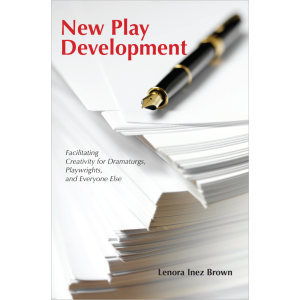
New Play Development"This is a book for dramaturgs of new work, but it is also a particularly effective book for anyone working on new plays: playwrights, directors, producers, even actors. Lenora skillfully dissects the process of workshopping new writing, and clearly defines the roles for all involved. I learned not only how to make a new play workshop more effective, but how to approach my writing and my directing, and how to meaningfully collaborate with others in this unique process. This is a necessary handbook for anyone working on new plays today."
Learn More
—Anne Marie Cammarato, Director -
![]() Sensory Writing for Stage and Screen
Sensory Writing for Stage and Screen"Few people live as passionately in the world of writing as Michael Wright, and this exploration of the sensory dimension of creativity enhances any discussion of dramatic writing. Sensory Writing for Stage and Screen through its clever use of a series of 'etudes' invites us into the close-to-the-bone world of human experience on its most intimate level. What we smell, taste, hear, see and feel takes center stage here. Mr. Wright challenges us to create characters as complex as we ourselves are—both celebrants and victims of our own senses. His book evokes the lushness of every human life and reminds us that all great characters (like ancient cities) are composed of layers and layers of their own experience."
Learn More
—Lee Blessing, Playwright, A Walk in the Woods, Eleemosynary -
![]() German for Reading (Second Edition)
German for Reading (Second Edition)German for Reading presupposes no previous acquaintance with German and can be used with equal effectiveness by graduate students in the arts and sciences who are preparing to pass a reading knowledge examination, or by undergraduates who are beginning to deal seriously with the problems of reading. Its programmed format permits it to be used either as a classroom text or by individuals working on their own. The second edition builds on strengths of the first while updating outdated terminology, removing terms and phrases no longer in use, and incorporating many revisions made in light of suggestions from readers.
Learn More -
![]() King Henry the Sixth: Parts I, II, and III
King Henry the Sixth: Parts I, II, and IIIGeorge Lyman Kittredge's insightful editions of Shakespeare have endured in part because of his eclecticism, his diversity of interests, and his wide-ranging accomplishments—all of which are reflected in the valuable notes in each volume. The plays in the New Kittredge Shakespeare series retain the original Kittredge notes and introductions, changed or augmented only when some modernization seems necessary. These new editions also include introductory essays by contemporary editors, notes on the plays as they have been performed on stage and film, and additional student materials.
Learn More -
![]() The Merry Wives of Windsor
The Merry Wives of WindsorGeorge Lyman Kittredge's insightful editions of Shakespeare have endured in part because of his eclecticism, his diversity of interests, and his wide-ranging accomplishments—all of which are reflected in the valuable notes in each volume. The plays in the New Kittredge Shakespeare series retain the original Kittredge notes and introductions, changed or augmented only when some modernization seems necessary. These new editions also include introductory essays by contemporary editors, notes on the plays as they have been performed on stage and film, and additional student materials.
Learn More -
![]() King John & Henry VIII
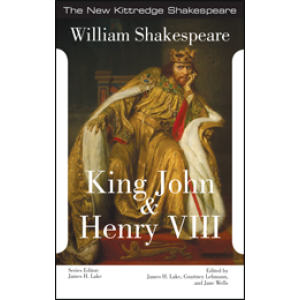
King John & Henry VIII"This is a terrific edition that really brings King John and Henry VIII to life. Consistently inviting student participation, the edition makes the plays wonderfully accessible, through explanations of the language, descriptions of context, topic guides, plot outlines, illustrations, and genealogies. A particular strength is the emphasis on performance. Thanks to the insightful histories provided, King John and Henry VIII are richly illuminated as stage and screen creations, allowing for genuinely imaginative engagement with these most fascinating Shakespearean dramas."
Learn More
—Ramona Wray, Reader in English at Queen's University, Belfast -
![]() An Actor's Task
An Actor's TaskAn Actor's Task provides a framework for studying the dual arts of acting: inhabiting a character both physically and psychologically. Actors at all levels can use this book to explore, develop, and review the sensory tools and training that enable them to be the best versions of themselves and, ultimately, to bring that understanding of "self" to their art.
"Through a series of engaging exercises, this book filters out the complexities of various acting techniques and offers up an appealing hands-on approach."
Learn More
—Tonya Pinkins, Tony Award–winning actress -
![]() Achilleid
Achilleid"One of the most entertaining short narratives of all time, the Achilleid is a stand-alone work of compelling contemporary interest that moves with great rapidity and clarity. Its compact narrative, which encompasses a brutish childhood, an overprotective mother, temporary gender bending, sexual violence, and a final coming to manhood with the promise of future military prowess, may be unparalleled in a single narrative of such brevity. . . . Until now, however, it has been virtually impossible to get a sense of the work if one did not know Latin—recent translations notwithstanding. Stanley Lombardo’s translation of the Achilleid is a dream: it’s sound, enthralling, and will fully engage readers with this enticing, perplexing, at times distressing, but ultimately rewarding work."
Learn More
—Marjorie Curry Woods, The University of Texas at Austin -
![]() Civil War
Civil War"Brian Walters has given us what too few translators of classical poetry do—an authorial presence. Here is Lucan himself in all his drastic modes—everything from his enraged indignation to his paradoxical aphorisms—recreating the ruptured Neronian world he lived in as he recounts the nefarious civil war that destroyed the Roman Republic."
Learn More
—Stanley Lombardo, University of Kansas -
![]() Afro-Latino Voices, Shorter Edition
Afro-Latino Voices, Shorter EditionIdeally suited for use in broad, swift-moving surveys of Latin American and Caribbean history, this abridgment of McKnight and Garofalo's Afro-Latino Voices: Narratives from the Early Modern Ibero-Atlantic World, 1550-1812 (2009) includes all of the English translations, introductions, and annotation created for that volume.
Learn More -
![]() Haft Paykar
Haft Paykar"The Haft Paykar—Nizami's twelfth-century masterpiece, written in the Persian verse couplet form known as masnavi—has waited a long time for a translation like this: one that simultaneously captures its lightness and charm and plumbs its wealth of cultural detail. Julie Meisami's deft, accurate, seemingly effortless version (rendered in English tetrameter, an inspired choice) is a rare accomplishment."
Learn More
—Michael Beard, University of North Dakota -
![]() Mapeando a Língua Portuguesa através das Artes, Corrected Edition
Mapeando a Língua Portuguesa através das Artes, Corrected EditionMapeando a Língua Portuguesa através das Artes is an exciting, comprehensive textbook for intermediate Portuguese courses. Mapeando features interviews, authentic texts, and works of art, all of which serve as springboards for students to express themselves in Portuguese through performance, debate, and communicative exercises. Each of the twelve units is structured around a particular art form, such as photography or literature, and includes three grammar lessons, three original texts, and integrated audio and video activities. A complementary website featuring streaming video and audio files is available here. Course instructors: Request the Mapeando a Língua Portuguesa através das Artes textbook answer key here (PDF only).
Learn More -
![]() Experiencing Theatre
Experiencing Theatre"Experiencing Theatre completely engages the beginning theatre student in the art of theatre. Students become playwrights, dramaturges, actors, directors, designers, adapters and collaborators through dynamic readings and excercises. This text gives them a great awareness of the work of being a theatre artist. Teachers have long strived towards creating these opportunities for their Intro students—finally a text that will make it happen."
Learn More
—Barbara Burgess-Lefebvre, Robert Morris University -
![]() Roman Lives, Corrected Edition
Roman Lives, Corrected Edition"It is humbling to encounter 'real' Latin, in letters inscribed on a building or tombstone, and to be utterly at a loss beyond the obvious. Yet, as Roman Lives demonstrates. . . much of this material can be relatively easy to decode. Furthermore, this book shows how epigraphy can open a window onto ancient lives and their humanity. This book should thus prove a rich resource for teachers of Latin and Roman civilization."
Learn More
—The Classical Outlook -
![]() Caderno de Produção, Corrected Edition
Caderno de Produção, Corrected EditionCaderno de Produção is an integral and interactive companion to Mapeando a Língua Portuguesa através das Artes, providing additional innovative exercises for each chapter of the textbook. Throughout each unit, all of which are in Portuguese, students will build their speaking, writing, and comprehension skills with exercises in vocabulary, grammar explanations and structures, additional readings, and videos featuring interviews and images from well-known artists of the Portuguese-speaking world, (the videos are available here at no charge). Course instructors: Request the Caderno de Produção workbook answer key here.
Learn More -
![]() On Law, Morality, and Politics (Second Edition)
On Law, Morality, and Politics (Second Edition)The second edition of Aquinas, On Law, Morality, and Politics retains the selection of texts presented in the first edition but offers them in new translations by Richard J. Regan—including that of his Aquinas, Treatise on Law (Hackett, 2000). A revised Introduction and glossary, an updated select bibliography, and the inclusion of summarizing headnotes for each of the units—Conscience, Law, Justice, Property, War and Killing, Obedience and Rebellion, and Practical Wisdom and Statecraft—further enhance its usefulness.
Learn More -
![]() Hornbook Ethics
Hornbook Ethics"Teachers of introductory ethics and applied ethics classes will have a hard time resisting Charles Cardwell's Hornbook Ethics. I am a big fan. The author has a remarkable gift for briefly introducing the basics of moral philosophy, and his book is so clear and concise that any serious student will be able to learn much from it. Not every philosopher will share its views or priorities of course, but these are set forth with such clarity that it will be easy to use even disagreements as teaching moments. I am unaware of a better introduction to ethics whose brevity approaches this one's."
Learn More
—Peter Tramel, Department of Philosophy, Fort Hays State University -
![]() Asking Good Questions
Asking Good QuestionsAsking Good Questions moves beyond a traditional discussion of ethical theory, focusing on how educators can use these important frameworks to facilitate critical thinking about real-life ethical dilemmas. In this way, authors Nancy Stanlick and Michael Strawser offer students a theoretical tool kit for creatively addressing issues that influence their own environments. This text begins with a discussion of key ethical theorists and then guides the reader through a series of original case studies and follow-up activities that facilitate critical thinking, emphasize asking thought provoking questions, and teach the student to address the complexity of ethical dilemmas while incorporating the viewpoints of their peers. Click here to download the Asking Good Questions instructor's guide.
Learn More -
![]() Puzzled?!
Puzzled?!"A great, logical, introduction to the areas of philosophy. A student who is just starting in the path to 'philosophizing' will greatly appreciate this gem of a book."
Learn More
—Alberto Mendoza, Antelope Valley College -
![]() Introductory Readings in Ancient Greek and Roman Philosophy (Second Edition)
Introductory Readings in Ancient Greek and Roman Philosophy (Second Edition)This concise anthology of primary sources designed for use in an ancient philosophy survey ranges from the Presocratics to Plato, Aristotle, the Hellenistic philosophers, and the Neoplatonists. The Second Edition features an amplified selection of Presocratic fragments in newly revised translations by Richard D. McKirahan. Also included is an expansion of the Hellenistic unit, featuring new selections from Lucretius and Sextus Empiricus as well as a new translation, by Peter J. Anderson, of most of Seneca’s De Providentia. The selections from Plotinus have also been expanded.
Learn More -
![]() European Romanticism
European Romanticism"The introductory essay is superb, the best short introduction to Romanticism I know. It is comprehensive, covering both the wide range of spheres that Romanticism affected—literature, philosophy, art, music, politics, nationalism—and the broad spectrum of European countries in which it was an influential cultural current. It offers a distinctive, unified interpretation of Romanticism that nonetheless does justice to the complexities of Romantic ideas."
Learn More
—Gerald Izenberg, Washington University in St. Louis -
![]() The Essential Thirty Years War
The Essential Thirty Years WarThis abridgment of Tryntje Helfferich's acclaimed 2009 anthology The Thirty Years War features an expanded General Introduction and annotation designed to support student readings in swift-moving surveys of European and World history.
Learn More -
![]() A Rulebook for Decision Making
A Rulebook for Decision Making"Pullman offers his readers essential insights into how humans reason and make decisions. Both concise and far-reaching, his work teaches us how to challenge intuitive logic and examine the processes for deliberative reasoning. This text will prove foundational for students in their intellectual journey toward the development of real skills in critical thinking. By pointing to simple yet profound examples, Pullman's text is both readable and provocative as it challenges us to consider the very mechanisms by which we understand our own cognitive biases."
Learn More
—Bradley A. Hammer, Department of English and Comparative Literature, University of North Carolina, Chapel Hill -
![]() Lazarillo de Tormes and The Grifter (El Buscon)
Lazarillo de Tormes and The Grifter (El Buscon)"An elegant, precise, and accessible modern-English rendering of the two best examples of the early modern picaresque genre: the paradigmatic Lazarillo de Tormes and Quevedo's mordant El Buscón. Frye's translations are triumphant, capturing the cadence of popular early modern speech while remaining faithful to the original texts; his notes illuminate the diverse contexts in which the texts were written. Frye gives careful attention throughout to the historical background that propelled these two parallel but different monuments of Golden Age Spanish literature."
Learn More
—Teofilo Ruiz, UCLA -
![]() Seneca: Selected Dialogues and Consolations
Seneca: Selected Dialogues and Consolations"Were I to include Seneca in a course on the Renaissance or on the Roman origins of our liberal arts ideal I would use Peter Anderson's new translation. The Introduction is excellent: readable and comprehensive. I especially like his discussion of the challenge of translating what he calls Seneca's six key words and their cognates. His lucid overview of the philosophical ideas that informed Seneca's thinking will help readers ponder nature and humanity, the cosmos and the polis, from within Seneca's mind and times. The translation can on occasion be nicely graphic, and thus likely to engage first-time readers, as for example in one of the opening lines of the Consolation to His Mother Helvia: '. . . I kept crawling along (reptare), trying to bind your wounds while I used one hand to keep pressure on mine (manu super plagam meam imposita).'" —Robert E. Proctor, Joanne Toor Cummings '50 Professor of Italian, Connecticut College
"An excellent tool for students and teachers of Latin literature and Stoic philosophy." —Aldo Dinucci, in Archai
Learn More -
![]() Edward II
Edward II"This exciting new edition of Edward II is indeed reader friendly. Of particular distinction are the introductory sections which include a thorough account of Marlowe's biography, a fresh critical examination of the play, plus a bibliography for further reading; a wise consideration of the date and text; and extensive annotations, especially helpful to students who have difficulties with the language. Of special value to both students and scholars are the Related Texts that follow the text of the play: three sections of documentary evidence on historical sources; power and politics; and love, friendship, and homoeroticism—all vital to an understanding of the play. No previous edition of the play manages to encompass so much."
Learn More
—Robert A. Logan, University of Hartford -
![]() The Poetic Edda (1st Edition)
The Poetic Edda (1st Edition)"The poems of the Poetic Edda have waited a long time for a Modern English translation that would do them justice. Here it is at last (Odin be praised!) and well worth the wait. These amazing texts from a 13th-century Icelandic manuscript are of huge historical, mythological and literary importance, containing the lion's share of information that survives today about the gods and heroes of pre-Christian Scandinavians, their unique vision of the beginning and end of the world, etc. Jackson Crawford's modern versions of these poems are authoritative and fluent and often very gripping. With their individual headnotes and complementary general introduction, they supply today's readers with most of what they need to know in order to understand and appreciate the beliefs, motivations, and values of the Vikings." —Dick Ringler, Professor Emeritus of English and Scandinavian Studies at the University of Wisconsin–Madison
Audiobook: An audiobook edition, narrated by Jackson Crawford, is also available from Downpour, Audible, and other audiobook retailers.
Learn More -
![]() Le Morte D'Arthur
Le Morte D'Arthur"I've just finished reading Joseph Glaser's Le Morte D'Arthur. I'm very pleased with it: the introduction is helpful without becoming an extended essay, the suggested reading seems solid and diverse, and the index is VERY useful, even for someone who has read Malory before. At last, a reader can keep all the knights and ladies straight! A fine entry point to a grand text, and when I next have an occasion to teach a course involving chivalry, I'll plan to use this very affordable edition."
Learn More
—Craig Caldwell, Department of History, Appalachian State University -
![]() Meditations, Objections, and Replies
Meditations, Objections, and RepliesThis edition features reliable, accessible translations; useful editorial materials; and a straightforward presentation of the Objections and Replies, including the objections from Caterus, Arnauld, and Hobbes, accompanied by Descartes' replies, in their entirety. The letter serving as a reply to Gassendi—in which several of Descartes' associates present Gassendi's best arguments and Descartes' replies—conveys the highlights and important issues of their notoriously extended exchange. Roger Ariew's illuminating Introduction discusses the Meditations and the intellectual environment surrounding its reception.
Learn More