The Hackett Signature Editions Collection Featuring Premium Hardcovers of Hackett Classics - Learn More Here.

Browse All
-
![]() King Lear
King Lear"By adding comments on recorded performances to Kittredge's notes . . . [which] were fun and helpful to my early study of Shakespeare . . . Kenneth Sprague Rothwell gives students and researchers the means to explore how performance can elucidate 'the script' of King Lear."
Learn More
—Harry Keyishian, Fairleigh Dickinson University -
![]() Scene Design: Rendering and Media
Scene Design: Rendering and MediaScene Design: Rendering and Media is intended to help students or practitioners improve their skills at making finished renderings of scene designs for theater. The book demonstrates the process of creating the renderings through real world methods and techniques. Chapters are dedicated to a detailed discussion of various tools including drawing, light and shadow, color mixing, painting, figures, and other media, and the book is rife with colorful and inspirational examples.
Learn More -
![]() By Roman Hands (Second Edition)
By Roman Hands (Second Edition)By Roman Hands, Second Edition takes Latin out of the textbook and allows students to see and translate Latin as it actually appeared on Roman monuments, walls, and tombs. The first collection of entirely authentic and un-adapted inscriptions and graffiti accessible to beginning and intermediate students of Latin, By Roman Hands unites the study of language and culture in a novel and compelling way and at a level that the Latin can be grasped and discussed by early Latin learners. Ranging from a love letter hastily scratched on a Pompeian wall to the proclamation of an emperor's achievements formally inscribed on a monumental arch, these carefully selected texts afford fascinating glimpses into the lives and minds of the Romans, even as they illustrate and reinforce the basic elements of the Latin language.
Learn More -
![]() Writing a Successful Research Paper: A Simple Approach
Writing a Successful Research Paper: A Simple Approach"Writing a successful research paper is not easy, but Stanley Chodorow's book is so lucid and well organized that, with it as an aid, students will find the process less daunting—and perhaps even satisfying. The sixth chapter, on using evidence, is the best and most helpful thing I've ever read on that crucial topic."
Learn More
—Al Filreis, Kelly Professor of English, Faculty Director of the Kelly Writers House, and Director of the Center for Programs in Contemporary Writing, University of Pennsylvania -
![]() King Richard the Third
King Richard the Third"In this splendid edition, Jacquelyn Kilpatrick gives us a comprehensive primer on Shakespeare's performance craft and an ideal text for teaching Richard III, particularly to students new to Shakespeare. Her introductory materials make a century of scholarship and filmmaking both accessible to the newcomer and illuminating for the experienced student or performer. Her keen understanding of the original performance circumstances of Shakespeare's plays and insightful accounts of salient stage and film productions work together to open up the rich array of possibilities and choices in performance, both then and now."
Learn More
—Catherine S. Burriss, California State University, Channel Islands -
![]() Thinking Through Script Analysis
Thinking Through Script Analysis"The real strength of this book is the focus on developing critical and creative thinking by making the process of script analysis enjoyable. The authors make analysis understandable. Students will be able to apply the skills they learn to other aspects of life and study."
Learn More
—Robin D. Stone, Associate Professor of Theatre, Roger Williams University -
![]() New Third Steps in Latin, Revised and Corrected
New Third Steps in Latin, Revised and CorrectedNew Third Steps in Latin is the third book in a three-book series designed specifically for middle or high school students. The texts employ a minimum of explanation of grammatical principles, concentrate on essential grammar and morphology and on the syntax of simple, compound, and complex sentences. The focus on learning is through numerous examples. The series offers students a complete graded introduction to Latin and grammar. It can be used alone, as a main text supplemented by readings and cultural material, or as a supplementary grammatical work text for a reading-oriented course.
Course instructors: click here to request PDF instructor's materials.
Learn More -
![]() Lingua Latina: Fabulae Syrae
Lingua Latina: Fabulae SyraeThe collection begins with the adventure of Pygmalion, the Cypriot sculptor who carved a woman out of ivory, and ends with nearly 200 verses of original Latin from books two and three of Ovid's Metamorphoses. The vignettes are annotated with helpful margin notes and are accompanied by beautiful historic woodcut illustrations. The volume contains two appendices: a list of vocabulary and a glossary of proper names. Fabulae Syrae can be used concurrently with Familia Romana for further enrichment or as a review text after completing Familia Romana. It is, however, also a stand-alone work and could also be used as a reader in mythology separate from the Lingua Latina per se Illustrata series. New vocabulary is kept to an absolute minimum, so the reader can truly enjoy the readings, while focusing on a mastery of the grammar and essential vocabulary taught in the Familia Romana.
Learn More -
![]() Six Records of a Life Adrift
Six Records of a Life Adrift"Shen Fu’s Six Records of a Life Adrift is the most intimate document at our disposal of private life in late imperial China. Graham Sanders now provides us with a new translation for the 21st century, which is not only well researched but also highly readable." —Wilt Idema, Harvard University
Learn More -
![]() Classics of Moral and Political Theory (Fifth Edition)
Classics of Moral and Political Theory (Fifth Edition)The fifth edition of Michael L. Morgan’s Classics of Moral and Political Theory broadens the scope and increases the versatility of this landmark anthology by offering new selections from Aristotle’s Politics, Aquinas’ Disputed Questions on Virtue and Treatise on Law, as well as the entirety of Locke’s Letter Concerning Toleration, Kant’s To Perpetual Peace, and Nietzsche’s On the Advantage and Disadvantage of History for Life.
Learn More -
![]() Bing: From Farmer's Son to Magistrate in Han China
Bing: From Farmer's Son to Magistrate in Han China"This book is wonderful. Only someone with Loewe's deep and broad knowledge could provide such a work of historical fiction that gives life to the gleanings of historical research that are too scattered and incomplete for the less skilled to harvest. Add to this the interesting story and this makes for an effective, useful supplementary reading for courses on Chinese history." —Steven Davidson, Southwestern University
"Only a master of the history of the early empires in China such as Michael Loewe could have spun this story tracing the gradual rise of a sympathetic character from plow boy to the official ranks at the Han court. Teachers will surely want to assign it to their students, as it perfectly illustrates key points that Loewe has made in more academic publications, for example, his Everyday Life in Early Imperial China during the Han Period 202 BC-AD 220. Comparative historians will find a wealth of information in it, including helpful notes suggesting further readings. Bing is as good as it gets in historical fiction." —Michael Nylan, University of California, Berkeley
Learn More -
![]() Sir Gawain and the Green Knight
Sir Gawain and the Green Knight“A dazzling recreation of the most memorable Middle English poem, and one that captures the original alliterative verse in all its dimensions: sense, sound, and rhythm.”—Ad Putter, Professor of Medieval English Literature, University of Bristol
"Nicely fills the gap between overly technical scholarly editions and too-simplified student editions. The translation and overview provide a solid introduction to the Middle English masterpiece and assures that future readers will be as willing as Glaser has been to devote the time and energy necessary to explore the poem's many facets. A worthy effort to bring the complex poem to modern students." —Ryan Naughton, Ohio University, in The Medieval Review
Learn More -
![]() The Essential Metamorphoses
The Essential MetamorphosesThe Essential Metamorphoses, Stanley Lombardo’s abridgment of his translation of Ovid’s Metamorphoses, preserves the epic frame of the poem as a whole while offering the best-known tales in a rendering remarkable for its clarity, wit, and vigor. While making no pretense of offering an experience comparable to that of reading the whole of Ovid’s self-styled history “from the world’s first origins down to my own time,” this practical and judicious selection of myths at the heart of Roman mythology and literature yet manages to relate many of the most fascinating episodes in that world-historical march toward the Age of Augustus—and is accompanied by an Introduction that deftly sets them in their cosmological, theological, and Augustan contexts.
Learn More -
![]() The Roman History
The Roman History"[A] well-vetted, well-thought-out, and much overdue updated English translation. It will make Velleius accessible to undergraduates, who previously may have only read Livy, Sallust, or Tacitus. Perhaps the greatest merit of the book is its thorough notation throughout the translation. . . . a necessity for nonspecialist readers."
Learn More
—Nikolaus Overtoom, Louisiana State University in H-Net: Humanities and Social Science Reviews Online -
![]() Germinal
Germinal“Raymond Mackenzie’s elegant new translation of Émile Zola’s Germinal captures the diction of the novel’s colorful characters and the restrained voice of a naturalist narrator. David Baguley’s introduction analyzes Zola’s personal background, his literary and scientific influences, and the historical circumstances of French workers in the 1860s as well as a spectrum of political acts and deeds in the 1880s when the novel was written. These features plus Zola’s notes on the town of Anzin that he studied prior to writing the novel, make this the edition of choice for course adoptions in history and literature." —Stephen Kern, Ohio State University
Learn More -
![]() Aeneid: Book 4
Aeneid: Book 4"The commentary itself is a gem, and students and teachers of Aeneid 4 alike will be very grateful to James O’Hara for the excellent job he has done to balance comments that help with translation and comprehension alongside those that allow students to engage with current scholarly debates about the interpretation of the Aeneid, as well as with Virgil's literary, philosophical and cultural contexts. . . . In conclusion, this is an engaging, learned and extremely useful commentary. It is well-directed to its intended audience of intermediate students but is also a useful resource for more advanced readers, particularly those wanting insight into the current state of scholarship on the Aeneid and significant recent debates about Book 4. It is lucid and well edited, and I highly recommend it."
Learn More
—Anne Rogerson, University of Sydney, in Bryn Mawr Classical Review -
![]() A True and Exact History of the Island of Barbados
A True and Exact History of the Island of Barbados“Ligon’s True and Exact History of the Island of Barbados is the most significant book-length English text written about the Caribbean in the seventeenth century. [It] allows one to see the contested process behind the making of the Caribbean sugar/African slavery complex. Kupperman is one of the leading scholars of the early modern Atlantic world. . . . I cannot think of any scholar better prepared to write an Introduction that places Ligon, his text, and Barbados in an Atlantic historical context. The Introduction is quite thorough, readable, and accurate; the notes [are] exemplary!”
Learn More
—Susan Parrish, University of Michigan -
![]() New Second Steps in Latin, Revised and Corrected
New Second Steps in Latin, Revised and CorrectedNew Second Steps in Latin is the second book in a three-book series designed specifically for middle or high school students. The texts employ a minimum of explanation of grammatical principles, concentrate on essential grammar and morphology and on the syntax of simple, compound, and complex sentences. The focus on learning is through numerous examples. The series offers students a complete graded introduction to Latin and grammar. It can be used alone, as a main text supplemented by readings and cultural material, or as a supplementary grammatical work text for a reading-oriented course.
Course instructors: click here to request PDF instructor's materials.
Learn More -
![]() Fragile Magic
Fragile MagicThis is a brief, but handy book outlining the task of viewing theatrical performances and evaluating them. Although aimed primarily at the festival level respondent, it is a book that can enhance the ability to evaluate and respond to the theatre experience, creating at the broadest level a sensitive and enriched audience.
Learn More -
![]() Love's Labour's Lost
Love's Labour's Lost"This student-friendly edition of a difficult play includes a clear, helpful introduction and notes elucidating the complicated imagery and wordplay. Notes and illustrations refer the reader to various staging options enabling him or her to imagine Love’s Labour’s Lost in performance."
Learn More
—Katharine E. Maus, James Branch Cabell Professor of English Literature, University of Virginia -
![]() Lingua Latina: Epitome Historiae Sacrae
Lingua Latina: Epitome Historiae SacraeEntirely in Latin (with vowel lengths marked), this book includes 209 readings from the Old Testament Books. There are also engaging exercises, including crosswords and matching. Epitome Historiae Sacrae been edited according to the Lingua Latina per se Illustrata series, is ideal for students who have completed Familia Romana as it drills and reviews grammar while adding more than 1,300 words to their vocabulary and modeling excellent Latin prose style.
Course Instructors: The PDF-only Epitome Historiae Sacrae answer key and marginal notes (by Frank Nitsche-Robinson) eBook is available for qualified adopters. If you have adopted the text, click here to request the PDF answer key and marginal notes file.
Learn More -
![]() The Book of John Mandeville
The Book of John Mandeville"The Book of John Mandeville, one of the most important medieval travel books, has been translated into English from the original Anglo-Norman French for the first time since the late fourteenth century. Iain Macleod Higgins's accurate, readable, and judiciously edited rendering now supersedes the modernizations of Middle English versions that have hitherto been the English-speaking world's chief access to a work second only to Marco Polo's Travels in its influence and the duration of its popularity. Higgins's copious annotation, detailed index, and inclusion of translated excerpts from Mandeville's sources and other relevant texts make this a historically important contribution to our knowledge of medieval travel literature and of Western perceptions of non-Western peoples. Impressive scholarship combines with skillful translation of a medieval work with great modern relevance." —Modern Language Association
Learn More -
![]() The Caesars
The Caesars"Donna Hurley has done a sterling job in providing us with both an Introduction to Suetonius and a translation of The Caesars that we can confidently recommend to students. Her Introduction summarizes a complex topic succinctly and is informative without being overwhelming, set at an ideal level for the student and intelligent enthusiast. Her translation is accurate and contemporary. Her primary goal is faithfulness to the original, which she achieves, but at the same time she recognizes the need to make her text clear, entertaining, and comprehensible to the modern reader, and she strikes exactly the right balance." —Anthony Barrett, Emeritus, University of British Columbia
“Hurley, who has written extensively and with authority on Suetonius, knows her author and his text thoroughly, and her Introduction to them is a model of presentation. Annotation (footnotes, not endnotes) is concise and to the point; essential background is gracefully sketched in a preliminary section on Roman institutions; maps and plans are clear and full. This thoughtful concern for the reader’s needs justifies confidence in the translation itself: for its combination of accuracy, clarity, and readability, it is the best.” —Edward Champlin, Princeton University
Learn More -
![]() Electra, Phoenician Women, Bacchae, & Iphigenia at Aulis
Electra, Phoenician Women, Bacchae, & Iphigenia at AulisThe four late plays of Euripides collected here, in beautifully crafted translations by Cecelia Eaton Luschnig and Paul Woodruff, offer a faithful and dynamic representation of the playwright’s mature vision.
Learn More -
![]() The Epic of The Cid
The Epic of The Cid"Harney’s translation and literary panorama will become a standard reference for students and scholars throughout the English-speaking world for decades to come. Harney’s profound knowledge of the cultural and creative ferment that surrounded the birth of this masterpiece is unchallenged. . . . The complementary medieval texts that Harney assembles—all the bright fragments that make up this mosaic of a ferocious warrior, clan chieftain, family man, and hero—have never before been brought together in one place with reliable translations from the Arabic, Latin, and Spanish."
Learn More
—George Greenia, College of William & Mary -
![]() Philosophy Before Socrates (Second Edition)
Philosophy Before Socrates (Second Edition)The second edition of Philosophy Before Socrates has been updated and expanded to reflect important new discoveries and the most recent scholarship. Changes and additions have been made throughout, the most significant of which are found in the chapters on the Pythagoreans, Parmenides, Zeno, Anaxagoras, and Empedocles, and the new chapter on Philolaus. The translations of some passages have been revised, as have some interpretations and discussions. A new Appendix provides translations of three Hippocratic writings and the Derveni papyrus.
Learn More -
![]() A Presocratics Reader (Second Edition)
A Presocratics Reader (Second Edition)"Curd and McKirahan's A Presocratics Reader is by far the best sourcebook for the Presocratics I've ever used in forty years of teaching ancient philosophy. Pieces I used to have to translate myself, such as the Dissoi Logoi, and Gorgias' Encomium of Helen, are included in the text, in much more skilled translation. The enlarged 2nd edition made a good book better."
Learn More
—Samuel C. Wheeler III, University of Connecticut -
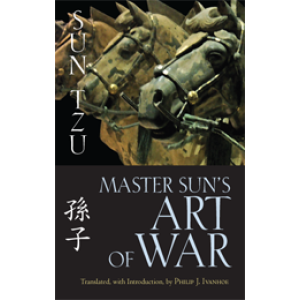
![]() Master Sun's Art of War
Master Sun's Art of War“P. J. Ivanhoe is one of the English-speaking world’s foremost translators and interpreters of classical Chinese philosophical texts. His translation of the Sunzi Bingfa reads beautifully, adorned only by sobering photographic plates of the famed terracotta army of the first Qin emperor that turn one back to the text in a properly reflective mood. The Introduction and endnotes are blessedly spare, providing just the right amount of interpretive scholarship to assist comprehension of the text, while not interfering with its intrinsic simplicity, clarity, and profundity.”
Learn More
—Sumner B. Twiss, Distinguished Professor of Human Rights, Ethics, and Religion, Florida State University -
![]() Legal Speeches of Democratic Athens
Legal Speeches of Democratic Athens“An excellent, wide-ranging collection of Athenian speeches illuminating central topics of political, social, and legal history, including male and female sexuality, the ancient economy, Greek law, and major episodes of civic strife. Both accurate and faithful to the orators’ prose style, Wolpert and Kapparis’ new translations come accompanied by informative introductions and notes, a glossary of legal terms, and a helpful bibliography. Highly recommended for courses in the history of classical Athens, ancient rhetoric, and Greek law.” —Robert W. Wallace, Northwestern University
Learn More -
![]() Introduction to Classical Chinese Philosophy
Introduction to Classical Chinese Philosophy"This book is an introduction in the very best sense of the word. It provides the beginner with an accurate, sophisticated, yet accessible account, and offers new insights and challenging perspectives to those who have more specialized knowledge. Focusing on the period in Chinese philosophy that is surely most easily approachable and perhaps is most important, it ranges over of rich set of competing options. It also, with admirable self-consciousness, presents a number of daring attempts to relate those options to philosophical figures and movements from the West. I recommend it very highly." —Lee H. Yearley, Walter Y. Evans-Wentz Professor, Religious Studies, Stanford University
"This book on philosophers who arose in the Eastern Zhou Dynasty is also an introduction to comparative ways of nonsuperficial thinking both within Chinese tradition and between Chinese tradition and the West. . . . The work is carefully detailed at every philosophically interesting turn, providing, e.g., a detailed discussion of mysticism that does not conflate traditions but sees distinctiveness. Throughout there are translations of technical terms, along with both pinyin and Chinese characters. Chapters conclude with well-crafted review questions. . . . Appendixes on hermeneutics, Chinese language, and the Kongzi are very useful. Summing up: Highly recommended." —F. J. Hoffman, West Chester University of Pennsylvania, in Choice
Learn More -
![]() Lingua Latina: Pars I: Familia Romana (Second Edition, with Full-Color Illustrations)
Lingua Latina: Pars I: Familia Romana (Second Edition, with Full-Color Illustrations)Familia Romana (the main book of Pars I of the Lingua Latina per se illustrata series) contains thirty-five chapters and describes the life of a Roman family in the 2nd century A.D. It culminates in readings from classical poets and Donatus's Ars Grammatica, the standard Latin school text for a millennium. Each chapter is divided into two or three lessons (lectiones) of a few pages each followed by a grammar section (Grammatica Latina) and three exercises (Pensa). Hans Ørberg's impeccable Latin, humorous stories, and the Peer Lauritzen illustrations, reproduced in full color, make this work a classic. The book also includes a table of declensions, a Roman calendar, and a word index (index vocabulorum).
"Familia Romana and A Companion to Familia Romana came as a complete revelation. I'd heard they were unique, but they are literally nothing less than a work of genius. They would completely revolutionize the classroom, and I would urge all teachers of first-year Latin at universities and all high school teachers to seriously consider adopting this radical approach to learning Latin. The companion volume provides all the traditional exposure you would want, but the main volume shows every prospect of genuinely internalizing Latin in the learner's brain as a living language, calling on a whole set of language-acquisition skills and instincts normally neglected in the teaching of a dead language. Mind-blowing." —Jack Mitchell, Department of Classics, Dalhousie University
Familia Romana Essentials Online online courseware is also available. More information can be found in the links below:
COURSE INSTRUCTORS: Request free instructor preview access and learn more here.
INDIVIDUAL LEARNERS: See purchasing options and FAQs about the self-paced learner version of the course here.
Learn More -
![]() Much Ado About Nothing
Much Ado About Nothing"Kittredge's admirably full notes, supplemented by Peter Kanelos's user-friendly introduction and references to film and television versions of the play, add up to a very accessible edition. I particularly liked the discussion of 'How to read Much Ado as performance,' which opens up a lot of possibilities for the student and teacher."
Learn More
—Lois Potter, Ned B. Allen Professor Emeritus, University of Delaware -
![]() The Essential Petrarch
The Essential Petrarch“Hainsworth’s translations from the Italian are first-rate, both in terms of accuracy to the intent of the originals . . . and in terms of conveying the force of Petrarch’s imagery. The translations from the Latin read freshly and easily . . . they are sure-footed, managing to capture the mix of pride and playfulness which characterizes Petrarch’s composite prose style. The notes to the individual poems are well-judged, just enough to keep the reader on track without parading off-putting erudition.”
Learn More
—Jonathan Usher, Emeritus, University of Edinburgh -
![]() Othello, The Moor of Venice
Othello, The Moor of Venice"This is an edition of Othello whose conversational introduction and unobtrusive but thorough notes will make the first-time visitor to the text an expert on the play. By keeping her own focus on the issue of performance—including her nuanced descriptions of the major films—editor Gretchen Schulz not only helps readers see Othello in the theatre of the imagination, she helps them to direct it as well."
Learn More
—Ralph Alan Cohen, American Shakespeare Center, Co-founder and Director of Mission; Gonder Professor of Shakespeare, Mary Baldwin College -
![]() Playwriting Master Class (Second Edition)
Playwriting Master Class (Second Edition)Playwrighting Master Class is a book for the active playwright. It explores the process of playwrighting, the evolution of the play as the playwright engages with it, and the choices the playwright makes in creating the play. Through the use of a number of case studies of playwrights engaged in writing and rewriting plays, Wright focuses on different individual approaches to their work, fostering their own unique visions and voices as a means of helping the working playwright find her or his own voice.
Learn More -
![]() First Greek Course
First Greek CourseThis text is designed for courses in the introduction to classical Greek using the "direct method" of learning. This method is a near immersion method in which much of the course and the book as possible is done in Greek, relying less on translation and more on acquiring skills in reading, speaking and thinking in the target language. Rouse's classic book has been thoroughly revised for the modern students by Anne Mahoney. The Greek reader, Rouse's Greek Boy, is a companion that carefully follows the progression of this text.
Learn More -
![]() Pericles, Prince of Tyre
Pericles, Prince of Tyre"Kahan has presented the performance and printing issues with directness and clarity, leaving many technical details that might discourage some students to the footnotes. The result is a very readable "Introduction" to one of Shakespeare's late romances."
Learn More
—Stanley Stewart, Distinguished Professor of English, University of California, Riverside -
![]() As You Like It
As You Like It"Now, in the twenty-first century, Patricia Lennox broadens that understanding in her excellent edition of As You Like It where she draws on her knowledge of international film and television. She offers new meaning for modern readers who, while they savor Shakespeare’s language also understand visual signals from contemporary media."
Learn More
—Irene G. Dash, Hunter College, CUNY, retired -
![]() Viajando através do alfabeto
Viajando através do alfabetoMaking use of Dicionario do viajante insolito by Brazilian writer Moacyr Scliar as a point of departure, Viajando aims to help students develop reading comprehension and oral and written comprehension of Portuguese, filling a much needed void as a reader or complementary intermediate text.
Learn More -
![]() Metamorphoses (Lombardo Edition)
Metamorphoses (Lombardo Edition)"Stanley Lombardo successfully matches Ovid’s human drama, imaginative brio, and irresistible momentum; and Ralph Johnson’s superb Introduction to Ovid's 'narratological paradise' is a bonus to this new and vigorous translation that should not be missed. Together, Introduction and text bring out the delightful unpredictability of Ovid’s 'history of the world' down to his times."
—Elaine Fantham, Giger Professor of Latin, Emerita, Princeton University"Lombardo’s translation is the most readable I’ve seen. . . . Its language is modern, accessible, and unpretentious. . . . I can imagine reading all the way through this version with students. I also admire the catalog of transformations . . . and, as usual, an Introduction by Ralph Johnson is worth the price of the book." —Margaret Musgrove, University of Central Oklahoma
Learn More -
![]() Poems to Friends
Poems to Friends“A fugitive handprint in a bowl of cream, a bird tangled in the grapevines of a mural, holy women who clap their voices into prayers—this is a world of unexpected beauty, and Pucci as a translator deserves our respect and praise for having clapped these poems into songs.”
Learn More
—Joel C. Relihan, Wheaton College, Norton, MA -
![]() The Figaro Plays
The Figaro Plays“[Beaumarchais’] fame rests on Le Barbier de Seville (1775) and Le Mariage de Figaro (1784), the only French plays which his stage-struck century bequeathed to the international repertoire. But his achievement has been adulterated, for ‘Beaumarchais’ has long been the brand name of a product variously reprocessed by Mozart, Rossini, and the score or so librettists and musicians who have perpetuated his plots, his characters, and his name. The most intriguing question of all has centered on his role as catalyst of the Revolution. Was his impertinent barber the Sweeney Todd of the Ancien Régime, the true begetter of the guillotine? . . . Beaumarchais’ plays have often seemed to need the same kind of shoring up as his reputation, as though they couldn’t stand on their own without a scaffolding of good tunes. Yet, as John Wells’ lively and splendidly speakable translations of the Barber, the Marriage, and A Mother’s Guilt demonstrate, they need assistance from no one. [Beaumarchais] thought of the three plays as a trilogy. Taken together, they reflect, as John Leigh’s commentaries make clear, the Ancien Régime’s unstoppable slide into revolution.”
Learn More
—David Coward in The London Review of Books -
![]() Governing China
Governing China“This compact narrative history of government institutions and their dialectical relation to society makes a perfect introduction to traditional China for political science, modern history, and comparative politics classes. The thesis, upheld by both specifics in lively prose and thought-provoking cross-period comparisons, is that unity, however valorized, always required hard work: military, political, and cultural creativity amidst ever-changing ethnic, class, and religious formations. Dardess also washes out old libels on non-Han, female, and eunuch power holders simply by recounting the facts.”
Learn More
—S. Schneewind, University of California, San Diego -
![]() The Cherry Orchard
The Cherry Orchard"Finding a decent Cherry Orchard which is not part of an anthology is valuable. Prof. Carnicke's introduction materials are highly helpful for teaching this in a theatre history or play analysis course." —Erith Jaffe-Berg, University of California, Riverside
Learn More -
![]() Theories of Human Nature
Theories of Human Nature“A very fine book on human nature, both what it is and what philosophers have thought about it—philosophers in an inclusive sense, from Plato and Aristotle to Mengzi and Xunzi, from Hume and Kant to Ibn al-Arabi to Marx and Rousseau and including many others. The writing is lively and accessible, the philosophy insightful, and the sense of human possibilities conveyed admirable. It will fit nicely into many different sorts of classes.”
Learn More
—John Perry, Stanford University -
![]() Herodotus Reader
Herodotus Reader"There are few Greek readers on the market for so crucial an author as Herodotus, and this text with its extensive selections . . . and helpful glosses admirably fills that void."
Learn More
—Mary English, Montclair State University -
![]() La France contemporaine à travers ses films
La France contemporaine à travers ses films"Rice's La France contemporaine à travers ses films successfully fosters a dynamic learning of French language and culture through the study of French cinema. It should appeal to a broad range of learners and avid cinphiles, while providing interesting glimpses into some of Frances most complex and hotly debated cultural issues of today."
Learn More
—Cheira Belquellaoui, DePauw University, in French Review -
![]() Latin American Independence
Latin American Independence"Rarely has the story of Latin American independence been told so richly and with such a plurality of voices. Chambers and Chasteen have expertly woven a comprehensive yet accessible historical tapestry of primary sources to tell the story of the Wars for Independence. The editors recover fascinating, lesser-known voices—many of which appear in English for the first time here—and situate them alongside canonical sources in rewarding and surprising ways. This is an indispensable resource for students and scholars alike, and an invitation to critically rethink the multiple meanings and resonance of Latin American independence."
Learn More
—Christopher Conway, The University of Texas at Arlington -
![]() Mulan
MulanThis volume offers lively translations of the earliest recorded version of the legend and several later iterations of the tale (including the screenplay of the hugely successful 1939 Chinese film Mulan Joins the Army), illustrating the many ways that reinterpretations of this basic story reflect centuries of changes in Chinese cultural, political, and sexual attitudes.
"The plots and the elaborations of the Mulan narratives reproduced (and summarized) here demonstrate the many ways in which the Mulan figure has spoken to succeeding generations with differing heroic characteristics and in the idiom that each audience understood; they offer excellent texts for a deep background for any consideration of Mulan in contemporary culture. For scholars of European fairy tales, the narratives offer striking points of comparison with European crossdressing heroines of the sixteenth, seventeenth, and eighteenth centuries." —Ruth B. Bottigheimer, Stony Brook University
Learn More