The Hackett Signature Editions Collection Featuring Premium Hardcovers of Hackett Classics - Learn More Here.

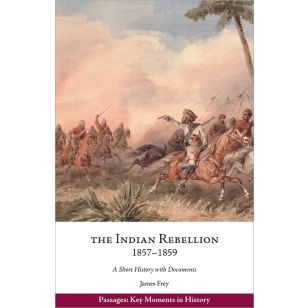
The Indian Rebellion, 1857–1859
Series: Passages: Key Moments in History
"Frey's concise and readable history of the Indian Rebellion is an excellent introduction to one of the most important wars of the nineteenth century. The rebellion lasted more than a year and pitted broad sections of north Indian society against the British East India Company. British victory consolidated colonial rule that would only be dislodged by twentieth-century nationalist movements. Frey provides a crystal-clear account of the causes, principal events, and consequences of the rebellion. Equally importantly, he deftly discusses why the rebellion remains controversial. Well-chosen documents add texture to the analysis. This is the best short history of the rebellion in print."
—Ian Barrow, Middlebury College
SKU
98209g
Reviews:
"Frey's concise and readable history of the Indian Rebellion is an excellent introduction to one of the most important wars of the nineteenth century. The rebellion lasted more than a year and pitted broad sections of north Indian society against the British East India Company. British victory consolidated colonial rule that would only be dislodged by twentieth-century nationalist movements. Frey provides a crystal-clear account of the causes, principal events, and consequences of the rebellion. Equally importantly, he deftly discusses why the rebellion remains controversial. Well-chosen documents add texture to the analysis. This is the best short history of the rebellion in print."
—Ian Barrow, Middlebury College
"Frey skillfully condenses and explains the complexities of the Indian sepoy mutiny of 1857 and the campaign to suppress it. This is a heroic achievement. The context provided is extremely helpful and the concluding analysis provides a bold attempt at synthesis. The documents are well selected, being quite different from previous collections. This book is highly detailed and informative, well written, and engaging to read. For undergraduates, postgraduates, and researchers it will be a boon having so much information within a single volume. It will be especially useful in courses addressing South Asian, British, World, or Imperial history."
—Crispin Bates, University of Edinburgh
“Across a substantive introduction, two body chapters, and a historiographic conclusion, James Frey provides a brief, yet dense and thorough, overview of the Indian Rebellion (1857-59). Synthesizing cultural, economic, environmental, military, political, and social histories, Frey’s narrative is at once grounded among the rebellion’s key players—military leaders and personnel in Hindustan—and attentive to the larger geopolitical priorities of both the rebels and British decision-makers in the region and London.
[W]ith its extensive glossary, illustrations, maps, timeline, and primary source collection, this text [is] especially appropriate for undergraduate courses on the British Empire, South Asia, or even historiography or research methods.
“Frey is at his best when his narrative animates the large-scale, faceless geopolitical and military scheming with intimate, individual stories. His diverse cast of characters includes not only the ‘heroes’ of the rebellion, like Canning, Campbell, Havelock, and Hugh Rose, along with the obligatory cameo from Lord Palmerston, but also equally compelling figures like Nana Sahib; Birjis Qadr, the twelve-year-old nawab to whom the rebels at Lucknow proclaimed allegiance; and Lakshmi Bai, the charismatic ‘Jezebel of Jhansi,’ and her female guards. Similarly, his descriptions of gruesome deaths, mass murders, and open pits full of hundreds or thousands of bodies underscore how violent of an affair the rebellion was and how brutally the British inflicted ‘revenge.’ Frey’s skillful tackling of such a difficult and multidimensional yet monumental narrative ultimately makes for a triumphant synthesis that demands and deserves wide readership.”
—Andrew Bellamy, Rutgers University, on H-Net: Humanities & Social Sciences Online
About the Author:
James Frey is Associate Professor of History, University of Wisconsin Oshkosh.