The Hackett Signature Editions Collection Featuring Premium Hardcovers of Hackett Classics - Learn More Here.

British Literature
-
![]() The Faerie Queene, Book Two
The Faerie Queene, Book Two"Teachers of Spenser will also welcome two more installments of the Hackett editions of separate books of The Faerie Queene under the general editorship of Abraham Stoll, this time on books 2 and on books 3 and 4. In my view, these are the most attractive, inexpensive, but also comprehensive editions to date, with far better (and easy to read) notes on mythology and name symbolism (matters increasingly foreign to our undergraduates) than almost all previous versions."
Learn More
—Catherine Gimelli Martin, Studies in English Literature 1500-1900 -
![]() A Sentimental Journey Through France and Italy and Continuation of the Bramine's Journal
A Sentimental Journey Through France and Italy and Continuation of the Bramine's Journal"Melvyn New's and W. G. Day's edition of Sterne's Sentimental Journey is the single best scholarly edition of that quirky but essential text available for student use. The notes are meticulous and hugely informative. The Introduction is lucid and useful, and the supplementary materials, including excerpts from Tristram Shandy and some of Sterne's sermons, provide essential background."
Learn More
—John Richetti, Department of English, University of Pennsylvania -
![]() The Faerie Queene, Book Five
The Faerie Queene, Book Five"This edition of book 5 of The Faerie Queene is a welcome contribution. Stoll presents a text that will be very useful in the classroom. The decision to make available individual (or in two cases, paired) books of the romance will make it possible for instructors to teach their preferred books of the romance; Stoll's edition of book 5 will certainly increase the likelihood that the Legend of Justice will reappear in undergraduate classrooms, introducing students to a text in which Spenser scholars are increasingly interested. We will all benefit from that."
Learn More
—Andrew Fleck, Sixteenth Century Journal -
![]() Paradise Lost (Kastan Edition)
Paradise Lost (Kastan Edition)"Kastan is an exemplary editor, attuned to emerging critical currents, yet steeped in the scholarship of an earlier tradition, aware of the text's provenance and reception, alert to its topicality. His introduction, a model of theoretically informed, politically committed, historically grounded criticism, makes this edition of Paradise Lost all you would expect from one of the most erudite and perceptive figures in the field." —Willy Maley, Modern Language Review
"This is a superb edition, a model of careful editing and judicious annotation." —Leslie Brisman, Department of English, Yale University
"Thank you for sending this impressive edition. . . . Having edited Paradise Lost myself (Norton, 2005), I was curious and keen to see Professor Kastan's. I agree wholeheartedly with the claim (more diplomatically put) that the punctuation of the 17th century editions has no authority and that its proponents are avoiding the problem of syntax. The notes are learned and informative, without excess, and it's good to have the text of Edward Phillips' Life." —Gordon Teskey, Harvard University
Learn More -
![]() The Canterbury Tales in Modern Verse
The Canterbury Tales in Modern Verse"This version of The Canterbury Tales is indeed 'fast-paced and entertaining'. It includes translations of most of the tales (certainly all of the most popular ones) and abridgments and summaries of a few others. Glaser's main innovation in this translation is a rather striking decision to render Chaucer's standard iambic pentameter line in iambic tetrameter. . . . Those who read his translation of The Canterbury Tales will likely be motivated to tackle a linguistically more challenging, yet more rewarding Middle English edition. Those who lack the time for such a task will still be able to appreciate the humor and variety of one of Chaucer's greatest works and will, through the basic and clear Introduction, get a sense of the historical and literary background of Chaucer, his times, and his works. The near conversational tone of the Introduction, furthermore, makes for an unintimidating encounter with a period of literature that, for many, is foreign and remote. As a kind of gateway text, therefore, Glaser's new translation of The Canterbury Tales will be much appreciated and valued by a non-specialist audience." —Jennifer A. Smith, Comitatus
Learn More -
![]() Doctor Faustus: With The English Faust Book
Doctor Faustus: With The English Faust Book"This is an excellent edition; I really appreciate the clear Introduction and the exceptionally useful notes. I look forward to using this text with a freshman literature class who will really benefit from the helpful textual apparatus." —Charlotte England, Department of English, Salisbury University
"The inexpensive paperback will allow this student-friendly text to be added to the reading list of a variety of high-school and college courses. Teachers as well as students will find the Introduction here very useful." —Bibliothèque d'Humanisme et Renaissance
Learn More -
![]() Doctor Faustus (Lake & Ribner Edition)
Doctor Faustus (Lake & Ribner Edition)An annotated version of Doctor Faustus, with modernized spelling and punctuation, of the 1616 B-text. James H. Lake's Introduction discusses the play’s historical and dramatic contexts, but focuses on its performance history from the Elizabethan era to our own, including film productions. Textual notes discuss variations between the A and B texts. Interviews with Ralph Alan Cohen of Shenandoah Shakespeare and Andreas Teuber (Mephistopheles in the Richard Burton production) as well as illustrations from theatre and film performances included.
Learn More -
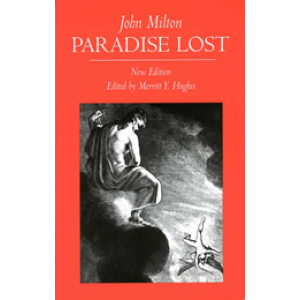
![]() Paradise Lost (Hughes Edition)
Paradise Lost (Hughes Edition)“Wonderful! Hughes’ edition is unexcelled!”
Learn More
—Carol V. Kaske, Cornell University -
![]() Utopia
Utopia“In addition to its elegant and precise translation of Utopia, this edition offers the prefatory material and postscripts from the 1518 edition, and More’s letter to Giles form the 1517 edition. Mr. Wootton has also added Erasmus’s ‘The Sileni of Alcibiades,’ which is crucial for the interpretation he gives in his Introduction of the many ambiguities and contradictions in More’s text as well as his life. The Introduction is a most valuable guide for understanding this man who was a proponent of toleration and a persecutor of heretics, a courtier full of worldly ambition ending as a fearless martyr. The contradictions of the man translated into a complicated and contradictory historiography to which Mr. Wootton’s Introduction is a most intelligent guide. A welcome addition to the More literature.”
Learn More
—J. W. Smit, Professor of History, Columbia University -
![]() The Complete Poems and Major Prose
The Complete Poems and Major Prose“This is by far the most thorough, most inspired and inspiring gathering of Milton's thought in one volume. It is a boon to teachers and students of Milton. Your keeping it in print is commendable and appreciated.”
Learn More
—Cicero Bruce, Dalton State College