The Hackett Signature Editions Collection Featuring Premium Hardcovers of Hackett Classics - Learn More Here.

Ancient Philosophy
-
![]() The Trials of Socrates
The Trials of SocratesLampooned in 406 B.C.E. in a blistering Aristophanic satire, Socrates was tried in 399 B.C.E. on a charge of corrupting the youth, convicted by a jury of about five hundred of his peers, and condemned to death. Glimpsed today through the extant writings of his contemporaries and near-contemporaries, he remains for us as compelling, enigmatic, and elusive a figure as Jesus or Buddha. Although present-day (like ancient Greek) opinion on "the real Socrates" diverges widely, six classic texts that any informed judgment of him must take into account appear together, for the first time, in this volume. Those of Plato and Xenophon appear in new, previously unpublished translations that combine accuracy, accessibility, and readability; that of Aristophanes' Clouds offers these same qualities in an unbowdlerized translation that captures brilliantly the bite of Aristophanes' wit. An Introduction to each text and judicious footnotes provide crucial background information and important cross-references.
Learn More -
![]() On the Nature of Things (Englert Edition)
On the Nature of Things (Englert Edition)"Englert's translation of the poem is indeed accurate and readable. He knows the poem as thoroughly as he knows the scholarship that bears on it . . . an admirable translation, admirably supported by scholarly tools."
Learn More
—W.R. Johnson, University of Chicago -
![]() Nicomachean Ethics (Sachs Edition)
Nicomachean Ethics (Sachs Edition)"Sachs's translations of Aristotle are truly exemplary. They combine a rare sensitivity to Aristotle's use of the Greek language with an English style that is straightforward and imaginative. But what makes Sachs's translations even more noteworthy is their attunement born of profound awareness of the untranslatability of this thought into modern philosophical concepts. For anyone seriously interested in Aristotle's philosophy, Sachs's translations are indispensable."
Learn More
—Burt Hopkins, Seattle University -
![]() Women in the Academy
Women in the Academy"These compelling dialogues invite and inspire readers to engage in a reflective journey of discovery focusing on several key philosophical themes. They provide a unique and valuable resource ideal for an introduction to philosophy and to feminist theory."
Learn More
—Robin Wang, Loyola Marymount University -
![]() Consolation of Philosophy
Consolation of Philosophy"Entirely faithful to Boethius' Latin; Relihan's translation makes the philosophy of the Consolation intelligible to readers; it gives equal weight to the poetry—in fact, Relihan's metrical translation of Boethius' metra are themselves contributions of the first moment to Boethian studies. Boethius finally has a translator equal to his prodigious talents and his manifold vision."
Learn More
—Joseph Pucci, Brown University -
![]() Pythagoras and the Pythagoreans
Pythagoras and the Pythagoreans“Kahn’s excellent knowledge of the texts is apparent and his familiarity with the scholarly literature is manifest. . . . The volume is attractively written and and produced, and will do a real service in making the Pythagorean tradition . . . accessible to non-specialists.”
Learn More
—Richard McKirahan, Philosophy in Review -
![]() On the Nature of Things (Smith Edition)
On the Nature of Things (Smith Edition)"Martin Ferguson Smith has for many years been one of the leading Lucretian scholars in the world. . . . We should expect from the beginning then that we are in the hands of a wise and learned guide as soon as we open his Lucretius, and this expectation is certainly borne out by the quality of this sensitive and thoughtful edition. . . . The Introduction . . . is excellent. Smith outlines in a highly accessible manner what little is known of Lucretius' life and times, the poem's position and status in the Epic and Didactic tradition, and the philosophy of Epicurus that Lucretius puts forward, but also manages to include some of the most up-to-date research, including recent scholarship on the Herculaneum papyri. . . . But of course, the translation is the most important part of the work . . . [and] it is streets ahead of the competition. . . . I can recommend this book unreservedly."
Learn More
—Gordon Campbell, Hermathena -
![]() The Older Sophists
The Older Sophists"Will be of interest both to those who know Greek and to those who do not, and, it is hoped, will provide a contribution to the serious study of the sophist movement. . . . Fascinating reading."
Learn More
—The Classical Review -
![]() Zeno's Paradoxes
Zeno's ParadoxesThese essays lead the reader through the land of the wonderful shrinking genie to the warehouse where the “infinity machines” are kept. By careful examination of a lamp that is switched on and off infinitely many times, or the workings of a machine that prints out an infinite decimal expansion of pi, we begin to understand how it is possible for Achilles to overtake the tortoise. The concepts that form the basis of modern science—space, time, motion, change, infinity—are examined and explored in this edition. Includes an updated bibliography.
Learn More -
![]() The Foundations of Socratic Ethics
The Foundations of Socratic EthicsGómez-Lobo argues that behind the facade of Socratic irony lies a strictly deductive system of ethics suspended from two axioms—one governing practical rationality and the other specifying the ingredients of the good life. In the Gorgias, the author contends, Plato tries to found Socratic ethics on a metaphysical principle about goodness in general, from which the axiom concerning the good life can be derived.
Learn More -
![]() The Trial and Death of Socrates (Third Edition)
The Trial and Death of Socrates (Third Edition)The third edition of The Trial and Death of Socrates presents G. M. A. Grube’s distinguished translations, as revised by John Cooper for Plato, Complete Works. A number of new or expanded footnotes are also included along with a Select Bibliography.
Learn More -
![]() Timaeus (Zeyl Edition)
Timaeus (Zeyl Edition)“Donald Zeyl’s fresh and faithful translation and his lucid, comprehensive commentary will bring the sublime Timaeus to life for contemporary students of cosmology, metaphysics, history of science, and philosophy.”
Learn More
—Sarah Broadie, Princeton University -
![]() Clouds (Meineck Edition)
Clouds (Meineck Edition)"Since the appearance of Sommerstein’s very successful literal translation less than twenty years ago, there have been at least five further new published attempts at rendering the play into English. It is certainly a bold enterprise to introduce yet one more translation onto the scene, but Peter Meineck has risen well to the challenge. The translation is straightforward and idiomatic, as well as well-paced and funny. . . Ian Storey’s Introduction is perfect for undergraduates.” —Max Nelson, Bryn Mawr Classical Review
Learn More -
![]() Magic, Reason and Experience
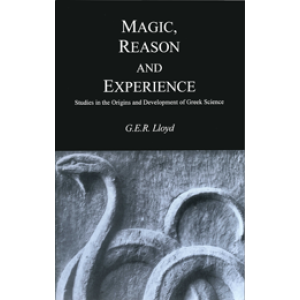
Magic, Reason and ExperienceThis study of the origins and progress of Greek science focuses especially on the interaction between scientific and traditional patterns of thought from the sixth to the fourth century BC. It begins with an examination of how particular Greek authors deployed the category of "magic," sometimes attacking its beliefs and practices; these attacks are then related to their background in Greek medicine and philosophical thought. In his second chapter Lloyd outlines developments in the theory and practice of argument in Greek science and assesses their significance. He next discuses the progress of empirical research as a scientific tool from the Presocratics to Aristotle. Finally, he considers why the Greeks invented science, their contribution to its history, and the social, economic, ideological and political factors that had a bearing on its growth.
Learn More -
![]() Science, Folklore and Ideology
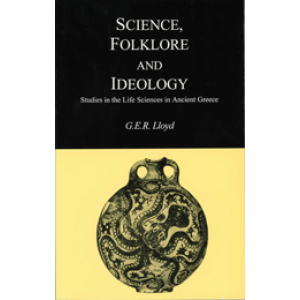
Science, Folklore and Ideology"[A] model of eclectic methodology, giving a fascinating picture of ancient views of animals, man, and medicine at the interface of popular belief and philosophy, of folklore and science, of ideology and criticism."
Learn More
—Helen King, Medical History -
![]() Statesman (Rowe Edition)
Statesman (Rowe Edition)“The original publication of Rowe’s translation in 1995 was a landmark event in the study of this fascinating but enigmatic dialogue. Based on a careful and convincing revised Greek text, the contemporary English of this unpretentious, clear, and—above all—accurate revised version make it by far the best available. In fact, Rowe’s translation is now and will surely remain the only acceptable choice.”
Learn More
—John Cooper, Princeton University -
![]() Four Island Utopias
Four Island UtopiasIncludes Plato's Atlantis, Euhemeros of Messene's Sacred Inscription, Iamboulos's Island of the Sun, and Bacon's New Atlantis, with a supplement of Utopian Prototypes, Developments and Variations.
Learn More -
![]() Empire and the Ends of Politics
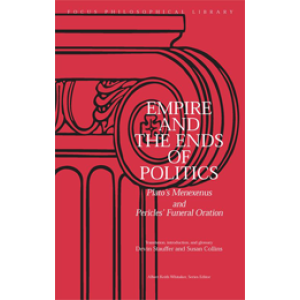
Empire and the Ends of PoliticsThis text brings together for the first time two complete key works from classical antiquity on the politics of Athens: Plato's Menexenus and Pericles' Funeral Oration (from Thucydides' history of the Peloponnesian War).
Learn More -
![]() Cratylus
Cratylus“It is. . . remarkable that Reeve’s is the first new English translation since Fowler’s Loeb edition of 1926. Fortunately, Reeve has done an excellent job. His version is not slavishly literal but is in general very accurate. It is also very clear and readable. Reeve is particularly to be congratulated for having produced versions of some of the more torturous passages, which are not only faithful to the text but also make good sense in English. The long and detailed introduction is worth reading in its own right.”
Learn More
—R. F. Stalley, The Classical Review -
![]() Phaedo (Brann, Kalkavage, & Salem Edition)
Phaedo (Brann, Kalkavage, & Salem Edition)"This marvelously conceived new translation of Plato's most important dialogue will set the standard for classroom use for many years to come. . . . The authors' imaginative new interpretation will inspire students and generate scholarly controversy-and is thus certain to accomplish what it suggests is the true aim of Socratic inquiry: the weaving, unweaving, and perpetual re-weaving of the Logos."
Learn More
—Dr. George R. Lucas, Jr., Professor of Philosophy, US Naval Academy, Annapolis -
![]() Politics (Reeve Edition)
Politics (Reeve Edition)“The beautifully crafted English of Reeve’s translation is as crisp and lucid as Aristotle’s Greek. One is constantly impressed with Reeve’s instinct for the right word in rendering the rich vocabulary of Aristotle’s thoughts about politics and for his ability to capture the subtleties of Aristotelian syntax. Highly recommended.” —David Keyt, University of Washington
“This is an admirable translation, meticulous in its attention to Aristotle’s Greek and judicious in its phrasing and choice of terms. It should prove invaluable to beginning students and scholars alike.” —Richard Kraut, Northwestern University
Learn More -
![]() Meno (Anastaplo & Berns Edition)
Meno (Anastaplo & Berns Edition)"This new translation of the Meno by Anastaplo and Berns has several distinctive features that make it useful for teaching and studying the dialogue. Generally achieving a balance between clarity and faithfulness, it includes valuable annotation, two appendices . . . and an innovative division of the text through the provision of numbers for each of it's speeches. . . . The overall result is a text that would give a reader unschooled in Greek a fairly reliable sense of the flow of ideas in the original."
Learn More
—William A. Welton, Loyola College, in Review of Metaphysics -
![]() Symposium (Sharon Edition)
Symposium (Sharon Edition)"The Symposium challenges the translator who is also a poet in its range of styles which is unique among the Platonic dialogues. Not only does the translator have to mimic the distinct style of the narrator, Apollodoros, and the seven symposiasts . . . he has to mind and represent the action in this the most dramatic of the Platonic dialogues. Sharon's translation meets these challenges and is a brilliant recovery of the style and drama of the Symposium. I know of no other translation that is so appropriately various in the styles adopted by and for the speakers or which is so attentive to the drama of this dialogue which celebrates a tragic victory."
Learn More
—Diskin Clay, Duke University -
![]() Hellenistic Philosophy (Second Edition)
Hellenistic Philosophy (Second Edition)This new edition of Hellenistic Philosophy—including nearly 100 pages of additional material—offers the first English translation of the account of Stoic ethics by Arius Didymus, substantial new sources on Epicureanism, Stoicism, and Scepticism, expanded representation of Plutarch and Cicero, and a fuller presentation of papyrological evidence. Inwood and Gerson maintain the standard of consistency and accuracy that distinguished their translations in the first edition, while regrouping some material into larger, more thematically connected passages. This edition is further enhanced by a new, more spacious page design.
Learn More -
![]() The Original Sceptics
The Original Sceptics"The Original Sceptics contains a wealth of analysis, argument and philological comment, and it undoubtedly succeeds in making the reader aware of the difficulties involved in discovering what the ancient sceptics really held.”
Learn More
—F. C. White, Australasian Journal of Philosophy -
![]() Plato's Cosmology
Plato's Cosmology“An indispensable storehouse of information and analysis—essential reading nowadays just as in 1935, when it first appeared. . . . Plato’s Cosmology continues to be the constant reference point of any serious study of the Timaeus.”
Learn More
—John M. Cooper, Princeton University -
![]() Plato: Complete Works
Plato: Complete Works"This is clearly the definitive edition in English of the Platonic writings. It replaces completely the Hamilton-Cairns collection. . . . The notes are at just the right level, and the index is very helpful. The translations are both readable and accurate." —Michael D. Rohr, Rutgers University
"The most important publishing event in Platonic translation is the Complete Works edited by Cooper and Hutchinson. . . . Hackett has lavished great care in the production of this volume: fine India paper, elegant typography, sewn binding, and cloth boards. . . . It should be in every library and on the shelves of all lovers of Plato." —Steven J. Willett, Syllecta Classica
Learn More -
![]() Aristotle: Introductory Readings
Aristotle: Introductory ReadingsDrawn from the translations and editorial aids of Irwin and Fine's Aristotle, Selections (Hackett Publishing Co., 1995), this anthology will be most useful to instructors who must try to do justice to Aristotle in a semester-long ancient-philosophy survey, but it will also be appropriate for a variety of introductory-level courses. Introductory Readings provides accurate, readable, and integrated translations that allow the reader to follow Aristotle's use of crucial technical terms and to grasp the details of his argument. Included are adaptations of the glossary and notes that helped make its parent volume a singularly useful aid to the study of Aristotle.
Learn More -
![]() Parmenides (Gill & Ryan Edition)
Parmenides (Gill & Ryan Edition)“Gill’s and Ryan’s Parmenides is, simply, superb: the Introduction, more than a hundred pages long, is transparently clear, takes the reader meticulously through the arguments, avoids perverseness, and still manages to make sense of the dialogue as a whole; there is a fine selective bibliography; and those parts of the translation I have looked at in detail suggest that it too is very good indeed.”
Learn More
—Christopher Rowe, Phronesis -
![]() Parmenides (Whitaker Edition)
Parmenides (Whitaker Edition)"Keith Whitaker's insightful introduction to this notoriously daunting text is valuable for its clarity and sobriety. The lucid interpretation will be of interest to those versed in the text and will be of great help to any who encounter the dialogue for the first time. The engaging translation humanizes the discourse without compromising its precision-a notable achievement that will earn the gratitude of readers."
Learn More
—Joseph Cropsey, University of Chicago -
![]() Sophist (Brann, Kalkavage, & Salem Edition)
Sophist (Brann, Kalkavage, & Salem Edition)This is an English translation of Plato presenting a new conception of the Theory of Forms. Socrates and others discuss the epistemological and metaphysical puzzles of the Parmenides, with aims to define the meaning of the Sophist. The glossary of key terms is a unique addition to Platonic literature by which concepts central to each dialogue are discussed and cross-referenced as to their occurrences throughout the work. In such a way students are encouraged to see beyond the words into concepts.
Learn More -
![]() The Presocratics
The PresocraticsThis comprehensive account of the history of ancient Greek thought circa 600 to 400 B.C. offers an accessible, nontechnical introduction to Presocratic philosophy. Translations of the surviving fragments of Presocratic writings serve as a foundation from which the discussion proceeds. Also included are maps, notes, and an index of names and terms. (Co-published in the U.K. by Gerald Duckworth and Company, Ltd. HPC holds rights in North America and U.S. Dependencies)
Learn More -
![]() Neoplatonism
Neoplatonism“An admirable account of a very difficult subject, remarkable for the erudition that clearly lies behind it as well as for its lucidity and good sense.”
Learn More
—Times Literary Supplement -
![]() Aristotle: Selections
Aristotle: SelectionsSelections seeks to provide an accurate and readable translation that will allow the reader to follow Aristotle's use of crucial technical terms and to grasp the details of his argument. Unlike anthologies that combine translations by many hands, this volume includes a fully integrated set of translations by a two-person team. The glossary—the most detailed in any edition—explains Aristotle's vocabulary and indicates the correspondences between Greek and English words. Brief notes supply alternative translations and elucidate difficult passages.
Learn More -
![]() Anaximander and the Origins of Greek Cosmology
Anaximander and the Origins of Greek CosmologyThrough criticism and analysis of ancient traditions, Kahn reconstructs the pattern of Anaximander’s thought using historical methods akin to the reconstructive techniques of comparative linguists.
Learn More -
![]() The Epicurus Reader
The Epicurus ReaderIncludes an introduction, the ancient biography of Epicurus, the extant letters, ancient collections of maxims, doxographical reports, the testimony of Cicero, the testimony of Lucretius, and the polemic of Plutarch. Short fragments and testimonia from known works: From On Nature, From the Puzzles, From On the Goal, From the Symposium, From Against Theophrastus, Fragments of Epicurus’ letters. Short fragments and testimonia from uncertain works: Logic and epistemology, Physics and theology, Ethics.
Learn More -
![]() The Stoics
The Stoics“Not only one of the best but also the most comprehensive treatment of Stoicism written in this century.”
Learn More
—Times Literary Supplement -
![]() Sophist (White Edition)
Sophist (White Edition)"This translation of one of Plato's most challenging dialogues is so unpretentiously honest that it risks undercutting its own significant merits. As far as I can judge, it will prove most helpful not only to students of classical studies and philosophy, but to anybody who is interested in the questions treated by the Sophist. Clarity seems to be the editor and translator's aim, and it is well achieved in: (a) an introduction which without philosophical arm-twisting brings in the views of some modern philosophers on negative and false statement (as inconclusive as Plato's), (b) a select bibliography and a summary of the arguments which students will find useful, and (c) a translation of the text in civilized modern English. Space forbids the adduction of parallel passages. However, I do not hesitate to claim that in terms of accuracy and credible conversational style, the translation will stand comparision with those of A.E. Taylor and F.M. Cornford."
Learn More
—David Rankin, in The Classical Review -
![]() Euthydemus (Sprague Edition)
Euthydemus (Sprague Edition)"This is the best translation available of a lively and challenging dialogue, which sets before the reader profound questions about the use and misuse of reason."
Learn More
—Myles Burnyeat, University of Cambridge -
![]() Philebus
PhilebusThis translation by Dorothea Frede of Plato’s dialogue on the nature of pleasure and its relation to thought and knowledge achieves a high standard of readability and fidelity to the Greek text. The volume includes a cogent introduction, notes, and comprehensive bibliography by Frede.
Learn More -
![]() Republic (Grube, Second Edition)
Republic (Grube, Second Edition)The revised edition of Grube’s classic translation follows and furthers Grube’s noted success in combining fidelity to Plato’s text with natural readability, while reflecting the fruits of new scholarship and insights into Plato’s thought since publication of the first edition in 1974. A new introduction, index, and bibliography by Professor Reeve are included in this new rendering.
“C.D.C. Reeve has taken the excellent Grube translation and, without sacrificing accuracy, rendered it into a vivid and contemporary style. It is intensity that is often lost in translation, but not here. This is not just a matter of style. The Republic is full of brilliant thoughts, and one needs to preserve brilliance to capture them. In the cave of translations, Reeve’s revision of Grube’s Republic is closest to the sun.” —Jonathan Lear, University of Chicago
Learn More -
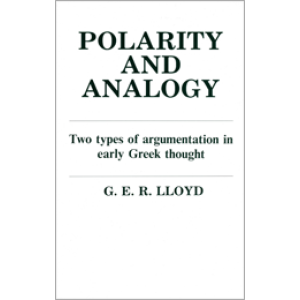
![]() Polarity and Analogy
Polarity and Analogy“The book’s major parts, one on polarity and the other on analogy, introduce the reader to the patterns of thinking that are fundamental not only to Greek philosophy but also to classical civilization as a whole. As a leading classicist in his own right, Lloyd is an impeccable guide. His sophistication in adducing anthropological parallels to Greek models of polarity and analogy broadens his perspective, making him a forerunner in the study of what we are now used to calling semiotics. A striking example of Lloyd’s approach is his re-examination of the dichotomy of Olympian and chthonian gods in ancient Greek world view, which surpasses the reductionist and pseudo-historical models of sky-gods and earth-goddesses that are still commonly invoked to account for polarities in Greek pantheon. In the second part, dealing with analogy, three crucial metaphorical models for the universe turn out to be basis for a dazzlingly wide variety of scientific and philosophical perspectives. Each model is tested in the whole spectrum of Greek artistic, philosophical and scientific thought. This work is a treasure-house of insights for experts and non experts alike.”
Learn More
—Gregory Nagy, Harvard University -
![]() Theaetetus (Williams Edition)
Theaetetus (Williams Edition)M. J. Levett's elegant translation of Theaetetus, first published in 1928, is here revised by Myles Burnyeat to reflect contemporary standards of accuracy while retaining the style, imagery, and idiomatic speech for which the Levett translation is unparalleled. Bernard Williams's concise introduction illuminates the powerful argument of this complex dialogue and illustrates its connections to contemporary metaphysical and epistemological concerns.
Learn More -
![]() Statesman (Skemp Edition)
Statesman (Skemp Edition)This edition of Martin Ostwald's revised version of J. B. Skemp's 1952 translation of Statesman includes a new selected bibliography, as well as Ostwald's interpretive introduction, which traces the evolution in Plato's political philosophy from Republic to Statesman to Laws—from philosopher-king to royal statesman.
Learn More -
![]() Laches and Charmides
Laches and Charmides“This excellent translation in current idiomatic English continues the superb quality set by Sprague in her previous version of Plato’s Euthydemus. . . . Its accuracy and reliability make the present volume suitable for use in various courses in the humanities.”
Learn More
—The Classical Outlook -
![]() The Theaetetus of Plato
The Theaetetus of Plato“Myles Burnyeat, the Lawrence Professor of Ancient Philosophy at Cambridge, has revised Levett’s translation to catch the charm and wit of the original in modern English, and has written a magnificent introduction and commentary of 250 pages that is lucid, rigorous, fair and un-put-downable.”
Learn More
—Philip Howard, The Times (London) -
![]() Prior Analytics
Prior Analytics“This volume is an impressive tour de force. It is state-of-the-art Aristotle: it employs the most recent philological, philosophical, and logical advances which since the 1970’s at least have rendered previous translations and commentaries obsolete. The translation is the first to take account of the recent epistemically orientated natural-deduction approach, which restores Aristotle’s reputation as a consummate logician and reveals much more of Aristotle’s method than previous approaches. Every page of Robin Smith’s commentary shows extensive learning, taste, imagination, and skill. . . . An important and lasting contribution, not only to Aristotle scholarship and to the history of logic, but also to the history of philosophy itself.”
Learn More
—John Corcoran, SUNY Buffalo -
![]() Symposium (Woodruff & Nehamas Edition)
Symposium (Woodruff & Nehamas Edition)"A model of the kind of text one needs for lecture courses: the translation is extremely readable and made even more accessible by intelligent printing decisions (on dividing the text, spacing for clarification, etc.); the notes are kept to a minimum but appear when they are really needed for comprehension and are truly informative. And the introduction admirably presents both basic information and a sense of current scholarly opinion." —S. G. Nugent, Princeton University
"A fantastic book. Translation is graceful and elegant yet uncannily accurate. Footnotes very useful, especially for teaching purposes, and the price is surprisingly low." —Eve Browning Cole, University of Minnesota
Learn More -
![]() Socrates in the Apology
Socrates in the Apology“Reeve’s book is an excellent companion to Plato’s Apology and a valuable discussion of many of the main issues that arise in the early dialogues. Reeve is an extremely careful reader of texts, and his familiarity with the legal and cultural background of Socrates’ trial allows him to correct many common misunderstandings of that event. In addition, he integrates his reading of the apology with a sophisticated discussion of Socrates’ philosophy. The writing is clear and succinct, and the research is informed by a thorough acquaintance with the secondary literature. Reeve’s book will be accessible to any serious undergraduate, but it is also a work that will have to be taken into account by every scholar doing advanced research on Socrates.”
Learn More
—Richard Kraut, Northwestern University -
![]() On Poetry and Style
On Poetry and StyleContains the Poetics and the first twelve chapters of the Rhetoric, Book III.
Learn More