The Hackett Signature Editions Collection Featuring Premium Hardcovers of Hackett Classics - Learn More Here.

Modern Philosophy
-
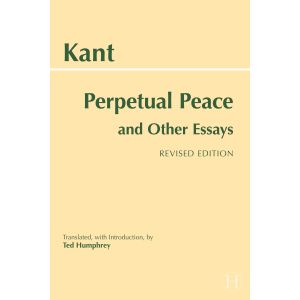
![]() Perpetual Peace and Other Essays (Revised Edition)
Perpetual Peace and Other Essays (Revised Edition)Written at the height of Kant’s philosophical maturity, the six essays included in this volume reflect his concern with issues of critical interest to his contemporaries—and to us. Their major themes include the nature and course of human history, the role of war in the history of people and nations and the principles on which lasting peace among them might be built, and the role of human reason and freedom in shaping the world in which we find ourselves.
These essays on politics, history, and moral practice build on and illustrate the consequences of Kant’s philosophy in his three Critical masterpieces and provide an important key for understanding that watershed in historical theory between the Enlightenment and nineteenth-century idealistic theories. With entirely new typesetting, this updated edition of Ted Humphrey’s 1983 translation restores inadvertent textual elisions, modifies translations of some significant terms, makes idiomatic adjustments in the English throughout, updates the Bibliography, and clarifies the conceptual and argumentative relationships among the essays.
Learn More -
![]() The World and Man
The World and ManIn late 1633, as Descartes was preparing The World and Man for publication, he learned that Galileo had been condemned by the Catholic Church for defending the motion of the earth. His reaction to the news was swift and powerful: as his own treatises also espoused the proposition deemed heretical, he canceled their publication. More than thirty years after Descartes had begun his project, these works were finally published, posthumously, both to acclaim and to controversy. Together, they profoundly influenced the course of modern philosophy.
Learn More -
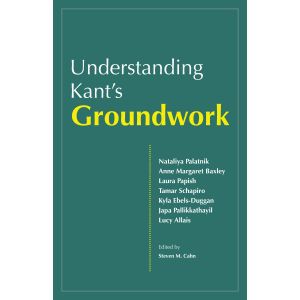
![]() Understanding Kant's Groundwork
Understanding Kant's GroundworkImmanuel Kant’s Groundwork for the Metaphysics of Morals is widely regarded as one of the most influential works in the history of moral philosophy. Indeed, any student of ethics will soon encounter a translation of the book, although trying to read it is likely to cause bewilderment. What, one may ask, is Kant trying to say? This book provides the answers. Here, seven highly regarded teachers and scholars of Kant’s ethics offer remarkably clear explanations of the most important concepts in the Groundwork: the good will, happiness, duty, hypothetical and categorical imperatives, the Formula of Universal Law, the Formula of Humanity, and freedom.
“This is the rare guide to Kant’s Groundwork suitable even for students new to philosophy. The clear, concise chapters focus on only the most essential concepts from all three sections of the Groundwork. The authors expertly illuminate Kant’s ethical thought and facilitate engagement with the text.” —Lara Denis, Agnes Scott College
Learn More -
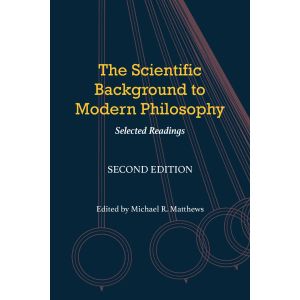
![]() The Scientific Background to Modern Philosophy (Second Edition)
The Scientific Background to Modern Philosophy (Second Edition)Through a collection of works from key thinkers in natural philosophy, the second edition of The Scientific Background to Modern Philosophy illuminates the central role scientific writing played in developing modern philosophical thought. This revised and expanded edition includes many new translations and incorporates works by foundational eighteenth- and nineteenth-century thinkers not in the first edition, including selections from works by Jean-Baptiste, le Rond d’Alembert, Denis Diderot, Émilie Du Châtelet, Jean-Jacques Rousseau, Joseph Priestley, Immanuel Kant, Carl Linnaeus, William Paley, and Charles Robert Darwin. These new additions provide students with a more comprehensive understanding of the scientific context in which the major philosophical works of the modern era were written and complement the selections from works by Nicolaus Copernicus, Francis Bacon, Galileo Galilei, René Descartes, Robert Boyle, Christiaan Huygens, and Isaac Newton that are retained from the first edition.
Learn More -
![]() Cavendish: Philosophical Letters, Abridged
Cavendish: Philosophical Letters, AbridgedSeries: Early Modern and Modern Women Philosophers
"Margaret Cavendish (1623–1673) is a fascinating figure who is getting increasing attention by historians of philosophy these days, and for good reason. . . . She’s an interesting advocate of a vitalist tradition emphasizing the inherent activity of matter, as well as its inherent perceptive faculties. She’s also the perfect character to open students (and their teachers) up to a different seventeenth century, and a different cast of philosophical characters. This is an ideal book to use in the classroom. The Philosophical Letters (1664) gives us Cavendish’s view of what was interesting and important in the philosophical world at that moment, a view of philosophy as it was at the time by an engaged participant. There are few documents like it in the history of philosophy. Deborah Boyle’s Introduction provides a very accessible summary of Cavendish’s natural philosophy, as well as good introductions to the other figures that Cavendish discusses in the book. Boyle’s annotations are not extensive, but they are a great help in guiding the student toward an informed reading of the texts." —Daniel Garber, Princeton University
Learn More -
![]() Modern Philosophy (Third Edition)
Modern Philosophy (Third Edition)The most widely read anthology for the study of modern philosophy, this volume provides key works of philosophers and other leading thinkers of the period, chosen to enhance the reader’s understanding of modern philosophy and its relationship to the natural sciences of the time. The third edition incorporates important contributions of women and minority thinkers into the canon of the modern period, while retaining all of the material of the previous edition. Included are works by Princess Elisabeth, Margaret Cavendish Duchess of Newcastle, Lady Anne Conway, Anton Wilhelm Amo, Lady Damaris Masham, Lady Mary Shepherd, and Emilie Marquise Du Châtelet.
"This is a wonderful text. . . . [T]he changes made for the 3rd edition are very welcome (especially the new selections from women and philosophers of color). I can't see using any other text, particularly at this very reasonable price point." —Steven Burgess, Benedictine University
Download the complete Table of Contents (PDF)
Learn More -
![]() On the Social Contract (Second Edition)
On the Social Contract (Second Edition)This new edition features a revision by Donald A. Cress of his bestselling 1987 translation of On the Social Contract together with Introduction, footnotes, and chronology by David Wootton, one of our leading historians of the Enlightenment.
Learn More -
![]() Utilitarianism (Eggleston Edition)
Utilitarianism (Eggleston Edition)"Eggleston has produced easily the best edition of Utilitarianism available. By conveniently including so many of the relevant passages from supplementary works, all organized for ease of reference, scholars and students alike will now have at their fingertips the materials needed to make sense of Mill's classic text. This is important not just for an accurate understanding of Mill's own moral and political philosophy, but for a proper appreciation of utilitarianism as a leading moral tradition." —Piers Norris Turner, Associate Professor of Philosophy, The Ohio State University
Learn More -
![]() Observations upon Experimental Philosophy, Abridged
Observations upon Experimental Philosophy, Abridged"Margaret Cavendish's philosophical work is at last taking its rightful place in the history of seventeenth-century thought, but her writings are so voluminous and wide-ranging that introducing her work to students has been difficult—at least until this volume came along. This carefully edited abridgment of Observations upon Experimental Philosophy will be indispensable for making Cavendish's fascinating ideas accessible to students. Marshall's Introduction provides a helpful overview of themes in Cavendish's natural philosophy, and the footnotes contain useful background information about some of the texts and philosophers that Cavendish mentions. The additional selections from Descartes, Hobbes, Boyle, and Hooke also help contextualize Cavendish's views." —Deborah Boyle, College of Charleston
Learn More -
![]() The Essential Leviathan
The Essential LeviathanThis edition of Leviathan is intended to provide the reader with a modestly abridged text that is straightforward and accessible, while preserving Hobbes' main lines of argument and of thought. It is meant for those who wish to focus primarily on the philosophical aspects of the work, apart from its stylish but often daunting early modern prose. The editors have updated language, style, punctuation, and grammar throughout. Very long, complicated sentences have been broken into two or more sentences for enhanced readability. In some instances, terms within a sentence are rearranged for enhanced clarity. Occasionally, an equivalent contemporary word is substituted for an archaic one. Ellipses indicate omissions of more than one sentence. Care has been taken to maintain the strength, nuance, and flavor of the work, especially of Hobbes' most difficult arguments. In addition, the volume offers a general Introduction and concise headnotes to each chapter. Annotation is geared to the student or novice reader. A glossary of key terms is also included, as well as an index.
A free author's Companion to The Essential Leviathan for students is available to download (PDFs) on the title support page here.
Learn More -
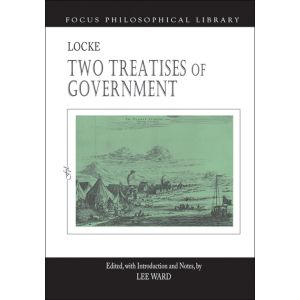
![]() Two Treatises of Government
Two Treatises of GovernmentDesigned to serve the needs of students confronting Locke’s political thought for the first time, Lee Ward’s edition offers a faithful text of Two Treatises of Government with modernized spelling and punctuation. Its Editor’s Introduction outlines the main arguments of these works, illustrates the conceptual thread uniting the less frequently read First Treatise with the far more famous Second Treatise, and locates Locke’s work amid the turbulent constitutional battles of 1690s England. Helpful notes at the foot of the page, a Thematic Index, and an up-to-date Bibliography are also provided.
Learn More -
![]() Meditations, Objections, and Replies
Meditations, Objections, and RepliesThis edition features reliable, accessible translations; useful editorial materials; and a straightforward presentation of the Objections and Replies, including the objections from Caterus, Arnauld, and Hobbes, accompanied by Descartes' replies, in their entirety. The letter serving as a reply to Gassendi—in which several of Descartes' associates present Gassendi's best arguments and Descartes' replies—conveys the highlights and important issues of their notoriously extended exchange. Roger Ariew's illuminating Introduction discusses the Meditations and the intellectual environment surrounding its reception.
Learn More -
![]() Spinoza: The Letters
Spinoza: The Letters"Especially valuable is the very scholarly Introduction and commentary. Probably no Spinoza scholars are more knowledgeable about the man, his times, and his philosophy; and they provide what I find to be really helpful guidance."
Learn More
—Paul Eisenberg, Indiana University -
![]() A Vindication of the Rights of Woman
A Vindication of the Rights of Woman"A thoughtful and useful abridgement of an essential historical, political, and philosophical text. [Barnard and Shapiro] have managed to preserve the tone and arguments of the original while shedding much of the redundancy and lengthy quotations of external sources that can be off-putting and cumbersome for today's readers. The explanatory footnotes added to the text are helpful without being overbearing."
Learn More
—Katrin Schultheiss, George Washington University -
![]() Rousseau: The Basic Political Writings (Second Edition)
Rousseau: The Basic Political Writings (Second Edition)This substantially revised new edition of Rousseau: The Basic Political Writings features a brilliant new Introduction by David Wootton, a revision by Donald A. Cress of his own 1987 translation of Rousseau’s most important political writings, and the addition of Cress’ new translation of Rousseau's State of War. New footnotes, headnotes, and a chronology by David Wootton provide expert guidance to first-time readers of the texts.
Learn More -
![]() Theories of Human Nature
Theories of Human Nature“A very fine book on human nature, both what it is and what philosophers have thought about it—philosophers in an inclusive sense, from Plato and Aristotle to Mengzi and Xunzi, from Hume and Kant to Ibn al-Arabi to Marx and Rousseau and including many others. The writing is lively and accessible, the philosophy insightful, and the sense of human possibilities conveyed admirable. It will fit nicely into many different sorts of classes.”
Learn More
—John Perry, Stanford University -
![]() Religion within the Bounds of Bare Reason
Religion within the Bounds of Bare ReasonWerner S. Pluhar's masterful rendering of Kant's major work on religion is meticulously annotated and presented here with a selected bibliography, glossary, and generous index. Stephen R. Palmquist's engaging Introduction provides historical background, discusses Religion in the context of Kant's philosophical system, elucidates Kant's main arguments, and explores the implications and ongoing relevance of the work.
Learn More -
![]() Discourse on Method (Kennington Edition)
Discourse on Method (Kennington Edition)This Focus Philosophical Library edition includes a new translation of Descartes' seminal discourse, with an original essay by Richard Kennington. This text is designed to provide the student with a close translation, notes, and a glossary of key terms, facilitating access to ideas as they originally were presented and helping to make the translator's work transparent.
Learn More -
![]() Voltaire: Philosophical Letters
Voltaire: Philosophical Letters“This fluid new translation, with abundant explanatory notes and an insightful Introduction to Voltaire’s literary strategies, will make an excellent edition for students, as well as a useful resource for scholars.”
Learn More
—Ann Blair, Harvard University -
![]() Hume: Moral Philosophy
Hume: Moral Philosophy"A genuine understanding of Hume's extraordinarily rich, important, and influential moral philosophy requires familiarity with all of his writings on vice and virtue, the passions, the will, and even judgments of beauty—and that means familiarity not only with large portions of A Treatise of Human Nature, but also with An Enquiry Concerning the Principles of Morals and many of his essays as well. This volume is the one truly comprehensive collection of Hume's work on all of these topics. Geoffrey Sayre-McCord, a leading moral philosopher and Hume scholar, has done a meticulous job of editing the texts and has provided an extensive Introduction that is at once accessible, accurate, and philosophically engaging, revealing the deep structure of Hume's moral philosophy."
Learn More
—Don Garrett, New York University -
![]() The Essential Spinoza
The Essential Spinoza"Absolutely magnificent edition! I will be using it in all my introductory courses. . . . I also will use it in my 16th and 17th-century History of Philosophy course. . . . Just a wonderful collection, great translations, good editorial additions as well. Terrific selection!"
Learn More
—Abba Lessing, Professor of Philosophy, Lake Forest College -
![]() Political Treatise
Political TreatiseThe Political Treatise, Spinoza’s final work, is a largely theoretical inquiry into the fundamental principles of political philosophy. This edition offers an exceptional translation by Samuel Shirley and a prefatory essay by Douglas Den Uyl that discusses why the Political Treatise deserves the attention of contemporary scholars. Steven Barbone and Lee Rice provide ample notes, a substantial bibliography, complete indexes of names and terms, and a comprehensive general introduction, which considers the evolution of Spinoza’s political thought in the context of the political and intellectual turmoil of the times, the relationship between the Political Treatise and the Theological-Political Treatise, and the importance of the Political Treatise to a full understanding of Spinoza’s political philosophy.
Learn More -
![]() Pensées
PenséesThis eloquent and philosophically astute translation is the first complete English translation based on the Sellier edition of Pascal’s manuscript, widely accepted as the manuscript that is closest to the version Pascal left behind on his death in 1662. A brief history of the text, a select bibliography of primary and secondary sources, a chronology of Pascal’s life and works, concordances between the Sellier and Lafuma editions of the original, and an index are provided.
Learn More -
![]() Spinoza's Theologico-Political Treatise
Spinoza's Theologico-Political TreatiseA complete translation in English of this modern text, with substantive apparatus to allow the student and serious reader to grapple in a meaningful way with this seminal text. The text includes ample footnotes, Spinoza's annotations, an interpretative essay, glossary and other indices.
Learn More -
![]() To Perpetual Peace
To Perpetual PeaceIn this short essay, Kant completes his political theory and philosophy of history, considering the prospects for peace among nations and addressing questions that remain central to our thoughts about nationalism, war, and peace. Ted Humphrey provides an eminently readable translation, along with a brief introduction that sketches Kant’s argument.
Learn More -
![]() Locke: The Political Writings
Locke: The Political WritingsThis comprehensive collection brings together the main published works (excluding polemical attacks on other people’s views) with the most important surviving evidence from among Locke’s papers relating to his political philosophy. David Wootton’s wide-ranging and scholarly Introduction sets the writings in the context of their time, examines Locke’s developing ideas and unorthodox Christianity, and analyzes his main arguments. The result is the first fully rounded picture of Locke’s political thought in his own words.
Learn More -
![]() Spinoza: The Complete Works
Spinoza: The Complete Works"This elegant volume has been produced to a very high standard, is easy to handle, affordably priced, and, most importantly, renders Spinoza accurately into clear and graceful English. It will undoubtedly become an indispensable tool for all serious readers of Spinoza. . . . The supporting editorial material of this volume—the work of Michael L. Morgan—is . . . judicious and reliable. His eight-page Introduction offers a succinct interpretive overview of Spinoza’s system that will be thought-provoking for specialists, while also basic enough to be accessible to novice Spinozists. Morgan also provides a very useful chronology of Spinoza’s life, a brief introduction to each work, and a light apparatus of footnotes."
Learn More
—Adam Sutcliffe, The Jewish Quarterly Review -
![]() The Philosophy of Right
The Philosophy of RightDesigned for graduate and advanced undergraduate courses in philosophy and political science, this edition features a glossary keyed to the primary occurrences of important terms in the text and provides insights into the concepts beyond the translation—an especially useful pedagogical device for students coming to Hegel for the first time.
Learn More -
![]() Critique of Practical Reason
Critique of Practical ReasonWith this volume, Werner Pluhar completes his work on Kant’s three Critiques, an accomplishment unique among English language translators of Kant. At once accurate, fluent, and accessible, Pluhar’s rendition of the Critique of Practical Reason meets the standards set in his widely respected translations of the Critique of Judgment (1987) and the Critique of Pure Reason (1996). Stephen Engstrom's Introduction discusses the place of the second Critique in Kant's critical philosophy, its relation to Kant's ethics, and its practical purpose and provides an illuminating outline of Kant's argument.
Learn More -
![]() Prolegomena to Any Future Metaphysics (Second Edition)
Prolegomena to Any Future Metaphysics (Second Edition)This edition of Prolegomena includes Kant’s letter of February, 1772 to Marcus Herz, a momentous document in which Kant relates the progress of his thinking and announces that he is now ready to present a critique of pure reason.
Learn More -
![]() Theological-Political Treatise (Second Edition)
Theological-Political Treatise (Second Edition)“Samuel Shirley is undoubtedly the most significant translator of Spinoza’s writings into English.”
Learn More
—Douglas Den Uyl, Bellarmine College -
![]() Discourse on Method, Optics, Geometry, and Meteorology
Discourse on Method, Optics, Geometry, and MeteorologyThis volume preserves the format in which Discourse on Method was originally published: as a preface to Descartes’s writings on optics, geometry, and meteorology. In his introduction, Olscamp discusses the value of reading the Discourse alongside these three works, which sheds new light on Descartes’s method. Includes an updated bibliography.
Learn More -
![]() Rameau's Nephew, and Other Works
Rameau's Nephew, and Other Works"It’s the best edition and the best translation available, one of Jacques Barzun’s most outstanding gifts to teachers. Bravo!”
Learn More
—William R. Everdell, St. Ann’s School -
![]() Spirit
Spirit"One problem in teaching Hegel’s Phenomenology of Spirit is the sheer size of the work, which makes it intractable within the time limits of the typical North American university semester course. The judicious instructor can use this pivotal Chapter Six of the book as a vehicle for summing up the themes that Hegel has been developing from the beginning, and for anticipating the conclusion to which they lead. Students are more likely to grasp the substance of the work by this method than by the usual practice of concentrating on the Preface and the first three Chapters. Most misunderstandings of Hegel are due to the limitations of precisely this practice. Chapter Six is a literary and philosophical masterpiece in its own right. I cannot think of any more perceptive synthetic view of the development of European culture than is contained here.”
Learn More
—George di Giovanni, McGill University -
![]() Kant's Theory of Knowledge
Kant's Theory of KnowledgeWhile most interpretive studies of the Critique of Pure Reason are either too scholarly or too superficial to be of practical use to students, Hartnack has achieved a concise comprehensive analysis of the work in a lucid style that communicates the essence of extraordinarily complex arguments in the simplest possible way. An ideal companion to the First Critique, especially for those grappling with the work for the first time.
Learn More -
![]() Readings In Modern Philosophy, Volume 2
Readings In Modern Philosophy, Volume 2This anthology offers the key works of Locke, Berkeley, and Hume in their entirety or in substantial selections, along with a rich selection of associated texts by other leading thinkers of the period.
Learn More -
![]() Readings In Modern Philosophy, Volume 1
Readings In Modern Philosophy, Volume 1This anthology offers the key works of Descartes, Spinoza, and Leibniz in their entirety or in substantial selections, along with a rich selection of associated texts by other leading thinkers of the period.
Learn More -
![]() Philosophical Essays and Correspondence
Philosophical Essays and CorrespondenceA superb text for teaching the philosophy of Descartes, this volume includes all his major works in their entirety, important selections from his lesser known writings, and key selections from his philosophical correspondence. The result is an anthology that enables the reader to understand the development of Descartes’s thought over his lifetime. Includes a biographical Introduction, chronology, bibliography, and index.
Learn More -
![]() Between Kant and Hegel
Between Kant and HegelThis volume fills a lamentable gap in the philosophical literature by providing a collection of writings from the pivotal generation of thinkers between Kant and Hegel. It includes some of Hegel’s earliest critical writings—which reveal much about his thinking before the first mature exposition of his position in 1807—as well as Schelling’s justification of the new philosophy of nature against skeptical and religious attack. This edition contains George di Giovanni’s extensive corrections, new preface, and thoroughly updated bibliography.
Learn More -
![]() Leibniz and Clarke: Correspondence
Leibniz and Clarke: CorrespondenceFor this new edition, Roger Ariew has adapted Samuel Clarke’s edition of 1717, modernizing it to reflect contemporary English usage. Ariew’s introduction places the correspondence in historical context and discusses the vibrant philosophical climate of the times. Appendices provide those selections from the works of Newton that Clarke frequently refers to in the correspondence. A bibliography is also included.
Learn More -
![]() Discourse on Method and Meditations on First Philosophy (Fourth Edition)
Discourse on Method and Meditations on First Philosophy (Fourth Edition)This edition contains Donald Cress's completely revised translation of the Meditations (from the corrected Latin edition) and recent corrections to Discourse on Method, bringing this version even closer to Descartes's original, while maintaining the clear and accessible style of a classic teaching edition.
Learn More -
![]() Critique of Pure Reason, Abridged
Critique of Pure Reason, Abridged“Eric Watkins has done a fine job of abridging the Critique to a manageable size while preserving those sections most often assigned in a survey course, including enough of the Analytic to provide a continuous argument. Students will get a good sense of the whole from the parts he includes. I recommend it enthusiastically.”
Learn More
—Kenneth R. Winkler, Wellesley College -
![]() Metaphysical Elements of Justice (Second Edition)
Metaphysical Elements of Justice (Second Edition)This volume offers the complete text of Kant’s Metaphysics of Morals, Part I, translated by John Ladd, along with Ladd’s illuminating Introduction to the first edition, expanded to include discussion of such issues as Kant’s conception of marriage and its relevance to his view of women. An updated bibliography, glossary, and index are also provided.
Learn More -
![]() Discourse on Method (Cress, Third Edition)
Discourse on Method (Cress, Third Edition)By far the most widely used translation in North American college classrooms, Donald A. Cress's translation from the French of the Adam and Tannery critical edition is prized for its accuracy, elegance, and economy. The translation featured in the Third Edition has been thoroughly revised from the 1979 First Edition and includes page references to the critical edition for ease of comparison.
Learn More -
![]() Dialogues Concerning Natural Religion (Second Edition)
Dialogues Concerning Natural Religion (Second Edition)Hume's brilliant and dispassionate essay "Of Miracles" has been added in this expanded edition of his Dialogues Concerning Natural Religion, which also includes "Of the Immortality of the Soul," "Of Suicide," and Richard Popkin's illuminating Introduction.
Learn More -
![]() Principles of Cartesian Philosophy
Principles of Cartesian PhilosophyWith meticulous scholarship and an accurate, highly readable translation, this volume sheds light not only on Spinoza’s debt to Descartes but also on the development of Spinoza’s own thought. Appearing for the first time in English translation, Lodewijk Meyer’s inaugural dissertation on matter (1683)—relevant for its comments on Descartes, Spinoza, and other thinkers of the time—is appended with notes and a short commentary. Cross-references to Descartes’s Principles of Philosophy are provided in an index, and there is an extensive bibliography.
Learn More -
![]() The Breakdown of Cartesian Metaphysics
The Breakdown of Cartesian Metaphysics“Original and stimulating. . . . The four new chapters deserve close attention. . . . Readers will await further studies by Richard A. Watson all the more impatiently.”
Learn More
—Jean-Luc Marion, Archives de Philosophie -
![]() Critique of Pure Reason
Critique of Pure Reason“The text rendered by Pluhar is the work of an expert translator . . . the virtues of his text are manifold; his translation exhibits an incontrovertible mastery of both English and German. Equally important is the fact that Pluhar has given the original a very close read during the act of translating. . . . Pluhar consistently resists the tendency to translate woodenly word-for-word. . . . In point of fact, accuracy of translation stands in no direct relation to literalness; it is much more a product of meticulous textual reading and skilful writing, and in this respect Pluhar has no modern equals in English Kant translation.”
Learn More
—James Jakob Fehr, Kant-Studien -
![]() Some Thoughts Concerning Education and of the Conduct of the Understanding
Some Thoughts Concerning Education and of the Conduct of the UnderstandingThis volume offers two complementary works, unabridged, in modernized, annotated texts—the only available edition priced for classroom use. Grant and Tarcov provide a concise introduction, a note on the texts, and a select bibliography.
Learn More