The Hackett Signature Editions Collection Featuring Premium Hardcovers of Hackett Classics - Learn More Here.

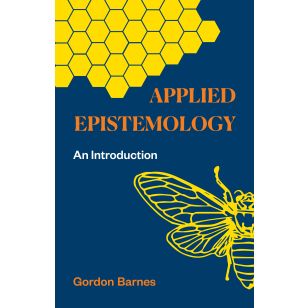
Applied Epistemology
Human knowledge is fundamentally social. Most of the processes by which we acquire and evaluate information in everyday life—giving and receiving testimony, identifying experts, and relying on them—involve whole communities of people. The successful use of knowledge to solve problems is thus most often a collective achievement. Likewise, the failure to leverage knowledge is seldom the fault of a single individual.
Beginning each chapter with a real-life example, Applied Epistemology demonstrates how various concepts of knowledge relate to problems arising in practical contexts. From trusting testimony and recognizing experts, to acknowledging bias and resisting propaganda, Applied Epistemology teaches us how to use theories of knowledge to navigate our complex world.
SKU
Applied Epistemology
Human knowledge is fundamentally social. Most of the processes by which we acquire and evaluate information in everyday life—giving and receiving testimony, identifying experts, and relying on them—involve whole communities of people. The successful use of knowledge to solve problems is thus most often a collective achievement. Likewise, the failure to leverage knowledge is seldom the fault of a single individual.
Beginning each chapter with a real-life example, Applied Epistemology demonstrates how various concepts of knowledge relate to problems arising in practical contexts. From trusting testimony and recognizing experts, to acknowledging bias and resisting propaganda, Applied Epistemology teaches us how to use theories of knowledge to navigate our complex world.
Additional Resources:
Sample Syllabus: Download a sample syllabus (Word file).
Supplemental Materials PDF: Download a PDF with links to online content and an additional reading list. Contents include:
Links to case studies: Short scenarios that could be used for small-group discussion, to apply theoretical concepts from the readings.
Links to external resources: Materials that may be used to supplement lectures by showing them to the class as a whole and leading large-group discussions based on the issues they raise.
Recommend primary texts: For additional readings to be assigned outside of class, to allow students to study key concepts or important texts mentioned in each chapter in more depth.
Reviews:
"This is an excellent introduction to applied epistemology. By engaging with vivid, real-world cases, Barnes grapples with pressing questions posed by expertise, disagreement, propaganda, artificial intelligence, and more. Highly recommended." —Hrishikesh Joshi, The University of Arizona
"An excellent and accessible demonstration of how fundamental problems and theories in epistemology apply to important real-world issues." —Michael Veber, East Carolina University
About the Author:
Gordon Barnes is Associate Professor of Philosophy at the State University of New York at Brockport.