The Hackett Signature Editions Collection Featuring Premium Hardcovers of Hackett Classics - Learn More Here.

Religion


-
![]() Apology for Raymond Sebond
Apology for Raymond Sebond“Roger Ariew and Marjorie Grene, with the help of Hackett’s modest pricing scheme, have made this challenging, infuriating, ironic and hilarious classic readily available in a faithful and well-presented translation. . . . Scholars will find this volume a fine choice for introducing students to early modern philosophy. . . . This is a welcome publication.”
Learn More
—Craig Walton, Philosophy in Review -
![]() The Daodejing of Laozi
The Daodejing of Laozi"Why another translation of the Daodejing? Ivanhoe manages, unlike some scholarly translators, to respect the intellectual, social, philosophic, historic, and spiritual integrity of the text and to put the text into a readable, insightful, and elegant English rendering of the most famous of the early Daoist classics."
Learn More
—John Berthrong, Boston University School of Theology -
![]() Images of Women in Chinese Thought and Culture
Images of Women in Chinese Thought and CultureThis rich collection of writings—many translated especially for this volume and some available in English for the first time—provides a journey through the history of Chinese culture, tracing the Chinese understanding of women as elucidated in writings spanning more than two thousand years. From the earliest oracle bone inscriptions of the Pre-Qin period through the poems and stories of the Song Dynasty, these works shed light on Chinese images of women and their roles in society in terms of such topics as human nature, cosmology, gender, and virtue.
Learn More -
![]() God (Second Edition)
God (Second Edition)“I have found God to be the most balanced, readable, and enjoyable synthesis of philosophy of religion materials available today. My students insist it is the book they will not re-sell at the close of the semester.”
Learn More
—Dr. Virginia Osborn, Belmont University -
![]() A Summary of Philosophy
A Summary of Philosophy“Those who want to approach [the Summa Theologiae] in English cannot do better than study Regan’s volume. It will provide them with a solid and reliable basis from which to take their studies of Aquinas further. . . . Regan’s translations are always accurate. . . . And, in producing them, he has managed to deliver texts written in elegant, intelligible, and idiomatic English.”
Learn More
—Brian Davies, International Philosophical Quarterly -
![]() The Treatise on Human Nature
The Treatise on Human Nature“Pasnau’s fine translation renders Aquinas’ Latin into contemporary English prose that avoids, as much as possible, scholastic as well as contemporary jargon. The translation is precise, but technical only when it has to be, and should give readers a very good sense for what Aquinas was trying to accomplish. The commentary will be exceptionally useful to readers at all levels. Those unfamiliar with Aquinas will find helpful introductions and guides, while even scholars will find useful hints and convincing corrections of time-honored mistakes.”
Learn More
—Jeffrey Hause, Creighton University -
![]() Spinoza: The Complete Works
Spinoza: The Complete Works"This elegant volume has been produced to a very high standard, is easy to handle, affordably priced, and, most importantly, renders Spinoza accurately into clear and graceful English. It will undoubtedly become an indispensable tool for all serious readers of Spinoza. . . . The supporting editorial material of this volume—the work of Michael L. Morgan—is . . . judicious and reliable. His eight-page Introduction offers a succinct interpretive overview of Spinoza’s system that will be thought-provoking for specialists, while also basic enough to be accessible to novice Spinozists. Morgan also provides a very useful chronology of Spinoza’s life, a brief introduction to each work, and a light apparatus of footnotes."
Learn More
—Adam Sutcliffe, The Jewish Quarterly Review -
![]() The Book of Doctrines and Beliefs
The Book of Doctrines and Beliefs“Daniel Frank’s Introduction is excellent, not just for the undergraduate reader, but, indeed, for any reader, specialist or layperson. It manages to find just the right combination of philosophy and history; it sends the reader to the right places for further reading; its judgments are quite sound. And the reissue of the Altmann translation is a wonderful idea.”
Learn More
—Charles Manekin, University of Maryland -
![]() Essays on the Moral Philosophy of Mengzi
Essays on the Moral Philosophy of Mengzi"It is difficult to do justice to the richness of all the essays in this short review. . . . [T]he exceptionally rigorous and inspiring scholarship offered by this collection has laid the groundwork for future inquiries, and anyone interested in Chinese thought will benefit greatly from engaging with the authors' enlightening and rewarding reconstructions of Mengzi's moral philosophy. This is a remarkable achievement, especially given the fact that the Mengzi is an exceedingly difficult text."
Learn More
—Yang Xiao, Journal of the American Academy of Religion -
![]() Ethics in the Confucian Tradition (Second Edition)
Ethics in the Confucian Tradition (Second Edition)"This enlightening book is a comparative study of the moral and metaphysical theories of these two luminaries of the Confucian tradition. . . . Ivanhoe draws in masterful strokes the trajectory of the Confucian image of the sage, from the semi-divine creator heroes revered by Kongzi, to Mengzi's human exemplars of perfected self-cultivation, to Wang Yangming's concept of the innate sagehood of every human."
Learn More
—Rene Goldman, Pacific Affairs -
![]() Three Philosophical Dialogues
Three Philosophical Dialogues"An excellent job. Williams's translation remains faithful to the Latin text while simultaneously proving clear and readable. I'm confident that both the introduction and the translation itself will motivate further study."
Learn More
—Christina Van Dyke, Calvin College -
![]() Theological-Political Treatise (Second Edition)
Theological-Political Treatise (Second Edition)“Samuel Shirley is undoubtedly the most significant translator of Spinoza’s writings into English.”
Learn More
—Douglas Den Uyl, Bellarmine College -
![]() Consolation of Philosophy
Consolation of Philosophy"Entirely faithful to Boethius' Latin; Relihan's translation makes the philosophy of the Consolation intelligible to readers; it gives equal weight to the poetry—in fact, Relihan's metrical translation of Boethius' metra are themselves contributions of the first moment to Boethian studies. Boethius finally has a translator equal to his prodigious talents and his manifold vision."
Learn More
—Joseph Pucci, Brown University -
![]() Proslogion
Proslogion"Williams' translation is scrupulously faithful and accurate without being slavishly literal, and yet is lively and graceful to both the eye and the ear." —Paul Vincent Spade, Indiana University
Learn More -
![]() The Inner Chapters
The Inner Chapters"Graham’s study and translation of the Zhuangzi remains one of the most valuable and important sources for students of Zhuangzi’s thought. The Introduction is remarkably rich, and the combination of philological care and philosophical insight that Graham brings to the text make this the most philosophically revealing and productive translation available.”
Learn More
—Philip J. Ivanhoe, Boston University -
![]() Roman Religion: A Sourcebook
Roman Religion: A Sourcebook"Professor Warrior's book is a useful anthology of readings which, diligently chosen and intelligently arranged, display the essential elements of Roman religion in its most interesting period." —Christopher McDonough, Boston College
"I am currently using Valerie M. Warrior’s Greek Religion: a Sourcebook and her Roman Religion: a Sourcebook for my class on Paganism. They are absolutely outstanding, in terms of the selection, the range of topics, and the level of detail provided. I will keep using these as long as I keep teaching the class (I hope for decades!). I would recommend them to anyone. Perfect to supplement a class based mainly on lectures, and to get students digging into the real sources of our knowledge and engaging with them." —Jack Mitchell, Department of Classics, Dalhousie University
Learn More -
![]() Philosophical and Theological Writings
Philosophical and Theological WritingsThis volume brings together Rosenzweig’s central essays on theology and philosophy, including two works available for the first time in English: the conclusion to Rosenzweig’s book Hegel and the State, and Rosenzweig’s famous letter to Rudolph Ehrenberg known as the “Urzelle of the Star of Redemption,” an essential work for understanding Rosenzweig, Weimar theology and philosophy, and German idealism and the existential reaction of the period. Additional selections are presented in new or revised translations. Introduction and notes by Franks and Morgan set Rosenzweig’s works in context and illuminate his role as one of the key thinkers of the period.
Learn More -
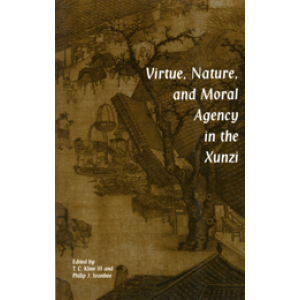
![]() Virtue, Nature, and Moral Agency in the Xunzi
Virtue, Nature, and Moral Agency in the XunziThis volume collects some of the most accessible and important contemporary essays on the thought of Xunzi, with an Introduction that provides historical background, philosophical context, and relates each of the selections to Xunzi's philosophy as a whole and to the themes of virtue, nature, and moral agency. These themes are also discussed in relation to Western philosophical concerns.
Learn More -
![]() Confucian Moral Self Cultivation (Second Edition)
Confucian Moral Self Cultivation (Second Edition)A concise and accessible introduction to the evolution of the concept of moral self-cultivation in the Chinese Confucian tradition, this volume begins with an explanation of the pre-philosophical development of ideas central to this concept, followed by an examination of the specific treatment of self cultivation in the philosophy of Kongzi ("Confucius"), Mengzi ("Mencius"), Xunzi, Zhu Xi, Wang Yangming, Yan Yuan and Dai Zhen. In addition to providing a survey of the views of some of the most influential Confucian thinkers on an issue of fundamental importance to the tradition, Ivanhoe also relates their concern with moral self-cultivation to a number of topics in the Western ethical tradition. Bibliography and index are included.
Learn More -
![]() Oedipus Tyrannus
Oedipus Tyrannus"A clear, vigorous, spare, actable translation, and with it, excellent apparatus (Intro., notes, bibliography); all in a slim and affordable volume. I will use when I next teach Oedipus. Hackett is an invaluable resource!” —Rachel Hadas, Rutgers University
"I have enjoyed all of the recent Hackett editions of translations of Greek literature and "Oedipus Tyrannus” is certainly no exception. Meineck and Woodruff got things just right, from employing "Tyrannus” instead of "Rex” in the title (as has become traditional, though it lends an erroneous sense to the play from the outset) to Woodruff’s very fine and accessible Introduction to the suspenseful, poetic and powerful rendering of the play itself. Meineck’s theatrical sensibility and knowledge are evident, yet the text never becomes too "stagey” nor wanders far from the Greek. I will definitely use this text along with other terrific Hackett editions in my courses." —Lisa Rengs George, Arizona State University
Learn More -
![]() Dialogue on Good, Evil, and the Existence of God
Dialogue on Good, Evil, and the Existence of God"Perry’s work is an engaging, highly readable introduction to the problem of natural and moral evil with respect to belief in an omniscient, omnipotent, and morally perfect God. This dialogue would work well as a supplement in either an introduction to philosophy or philosophy of religion course. . . . Perry is to be commended for taking a very difficult subject and making it accessible to a more general audience.”
Learn More
—Jeff Wisdom, Biola University -
![]() On Faith and Reason
On Faith and Reason"Stephen Brown of Boston College has done an extremely useful service in providing this anthology of appropriate readings on Aquinas and his views on ‘faith and reason.’ The selections are intelligently chosen; the introduction to the book is excellent, especially the section locating Aquinas over against Augustine."
Learn More
—Ian Markham, Theological Book Review -
![]() On Human Nature
On Human Nature“The substantial Introduction and the selection have been done . . . extremely well. The Introduction makes illuminating connections between the thought of Aquinas and Descartes. . . . The book’s usefulness is enhanced by the bibliography.”
Learn More
—Ian Markham, Theological Book Review -
![]() Oresteia
Oresteia“Peter Meineck’s new rendition of the Oresteia is that rare and wonderful thing: a text accessible to the Greekless audience while still preserving the vocabulary of Aeschylus. Those of us who have seen Peter Meineck's performances have long marveled at his ability to turn Greek into clear English, how he does not do ‘versions’ of the plays, how he does not rewrite the ancients into modern jargon (even his comedies maintain more Aristophanic text than is usual). Here lines that students have always needed explicated stand clear. . . . Helene Foley has provided a fine introduction for this translation. Introduction and translation together provide an exciting text, one that should be widely read, widely used.” —Karelisa Hartigan, University of Florida, in The Classical Outlook
Learn More -
![]() On the Inner Life of the Mind
On the Inner Life of the MindBoth an anthology of Augustine’s writings and a commentary on them, this work features substantial selections from On the Trinity, Confessions, The City of God, and On Freedom of the Will, as well as selections from lesser known works—all brilliantly knit together and illuminated by philosopher Robert Meagher.
Learn More -
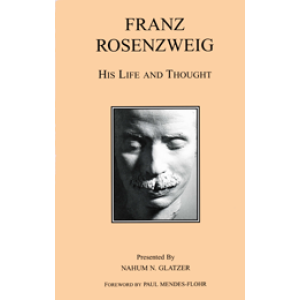
![]() Franz Rosenzweig
Franz Rosenzweig“Rosenzweig’s life combined a fabulous spiritual search, a profound engagement with philosophy as well as with Judaism, and enormous accomplishment in the face of overwhelming physical handicaps. His thought is both illuminated by and realized in his amazing life. Nahum Glatzer has brought both the life and the thought together in this marvelous collection. There is no better introduction to this seminal Jewish thinker.”
Learn More
—Hilary Putnam, Harvard University -
![]() Dialogues Concerning Natural Religion (Second Edition)
Dialogues Concerning Natural Religion (Second Edition)Hume's brilliant and dispassionate essay "Of Miracles" has been added in this expanded edition of his Dialogues Concerning Natural Religion, which also includes "Of the Immortality of the Soul," "Of Suicide," and Richard Popkin's illuminating Introduction.
Learn More -
![]() Basic Writings of St. Thomas Aquinas, Volume 1 of 2
Basic Writings of St. Thomas Aquinas, Volume 1 of 2Includes the whole of the First Part of the Summa Theologica. Pegis’s revision and correction of the English Dominican Translation renders Aquinas’ technical terminology consistently as it conveys the directness and simplicity of Aquinas’ writing; the Introduction, notes, and index aim at giving the text its proper historical setting, and the reader the means of studying St. Thomas within that setting.
Learn More -
![]() Basic Writings of St. Thomas Aquinas, Volume 2 of 2
Basic Writings of St. Thomas Aquinas, Volume 2 of 2Includes substantial selections from the Second Part of the Summa Theologica and the Summa Contra Gentiles. Pegis’s revision and correction of the English Dominican Translation renders Aquinas’ technical terminology consistently as it conveys the directness and simplicity of Aquinas’ writing; the Introduction, notes, and index aim at giving the text its proper historical setting, and the reader the means of studying St. Thomas within that setting.
Learn More -
![]() Basic Writings of St. Thomas Aquinas, 2 Volume Set
Basic Writings of St. Thomas Aquinas, 2 Volume SetIncludes the whole of the First Part of the Summa Theologica and substantial selections from the Second Part and the Summa Contra Gentiles. Pegis’s revision and correction of the English Dominican Translation renders Aquinas’ technical terminology consistently as it conveys the directness and simplicity of Aquinas’ writing; the Introduction, notes, and index aim at giving the text its proper historical setting, and the reader the means of studying St. Thomas within that setting.
Learn More -
![]() What Is Art?
What Is Art?Maude’s excellent translation of Tolstoy’s treatise on the emotionalist theory of art was the first unexpurgated version of the work to appear in any languages. More than ninety years later this work remains, as Vincent Tomas observed, “one of the most rigorous attacks on formalism and on the doctrine of art for art’s sake ever written.” Tomas’s Introduction makes this the edition of choice for students of aesthetics and anyone with philosophical interests.
Learn More -
![]() Gandhi: Selected Political Writings
Gandhi: Selected Political WritingsBased on the complete edition of his works, this new volume presents Gandhi’s most important political writings arranged around the two central themes of his political teachings: satyagraha (the power of non-violence) and swaraj (freedom). Dennis Dalton’s general Introduction and headnotes highlight the life of Gandhi, set the readings in historical context, and provide insight into the conceptual framework of Gandhi’s political theory. Included are bibliography, glossary, and index.
Learn More -
![]() Monologion and Proslogion
Monologion and Proslogion"Williams's translations are scrupulously faithful and accurate without being slavishly literal, and yet are lively and graceful."
Learn More
—Paul Vincent Spade, Indiana University -
![]() The Guide of the Perplexed
The Guide of the Perplexed“The reissue of Guttmann’s edition of Rabin’s translation is a welcome event. There has long been a need for a readable, judicious edition, for classroom use, of this large and complex work.”
Learn More
—Michael L. Morgan, Indiana University -
![]() Neoplatonism
Neoplatonism“An admirable account of a very difficult subject, remarkable for the erudition that clearly lies behind it as well as for its lucidity and good sense.”
Learn More
—Times Literary Supplement -
![]() Augustine: Political Writings
Augustine: Political Writings"[This volume] offers one-stop access to the political ideas of a major pre-modern thinker. The translations are fresh, accurate, supple, and clear, and the notes and comments are helpful. Ernest Fortin's excellent Introduction sets the central text, the City of God, in historical perspective and outlines problems Augustine faced in trying to reconcile Christian faith with the legitimate demands of civic life."
Learn More
—Alan R. Perreiah, Teaching Philosophy -
![]() Tao Te Ching
Tao Te ChingThis translation captures the terse and enigmatic beauty of the ancient original and resists the tendency toward interpretive paraphrase found in many other editions. Along with the complete translation, Lombardo and Addiss provide one or more key lines from the original Chinese for each of the eighty-one sections, together with a transliteration of the Chinese characters and a glossary commenting on the pronunciation and meaning of each Chinese character displayed. This greatly enhances the reader's appreciation of how the Chinese text works and feels and the different ways it can be translated into English.
"This crystalline translation of the Tao Te Ching is accurate down to the nuance and as concisely poetic as the original. It preserves the quirks and flavors of the original text. The translators hearkened to the message of the book itself, and kept it clear and gently strong. Of the many translations I have read in English, this is unquestionably the best." —Gary Snyder, University of California at Davis
Learn More -
![]() The Grand Inquisitor
The Grand Inquisitor"This collection gives us a sense of the depth of Dostoevsky's insights into human life and suffering and of his profound understanding of the tensions and dangers of modernity. Guignon's Introduction is a brilliant study that shows how profoundly the 'legend of the Grand Inquisitor' speaks to our day." —Charles Taylor, McGill University
"Guignon's Introduction is by far the best available to these texts, and is, for its clarity and depth, one of the finest Introductions to complex literary or philosophical material that I've ever read." —Stephen L. Collins, Babson College
Learn More -
![]() The Journey of the Mind to God
The Journey of the Mind to GodThe Hackett edition of this classic of medieval philosophy and mysticism—a plan of pilgrimage for the learned Franciscan wishing to reach the apex of the mystical experience—combines the highly regarded Boehner translation with a new introduction by Stephen Brown focusing on St. Francis as a model of the contemplative life, the meaning of the Itinerarium, its place in Bonaventure’s mystical theology, and the plan of the work. Boehner’s Latin Notes, as well as Latin texts from other works of Bonaventure included in the Franciscan Institute Edition, are rendered here in English, making this the edition of choice for the beginning student.
Learn More -
![]() Spinoza: Ethics
Spinoza: Ethics"Professor Shirley has provided a translation which is fluent, eminently readable, and responsive to current research into Spinoza's thought. Where a particular passage is difficult or obscure, Shirley never attempts to interpose himself between the reader and Spinoza, nor to side with one or another competing school of interpretation. This makes his translation not just an ideal introduction for the reader new to Spinoza, but also a trustworthy source of insight for the more advanced reader."
Learn More
—Lee C. Rice, Marquette University -
![]() The Essential Plotinus
The Essential Plotinus“The Essential Plotinus is a lifesaver. For many years my students in Greek and Roman Religion have depended on it to understand the transition from antiquity to the Middle Ages. The translation is crisp and clear, and the excerpts are just right for an introduction to Plotionus’s many-layered view of the world and humankind’s place in it.”
Learn More
—F. E. Romer, University of Arizona -
![]() Philosophy in the Middle Ages (Third Edition)
Philosophy in the Middle Ages (Third Edition)The third edition builds on the strengths of the second by preserving its essential shape while adding several important new texts—including works by Augustine, Boethius, Pseudo-Dionysius the Areopagite, Anselm, al-Fārābī, al-Ghazālī, Ibn Rushd, Bonaventure, Thomas Aquinas, and John Duns Scotus—and featuring new translations of many others. The volume has also been redesigned and its bibliographies updated with the needs of a new generation of students in mind.
Learn More -
![]() The Letters
The Letters"Especially valuable is the very scholarly Introduction and commentary. Probably no Spinoza scholars are more knowledgeable about the man, his times, and his philosophy; and they provide what I find to be really helpful guidance."
Learn More
—Paul Eisenberg, Indiana University