The Hackett Signature Editions Collection Featuring Premium Hardcovers of Hackett Classics - Learn More Here.

Homeschool History
-
![]() Barbarians in the Greek and Roman World
Barbarians in the Greek and Roman World"A fascinating study of interrelatedness among peoples that does much to undermine the conventional notion of there being an essentialist divide between Greco-Roman and barbarian culture and peoples. Jensen's work is not only a testimony to the truly multicultural dimension of the ancient Mediterranean, but also a reminder of how contemporary prejudices help shape our view of past societies. The world that the author paints is 'a tumult of different ideas, interpretations, and conflicts that had no final resolution.' What better reason could a historian offer for studying antiquity? Both readable and scholarly, Barbarians in the Greek and Roman World has a refreshingly modern ring and delivers an important modern message." —Robert Garland, Colgate University
"This book is excellent, and even necessary, reading for any survey of the ancient world. Easy to read and unafraid to explain scholarly arguments, Jensen takes his readers on a tour of the so-called Greek and Roman world. While he follows traditional chronological and temporal boundaries, he does not adhere to the old scholarly lens. In fact, by directly challenging it, he opens our eyes to an entirely different ancient world. Rather than speak from the heart of the Roman forum or the Athenian agora, Jensen approaches ancient history from the position of an outsider, as a scholar unwilling to settle on simple narratives of progress from single centers, but rather forcefully admitting difference. Ultimately, Jensen illustrates the benefit of moving beyond the Greeks and the Romans and the importance of doing so. After all, as far as the Romans and Greeks were concerned, we—the English-speaking readers that form Jensen's audience—are as much, if not more, barbarian than Greco-Roman!" —Brian Turner, Portland State University
Learn More -
![]() Daily Life in Ancient Rome
Daily Life in Ancient Rome"There’s a tremendous amount to admire in Brian Harvey’s new Daily Life in Ancient Rome: A Sourcebook. And it stands out as a superior work against all the competing texts. Specifically, much careful thought, attention, and effort has gone into ensuring that the work is ideal for students and interested non-professionals. The texts are all translated into clear, accurate English. They are also thoroughly contextualized, both in categories as well as individually. This insistence on the historicity of the sources sets the book apart from the norm. The book also benefits from Harvey’s extensive, almost encyclopedic, knowledge of inscriptions, which are used as important sources along with the literary excerpts. Finally, the many photos by the author himself augment the texts and are themselves analyzed as unique sources."
Learn More
—Steven L. Tuck, Miami University, Ohio -
![]() Daily Life of the Ancient Greeks (Second Edition)
Daily Life of the Ancient Greeks (Second Edition)Significantly expanded and updated in light of the most recent scholarship, the second edition of Garland's engaging introduction to ancient Greek society brings this world vividly to life—and, in doing so, explores the perspectives and morals of typical ancient Greek citizens across a wide range of societal levels. Food and drink, literacy, the plight of the elderly, the treatment of slaves, and many more aspects of daily life in ancient Greece also come into sharp focus. More than sixty illustrations are included, as are maps, a chronology, a glossary of Greek terms, and suggestions for further reading.
Learn More -
![]() Renaissance Humanism
Renaissance Humanism"By far the best collection of sources to introduce readers to Renaissance humanism in all its many guises. What distinguishes this stimulating and useful anthology is the vision behind it: King shows that Renaissance thinkers had a lot to say, not only about the ancient world—one of their habitual passions—but also about the self, how civic experience was configured, the arts, the roles and contributions of women, the new science, the 'new' world, and so much more."
Learn More
—Christopher S. Celenza, Johns Hopkins University -
![]() Seven Myths of Native American History
Seven Myths of Native American HistorySeries: Myths of History
"Seven Myths of Native American History will provide undergraduates and general readers with a very useful introduction to Native America past and present. Jentz identifies the origins and remarkable staying power of these myths at the same time he exposes and dismantles them."
—Colin G. Calloway, Dartmouth College"Misconceptions continue to shape public perceptions of American Indians. Deeply ingrained cultural fictions, what Jentz (history, North Hennepin Community College) refers to as myths, have had a lasting hold on popular understanding of Native Americans. In this readable and engaging overview, Jentz provides an important corrective, one that not only catalogs key stories and stereotypes but also lays a foundation for challenging them. As the title indicates, Jentz seeks to demystify seven fundamental ideas about American Indians through critical histories. Following a helpful introductory discussion, he devotes a chapter to each myth. Specifically, he unpacks (1) the noble savage, (2) the ignoble savage, (3) wilderness and wildness, (4) the vanishing native, (5) the authentic Indian, (6) the ecological Indian, and (7) the mystical native. Throughout, Jentz employs clear language and tangible examples to clarify each myth and its significance. [T]his work will greatly benefit nonspecialists, including high school teachers and students. The volume will be useful as either a textbook in introductory courses in Native American studies or as secondary reading. Summing Up: Highly recommended."
Learn More
—C. R. King, Washington State University, in Choice -
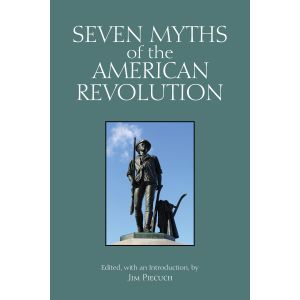
![]() Seven Myths of the American Revolution
Seven Myths of the American Revolution"In fast-paced, crystal-clear prose, these four veteran historians quash not just seven myths about the American Revolution but dozens. If you think that slavery was inevitable, that British commanders were lazy nincompoops, or that Indigenous warriors were nothing more than British pawns, you will savor the challenge of Seven Myths of the American Revolution just as much as I did."
Learn More
—Woody Holton, University of South Carolina, author of Liberty Is Sweet: The Hidden History of the American Revolution (Simon & Schuster, 2021) -
![]() Seven Myths of the Civil War
Seven Myths of the Civil WarSeries: Myths of History
"Readers of this book who thought they knew a lot about the U.S. Civil War will discover that much of what they 'knew' is wrong. For readers whose previous knowledge is sketchy but whose desire to learn is strong, the separation of myth from reality is an important step toward mastering the subject. The essays will generate lively discussion and new insights." —James M. McPherson, Professor Emeritus, Princeton University
"Wesley Moody's clear, engaging book tackles enduring Civil War myths with grace, candor, and persuasive evidence. By exploring a wide range of subjects including the war's causes, soldiers, leaders, prisons, and battlefields, this volume's group of talented historians accomplishes more than myth busting. Each scholar reveals deeper, more satisfying stories hidden beneath Civil War fallacies and falsehoods. As a result, Civil War students and enthusiasts will find more than facts in this compelling book; they’ll encounter the complexities of real war, the long shadows of memory, and the hard work that historians conduct to illuminate the past." —Jason Phillips, Eberly Professor of Civil War History, West Virginia University
Learn More -
![]() The Accessible Federalist
The Accessible Federalist"I assign students to read The Federalist so they will grasp the ideas. But too often they can’t get past the words. Adam Seagrave's The Accessible Federalist will enable readers of all backgrounds to understand the ideas that shaped the Constitution. It will also spur many readers onward to study and appreciate the original texts. I hope it gets wide attention and classroom use." —James H. Read, Professor of Political Science, College of Saint Benedict and Saint John’s University
Learn More -
![]() The Essential Douglass
The Essential Douglass"For years I have wanted a compact, carefully edited collection of Frederick Douglass’ writings and speeches spanning his whole career—from the antebellum years to the Civil War and Reconstruction to the retreat from racial democracy in the 1870s, ’80s, and ’90s. Finally, in Nicholas Buccola’s expertly edited The Essential Douglass: Selected Writings & Speeches, I have it. Buccola has done teachers and scholars of American political thought a tremendous service by making a truly representative selection of Douglass’ achievement available in an affordable volume. I am excited to assign this book to my students and share with them the full breadth of Douglass’ intellectual fire." —Jack Turner, University of Washington
Download a PDF of the Table of Contents.
Learn More -
![]() The Essential Federalist and Anti-Federalist Papers
The Essential Federalist and Anti-Federalist Papers“An excellent edition of the key writings surrounding the adoption of the American Constitution. The learned Introduction brings to life the key intellectual debates at the heart of modern constitutionalism as well as those concerning the American Constitution. A fine critical edition.”
—Frederick Rosen, University College London“This is an excellent collection that fills a need—of all the document collections on the founding era, there is no one-volume collection with both Federalist and Anti-Federalist opinions—and none so affordably priced! I look forward to adopting this book in my general U.S. history and advanced U.S. legal history courses.”
Learn More
—Christopher Capozzola, History Department, MIT -
![]() The Essential Greek Historians
The Essential Greek HistoriansIncludes an introduction, maps, and selections from Herodotus' The Histories, Thucydides' History of the Peloponnesian War, Xenophon's The Hellenica, Aristotle's The Constitution of Athens, The Parian Marble, Polybius' The Histories, Memnon's History of Heracleia, Plutarch's Life of Alexander. See the full Table of Contents (PDF) here.
"Burstein’s The Essential Greek Historians is an excellent collection of texts representing the development of historiography in the ancient Greek world. Each text is presented in an engaging and readable translation, with an insightful introduction exploring the purposes behind its composition, the significance of its contribution to the growth of historiography as a literary genre, and the context in which its author thought and wrote. These texts include not only familiar favorites like Herodotus and Thucydides, but also sources such as The Parian Marble and Memnon's History of Heracleia, which give a broader and richer view of the ways in which Greeks engaged with history. In one economical volume, Burstein has created an indispensable introduction to the historical thought of the ancient Greeks. No student of Greek historiography should be without it." —Erik Jensen, Salem State University
Learn More -
![]() The Essential Thucydides: On Justice, Power, and Human Nature (Second Edition)
The Essential Thucydides: On Justice, Power, and Human Nature (Second Edition)Thucydides was the first ancient Greek historian to double as a social scientist. He set out to understand human events entirely in human terms, without recourse to myth. He sought to know why people go to war and how they are affected by its violence. He studied the civil war in Corcyra, which began when radicals burst into the council house and killed leaders who favored democracy. The strengths and weaknesses of democracy are a major theme of his History. Its larger story shows how the Athenians tried to expand their empire too far and came to a crushing defeat. Here are vivid stories of land and sea battles, interspersed with fascinating and disturbing debates about war and policy. All of Thucydides’s History is here, either in summary or translation, in a volume short enough for a wide readership. This Second Edition is expanded to include all the important debates and battle scenes, and the entire translation has been revised in accord with the latest scholarship. The Essential Thucydides is the second edition of Paul Woodruff's On Justice, Power, and Human Nature: Selections from The History of the Peloponnesian War (first published by Hackett 1993, paperback ISBN 978-0-87220-168-2, cloth ISBN 978-0-87220-169-9).
“At last—a good way to navigate the choppy waters of Thucydides’s account of the Great War! Woodruff has focused on themes of lasting importance—human nature, justice, and war itself. These have guided his skillful selection of passages and his deft explanatory comments, all in a fast-moving, readable style.”
Learn More
—W. R. Connor, Andrew Fleming West Professor of Classics, Emeritus, Princeton University -
![]() The French Revolution
The French Revolution"This new edition of Mason and Rizzo's anthology is a welcome addition to the study of the revolutionary and Napoleonic French Atlantic. It includes a wealth of documents related to life in metropolitan and colonial France from the middle of the eighteenth century through the Napoleonic Consulate as well as concise section overviews that detail experiences on the continent and in Saint-Domingue, France’s wealthiest Caribbean colony, during this tumultuous era. These features, along with images, maps, and a detailed timeline, provide an invaluable resource for scholars and students alike."
Learn More
—Rebecca Hartkopf Schloss, Texas A&M University -
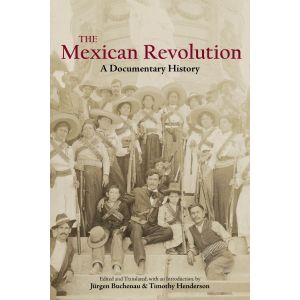
![]() The Mexican Revolution
The Mexican RevolutionSelected as one of the best historical materials of 2023 by the Reference and User Services Association, a division of The American Library Association.
"Henderson and Buchenau have done an excellent and thoughtful job of collecting a wide range of voices for students to learn about the Mexican Revolution and its causes, both from ‘above’ and from ‘below’. I’m particularly appreciative of the authors’ inclusion of women’s voices and women’s issues of the era, including the point of view of the first woman elected to public office in Mexico. They deserve praise for including documents that complicate widely accepted, heroic revolutionary narratives of the period for students—such as the experience of soldaderas and the massacre of Chinese people in Torreón. It is also worth mentioning that the editors have done an admirable job in choosing documents from across Mexico’s many diverse and heterogenous regions. The general Introduction is excellent; it is both accurate and highly readable for students. It is no easy feat to succinctly describe both the events and the significance of this period in Mexican history as the authors have done here." —Sarah Osten, The University of Vermont
Learn More -
![]() The Prince (Wootton Edition)
The Prince (Wootton Edition)"This is an excellent, readable and vigorous translation of The Prince, but it is much more than simply a translation. The map, notes and guide to further reading are crisp, to-the-point and yet nicely comprehensive. The inclusion of the letter to Vettori is most welcome. But, above all, the Introduction is so gripping and lively that it has convinced me to include The Prince in my syllabus for History of Western Civilization the next time that I teach it. . . . Great price, too! And lovely printing and layout."
Learn More
—Rachel Fulton, University of Chicago