The Hackett Signature Editions Collection Featuring Premium Hardcovers of Hackett Classics - Learn More Here.

Virtual Exhibits and Special Events
-
![]() A Rulebook for Arguments (Fifth Edition)
A Rulebook for Arguments (Fifth Edition)"This is the ultimate 'how-to' book for anyone who wants to use reasons and evidence in support of conclusions, to be clear instead of confusing, persuasive instead of dogmatic, and better at evaluating the arguments of others." —Debra Nails, Michigan State University
From academic writing to personal and public discourse, the need for good arguments and better ways of arguing is greater than ever before. This timely fifth edition of A Rulebook for Arguments sharpens an already-classic text, adding updated examples and a new chapter on public debates that provides rules for the etiquette and ethics of sound public dialogue as well as clear and sound thinking in general.
Learn More -
![]() A Workbook for Arguments: A Complete Course in Critical Thinking (Third Edition)
A Workbook for Arguments: A Complete Course in Critical Thinking (Third Edition)David Morrow and Anthony Weston build on Weston’s acclaimed A Rulebook for Arguments to offer a complete textbook for a course in critical thinking or informal logic. The third edition of Workbook includes:
* The entire text of the recent fifth edition of the Rulebook, supplementing this core text with extensive further explanations and exercises.
* Updated and improved homework exercises ensure that the examples continue to resonate with today’s students. Roughly one-third of the exercises have been replaced with updated or improved examples.
* A new chapter on engaging constructively in public debates—including five new sets of exercises—trains students to engage respectfully and constructively on controversial topics, an increasingly important skill in our hyper-partisan age. Three new critical thinking activities offer further opportunities to practice constructive dialogue.
Additional Resources: Companion website for A Workbook for Arguments.
Download the complete Table of Contents (PDF)
Learn More -
![]() Abortion (Fourth Edition)
Abortion (Fourth Edition)This new edition of Abortion: The Supreme Court Decisions includes all of the major Supreme Court decisions on abortion since the 1960s—as well as many majority, dissenting, and plurality opinions—carefully edited for use by researchers, journalists, and teachers in a variety of disciplines.
Learn More -
![]() Aeneid (Lombardo Edition)
Aeneid (Lombardo Edition)"Crisp, idiomatic, and precise, this is a translation for our era. The list of further reading, grounded in the writings of W.R. Johnson (who also wrote the Introduction) and Michael C. J. Putnam, suggests the context that informs the translation: here, as the translator says in the Preface, you will find an Aeneid that works more in the shadows than in the light. . . . This translation would be excellent for classroom use: not only would it incite fascinating discussions about issues of war and empire, but it also reads well aloud. . . . Together with Johnson's Introduction, this volume offers the Aeneid in terms that will resonate strongly with the general reader of today." —Sarah Spence, New England Classical Journal
"Adapting words of the ancient critic Longinus, [Lombardo] refers to the intense light of noon of the Iliad, the magical glow of the setting sun in the Odyssey, and the chiaroscuro of the Aeneid, a darkness visible. This latter phrase is the title of a famous interpretation of the Aeneid by W. R. Johnson, who contributes a splendid essay to the translation. Whether recited or read, the present volume stands as another fine performance on Lombardo's part. Summing up: Highly recommended."
—C. Fantazzi, CHOICE"Lombardo...tends to let Virgil be Virgil, and so avoids imposing unwarranted interpretation on the unwary reader. . . . [W.R. Johnson's] introduction is masterful and illuminating." —Hayden Pelliccia, The New York Review of Books
Learn More -
![]() Aeneid: Book 10
Aeneid: Book 10Vergil: Aeneid 10 is part of a new series of commentaries on the Aeneid. Each volume adapts, with extensive revisions and additions, the commentaries of T. E. Page (1884, 1900) and is edited by a scholar of Roman epic. The present volume offers the Latin text of Book 10 along with extensive notes and commentary designed to meet the needs of intermediate students of Latin.
“The new Vergil commentaries from Focus are an exciting resource for almost anyone reading the Aeneid in Latin. The editors recognize that developing core reading skills and involving students in the interpretive questions raised by the poem are not separate objectives. This recognition has resulted in commentaries that enticingly present basic information in a wider setting of observation and enquiry. All in all, the Focus series balances simplicity and subtlety, reminding students at all levels that increasing technical precision and stretching one’s interpretive curiosity are—fundamentally—one endeavor.”
Learn More
—Antonia Syson, late of Purdue University, in Teaching Classical Languages (CAMWS) -
![]() Afonso I Mvemba a Nzinga, King of Kongo
Afonso I Mvemba a Nzinga, King of Kongo“John K. Thornton’s new book is another must-read. It contains both translations of the extant letters of the most significant king of Kongo’s history, Afonso I (r. 1506–1542), and a powerful, learned, and highly readable analysis of what these letters tell us about the life and times of one of the most important rulers anywhere in the world during the sixteenth century. This book will be essential reading for scholars, teachers, and students engaged with the history of the Kingdom of Kongo.”
Learn More
—Toby Green, King’s College London -
![]() Alexander The Great
Alexander The GreatComprising relevant selections from the four ancient writers whose portraits of Alexander the Great still survive—Arrian, Diodorus, Plutarch, and Quintus Curtius—this volume provides a complete narrative of the important events in Alexander's life. The Introduction sets these works in historical context, stretching from the conclusion of the Peloponnesian War through Alexander's conquest of Asia, and provides an assessment of Alexander's historical importance as well as a survey of the central controversies surrounding his personality, aims and intentions. This edition includes a timeline, maps, a bibliography, a glossary, and an index.
Learn More -
![]() An Introduction to the Ethics of Social Media
An Introduction to the Ethics of Social Media"Doug Campbell lays out a comprehensive and fair-minded account of both the benefits and the drawbacks of social media for our era. He attaches these evaluations to both the individual and to society as a whole. The case studies are compelling and exhibit a keen awareness of the current moment. How should we live, now that many or even most of us are at least partially online? Campbell addresses this question from the point of view of privacy, attention, politics, misinformation, online ostracism, online friendship, and the potential benefits of simply quitting social media or at least some of its more pernicious platforms. Along the way, Campbell ties his discussions back to philosophical concerns raised by Plato, Aristotle, and Xunzi, among others. He also connects his discussion with recent work in feminist philosophy. And each chapter concludes with a succinct definition of key terms and suggested case studies and discussion topics that will engage students at all levels. An impressive accomplishment, and one that deserves a place in the classroom."
Learn More
—Mark Alfano, Macquarie University -
![]() An Introduction to Utilitarianism
An Introduction to UtilitarianismAn Introduction to Utilitarianism: From Theory to Practice is a state-of-the-art text, simultaneously accessible to introductory students and informative for more advanced readers. Two key features set it apart. First, its comprehensive coverage of the arguments for and against utilitarianism is unparalleled. Second, it takes seriously the practical implications of utilitarianism for how we should live, with a particular emphasis on utilitarianism's impartial beneficence and its focus on effectiveness. Guided by the conviction that practical ethics is more about how best to use our limited time and resources than which victims to hit with trolleys in thought experiments, its practical upshots should prove amenable to utilitarians and non-utilitarians alike.
Learn More -
![]() Ancient Rome
Ancient Rome"Terrific . . . exactly the sort of collection we have long needed: one offering a wide range of texts, both literary and documentary, and that—with the inclusion of Sulpicia and Perpetua—allows students to hear the voices of actual women from the ancient world. The translations themselves are fluid; the inclusion of long extracts allows students to sink their teeth into material in ways not possible with traditional source books. The anonymous texts, inscriptions, and other non-literary material topically arranged in the 'Documentary' section will enable students to see how the documentary evidence supplements or undermines the views advanced in the literary texts. This is a book that should be of great use to anyone teaching a survey of the history of Ancient Rome or a Roman Civilization course. I look forward to teaching with this book which is, I think, the best source book I have seen for the way we teach these days."
Learn More
—David Potter, University of Michigan -
![]() Anselm: Basic Writings
Anselm: Basic WritingsRanging from his early treatises, the Monologion (a work written to show his monks how to meditate on the divine essence) and the Proslogion (best known for its advancement of the so-called ontological argument for the existence of God), to his three philosophical dialogues on metaphysical topics such as the relationship between freedom and sin, and late treatises on the Incarnation and salvation, this collection of Anselm's essential writings will be a boon to students of the history of philosophy and theology as well as to anyone interested in examining what Anselm calls "the reason of faith."
Learn More -
![]() Anselm: The Complete Treatises
Anselm: The Complete TreatisesAn expanded version of the translator’s Anselm: The Basic Writings, The Complete Treatises incorporates new translations of works omitted from that volume (most notably, De grammatico) in addition to selected letters and prayers of philosophical interest. The only such collection translated by a single hand and rendered with attention to terminological consistency across the treatises, it’s the ideal choice for use by students of philosophy and theology.
Learn More -
![]() Anthology of Classical Myth (Second Edition)
Anthology of Classical Myth (Second Edition)This new edition of Anthology of Classical Myth offers selections from key Near Eastern texts—the Babylonian Epic of Gilgamesh, Epic of Creation (Enuma Elish), and Atrahasis; the Hittite Song of Emergence; and the flood story from the book of Genesis—thereby enabling students to explore the many similarities between ancient Greek and Mesopotamian mythology and enhancing its reputation as the best and most complete collection of its kind. Click here to see the full Table of Contents (PDF) for Anthology of Classical Myth (Second Edition).
Learn More -
![]() Applied Epistemology
Applied EpistemologyHuman knowledge is fundamentally social. Most of the processes by which we acquire and evaluate information in everyday life—giving and receiving testimony, identifying experts, and relying on them—involve whole communities of people. The successful use of knowledge to solve problems is thus most often a collective achievement. Likewise, the failure to leverage knowledge is seldom the fault of a single individual.
Beginning each chapter with a real-life example, Applied Epistemology demonstrates how various concepts of knowledge relate to problems arising in practical contexts. From trusting testimony and recognizing experts, to acknowledging bias and resisting propaganda, Applied Epistemology teaches us how to use theories of knowledge to navigate our complex world.
Learn More -
![]() Applied Ethics: An Impartial Introduction
Applied Ethics: An Impartial IntroductionApplied Ethics: An Impartial Introduction prepares readers to evaluate selected classical and contemporary problems in applied ethics in a way that does justice to their complexity without sacrificing clarity or fairness of representation. Its balanced exposition and analysis, enhanced by helpful pedagogical features, make it an ideal book for introducing the ethics of real-life problems including abortion, animal rights, disability, the environment, poverty, and punishment.
"Jackson, Goldschmidt, Crummett, and Chan are experienced teachers with a multitude of insights on the problems they explain in this splendid introduction to applied ethics. It is selective in focus but comprehensive in coverage; it is philosophically rigorous but remarkably clear in presentation; and each of the six sections is substantive enough for a good part of a course while the whole could occupy a full term. The book is an excellent choice as a main introductory text in applied ethics but so well laid out and referenced as to be a resource for students working in this field at any level. It has the clarity and concreteness needed for an introduction and the thoroughness needed in a higher-level study of the moral problems it explores." —Robert Audi, John A. O’Brien Professor of Philosophy, University of Notre Dame
Learn More -
![]() Aquinas: Basic Works
Aquinas: Basic WorksDrawn from a wide range of writings and featuring state-of-the-art translations, Basic Works offers convenient access to Thomas Aquinas' most important discussions of nature, being and essence, divine and human nature, and ethics and human action. The translations all capture Aquinas's sharp, transparent style and display terminological consistency. Many were originally published in the acclaimed translation-cum-commentary series The Hackett Aquinas, edited by Robert Pasnau and Jeffrey Hause. Others appear here for the first time: Eleonore Stump and Stephen Chanderbahn’s translation of On the Principles of Nature, Peter King’s translation of On Being and Essence, and Thomas Williams’ translations of the treatises On Happiness and On Human Acts from the Summa theologiae.
Learn More -
![]() Aristotle's Dialectic
Aristotle's DialecticAristotle's Dialectic fits seamlessly with the other volumes in the New Hackett Aristotle Series, enabling Anglophone readers to study these works in a way previously not possible. The Introduction describes the book that lies ahead, explaining what it is about, what it is trying to do, and how it goes about doing it. Sequentially numbered, cross-referenced endnotes provide the information most needed at each juncture, while a detailed Index indicates the places where focused discussion of key notions occurs.
"The Topics and the Sophistical Refutations are the workshop in which the argumentative armory of Aristotle's philosophy is forged. They are not an easy read, but for this very reason Reeve's masterly translation, which achieves fluidity without sacrificing rigor and lexical consistency, is a most essential tool."
Learn More
—Paolo Fait, Tutorial Fellow in Classical Philosophy, New College, University of Oxford -
![]() Aristotle's Theology
Aristotle's Theology"Even those already familiar with Aristotle may be surprised to learn that discussions of theological topics can be found in so many of his works. Reeve's idea of packaging these texts sequentially along with commentary and notes is brilliant. This book will be essential reading for anyone interested in Aristotle's theology."
—S. Marc Cohen, Professor of Philosophy, Emeritus, University of Washington“Based on comprehensive knowledge of the Aristotelian corpus, Reeve’s book is a transformative addition to the literature.”
Learn More
—David Sedley, Emeritus Laurence Professor of Ancient Philosophy, University of Cambridge -
![]() Aristotle: Complete Works
Aristotle: Complete WorksAristotle: Complete Works is a monumental achievement, the first new English-language translations of the Aristotelian corpus since 1954. Edited by C. D. C. Reeve and Pavlos Kontos, this beautifully produced two-volume cloth-bound set with smyth-sewn bindings aims for consistent translation of key terms across the works and includes a general Introduction by Christof Rapp, Catalogs of Aristotle’s Writings, an Annotated Index of People and Places, and an extensive Annotated Glossary of Terms.
Learn More -
![]() Barbarians in the Greek and Roman World
Barbarians in the Greek and Roman World"A fascinating study of interrelatedness among peoples that does much to undermine the conventional notion of there being an essentialist divide between Greco-Roman and barbarian culture and peoples. Jensen's work is not only a testimony to the truly multicultural dimension of the ancient Mediterranean, but also a reminder of how contemporary prejudices help shape our view of past societies. The world that the author paints is 'a tumult of different ideas, interpretations, and conflicts that had no final resolution.' What better reason could a historian offer for studying antiquity? Both readable and scholarly, Barbarians in the Greek and Roman World has a refreshingly modern ring and delivers an important modern message." —Robert Garland, Colgate University
"This book is excellent, and even necessary, reading for any survey of the ancient world. Easy to read and unafraid to explain scholarly arguments, Jensen takes his readers on a tour of the so-called Greek and Roman world. While he follows traditional chronological and temporal boundaries, he does not adhere to the old scholarly lens. In fact, by directly challenging it, he opens our eyes to an entirely different ancient world. Rather than speak from the heart of the Roman forum or the Athenian agora, Jensen approaches ancient history from the position of an outsider, as a scholar unwilling to settle on simple narratives of progress from single centers, but rather forcefully admitting difference. Ultimately, Jensen illustrates the benefit of moving beyond the Greeks and the Romans and the importance of doing so. After all, as far as the Romans and Greeks were concerned, we—the English-speaking readers that form Jensen's audience—are as much, if not more, barbarian than Greco-Roman!" —Brian Turner, Portland State University
Learn More -
![]() Beowulf
Beowulf"Although an audience of enamored nonspecialists embraced Heaney's version . . . other scholars gave only grudging respect to the poet whose 'Heaneywulf' often seemed to represent an Anglo-Saxon world re-created in the Irish poet's own image. Since 2002, new and revised translations have come and gone, none attracting as much attention as Heaney's. That should change with Ringler's new translation, and not just because scholars such as Tom Shippey, Frederick Rebsamen, and John Niles vouch for it. The proof is in the reading, whether one does so silently or aloud. In his comprehensive, insightful introduction and rhythmic replication of Old English poetry, Ringler offers the specialist what Heaney did not; this is a performative translation that re-creates the world of Beowulf as accurately as may be possible. Accessible and exciting for specialists and nonspecialists alike, this is the edition professors should be using to introduce the venerable poem to a new audience. Summing up: Essential."
—A.P. Church, CHOICE
Learn More -
![]() Black Protagonists of Early Modern Spain
Black Protagonists of Early Modern Spain** Awarded the MLA’s Aldo and Jeanne Scaglione prize for a translation of a literary work (December 2024). **
The prize committee’s citation: "In the three Spanish comedias included in Black Protagonists of Early Modern Spain, which appear together and in English for the first time, the seemingly rigid social hierarchies that form the setting of so many comedias are put to the test when three talented Black men break through the racial barriers. Michael Kidd’s selection of plays will appeal to students of literature, history, cultural studies, and the African diaspora. The plays themselves are framed between a highly informative preface and introduction and an extensive annotated glossary of people and places. However, it is the accessibility, fluidity, and vibrancy of language that make this volume an excellent choice for all readers to experience and enjoy in English the same kind of wordplay that was integral to the Spanish comedia of the early modern period."
Remarkable products of a nation deeply implicated in the Atlantic slave trade, the seventeenth-century Spanish plays Juan Latino, The Brave Black Soldier, and Virtues Overcome Appearances appear together in English for the first time in this volume. The three protagonists not only defy the period’s color-based prejudices but smash through its ultimate social barrier: marriage into the white nobility. Michael Kidd’s fluid translations and extensive critical introduction, bibliography, and glossary are enhanced by Hackett’s title support webpage. Black Protagonists of Early Modern Spain is essential reading for students of theater history, Spanish literature, and the African diaspora.
Additional Online Resources: Illustrations and maps referenced in the book are available for free on the title support page.
Learn More -
![]() Cinema for French Conversation (Fifth Edition)
Cinema for French Conversation (Fifth Edition)Cinema for French Conversation, Fifth Edition, builds upon the strengths of previous editions of this pioneering textbook by devoting six new chapters to recent award-winning French-language films including La cour de Babel, Fatima, Ce qui nous lie, La famille Bélier, Diplomatie, and Intouchables. Each of the book’s eighteen chapters features key vocabulary for viewing its corresponding film, structured post-viewing exercises aimed at facilitating in-class discussion, related readings for each film designed to provide perspective, and much more. A (forthcoming) companion website offers links to film trailers, interviews, and other online resources. A proven aid for cultivating French-language conversation skills at the upper-intermediate and advanced levels, Anne-Christine Rice’s classic book yields rich insight into elements of historic and present-day French culture while fostering appreciation for France’s renowned septième art itself.
Films and Additional Online Resources Webpage: Click here for information about how to access the films covered in the textbook and to download additional online resource PDFs for each chapter.
Course Instructor Resources: An electronic (PDF only) instructor's manual for Cinema for French Conversation, Fifth Edition is available to qualified course instructors who have adopted the text for their course. Click here to request a copy.
Learn More -
![]() Cinema for Spanish Conversation (Fifth Edition)
Cinema for Spanish Conversation (Fifth Edition)Cinema for Spanish Conversation, Fifth Edition, draws on sixteen high-interest films (and related readings) to introduce students to the authentic language and cultures of the Spanish-speaking world. Each chapter offers a wide variety of activities designed to improve students’ conversational skills as well as opportunities for reading and writing practice. New to the fifth edition are three new critically acclaimed films, including Yuli (set in Cuba), El último verano de la Boyita (Argentina), and Oscar-award-winning film Roma (Mexico), along with readings and activities related to each. Also new is a section, added to each chapter, offering new and expanded activities related to the films, updated information on each film, and its actors and directors, and a revised and updated appendix, organized by chapter, offering a list of recent films that can be compared or contrasted to the films in the book. Available for sale only in the US, Canada, and UK.
"Cinema for Spanish Conversation is already a classic pedagogical text, geared for those students seeking to improve their verbal fluency in the Spanish language while exploring complex issues relating to contemporary Spanish-speaking societies and their diaspora through the lenses of the film industry."
—Asela R. Laguna, Rutgers University, NewarkInstructor's Manual (PDF): A PDF-only instructor's manual is available. Please use this form to request the instructor's manual.
Films page: Links to purchase/rent/stream the films are available on the Cinema for Spanish Conversation films page.
Learn More -
![]() Classical Sanskrit for Everyone
Classical Sanskrit for Everyone"Surprisingly, Classical Sanskrit for Everyone is indeed for everyone. Playing tour guide to the 'curious,' the 'Yoga aficionado,' and the 'scholar' on an efficient itinerary through Sanskrit grammar and its philosophical cultures, Keating’s book is refreshingly accessible and useful. Replete with an excellent analysis of important features of Sanskrit with analogies to English usage and learned 'pandit points,' it also provides supplemental discussions of Sanskrit poetry and philosophy and up-to-date online resources. Pop culture references and a playfully funny tone, at turns, disarm the uninitiated reader and give the scholar a fresh perspective on how to teach this language to a new generation of eager learners."
—Deven M. Patel, University of PennsylvaniaAdditional Resources: A translation key (PDF download) and links to free online resources, including dictionaries and instructional materials, are available on the Classical Sanskrit for Everyone title support page.
Learn More -
![]() Classics in Western Philosophy of Art
Classics in Western Philosophy of Art"Indispensable turn-by-turn directions for those navigating the ideas of nine philosophers who set the stage for thinking about art and society. Clear and comprehensive, Noël Carroll is the perfect guide to the history of aesthetics." —Dominic McIver Lopes, University of British Columbia
"Carroll’s Classics in Western Philosophy of Art is a masterful series of commentaries on nine classical writings on art by philosophers in the Western tradition—learned and penetrating in exegesis, equally penetrating in critique. It’s not just one philosopher after another. Carroll takes note of what later writers say, explicitly or implicitly, about earlier writers, and imagines what those earlier writers might have said in response. He is host to a conversation. How I wish these commentaries had been available when I was still teaching philosophy of art! I would have been spared my own exegetical labors over these often-difficult texts, and my teaching would have been immeasurably improved."
Learn More
—Nicholas Wolterstorff, Noah Porter Professor Emeritus of Philosophical Theology, Yale University -
![]() Classics of Political Thought for Today
Classics of Political Thought for TodayHumanity faces numerous critical challenges in the twenty-first century, from climate change and globalization to pandemics and the impact of technological advances. Can the ideas of past political thinkers help us refine the problem-solving skills needed to redress the practical predicaments of today? In Classics of Political Thought for Today, Colin Farrelly explores a wide range of historical political thinkers, demonstrating how the successes and limitations of these past figures can yield sage insights for how we identify and address the social and political problems of today. The book canvasses, and critically assesses, the ancient Greeks, social contract theory, conservatism, feminism, Black political thought, utilitarianism, and Marxism. Farrelly highlights the lessons we can learn from past political thinkers, engaging with their ideas in a way that facilitates the intellectual curiosity, insight, and optimism necessary for addressing the societal predicaments of today and tomorrow.
Learn More -
![]() Classics of Western Philosophy (Eighth Edition)
Classics of Western Philosophy (Eighth Edition)The Eighth Edition of Steven M. Cahn's Classics of Western Philosophy offers the same exacting standard of editing and translation that made earlier editions of this anthology the most highly valued and widely used volume of its kind. But the Eighth Edition offers exciting new content as well, including Plato's Laches (complete), new selections from Aristotle's Nicomachean Ethics (on courage), Descartes' Discourse on Method (complete), all previously omitted sections of Berkeley's A Treatise Concerning the Principles of Human Knowledge, and Kant's Prolegomena to Any Future Metaphysics (complete).
Learn More -
![]() Common Ground: Second Language Acquisition Theory Goes to the Classroom
Common Ground: Second Language Acquisition Theory Goes to the Classroom* Download the Table of Contents for Common Ground (PDF)
* Visit the companion Website with additional Online resources
“There is so much to know and to consider when learning to teach a language, and Common Ground presents, in a straightforward and simplified way, the most important concepts, based on SLA research. Students are more likely to retain and apply this important information when it is presented concisely, with many specific examples, as it is in this book. Common Ground has a logical organization that is easy to follow, both in terms of chapter order and the sequencing of information and activities within each chapter. The content is accurate, current, concise, readable, and easy to understand. The number of sample activities in the second half of each chapter is wonderful--they serve to illustrate the concepts in the first half of the chapter and provide students/teachers with a wealth of ideas that they will be able to adapt and use in their own classrooms. The companion website will be a great resource and a good way to update the book more regularly than producing subsequent editions, especially with respect to tech tools, webinars on teaching with technology, etc. I will definitely adopt this book into my courses; I think others will too, because of the high quality of the authors’ work, the conciseness of their writing, the numerous useful examples, and the low cost of the book to students.” —Tammy Jandrey Hertel, University of Lynchburg, and author of El cine documental: Spanish Language and Culture through Documentary Film
“Common Ground is accessible to teachers at all levels yet firmly rooted in current questions of second language acquisition (SLA). One of its primary strengths is the authors themselves, both of whom are accomplished language teachers who understand the challenges and opportunities in communication-focused language teaching. Their experience, expertise, insight, and enthusiasm for language teaching translate into a book that is refreshingly practical for teachers, especially teachers who are striving to break from traditional drills commonly presented in textbooks. I hope this book finds its way into the hands of every language teacher who is looking for concrete examples of how SLA principles meet the realities of the classroom." —Stacey Margarita Johnson, Vanderbilt University
Learn More -
![]() Confessions (Williams Edition)
Confessions (Williams Edition)"The best overall translation of Augustine's Confessions to date. . . . Williams captures the immediacy of Augustine's prayer, the playfulness of his language, and (without striving too hard) the properly elevated poetry of the text. As priest and philosopher and an Anglican with a good sense of English, Williams understands Augustine from the inside. For the foreseeable future, this will be my go-to translation for the Confessions."
Learn More
—Jared Ortiz, Hope College, in Catholic World Report -
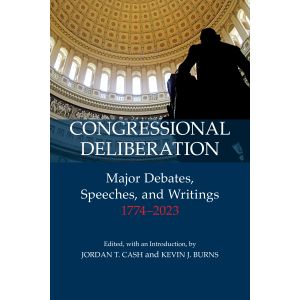
![]() Congressional DeliberationFrom John Adams’s 1774 diary entries on debates in the Continental Congress to the first ouster of a seated Speaker of the House in U.S. history in 2023, Jordan T. Cash and Kevin J. Burns’s Congressional Deliberation offers an edited and historically contextualized selection of primary sources highlighting key turning points in the history of the U.S. Congress. Via its diverse documentary record—and often by way of showcasing the lively cut-and-thrust of historic House and Senate debates—Congressional Deliberation sheds light on such formative issues in Congressional history as war powers and foreign policy, impeachment, civil rights, representation and apportionment, filibusters, federalism, oversight and investigation, legislative leadership, and many more. It will prove a valuable resource to all students of the U.S. Congress and of representative government.
Congressional DeliberationFrom John Adams’s 1774 diary entries on debates in the Continental Congress to the first ouster of a seated Speaker of the House in U.S. history in 2023, Jordan T. Cash and Kevin J. Burns’s Congressional Deliberation offers an edited and historically contextualized selection of primary sources highlighting key turning points in the history of the U.S. Congress. Via its diverse documentary record—and often by way of showcasing the lively cut-and-thrust of historic House and Senate debates—Congressional Deliberation sheds light on such formative issues in Congressional history as war powers and foreign policy, impeachment, civil rights, representation and apportionment, filibusters, federalism, oversight and investigation, legislative leadership, and many more. It will prove a valuable resource to all students of the U.S. Congress and of representative government."Congressional Deliberation provides readers with valuable insights into many of the most consequential historical debates and hinge points in the American experience by offering access to crucial primary source materials. The descriptive summaries provided by the editors explain and contextualize the complex topics admirably, making this volume a valuable source for instructors in government, civics, and history. Many of the historic disputes included have a very contemporary resonance that will help prompt lively class discussions while also providing valuable primary material for research purposes."
Learn More
—John A. Lawrence, PhD, Arc of Power: Inside Nancy Pelosi's Speakership 2005–2010 and The Class of '74: Congress after Watergate and the Roots of Partisanship -
![]() Daily Life in Ancient Rome
Daily Life in Ancient Rome"There’s a tremendous amount to admire in Brian Harvey’s new Daily Life in Ancient Rome: A Sourcebook. And it stands out as a superior work against all the competing texts. Specifically, much careful thought, attention, and effort has gone into ensuring that the work is ideal for students and interested non-professionals. The texts are all translated into clear, accurate English. They are also thoroughly contextualized, both in categories as well as individually. This insistence on the historicity of the sources sets the book apart from the norm. The book also benefits from Harvey’s extensive, almost encyclopedic, knowledge of inscriptions, which are used as important sources along with the literary excerpts. Finally, the many photos by the author himself augment the texts and are themselves analyzed as unique sources."
Learn More
—Steven L. Tuck, Miami University, Ohio -
![]() Daily Life of the Ancient Greeks (Second Edition)
Daily Life of the Ancient Greeks (Second Edition)Significantly expanded and updated in light of the most recent scholarship, the second edition of Garland's engaging introduction to ancient Greek society brings this world vividly to life—and, in doing so, explores the perspectives and morals of typical ancient Greek citizens across a wide range of societal levels. Food and drink, literacy, the plight of the elderly, the treatment of slaves, and many more aspects of daily life in ancient Greece also come into sharp focus. More than sixty illustrations are included, as are maps, a chronology, a glossary of Greek terms, and suggestions for further reading.
Learn More -
![]() Descartes: Ethics
Descartes: EthicsThough Descartes never wrote a book specifically devoted to moral philosophy, his thought on ethical matters can be found throughout his correspondence and in parts of his work Passions of the Soul. In 1685, an anonymous editor in London gathered these writings in a textbook devoted to Descartes’s ethical thought.
Roger Ariew has translated, from Descartes’s original French texts, those selections included in the 1685 volume, adding to those writings an Appendix of relevant materials, including Part III of the Discourse on Method on the provisional morals, a portion of the Preface to the French edition of the Principles of Philosophy on the “tree” of philosophy, and portions of additional letters that help to illuminate the background for the correspondence included in the 1685 volume.
Learn More -
![]() Destroying to Replace
Destroying to Replace"This book explores settler colonial genocides in a global perspective and over the long durée. It does so systematically and compellingly, as it investigates how settler colonial expansion at times created conditions for genocidal violence, and the ways in which genocide was at times perpetrated on settler colonial frontiers. This volume will prove invaluable to teachers and students of imperialism, colonialism, and human rights." —Lorenzo Veracini, Swinburne University of Technology, and author of The World Turned Inside Out: Settler Colonialism as a Political Idea
"A succinct, insightful, and highly readable text discussing an issue that deserves to be integral to any world history course. Using four finely crafted, yet widely dispersed, case studies Adhikari strikingly shows how vulnerability and resistance occur as the waves of global capitalism hit indigenous societies." —Robert Gordon, University of Vermont
Learn More -
![]() Discourse on Method and Meditations on First Philosophy (Fourth Edition)
Discourse on Method and Meditations on First Philosophy (Fourth Edition)This edition contains Donald Cress's completely revised translation of the Meditations (from the corrected Latin edition) and recent corrections to Discourse on Method, bringing this version even closer to Descartes's original, while maintaining the clear and accessible style of a classic teaching edition.
Learn More -
![]() Discovering Philosophy (Fourth Edition)
Discovering Philosophy (Fourth Edition)Are we free or determined? Are things really the way they appear to be? What’s the difference between right and wrong? Can God’s existence be demonstrated? Discovering Philosophy looks at these and other fundamental questions that have bedeviled thinkers for centuries. Designed for students who are more comfortable with secondary than primary sources, Discovering Philosophy is both accessible and intellectually challenging. While it examines the ideas of traditional philosophers, it also considers perspectives that have historically been underrepresented (feminist philosophers and Native American thought), draws examples from popular culture, and considers cutting-edge philosophical questions raised by scientific discoveries (are dolphins nonhuman persons with rights?). Each chapter includes discussion questions, boxed highlights, and suggestions for further reading.
Instructor Resources: Click here to request the Instructor's Manual (PDF) and Test Bank with Answer Key (PDF or Word file).
Learn More -
![]() Disputed Questions on Virtue
Disputed Questions on Virtue"Hause and Murphy are to be congratulated. [Their volume's] strong points are numerous and important. The translation is clear and faithful. A real advantage is using the as yet unpublished Leonine text, which is significantly superior to the Marietti edition. The translators retain the disputed question format. And the whole series is translated. Hause offers an extend commentary which is solid and helpful for beginning readers. . . . Even for Aquinas, who semper loquitur formalissime, first rate translations are hard to come by; and we have one here. . . . A gem."
Learn More
—R. E. Houser, University of St. Thomas (Houston, TX), in Notre Dame Philosophical Reviews -
![]() Doctor Faustus
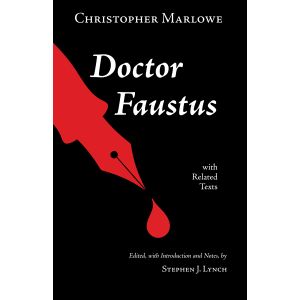
Doctor FaustusThis new edition of Christopher Marlowe’s Doctor Faustus offers the complete 1604 A-text with embedded selections from the 1616 B-text. Its innovative format will make it easier for readers to note differences between these texts and to consider what is gained and lost in viewing them both separately and together. A full Introduction to the play, notes, and a rich selection of related texts further enhance the value of this edition to students of Renaissance drama, Reformation theology, magic, and occult philosophy.
Learn More -
![]() Ekstase und Elend: Deutsche Kulturgeschichte 1900 bis heute
Ekstase und Elend: Deutsche Kulturgeschichte 1900 bis heuteEkstase und Elend is an intermediate/advanced textbook for German studies courses that presents the cultural history of German-speaking Europe from roughly 1900 to the present. Compiled by a team of scholars of German studies, applied linguistics, and history, it offers the historical, political, and social context necessary for engaging with recent cultural products from German-speaking Europe while cultivating the vital skills for doing so in German.
Click here to visit the companion website featuring an annotated interactive timeline, media from a variety of sources, and suggested research projects.
"I like the way Ekstase und Elend translates its 'ecstasy vs. misery' dichotomy throughout the volume. It engagingly conveys sociopolitical and even economic history by laying out sharp contrasts—through texts, images, and exercises that cover a range of topics, peoples, and events. A second major strength of the volume is its sociohistorical inclusiveness. I’ve not yet run across a German-language civilization textbook that (with the exception of the Jewish peoples, in the context of Nazi Germany and WWII) includes to such an extent the narratives of historically underrepresented groups and individuals. Strongly recommended." —James Pfrehm, Department of Modern Languages and Literatures, Ithaca College
Learn More -
![]() Environmental Ethics: The Central Issues
Environmental Ethics: The Central IssuesEnvironmental Ethics provides an accessible, lively, and up-to-date introduction to the central issues and controversies in environmental ethics. Requiring no previous knowledge of philosophy or ethical theory, the book will be of interest to students, environmental scientists, environmental policy makers, and anyone curious to know what philosophers are saying today about the urgent environmental challenges we face.
Instructor Resources: Click here to download PowerPoint lecture slides and to request Environmental Ethics test banks with answer keys.
Learn More -
![]() Expanding Horizons
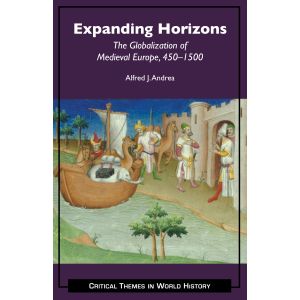
Expanding Horizons"A trailblazer in the field of premodern global history, Andrea here guides readers through the medieval expansion of the 'first Europe' from the fifth to the fifteenth centuries. Ranging from Ireland to Ethiopia, from the Mongol Empire to the so-called New World, Expanding Horizons demolishes any lingering sense that European societies remained isolated from the wider world before the modern age. Complete with maps, excerpts from primary source documents, and suggestions for further reading, this book will be an ideal resource for anyone planning to build a course around themes of global travel, exploration, and colonialism."
—Brett E. Whalen, The University of North Carolina at Chapel Hill"Andrea takes the reader on a journey over 1,000 years and around the world. By weaving a masterpiece of historical narrative and inquiry he demonstrates that Medieval Europe was very much part of world history while dispelling myths and misconceptions along the way. It is the type of book that awakens the mind and demonstrates the importance of historical study."
Learn More
—Timothy May, University of North Georgia -
![]() Familia Romana Essentials Online
Familia Romana Essentials OnlineCOURSE INSTRUCTORS: Request free instructor preview access and learn more here.
INDIVIDUAL LEARNERS: See purchasing options and FAQs about the self-paced learner version of the course here.
$39.95 for a 12-month student subscription.
Completely updated on a new and improved platform, Familia Romana Essentials Online offers students and instructors as well as self-learners an integrated and fully-digital Latin learning experience drawn from the essential components of Pars I of Hans Ørberg’s Lingua Latina per se Illustrata series. It can be used independently of, or in conjunction with, print editions of those components as well as other supplements to Lingua Latina: Pars I. Familia Romana Essentials Online offers an electronic version of the complete text of Familia Romana in eBook format with auto-correcting exercises, the complete text of Exercitia Latina I with auto-correcting exercises, audio recordings from the text for pronunciation and listening comprehension practice, flashcard sets for vocabulary practice, a searchable Latin/English glossary that includes all vocabulary from Familia Romana, the text of Ørberg’s student manual Latine Disco, and more.
Learn MoreOut of stock -
![]() Fear and Trembling: Dialectical Lyric
Fear and Trembling: Dialectical Lyric"Faithful to the original Danish text and eminently readable, Jech's translation of Fear and Trembling admirably communicates the literary qualities of Kierkegaard's text, as well as his occasional fits of inspiration. Jech displays an unusual sensitivity not only to the literary/linguistic qualities of Kierkegaard’s prose, but also to his (often realized) aspirations to philosophical precision. As presented by Jech, Kierkegaard is not simply a gifted writer and speculative theologian dabbling in philosophy, but a philosopher concerned to limn the optimal role of philosophical reflection, and to do so experimentally, especially with respect to matters of morality and faith. The translation is furthermore supplemented by very helpful explanatory notes that convey Kierkegaard’s own erudition and the multiple influences upon his thinking. The Historical Glossary will become a valuable reference tool for students and scholars of Kierkegaard’s writings. It is likely to play a welcome role in encouraging an improved understanding of what Kierkegaard means when he employs his idiosyncratic categories, allusions, and vocabulary." —Daniel Conway, Professor of Philosophy and Humanities, Texas A&M University
Learn More -
![]() Five Dialogues (Second Edition)
Five Dialogues (Second Edition)The second edition of Five Dialogues presents G. M. A. Grube’s distinguished translations, as revised by John Cooper for Plato, Complete Works. A number of new or expanded footnotes are also included along with an updated bibliography.
Learn More -
![]() Frankenstein: The 1818 Edition with Related Texts
Frankenstein: The 1818 Edition with Related Texts"In this new edition of Mary Shelley's Frankenstein, David Wootton's Introduction gives the reader both a clear and gripping account of the biographical circumstances that led to the novel’s writing and the most striking and original interpretations of its central themes and of the intellectual and cultural influences on them. Offering a new account of the complex history of its composition, and drawing upon his deep knowledge of eighteenth- and nineteenth-century scientific debates, Wootton reveals the ways in which the origins of Shelley’s novel are inextricably linked to conceptions of the origins of life itself. We have here a transformative reading of one of the world’s best-known stories." —Laura Marcus, Goldsmiths' Professor of English Literature and Fellow of New College, University of Oxford
"David Wootton, the editor of a splendid new edition of Frankenstein that includes a rich variety of relevant texts, prefers to focus on the contribution made to the novel by Mary’s reading of contemporary articles on travel (the book’s first narrator, Robert Walton, is bound for the North Pole, which he describes as 'the favourite dream of my early years'). Wootton's magisterial introduction grants equal significance to the earnest discussions about generating life that took place in 1816 at Lord Byron's lakeside villa in Switzerland, where Frankenstein was conceived."
—Miranda Seymour in The New York Review of BooksClick here to see the full Table of Contents with the list of related texts included.
Learn More -
![]() From Alpha to Omega (Fifth Edition)
From Alpha to Omega (Fifth Edition)From Alpha to Omega offers an encouraging and accessible introduction to Classical Greek for today’s students. Its fifty brief lessons, each typically focused on one or two grammatical topics, reinforce students’ learning through exercises that offer practice with the target vocabulary and—beginning with Lesson 5—through translation of a short annotated selection from an ancient source. From Aesop to the New Testament, Aristotle, Arrian, Demosthenes, Lysias, Plato, Thucydides, and Xenophon, the readings include passages in which students can put their newly acquired skills to immediate (and gratifying) use. From Alpha to Omega is ideal for use in classroom settings, homeschool settings, and by self-learners. An electronic answer key for the textbook (PDF only) is available for qualified adopters. If you have adopted the text, click here to request the answer key.
Learn More -
![]() Gilgamesh
GilgameshThis stirring new version of the great Babylonian epic includes material from the recently discovered “monkey tablet” as well as an Introduction, timeline, glossary, and correspondences between lines of the translation and those of the original texts.
"A comprehensive Introduction with a light touch (Beckman), a poetic rendering with verve and moxie (Lombardo): This edition of the colossal Babylonian Gilgamesh Epic should satisfy all readers who seek to plumb its wealth and depth without stumbling over its many inconvenient gaps and cruxes. A fine gift to all lovers of great literature." —Jack M. Sasson, Emeritus Professor, Vanderbilt University and The University of North Carolina at Chapel Hill
Learn More -
![]() Giving Reasons
Giving Reasons"David Morrow’s Giving Reasons is concise, lively, and accessible. Covering the essentials of critical thinking in clear, non-technical language, the book will be a welcome addition to introductory college courses as well as high school classes in any discipline. Giving Reasons is an excellent tool for teaching critical thinking across the curriculum." —Stephen Beck, The Evergreen State College
Visit the Giving Reasons title support webpage for supplemental online resources, including practice exercises, additional writing by David R. Morrow, and downloadable appendices (PDFs).
Learn More -
![]() Greek Religion: A Sourcebook
Greek Religion: A Sourcebook"Warrior's text fills a long-acknowledged void for teaching Ancient Religion. There is no real alternative. The best recommendation for her book comes from my students, who voted her Greek and Roman Sourcebooks their favorite texts in my Greek and Roman Religion course."
Learn More
—Randall M. Colaizzi, Ph.D., University of Massachusetts, Boston



























Filter
Virtual Exhibits and Special Events