The Hackett Signature Editions Collection Featuring Premium Hardcovers of Hackett Classics - Learn More Here.

Homeschool Literature
-
![]() Aeneid (Lombardo Edition)
Aeneid (Lombardo Edition)"Crisp, idiomatic, and precise, this is a translation for our era. The list of further reading, grounded in the writings of W.R. Johnson (who also wrote the Introduction) and Michael C. J. Putnam, suggests the context that informs the translation: here, as the translator says in the Preface, you will find an Aeneid that works more in the shadows than in the light. . . . This translation would be excellent for classroom use: not only would it incite fascinating discussions about issues of war and empire, but it also reads well aloud. . . . Together with Johnson's Introduction, this volume offers the Aeneid in terms that will resonate strongly with the general reader of today." —Sarah Spence, New England Classical Journal
"Adapting words of the ancient critic Longinus, [Lombardo] refers to the intense light of noon of the Iliad, the magical glow of the setting sun in the Odyssey, and the chiaroscuro of the Aeneid, a darkness visible. This latter phrase is the title of a famous interpretation of the Aeneid by W. R. Johnson, who contributes a splendid essay to the translation. Whether recited or read, the present volume stands as another fine performance on Lombardo's part. Summing up: Highly recommended."
—C. Fantazzi, CHOICE"Lombardo...tends to let Virgil be Virgil, and so avoids imposing unwarranted interpretation on the unwary reader. . . . [W.R. Johnson's] introduction is masterful and illuminating." —Hayden Pelliccia, The New York Review of Books
Learn More -
![]() Anthology of Classical Myth (Second Edition)
Anthology of Classical Myth (Second Edition)This new edition of Anthology of Classical Myth offers selections from key Near Eastern texts—the Babylonian Epic of Gilgamesh, Epic of Creation (Enuma Elish), and Atrahasis; the Hittite Song of Emergence; and the flood story from the book of Genesis—thereby enabling students to explore the many similarities between ancient Greek and Mesopotamian mythology and enhancing its reputation as the best and most complete collection of its kind. Click here to see the full Table of Contents (PDF) for Anthology of Classical Myth (Second Edition).
Learn More -
![]() Beowulf
Beowulf"Although an audience of enamored nonspecialists embraced Heaney's version . . . other scholars gave only grudging respect to the poet whose 'Heaneywulf' often seemed to represent an Anglo-Saxon world re-created in the Irish poet's own image. Since 2002, new and revised translations have come and gone, none attracting as much attention as Heaney's. That should change with Ringler's new translation, and not just because scholars such as Tom Shippey, Frederick Rebsamen, and John Niles vouch for it. The proof is in the reading, whether one does so silently or aloud. In his comprehensive, insightful introduction and rhythmic replication of Old English poetry, Ringler offers the specialist what Heaney did not; this is a performative translation that re-creates the world of Beowulf as accurately as may be possible. Accessible and exciting for specialists and nonspecialists alike, this is the edition professors should be using to introduce the venerable poem to a new audience. Summing up: Essential."
—A.P. Church, CHOICE
Learn More -
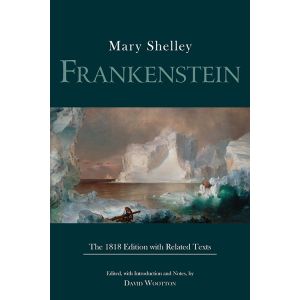
![]() Frankenstein: The 1818 Edition with Related Texts
Frankenstein: The 1818 Edition with Related Texts"In this new edition of Mary Shelley's Frankenstein, David Wootton's Introduction gives the reader both a clear and gripping account of the biographical circumstances that led to the novel’s writing and the most striking and original interpretations of its central themes and of the intellectual and cultural influences on them. Offering a new account of the complex history of its composition, and drawing upon his deep knowledge of eighteenth- and nineteenth-century scientific debates, Wootton reveals the ways in which the origins of Shelley’s novel are inextricably linked to conceptions of the origins of life itself. We have here a transformative reading of one of the world’s best-known stories." —Laura Marcus, Goldsmiths' Professor of English Literature and Fellow of New College, University of Oxford
"David Wootton, the editor of a splendid new edition of Frankenstein that includes a rich variety of relevant texts, prefers to focus on the contribution made to the novel by Mary’s reading of contemporary articles on travel (the book’s first narrator, Robert Walton, is bound for the North Pole, which he describes as 'the favourite dream of my early years'). Wootton's magisterial introduction grants equal significance to the earnest discussions about generating life that took place in 1816 at Lord Byron's lakeside villa in Switzerland, where Frankenstein was conceived."
—Miranda Seymour in The New York Review of BooksClick here to see the full Table of Contents with the list of related texts included.
Learn More -
![]() Gilgamesh
GilgameshThis stirring new version of the great Babylonian epic includes material from the recently discovered “monkey tablet” as well as an Introduction, timeline, glossary, and correspondences between lines of the translation and those of the original texts.
"A comprehensive Introduction with a light touch (Beckman), a poetic rendering with verve and moxie (Lombardo): This edition of the colossal Babylonian Gilgamesh Epic should satisfy all readers who seek to plumb its wealth and depth without stumbling over its many inconvenient gaps and cruxes. A fine gift to all lovers of great literature." —Jack M. Sasson, Emeritus Professor, Vanderbilt University and The University of North Carolina at Chapel Hill
Learn More -
![]() Hamlet
Hamlet"Shakespeare scholars Bernice W. Kliman and James H. Lake have carried out the important task of not only bringing up to date the text of Hamlet as edited in the last century by the celebrated Shakespearean George Lyman Kittredge but also retaining its significant features. The editors' discerning analyses of performances by Mel Gibson, Kenneth Branah, Michael Almereyda, and Simon Russell Beale drive home the point that Hamlet today remains alive but restless and unpredictable. It exemplifies Ben Johnson's Shakespeare, who '. . . was not of an age, but for all time!'"
Learn More
—Kenneth Sprague Rothwell, (1921-2010), was Professor Emeritus, University of Vermont -
![]() Iliad
Iliad"Gripping. . . . Lombardo's achievement is all the more striking when you consider the difficulties of his task. . . . [He] manages to be respectful of Homer's dire spirit while providing on nearly every page some wonderfully fresh refashioning of his Greek. The result is a vivid and disarmingly hardbitten reworking of a great classic." —Daniel Mendelsohn, The New York Times Book Review
"It is hard to overstate the attractions of this translation. In a rhythm sinewy and flexible, with language that is precise, lyrical and fresh, Lombardo's Iliad pulses with all the power and luminosity of the Greek. He shows extraordinary sensitivity to the images and aural effects of the ancient poem. There are brilliant touches on every page. . . . Altogether this is as good as Homer gets in English." —Richard P. Martin, Princeton University
Learn More -
![]() Odyssey
Odyssey"[Lombardo] has brought his laconic wit and love of the ribald. . . . to his version of the Odyssey. His carefully honed syntax gives the narrative energy and a whirlwind pace. The lines, rhythmic and clipped, have the tautness and force of Odysseus' bow." —Chris Hedges, The New York Times Book Review
"The definitive English version of Homer for our time." —The Common Review: The Magazine of the Great Books Foundation
"Lombardo weaves his cherished idioms into important patterns of repetition and transformation so familiar to the telling of the Odyssey. . . . Above all, such familiar phrases serve to remind us of the oral character of the original Odyssey, providing the reader with an uncanny immediacy and relevance." —Christina Zwarg, The Bryn Mawr Classical Review
Learn More -
![]() Romeo and Juliet
Romeo and Juliet"This splendid edition furnishes readers, students, and theater people alike with a marvelous set of tools for appreciating the many facets of Shakespeare's play: a freshly edited text from the authoritative 1599 quarto, trenchant explanatory notes, and–best of all–insightful performance notes detailing the various ways in which individual passages have been interpreted in important films and stage productions."
Learn More
—Eric Rasmussen, University of Nevada, Reno and co-editor of the RSC Shakespeare edition -
![]() Sir Gawain and the Green Knight
Sir Gawain and the Green Knight“A dazzling recreation of the most memorable Middle English poem, and one that captures the original alliterative verse in all its dimensions: sense, sound, and rhythm.”—Ad Putter, Professor of Medieval English Literature, University of Bristol
"Nicely fills the gap between overly technical scholarly editions and too-simplified student editions. The translation and overview provide a solid introduction to the Middle English masterpiece and assures that future readers will be as willing as Glaser has been to devote the time and energy necessary to explore the poem's many facets. A worthy effort to bring the complex poem to modern students." —Ryan Naughton, Ohio University, in The Medieval Review
Learn More -
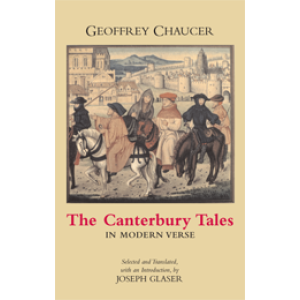
![]() The Canterbury Tales in Modern Verse
The Canterbury Tales in Modern Verse"This version of The Canterbury Tales is indeed 'fast-paced and entertaining'. It includes translations of most of the tales (certainly all of the most popular ones) and abridgments and summaries of a few others. Glaser's main innovation in this translation is a rather striking decision to render Chaucer's standard iambic pentameter line in iambic tetrameter. . . . Those who read his translation of The Canterbury Tales will likely be motivated to tackle a linguistically more challenging, yet more rewarding Middle English edition. Those who lack the time for such a task will still be able to appreciate the humor and variety of one of Chaucer's greatest works and will, through the basic and clear Introduction, get a sense of the historical and literary background of Chaucer, his times, and his works. The near conversational tone of the Introduction, furthermore, makes for an unintimidating encounter with a period of literature that, for many, is foreign and remote. As a kind of gateway text, therefore, Glaser's new translation of The Canterbury Tales will be much appreciated and valued by a non-specialist audience." —Jennifer A. Smith, Comitatus
Learn More -
![]() The Poetic Edda (1st Edition)
The Poetic Edda (1st Edition)"The poems of the Poetic Edda have waited a long time for a Modern English translation that would do them justice. Here it is at last (Odin be praised!) and well worth the wait. These amazing texts from a 13th-century Icelandic manuscript are of huge historical, mythological and literary importance, containing the lion's share of information that survives today about the gods and heroes of pre-Christian Scandinavians, their unique vision of the beginning and end of the world, etc. Jackson Crawford's modern versions of these poems are authoritative and fluent and often very gripping. With their individual headnotes and complementary general introduction, they supply today's readers with most of what they need to know in order to understand and appreciate the beliefs, motivations, and values of the Vikings." —Dick Ringler, Professor Emeritus of English and Scandinavian Studies at the University of Wisconsin–Madison
Audiobook: An audiobook edition, narrated by Jackson Crawford, is also available from Downpour, Audible, and other audiobook retailers.
Learn More -
![]() The Tragedy of Macbeth
The Tragedy of MacbethThe fourth in a series of editions of Shakespeare’s most political and history-soaked plays, this Macbeth offers copious aids to understanding the play not found in any other edition. By attending to the play’s medieval Scottish setting in a way that rival editors have never matched—when they have even dug beyond the early seventeenth-century context in which it was produced—Jan H. Blits’s edition richly rewards readers left unsatisfied by “decodings” of the play’s supposed allusions to the politics of early modern England who wish to look deeper. In doing so, it opens the text for readers to encounter, in new ways, the play’s historical, political, and psychological significance.
Learn More -
![]() The Western Literary Tradition, Volume 1: The Hebrew Bible to John Milton
The Western Literary Tradition, Volume 1: The Hebrew Bible to John MiltonThis compact anthology provides a thorough introduction to the major works of the Western literary tradition from Antiquity to 1700 covering the Hebrew Bible to John Milton (see the full Table of Contents in the link below). It includes excerpts from seventy texts translated from eight ancient and modern languages in genres as diverse as epic, lyric, and dramatic verse; prose narrative including story, romance, and novel; and nonfiction prose including autobiography, biography, letter, speech, dialogue, and essay. Further distinguishing this collection is the inclusion of works by women writers often overlooked in other literary anthologies. Margaret L. King's clear, engaging introductions and notes support an informed reading of the texts while extending students’ knowledge of particular authors and problems of interest.
Table of Contents: Click here to see the full Table of Contents for The Western Literary Tradition, Volume 1 (PDF)
Ebook flexibility: Find the The Western Literary Tradition eBook solution that best fits your syllabus. In addition to being available as a complete volume in print and eBook formats The Western Literary Tradition: Volume 1 is also available in four affordable ($9.95 each) eBook-only selections: Antiquity: Foundations of Western Literature, The Middle Ages: The Formation of the Western Literary Tradition, Renaissance Revisions: Recovery and Renewal, and Early Modern: New Horizons. Click here to learn more about the eBook-only selections, and to request instructor eBook exam copies.
Learn More -
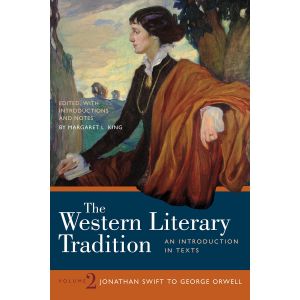
![]() The Western Literary Tradition, Volume 2: Jonathan Swift to George Orwell
The Western Literary Tradition, Volume 2: Jonathan Swift to George OrwellThis compact anthology—the second volume in Margaret L. King’s masterful introduction to the Western literary tradition—offers, in whole or in part, eighty key literary works of the eighteenth, nineteenth, and twentieth centuries. The texts provided here represent an unusually broad array of languages and traditions, ranging across a variety of genres such as verse, drama, philosophy, short- and long-form fiction, and non-fiction (including autobiography, speech, journalism, and essay). This second volume shares with the first a focus on works by women; numerous texts by Latin American writers are included here as well. King’s clear, engaging introductions and notes support an informed reading of the texts while extending students’ knowledge of particular authors and problems of interest. The Western Literary Tradition’s modest length and cost allow for the use of full-length works—many of which are available in Hackett Publishing’s own well-regarded and inexpensive translations and editions—alongside the anthology without adding undue cost to a student’s total textbook fees.
See the complete Table of Contents for volume 2 here (PDF).
Learn More