The Hackett Signature Editions Collection Featuring Premium Hardcovers of Hackett Classics - Learn More Here.

PPE 2024
-
![]() Abortion (Fourth Edition)
Abortion (Fourth Edition)This new edition of Abortion: The Supreme Court Decisions includes all of the major Supreme Court decisions on abortion since the 1960s—as well as many majority, dissenting, and plurality opinions—carefully edited for use by researchers, journalists, and teachers in a variety of disciplines.
Learn More -
![]() An Introduction to Utilitarianism
An Introduction to UtilitarianismAn Introduction to Utilitarianism: From Theory to Practice is a state-of-the-art text, simultaneously accessible to introductory students and informative for more advanced readers. Two key features set it apart. First, its comprehensive coverage of the arguments for and against utilitarianism is unparalleled. Second, it takes seriously the practical implications of utilitarianism for how we should live, with a particular emphasis on utilitarianism's impartial beneficence and its focus on effectiveness. Guided by the conviction that practical ethics is more about how best to use our limited time and resources than which victims to hit with trolleys in thought experiments, its practical upshots should prove amenable to utilitarians and non-utilitarians alike.
Learn More -
![]() Applied Ethics: An Impartial Introduction
Applied Ethics: An Impartial IntroductionApplied Ethics: An Impartial Introduction prepares readers to evaluate selected classical and contemporary problems in applied ethics in a way that does justice to their complexity without sacrificing clarity or fairness of representation. Its balanced exposition and analysis, enhanced by helpful pedagogical features, make it an ideal book for introducing the ethics of real-life problems including abortion, animal rights, disability, the environment, poverty, and punishment.
"Jackson, Goldschmidt, Crummett, and Chan are experienced teachers with a multitude of insights on the problems they explain in this splendid introduction to applied ethics. It is selective in focus but comprehensive in coverage; it is philosophically rigorous but remarkably clear in presentation; and each of the six sections is substantive enough for a good part of a course while the whole could occupy a full term. The book is an excellent choice as a main introductory text in applied ethics but so well laid out and referenced as to be a resource for students working in this field at any level. It has the clarity and concreteness needed for an introduction and the thoroughness needed in a higher-level study of the moral problems it explores." —Robert Audi, John A. O’Brien Professor of Philosophy, University of Notre Dame
Learn More -
![]() Classics of Political Thought for Today
Classics of Political Thought for TodayHumanity faces numerous critical challenges in the twenty-first century, from climate change and globalization to pandemics and the impact of technological advances. Can the ideas of past political thinkers help us refine the problem-solving skills needed to redress the practical predicaments of today? In Classics of Political Thought for Today, Colin Farrelly explores a wide range of historical political thinkers, demonstrating how the successes and limitations of these past figures can yield sage insights for how we identify and address the social and political problems of today. The book canvasses, and critically assesses, the ancient Greeks, social contract theory, conservatism, feminism, Black political thought, utilitarianism, and Marxism. Farrelly highlights the lessons we can learn from past political thinkers, engaging with their ideas in a way that facilitates the intellectual curiosity, insight, and optimism necessary for addressing the societal predicaments of today and tomorrow.
Learn More -
![]() Congressional DeliberationFrom John Adams’s 1774 diary entries on debates in the Continental Congress to the first ouster of a seated Speaker of the House in U.S. history in 2023, Jordan T. Cash and Kevin J. Burns’s Congressional Deliberation offers an edited and historically contextualized selection of primary sources highlighting key turning points in the history of the U.S. Congress. Via its diverse documentary record—and often by way of showcasing the lively cut-and-thrust of historic House and Senate debates—Congressional Deliberation sheds light on such formative issues in Congressional history as war powers and foreign policy, impeachment, civil rights, representation and apportionment, filibusters, federalism, oversight and investigation, legislative leadership, and many more. It will prove a valuable resource to all students of the U.S. Congress and of representative government.
Congressional DeliberationFrom John Adams’s 1774 diary entries on debates in the Continental Congress to the first ouster of a seated Speaker of the House in U.S. history in 2023, Jordan T. Cash and Kevin J. Burns’s Congressional Deliberation offers an edited and historically contextualized selection of primary sources highlighting key turning points in the history of the U.S. Congress. Via its diverse documentary record—and often by way of showcasing the lively cut-and-thrust of historic House and Senate debates—Congressional Deliberation sheds light on such formative issues in Congressional history as war powers and foreign policy, impeachment, civil rights, representation and apportionment, filibusters, federalism, oversight and investigation, legislative leadership, and many more. It will prove a valuable resource to all students of the U.S. Congress and of representative government."Congressional Deliberation provides readers with valuable insights into many of the most consequential historical debates and hinge points in the American experience by offering access to crucial primary source materials. The descriptive summaries provided by the editors explain and contextualize the complex topics admirably, making this volume a valuable source for instructors in government, civics, and history. Many of the historic disputes included have a very contemporary resonance that will help prompt lively class discussions while also providing valuable primary material for research purposes."
Learn More
—John A. Lawrence, PhD, Arc of Power: Inside Nancy Pelosi's Speakership 2005–2010 and The Class of '74: Congress after Watergate and the Roots of Partisanship -
![]() Environmental Ethics: The Central Issues
Environmental Ethics: The Central IssuesEnvironmental Ethics provides an accessible, lively, and up-to-date introduction to the central issues and controversies in environmental ethics. Requiring no previous knowledge of philosophy or ethical theory, the book will be of interest to students, environmental scientists, environmental policy makers, and anyone curious to know what philosophers are saying today about the urgent environmental challenges we face.
Instructor Resources: Click here to download PowerPoint lecture slides and to request Environmental Ethics test banks with answer keys.
Learn More -
![]() Hume: Moral Philosophy
Hume: Moral Philosophy"A genuine understanding of Hume's extraordinarily rich, important, and influential moral philosophy requires familiarity with all of his writings on vice and virtue, the passions, the will, and even judgments of beauty—and that means familiarity not only with large portions of A Treatise of Human Nature, but also with An Enquiry Concerning the Principles of Morals and many of his essays as well. This volume is the one truly comprehensive collection of Hume's work on all of these topics. Geoffrey Sayre-McCord, a leading moral philosopher and Hume scholar, has done a meticulous job of editing the texts and has provided an extensive Introduction that is at once accessible, accurate, and philosophically engaging, revealing the deep structure of Hume's moral philosophy."
Learn More
—Don Garrett, New York University -
![]() Marx: Selected Writings
Marx: Selected WritingsFeaturing the most important and enduring works from Marx's enormous corpus, this collection ranges from the Hegelian idealism of his youth to the mature socialism of his later works. Organized both topically and in rough chronological order, the selections (many of them in the translations of Loyd D. Easton and Kurt H. Guddat) include writings on historical materialism, excerpts from Capital, and political works.
Learn More -
![]() The Creative Argument: Rhetoric in the Real World, with Readings
The Creative Argument: Rhetoric in the Real World, with ReadingsThe Creative Argument sets itself apart from its competitors by presenting a series of compelling works of literary nonfiction that challenge what students think they know about arguments. Each chapter begins with an engaging argument from a work of nonfiction, followed by an in-depth yet accessible analysis of a key aspect of argumentation. Suitable for both courses in argument and first-year writing, the principles and strategies outlined in the text help students become more creative and critical as rhetoricians, both inside the classroom and out.
Instructor Resources: A PDF-only teacher's guide is available for qualified instructors. Please use this form to request a copy. A Facebook group for instructor support, moderated by author Thomas Girshin, is also free and available for request at this link.
Supplementary Readings: Download a PDF with suggested supplemental readings and resources for each chapter.
"For faculty, The Creative Argument's careful organization provides a blueprint for the semester or supplemental material for generating lectures and learning activities. For students, the efficient chapters, thoughtful readings, and refined explanations make reading and learning nearly effortless. The Creative Argument is the best way to get students to quickly understand how and why argument is paramount for personal and societal growth. This is the book to excite students about writing, research, and argument."
Learn More
—Tyrell Stewart-Harris, Cornell University -
![]() The Economy 2.0: Microeconomics
The Economy 2.0: MicroeconomicsThe Economy 2.0 equips students with the tools to address today’s pressing problems by facilitating mastery of the conceptual and quantitative tools of contemporary economics. It challenges students to address various forms of inequality and social problems, introduces them to the most important tools and concepts used by people working with the economy, and motivates all models and concepts by evidence and real-world applications.
"Teaches both the tools of the discipline and the way real economies work, making it useful and fun at the same time." —Dani Rodrik, Harvard University
Learn More -
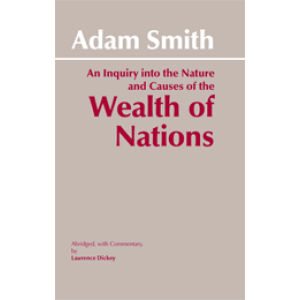
![]() Wealth of Nations
Wealth of Nations"Has all the basic chapters for the illustration of all the various (and contradictory) points anyone might want to make about the text. Dickey's own texts are invaluable. The introductions to the chapters are essential to make clear to students where they fit in the overall argument of the book. The appendices, though clearly the expression of the author's own views about the text, are admirably objective in the treatment of competing views, and represent an important contribution to Smith scholarship."
Learn More
—J. W. Smit, Columbia University