The Hackett Signature Editions Collection Featuring Premium Hardcovers of Hackett Classics - Learn More Here.

Recent Releases
-
![]() Congressional DeliberationFrom John Adams’s 1774 diary entries on debates in the Continental Congress to the first ouster of a seated Speaker of the House in U.S. history in 2023, Jordan T. Cash and Kevin J. Burns’s Congressional Deliberation offers an edited and historically contextualized selection of primary sources highlighting key turning points in the history of the U.S. Congress. Via its diverse documentary record—and often by way of showcasing the lively cut-and-thrust of historic House and Senate debates—Congressional Deliberation sheds light on such formative issues in Congressional history as war powers and foreign policy, impeachment, civil rights, representation and apportionment, filibusters, federalism, oversight and investigation, legislative leadership, and many more. It will prove a valuable resource to all students of the U.S. Congress and of representative government.
Congressional DeliberationFrom John Adams’s 1774 diary entries on debates in the Continental Congress to the first ouster of a seated Speaker of the House in U.S. history in 2023, Jordan T. Cash and Kevin J. Burns’s Congressional Deliberation offers an edited and historically contextualized selection of primary sources highlighting key turning points in the history of the U.S. Congress. Via its diverse documentary record—and often by way of showcasing the lively cut-and-thrust of historic House and Senate debates—Congressional Deliberation sheds light on such formative issues in Congressional history as war powers and foreign policy, impeachment, civil rights, representation and apportionment, filibusters, federalism, oversight and investigation, legislative leadership, and many more. It will prove a valuable resource to all students of the U.S. Congress and of representative government."Congressional Deliberation provides readers with valuable insights into many of the most consequential historical debates and hinge points in the American experience by offering access to crucial primary source materials. The descriptive summaries provided by the editors explain and contextualize the complex topics admirably, making this volume a valuable source for instructors in government, civics, and history. Many of the historic disputes included have a very contemporary resonance that will help prompt lively class discussions while also providing valuable primary material for research purposes."
Learn More
—John A. Lawrence, PhD, Arc of Power: Inside Nancy Pelosi's Speakership 2005–2010 and The Class of '74: Congress after Watergate and the Roots of Partisanship -
![]() Heroides
Heroides"An excellent piece of work. Lombardo and McClure have struck the right balance between literal and lyrical, formal and informal. Each of the letters has a distinct voice–something clear in the Latin but difficult to convey.
Learn More
"There are many small pleasures for the reader looking at the Latin (duplicated line-starts and -ends, verbal effects, etc.). Most are unobtrusive, which is all to the good. This translation is not designed to be a crib, though it wouldn’t be bad as one. More importantly, the poems read well in English. There are lots of glancing references to the tropes of elegy, but they won’t slow down the first-time reader of the poems. The translators have even made something of several of the puns (e.g. verbum/vela dare), an impressive feat.
"Welch's Introduction is perfectly pitched; it gives a lot of useful information in short compass, and it does so in a lively manner, with full attention to the scholarship but not so as the general reader would notice."
–Laurel Fulkerson, Professor Emerita of Classics, Florida State University -
![]() Persians
Persians"The musicality of Deborah Roberts' translation of Aeschylus' Persians, the earliest Greek tragedy that has come down to us, rivals the playwright's own astonishing lyricism. She crafts extended speeches by the drama's characters into captivating set-pieces of performance poetry. Roberts also replicates Herodotus' celebrated storytelling energy in her translation of the passages from his Histories included in this volume. In her Introduction, Roberts examines Aeschylus' drama and Herodotus' representations of Persian culture as crucial records of ancient Greek conceptions of otherness and perceptively appraises the Persians itself as a sober contemplation upon the shared human toll of political ambition and warfare’s traumas and grief, making this book urgently relevant to contemporary audiences."
Learn More
—James Bradley Wells, PhD, Edwin L. Minar Professor of Classical Studies, DePauw University -
![]() Treatise on the First Principle
Treatise on the First PrincipleSeeking what he describes as "the utmost limit of the knowledge our natural reason can achieve . . . concerning the True Existence [that is God]," John Duns Scotus (1265–1308) offers in this treatise one of philosophy’s most rigorous and ambitious attempts to deduce God’s existence from purely metaphysical theorems. As elucidated by its concise philosophical commentary, Thomas M. Ward's new translation of the Treatise on the First Principle puts a masterpiece of natural theology within reach of a new generation of English-reading students of philosophy.
"A very useful volume. The translation is clear, faithful, and eminently readable. The commentary hits exactly the right level. The writing is very clear; the difficulties are not shirked but instead carefully faced, and as an aid to study and comprehension of the text (which is a difficult one) it should be extremely valuable."
Learn More
—Thomas Williams, Isabelle A. and Henry D. Martin Professor of Medieval Philosophy, Georgetown University -
![]() Expanding Horizons
Expanding Horizons"A trailblazer in the field of premodern global history, Andrea here guides readers through the medieval expansion of the 'first Europe' from the fifth to the fifteenth centuries. Ranging from Ireland to Ethiopia, from the Mongol Empire to the so-called New World, Expanding Horizons demolishes any lingering sense that European societies remained isolated from the wider world before the modern age. Complete with maps, excerpts from primary source documents, and suggestions for further reading, this book will be an ideal resource for anyone planning to build a course around themes of global travel, exploration, and colonialism."
—Brett E. Whalen, The University of North Carolina at Chapel Hill"Andrea takes the reader on a journey over 1,000 years and around the world. By weaving a masterpiece of historical narrative and inquiry he demonstrates that Medieval Europe was very much part of world history while dispelling myths and misconceptions along the way. It is the type of book that awakens the mind and demonstrates the importance of historical study."
Learn More
—Timothy May, University of North Georgia -
![]() Fear and Trembling: Dialectical Lyric
Fear and Trembling: Dialectical Lyric"Faithful to the original Danish text and eminently readable, Jech's translation of Fear and Trembling admirably communicates the literary qualities of Kierkegaard's text, as well as his occasional fits of inspiration. Jech displays an unusual sensitivity not only to the literary/linguistic qualities of Kierkegaard’s prose, but also to his (often realized) aspirations to philosophical precision. As presented by Jech, Kierkegaard is not simply a gifted writer and speculative theologian dabbling in philosophy, but a philosopher concerned to limn the optimal role of philosophical reflection, and to do so experimentally, especially with respect to matters of morality and faith. The translation is furthermore supplemented by very helpful explanatory notes that convey Kierkegaard’s own erudition and the multiple influences upon his thinking. The Historical Glossary will become a valuable reference tool for students and scholars of Kierkegaard’s writings. It is likely to play a welcome role in encouraging an improved understanding of what Kierkegaard means when he employs his idiosyncratic categories, allusions, and vocabulary." —Daniel Conway, Professor of Philosophy and Humanities, Texas A&M University
Learn More -
![]() Classics of Political Thought for Today
Classics of Political Thought for TodayHumanity faces numerous critical challenges in the twenty-first century, from climate change and globalization to pandemics and the impact of technological advances. Can the ideas of past political thinkers help us refine the problem-solving skills needed to redress the practical predicaments of today? In Classics of Political Thought for Today, Colin Farrelly explores a wide range of historical political thinkers, demonstrating how the successes and limitations of these past figures can yield sage insights for how we identify and address the social and political problems of today. The book canvasses, and critically assesses, the ancient Greeks, social contract theory, conservatism, feminism, Black political thought, utilitarianism, and Marxism. Farrelly highlights the lessons we can learn from past political thinkers, engaging with their ideas in a way that facilitates the intellectual curiosity, insight, and optimism necessary for addressing the societal predicaments of today and tomorrow.
Learn More -
![]() Lysistrata, Women at the Thesmophoria, Frogs
Lysistrata, Women at the Thesmophoria, Frogs"Arnson Svarlien's translation offers fresh insight into three of Aristophanes's greatest comedies. The verse flows smoothly, and throughout it is stressed that these plays belong on a stage, with guidance on how that might be accomplished. At the same time, the detailed Introduction and interpretative notes on every page show that both Arnson Svarlien and Storey are deeply committed to presenting a vibrant, modern Aristophanes, and to giving the tools needed for readers and actors to form their own opinions on matters of ongoing scholarly controversy."
Learn More
—C.W. Marshall, FRSC, Professor of Greek, The University of British Columbia -
![]() An Introduction to Utilitarianism
An Introduction to UtilitarianismAn Introduction to Utilitarianism: From Theory to Practice is a state-of-the-art text, simultaneously accessible to introductory students and informative for more advanced readers. Two key features set it apart. First, its comprehensive coverage of the arguments for and against utilitarianism is unparalleled. Second, it takes seriously the practical implications of utilitarianism for how we should live, with a particular emphasis on utilitarianism's impartial beneficence and its focus on effectiveness. Guided by the conviction that practical ethics is more about how best to use our limited time and resources than which victims to hit with trolleys in thought experiments, its practical upshots should prove amenable to utilitarians and non-utilitarians alike.
Learn More -
![]() Classical Sanskrit for Everyone
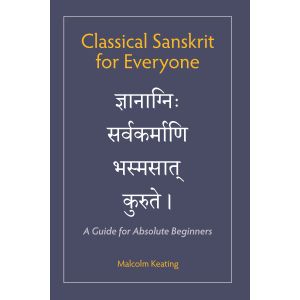
Classical Sanskrit for Everyone"Surprisingly, Classical Sanskrit for Everyone is indeed for everyone. Playing tour guide to the 'curious,' the 'Yoga aficionado,' and the 'scholar' on an efficient itinerary through Sanskrit grammar and its philosophical cultures, Keating’s book is refreshingly accessible and useful. Replete with an excellent analysis of important features of Sanskrit with analogies to English usage and learned 'pandit points,' it also provides supplemental discussions of Sanskrit poetry and philosophy and up-to-date online resources. Pop culture references and a playfully funny tone, at turns, disarm the uninitiated reader and give the scholar a fresh perspective on how to teach this language to a new generation of eager learners."
—Deven M. Patel, University of PennsylvaniaAdditional Resources: A translation key (PDF download) and links to free online resources, including dictionaries and instructional materials, are available on the Classical Sanskrit for Everyone title support page.
Learn More -
![]() Kudrun
Kudrun"I am a huge fan of Whobrey’s translations. These new English translations of Kudrun, Wolf Dietrich, and Otnit uphold the quality to which I’ve grown accustomed in his work. They do an excellent job of capturing the language and cadence of the texts, and are as accurate, readable, and fluent as the original texts allow them to be.
Learn More
"I especially love the texts Wolf Dietrich and Otnit, and I’m thrilled they are now available for the first time in English translation. They are such fun to read, and I hope that students find their hapless heroes as entertaining and humorous as I do.
"In short, it is a delight to read Whobrey’s English translations of these tales, and I’m excited to teach with them."
—Kathryn Starkey, Stanford University -
![]() The End of the Ottoman Empire and the Forging of the Modern Middle East
The End of the Ottoman Empire and the Forging of the Modern Middle East"In one hundred and twenty pages this book provides a compelling account of the shaping of the modern Middle East, and the critical part played in that process by the Ottoman Empire, even as it fell apart. It offers a mine of background information for anyone wishing to understand the current scene. Thirty-four well-chosen documents, mainly culled from the archives, buttress and illuminate the story."
Learn More
—Jonathan Schneer, Georgia Institute of Technology, author of The Balfour Declaration: The Origins of Arab-Israeli Conflict -
![]() The Hackett Introduction to Medical Ethics
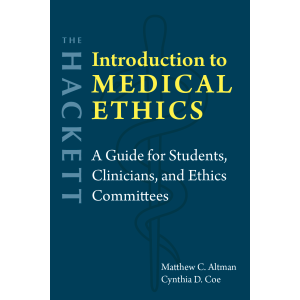
The Hackett Introduction to Medical EthicsThe Hackett Introduction to Medical Ethics addresses key debates and analyzes prominent ethical perspectives on clinical medicine, healthcare policy, and human experimentation. Using numerous examples and case studies, Altman and Coe apply value theory to contemporary medical practice and trace the repercussions for such philosophical issues as autonomy, death, and justice. The book invites a range of readers to investigate urgent moral questions at the intersection of the body and social institutions. Free online resources include PowerPoint lecture slides, a sample syllabus, links to case studies (to help facilitate small group discussion and apply theoretical concepts), and more.
"With remarkable breadth and depth, Altman and Coe provide up-to-date discussions of both classic bioethical issues (such as informed consent and reproductive technologies) and more recent developments in the field (such as relational autonomy and the impact of racial disparities on healthcare). The Hackett Introduction to Medical Ethics balances contemporary theory with clinical examples and cases in ways that will benefit both students and professionals in philosophy, bioethics, and healthcare."
Learn More
—Jamie Watson, Cleveland Clinic Center for Bioethics and Cleveland Clinic Lerner College of Medicine -
![]() From Alpha to Omega (Fifth Edition)
From Alpha to Omega (Fifth Edition)From Alpha to Omega offers an encouraging and accessible introduction to Classical Greek for today’s students. Its fifty brief lessons, each typically focused on one or two grammatical topics, reinforce students’ learning through exercises that offer practice with the target vocabulary and—beginning with Lesson 5—through translation of a short annotated selection from an ancient source. From Aesop to the New Testament, Aristotle, Arrian, Demosthenes, Lysias, Plato, Thucydides, and Xenophon, the readings include passages in which students can put their newly acquired skills to immediate (and gratifying) use. From Alpha to Omega is ideal for use in classroom settings, homeschool settings, and by self-learners. An electronic answer key for the textbook (PDF only) is available for qualified adopters. If you have adopted the text, click here to request the answer key.
Learn More -
![]() The Essential Sarmiento: Civilization, Barbarism, and Progress
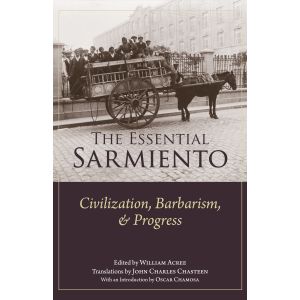
The Essential Sarmiento: Civilization, Barbarism, and Progress"Domingo Sarmiento is a rhetorical and political giant whose garrulous, colorful, and troubling ideas about race, violence, politics, and literature have fascinated Spanish-language readers for over a hundred and fifty years. Thanks to William Acree's brilliant selection of writings and annotations, the sparkling translations of John Charles Chasteen, and Oscar Chamosa's excellent critical Introduction, readers of English can finally encounter this larger-than-life writer who was deeply committed to documenting his historical moment and assessing social and political ills. This book is a major—and long overdue—contribution to Latin American Studies."
Learn More
—Christopher B. Conway, The University of Texas at Arlington -
![]() Aristotle: Complete Works
Aristotle: Complete WorksAristotle: Complete Works is a monumental achievement, the first new English-language translations of the Aristotelian corpus since 1954. Edited by C. D. C. Reeve and Pavlos Kontos, this beautifully produced two-volume cloth-bound set with smyth-sewn bindings aims for consistent translation of key terms across the works and includes a general Introduction by Christof Rapp, Catalogs of Aristotle’s Writings, an Annotated Index of People and Places, and an extensive Annotated Glossary of Terms.
Learn More -
![]() The Wanderer's Journal
The Wanderer's JournalThe Wanderer's Journal, a pocket-sized (4" x 6") notebook, features a smyth-sewn binding with a ribbon marker and a flexible hardcover with a copper foil embossed image of Odin's ravens, Hugin and Munin, stamped on the front. In addition to 148 blank ruled pages, the journal includes 13 illustrated rune pages with rune translations on the reverse pages. The rune illustrations by E.L. Wilson are based on Dr. Jackson Crawford’s handwritten runes from 13 verses he selected from the Norse poem Hávamál. The translations are sourced from Dr. Crawford’s frank and down-to-earth translations from "The Cowboy Hávamál," included in his 2019 Hackett Publishing book, The Wanderer’s Hávamál. The Old Norse was written with the sixteen-letter Younger Futhark runic alphabet, which is used in this journal.
Learn More -
![]() Sitting Bull Speaks
Sitting Bull Speaks“Sitting Bull is arguably one of the best-known Native American leaders, and his life has been extensively documented. In Sitting Bull Speaks, Brad Lookingbill doesn’t aim to retell these familiar stories. Instead, he allows Sitting Bull to speak for himself. Drawing from various archives and sources, the book weaves a compelling and well-researched narrative centered on Sitting Bull’s own words and thoughts. Lookingbill introduces each document with thoughtful commentary, guiding the reader through the historical context. Though the title Sitting Bull Speaks echoes that of Neihardt’s classic Black Elk Speaks, this work goes further by presenting an authentic account of Sitting Bull’s voice. It offers a deeper understanding not only of the man himself but also of the Lakota world in which he lived.”
Learn More
—Rani-Henrik Andersson, University of Helsinki -
![]() Toward a New Humanism
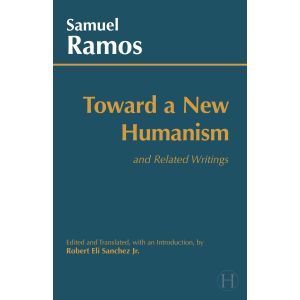
Toward a New Humanism“Written in 1940 and available here for the first time ever in English, Samuel Ramos’ Toward a New Humanism is a prescient discussion of humanism, technology, mortality, and the tensions between the national and the universal. In addition to Sanchez’s thoughtful introduction, his superb translation of Ramos’s text, and the informative editorial notes running throughout, this volume is further enriched by the inclusion of translations of other, earlier, essays—written by Ramos and other influential philosophers from the period--on related topics as well as translations of assessments of Ramos’s ‘new humanism' by other leading philosophers in mid-century Mexico. More than eighty-five years after its original publication--and in this era of renewed global conflicts—Ramos’s call for a profound rethinking and reshaping of modern culture and society is as timely as when it was written, and Sanchez is to be commended for making this important text available for a new generation of readers.”
Learn More
—Manuel Vargas and Clinton Tolley, Mexican Philosophy Lab, UC San Diego -
![]() Applied Epistemology
Applied EpistemologyHuman knowledge is fundamentally social. Most of the processes by which we acquire and evaluate information in everyday life—giving and receiving testimony, identifying experts, and relying on them—involve whole communities of people. The successful use of knowledge to solve problems is thus most often a collective achievement. Likewise, the failure to leverage knowledge is seldom the fault of a single individual.
Beginning each chapter with a real-life example, Applied Epistemology demonstrates how various concepts of knowledge relate to problems arising in practical contexts. From trusting testimony and recognizing experts, to acknowledging bias and resisting propaganda, Applied Epistemology teaches us how to use theories of knowledge to navigate our complex world.
Learn More -
![]() Pascal: Philosophical Fragments
Pascal: Philosophical FragmentsThis volume provides a selection of the most philosophically relevant passages from Pascal's Pensées in Roger Ariew's updated translations. Also included are a chronology of Pascal's life and times, a fascinating history of the text of the Pensées, and a selected bibliography.
Learn More