The Hackett Signature Editions Collection Featuring Premium Hardcovers of Hackett Classics - Learn More Here.

History







-
![]() Edgar Huntly; or, Memoirs of a Sleep-Walker
Edgar Huntly; or, Memoirs of a Sleep-Walker"This is now the edition of choice for those of us who teach Brown's fascinating Edgar Huntly. Barnard and Shapiro explore the relevant historical, cultural, and literary backgrounds in their illuminating Introduction; they skillfully annotate the text; they provide useful and up-to-date bibliographies; and they append a number of revealing primary texts for further cultural contextualization. This edition will help to stimulate new thinking about race, empire, and sexuality in Brown's prescient novel of the American frontier." —Robert S. Levine, University of Maryland
"The striking painting by a French artist on the cover of this American novel signals the editors' refreshing approach to Edgar Huntly through trans-Atlantic discourses of empire, radical-democratic social theory, sensibility, and sexuality. . . .This edition provides students with the tools to contextualize and analyze Edgar Huntly, including an extensive bibliography of relevant scholarship and footnotes that define unfamiliar words, give historical background, or refer the reader back to the introduction. Barnard and Shapiro's selection of related texts from works including William Godwin's Political Justice and Brown's essays gives students insight on Edgar Huntly's sources." —Yvette Piggush, Journal of the Early Republic
Learn More -
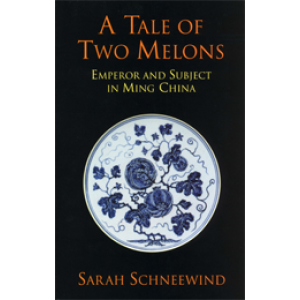
![]() A Tale of Two Melons
A Tale of Two Melons"Undergraduates will join specialists in enjoying this feast of melons. Schneewind's marvelous little book is at once a primer in some key aspects of China's traditional civilization and history, as well as a case study of an obscurely understood event that took place in 1372, in the reign of Taizu, founder of the Ming Dynasty (1368-1644). When two melons share a single stalk, and a local grower presents the anomaly to the emperor, the symbolism, the intentions of the giver, the reaction of the recipient, and the meaning of the whole act to observers and later commentators turn out to be anything but straightforward. Divergent interpretations began immediately, and continue to the present day."
Learn More
—John Dardess, University of Kansas -
![]() The Underdogs
The UnderdogsIn addition to a fresh translation of Los de Abajo, Azuela's classic novel of the Mexican Revolution, this volume offers both a general Introduction to the work and an extensive appendix setting the novel in its historical, literary, and political context. Related texts include contemporary reviews of Azuela's book, an excerpt from Anita Brenner's Idols Behind Altars (1929), and selections from John Reed's Insurgent Mexico (1914).
"Pellón's translation marks a clear improvement over the previous English versions of this seminal novel. Pellón captures the crisp, tense, and terse dialogue of Azuela's original, and I believe that his decision to leave some words in Spanish is a good one, given that most of the words involved are already well known to the non-Spanish speaking public. The retention of these Spanish words adds flavor to the translation without turning it into a 'Taco Bell' version of the novel. I am so enthusiastic about Pellón's translation that I believe it should become the standard edition of Los de Abajo read in America. . . In short, this new translation is worthy of the classic on which it is based. I will certainly use it in my courses, but more to the point, I will recommend it to my colleagues teaching courses on English literature, Comparative literature, and American studies." —Roberto González Echevarría, Sterling Professor of Hispanic and Comparative Literatures, Yale University
Learn More -
![]() Confessions (Sheed, Second Edition)
Confessions (Sheed, Second Edition)"This translation is already a classic. It is the translation that has guided three generations of students and readers into a renewed appreciation of the beauty and urgency of a masterpiece of Christian autobiography. This is largely because the translator has caught not only the meaning of Augustine’s Confessions, but a large measure of its poetry. It makes the Latin sing in English as it did when it came from the pen of Augustine, some sixteen hundred years ago. Deeply rooted in the tradition of which Augustine was himself a principal founder, this translation is not only modern: it is a faithful echo, in a language that has carried throughout the ages, of its author’s original passion and disquiet." —Peter Brown
"To my ears, Sheed’s translation is the most beautiful English translation available. The same electric current that runs through Augustine’s original can be felt in this translation, which combines a slightly elevated style (more elevated in direct prayers) combined with the immediacy and transparency of a street preacher (not that different from Augustine’s own style). The latest edition includes an introduction by Peter Brown, the best biographer of Augustine, and notes and commentary by Michael Foley, a truly excellent reader of Augustine." —Jared Ortiz, Hope College, in Catholic World Report
Learn More -
![]() Selected Writings of James Madison
Selected Writings of James Madison"This valuable anthology of the framer's essential writings allows readers to experience the panoramic depth of Madison's mind. For those just beginning their study, Ketcham's choices offer a meaningful introduction to Madison's complex view of the whole. . . . Of special note is the final section, in which Ketcham provides a selection of Madison's treatises on issues that cut the Union asunder in the decade prior to the Civil War. In this reviewer's mind, the editor is to be praised for his efforts in assembling such a comprehensive, cohesive, and concise collection. Summing Up: Essential."
Learn More
—M. J. C, Taylor, CHOICE -
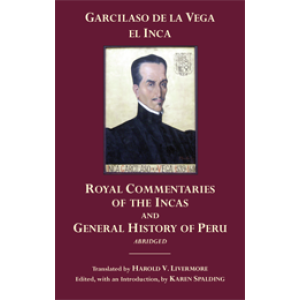
![]() The Royal Commentaries of the Incas and General History of Peru, Abridged
The Royal Commentaries of the Incas and General History of Peru, Abridged"Karen Spalding's abridgment of Livermore's translation is an excellent example of what a sourcebook for classroom use should be. It has a wonderfully enlightening Introduction and the texts are well selected, allowing students to grasp the breath, complexity, and importance of Garcilaso's work. This book enables teachers and professors to expose their students to a unique literary, historical, and artistic production by a mestizo who reflects on both conquest and miscegenation in early colonial Peru." —Tamar Herzog, Stanford University
"Abridging fifteen hundred pages to a concise two-hundred-page book, Karen Spalding has provided educators with a text that makes this important author accessible to undergraduates. . . . By publishing both parts of his history together . . . Spalding encourages students to compare the rational Inca state with the corruption anad deception of Spanish administrators—exactly as Garcilaso had intended. . . . Spalding's abridgment of Garcilaso carefully includes excerpts from the major issues detailed in Garcilaso's rich history." —R. Jovita Baber, (University of Illinois-Champaign), in The Sixteenth Century Journal
Learn More -
![]() The Essential Jefferson
The Essential Jefferson"The publication of The Essential Jefferson is a welcome addition to the fine American Heritage Series published by Hackett Publishing. . . . Yarbrough's judicious selection of key Jefferson documents and its economical price make [this book] ideal for the classroom. . . . In the post-September 11 era, an understanding of the thought of America's first philosopher of democracy is more essential now than at any time in America's history—including its founding era. Anyone interested in understanding democracy would be wise to read The Essential Jefferson."
Learn More
—Jeffrey D. Hilmer, Perspectives on Political Science -
![]() The Social and Political Thought of American Progressivism
The Social and Political Thought of American Progressivism"Eldon Eisenach, one of the most perceptive scholars of American progressivism, has brought together in this fine collection both standard and unfamiliar sources that will give historians, political scientists, and their undergraduate and graduate students access to a wide range of voices from—and reliable guidance to the voluminous secondary sources on—the era of progressive reform."
Learn More
—James Kloppenberg, Harvard University -
![]() The Essential Aeneid
The Essential AeneidStanley Lombardo's deft abridgment of his 2005 translation of the Aeneid preserves the arc and weight of Virgil's epic by presenting major books in their entirety and abridged books in extended passages seamlessly fitted together with narrative bridges. W. R. Johnson's Introduction, a shortened version of his masterly Introduction to that translation, will be welcomed by both beginning and seasoned students of the Aeneid, and by students of Roman history, classical mythology, and Western civilization.
Learn More -
![]() The Spanish Inquisition, 1478-1614
The Spanish Inquisition, 1478-1614"With very few exceptions the rich inquisitorial sources collected here have, until now, been available only to specialists with a knowledge of early modern Spanish. The Spanish Inquisition, 1478–1614: An Anthology of Sources fills a gaping hole in the English-language literature, making these previously inaccessible documents available to a much wider reading public. . . . With a strong Introduction and supporting material for each document, this source reader provides a wealth of material for classes on late medieval or modern Europe; Spain and Latin America; Western civilization; or the history of Western religions. This reader will also be valuable to seminars on subjects such as witchcraft, early modern legal history, and women's history."
Learn More
—Benjamin Ehlers, University of Georgia -
![]() Agricola, Germany, and Dialogue on Orators
Agricola, Germany, and Dialogue on OratorsThis volume provides three short works of Tacitus: Agricola—the fullest ancient account of Rome's conquest of Britain and of the public career of a senator in the service of a Roman emperor—Germany, a valuable source on the ancient land and its people, and Dialogue on Orators, an examination in the tradition of Cicero's rhetorical essays of the decline of oratory in Rome's early empire. Together, these works illuminate an important phase in Tacitus' development as Rome's foremost historian.
Learn More -
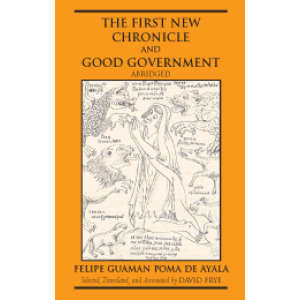
![]() The First New Chronicle and Good Government, Abridged
The First New Chronicle and Good Government, AbridgedDavid Frye's skillful translation and abridgment of Felipe Guaman Poma de Ayala's monumental First New Chronicle and Good Government (composed between 1600-1616) offers an unprecedented glimpse into pre-colonial Inca society and culture, the Spanish conquest of Peru (1532-1572), and life under the corrupt Spanish colonial administration. An Introduction provides essential historical and cultural background and discusses the author's literary and linguistic innovations. Maps, a glossary of terms, and seventy-five of Guaman Poma's ink drawings are also included.
Learn More -
![]() The Mangy Parrot, Abridged
The Mangy Parrot, AbridgedDavid Frye’s abridgment of his 2003 translation of The Mangy Parrot captures all of the narrative drive, literary innovation, and biting social commentary that established Lizardi’s comic masterpiece as the Don Quixote of Latin America.
Learn More -
![]() Alexander The Great
Alexander The GreatComprising relevant selections from the four ancient writers whose portraits of Alexander the Great still survive—Arrian, Diodorus, Plutarch, and Quintus Curtius—this volume provides a complete narrative of the important events in Alexander's life. The Introduction sets these works in historical context, stretching from the conclusion of the Peloponnesian War through Alexander's conquest of Asia, and provides an assessment of Alexander's historical importance as well as a survey of the central controversies surrounding his personality, aims and intentions. This edition includes a timeline, maps, a bibliography, a glossary, and an index.
Learn More -
![]() Aeneid (Lombardo Edition)
Aeneid (Lombardo Edition)"Crisp, idiomatic, and precise, this is a translation for our era. The list of further reading, grounded in the writings of W.R. Johnson (who also wrote the Introduction) and Michael C. J. Putnam, suggests the context that informs the translation: here, as the translator says in the Preface, you will find an Aeneid that works more in the shadows than in the light. . . . This translation would be excellent for classroom use: not only would it incite fascinating discussions about issues of war and empire, but it also reads well aloud. . . . Together with Johnson's Introduction, this volume offers the Aeneid in terms that will resonate strongly with the general reader of today." —Sarah Spence, New England Classical Journal
"Adapting words of the ancient critic Longinus, [Lombardo] refers to the intense light of noon of the Iliad, the magical glow of the setting sun in the Odyssey, and the chiaroscuro of the Aeneid, a darkness visible. This latter phrase is the title of a famous interpretation of the Aeneid by W. R. Johnson, who contributes a splendid essay to the translation. Whether recited or read, the present volume stands as another fine performance on Lombardo's part. Summing up: Highly recommended."
—C. Fantazzi, CHOICE"Lombardo...tends to let Virgil be Virgil, and so avoids imposing unwarranted interpretation on the unwary reader. . . . [W.R. Johnson's] introduction is masterful and illuminating." —Hayden Pelliccia, The New York Review of Books
Learn More -
![]() Everyday Life in Early Imperial China
Everyday Life in Early Imperial ChinaIn this lively and accessible account, with illustrations on nearly every page, Michael Loewe gives us a vivid picture of the lives of peasants working the land, the lives of town inhabitants, and the elaborate hierarchy of institutions and civil servants that sustained the vast imperial government. In a new Preface and an updated Bibliography, Loewe calls our attention to the significance of scholarly research and discoveries since the original publication of his classic work.
Learn More -
![]() The Federalist
The Federalist"The Federalist Papers are by far the most significant resource for historical argument in construing the U.S. Constitution. J. R. Pole has given us a new edition that winningly combines his exceptional mastery of the politics of the Federalist period with an acute appreciation of the historical and philosophical background of the Papers. In crisp, lucid English prose he provides guidance for students—including lawyers, journalists, and judges—who want to understand the context within which the Federalist Papers were created. There is no more important work of American political philosophy; there is no one better to explicate its historical and political sources than J. R. Pole; it is unlikely there will be a better edition than his."
Learn More
—Philip Bobbitt, University of Texas at Austin School of Law -
![]() Medicine on Trial
Medicine on TrialThrough close examination of legal, historical, and medical sources, this volume sheds light on the evolution of U.S. law as it bears on bio-ethical issues, advances in medical technology, and the changing role of medicine in the American courtroom during the last 150 years. In doing so, it provides a clear, accessible introduction to such major medical and legal controversies as the "right to die," assisted suicide, bioengineering, reproductive rights, and DNA testing. An extensive collection of important documents is included, along with a glossary of key people, events, and concepts; a chronology; a table of cases cited; an annotated bibliography; and a comprehensive index.
Learn More -
![]() A Debate on Jewish Emancipation and Christian Theology in Old Berlin
A Debate on Jewish Emancipation and Christian Theology in Old Berlin"One of the most fascinating and, indeed, seminal debates in the protracted struggle of German Jewry to gain full citizenship and civic equality. As the translators make clear in their learned and generally lucid Introduction, this debate illuminates the enduring difficulty of modern nation states to establish a civic society that is, if not religiously neutral, at least inclusive. . . . It will surely enter the canon of standard works in the study of modern Jewish history."
Learn More
—Paul Mendes-Flohr, Hebrew University -
![]() The Human Body on Trial
The Human Body on TrialSince the mid-nineteenth century, the U.S. courts have attempted, in a series of landmark cases, to resolve bitter conflicts over an individual’s right to bodily autonomy. In this introductory volume, Lynne Curry draws on close readings of U.S. Supreme Court and other twentieth-century legal decisions, supporting case materials, public health records, and legal and medical theories to trace the ways in which the courts’ rulings have shaped the development of such controversial issues as mandatory vaccination, abortion and the right to die.
Learn More -
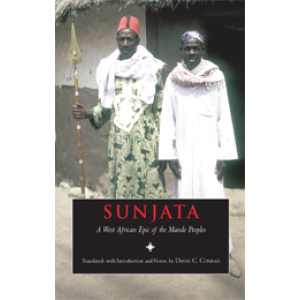
![]() Sunjata
Sunjata"Thanks to his careful editing and translating of Condé's narrative, Conrad offers a highly readable version of the epic that is about a third of its original length. The translation communicates not only the poetic qualities and the essential events of the Sunjata legend but also the master bard's performance values. Thus, this rendering will fascinate those who already know the story and culture and those coming to the epic for the first time. Conrad provides an excellent introduction to Mande oral tradition, the role of the griot, and the Manding belief system. Though he makes no claim for this as the complete scholarly edition, he does provide helpful scholarly notes, a glossary, and a good bibliography. . . . Summing up: Highly recommended." —L. W. Yoder, CHOICE
Learn More -
![]() Annals
Annals"An elegant addition to Tacitean scholarship. . . . The appendices are comprehensive and extremely useful for students, covering political and military terms that are cross-referenced to the text, the deployment of the army which can be confusing in the Annals, Rome, geographical and tribal names, and maps as well as a good index of names. . . . This translation has many eminently practical features, including clear layout, the use of footnotes, and numbering of the text. . . . The Introduction is very accessible and, coupled with the text, will be very useful for students."
Learn More
—Alisdair Gibson, Journal of Classics Teaching -
![]() The Vocation Lectures
The Vocation Lectures"[Owen and Strong] beautifully weave together the historical, philosophical, academic and personal circumstances that shaped Weber's world-view and these efforts reward the reader with a nuanced and thorough understanding. . . . Students, and even established academics, will benefit tremendously from this new edition. Rating: *****"
Learn More
—Jeffrey Roberts, University of Kent, in Political Studies Review -
![]() Another Philosophy of History and Selected Political Writings
Another Philosophy of History and Selected Political Writings"Evrigenis and Pellerin should be congratulated for editing this volume, which publishes Herder's smaller and early work, Another Philosophy of History, including six smaller essays on the same topic. This volume offers the opportunity to introduce Herder to students in a survey of the history of political thought, along with his better-known contemporaries such as Rousseau, Kant, Burke, and Hegel, as well as their predecessors Machiavelli, Locke, and Hobbes. Evrigenis and Pellerin's edition gives the reader a fine introduction to Herder and his thought. The selections of the smaller essays are very helpful in allowing someone unfamiliar with Herder to see how his important thoughts could be responsible in shaping how thinkers in the later half of the 19th Century thought about the nation and the role of politics in general. Rating: * * * * *"
Learn More
—Clifford Angell Bates, Jr., Political Studies Review -
![]() The Founding of a Nation
The Founding of a Nation"This wonderfully rich volume challenges those who claim that political history is arid, narrow, or worse, irrelevant to our own concerns. Jensen's study explores popular political mobilization on the eve of American independence. It reconstructs the complex decisions that slowly, often painfully transformed a colonial rebellion into a genuine revolution. Jensen's well-paced narrative never loses sight of the ordinary men and women who confronted the most powerful empire in the world."
Learn More
—T.H. Breen, William Smith Mason Professor of American History, Northwestern University -
![]() The Mangy Parrot
The Mangy Parrot“Finally, an engaging, full-fledged rendition of the first Latin American novel ever—and still one of the savviest. José Joaquin Fernández de Lizardi invented Mexico . . . and David Frye shows us how.”
Learn More
—Ilan Stavans -
![]() Memorable Deeds and Sayings
Memorable Deeds and Sayings“The publication of Henry John Walker’s translation of Memorable Deeds and Sayings ensures a wider readership for Valerius’ great compendium of Greco-Roman lore. Of the many merits of Walker’s translation, I would cite especially its readability. Walker has produced a version of Valerius Maximus that reflects the original’s wide sweep, but in Walker’s hands Valerius tells a seamless story in multiple parts. This translation will be easily used by students in the classroom and by scholars. It is a substantial accomplishment: a superior new translation that renders a monument of Latin literature accessible in every way to multiple audiences.”
Learn More
—Joseph Pucci, Brown University -
![]() Tracts of the American Revolution, 1763-1776
Tracts of the American Revolution, 1763-1776This volume brings together seventeen of the most important pamphlets produced by the American colonies as they opposed British measures and policies after 1763, and as they disputed the issue of independence with one another between 1774 and 1776. The most famous pamphleteers—James Otis, John Dickinson, John Adams, Thomas Jefferson, and Thomas Paine—are here; so too are lesser-known ones.
Learn More -
![]() The Essential Federalist and Anti-Federalist Papers
The Essential Federalist and Anti-Federalist Papers“An excellent edition of the key writings surrounding the adoption of the American Constitution. The learned Introduction brings to life the key intellectual debates at the heart of modern constitutionalism as well as those concerning the American Constitution. A fine critical edition.”
—Frederick Rosen, University College London“This is an excellent collection that fills a need—of all the document collections on the founding era, there is no one-volume collection with both Federalist and Anti-Federalist opinions—and none so affordably priced! I look forward to adopting this book in my general U.S. history and advanced U.S. legal history courses.”
Learn More
—Christopher Capozzola, History Department, MIT -
![]() Social Theories of Jacksonian Democracy
Social Theories of Jacksonian Democracy"This bracing collection offers a profound glimpse into the depth and variety of social views Jackson and Van Buren had to negotiate in order to create the now familiar sort of political party that has been essential to American democracy. Composed of entirely primary sources, the collection remains a revealing window into the social and political thought of the Jacksonian America, and stands as an essential complement to contemporary secondary treatments of the era."
Learn More
—Russell Muirhead, Harvard University -
![]() Theology in America
Theology in AmericaCovering nearly 300 years of American religious writing, this anthology compiles selections from thirteen notable thinkers—including Thomas Hooker, Jonathan Edwards, Charles Hodge, Ralph Waldo Emerson, Josiah Royce, William James and H. Richard Niebuhr—to reveal the vital and creative history of Protestant theology in America.
Learn More -
![]() The Political Thought of Benjamin Franklin
The Political Thought of Benjamin FranklinToo often dismissed as the least philosophic of the Founding Fathers, Benjamin Franklin had a deep and lasting impact on the shape of American political thought. In this substantial collection of Franklin’s letters, essays, and lesser-known papers, Ralph Ketcham traces the development of Franklin’s practical–and distinctly American–political thought from his earliest Silence Dogood essays to his final writings on the Constitution and The Evils of the Slave Trade.
Learn More -
![]() Puritan Political Ideas
Puritan Political IdeasIn this unique collection, noted historian Edmund Morgan focuses upon three ideas that lay at the root of Puritan political theory and have had a continuing significance in our history: calling, covenant, and the separate spheres of church and state. The selections show the origin of these ideas in the writings of the early English Puritans before the colonization of America, in seventeenth century New England, and finally in new contexts in the eighteenth century. One may read these documents as primary sources of Puritan thought per se, as sources of American intellectual history, or as sources of a political theory that flowered in the early years of the new constitutional republic.
Learn More
—from the Foreword -
![]() The Political Writings of John Adams
The Political Writings of John Adams"The fundamental article of my political creed," declared John Adams, "is that despotism, or unlimited sovereignty, or absolute power is the same in a majority of a popular assembly, an aristocratical council, an oligarchical junto, and a single emperor. Equally arbitrary, cruel, bloody, and in every respect diabolical." The consequences of this article for Adams’ thought are nowhere better articulated than in this anthology, which presents his remarkable attempts at constructing a complete political system based on constitutional, balanced, representative government.
Learn More -
![]() New Deal Thought
New Deal Thought"The volume is primarily a collection of documents and . . . remains a vaulable resource. Containing 420 pages of documentation, it is divided into eleven sections . . . national economic planning, monopoly power and public enterprise, social welfare, and the interest groups which the New Deal failed to mobilize."
Learn More
—Stuart Kidd, Journal of American Studies -
![]() An Account, Much Abbreviated, of the Destruction of the Indies
An Account, Much Abbreviated, of the Destruction of the Indies“This is a splendid new translation of Brevísima Relación, the famous denunciation of the Spanish conquest of the Americas, written by Dominican friar Bartolomé de Las Casas (1483-1566). . . . The Hackett edition of Brevísima Relación . . . has a lot to offer to undergraduates. . . . Knight’s introduction to the text makes in fact for a compelling read. . . . Together with Knight’s ample annotations, which refer students to the most up-to-date secondary literature, it makes for a wonderful introduction to the history of Europe’s expansion into the Western Hemisphere.”
Learn More
—Martine van Ittersum, Journal of Early Modern History -
![]() Sieyès: Political Writings
Sieyès: Political Writings"This new English edition of some of Sieyes' key texts is to be warmly welcomed. . . . Michael Sonenscher's scholarly Introduction is devoted to a discussion of different aspects of Sieyes' political ideas, rather than to a detailed examination of the texts themselves. He concentrates mainly, and quite properly, on Sieyes' concept of representation, which he analyses with sensitivity, linking it to Sieyes' concept of the nation, and distinguishing it carefully from the conventional view of representation held by the man in the street. . . . Sonenscher has researched widely and his allusions are original and stimulating. . . . [He] has done a good service in making these compelling and subversive writings more widely available."
Learn More
—Murray Forsyth, History of Political Thought -
![]() On the War for Greek Freedom
On the War for Greek FreedomDesigned for students with little or no background in ancient Greek language, history, and culture, this new abridgment presents those selections that comprise Herodotus’ historical narrative. These are meticulously annotated, and supplemented with a chronology of the Archaic Age, Historical Epilogue, glossary of main characters and places, index of proper names, and maps.
Learn More -
![]() Divine Right and Democracy
Divine Right and DemocracyDavid Wootton’s masterly compilation of speeches, essays, and fiercely polemical pamphlets—organized into chapters focusing on the main debates of the century—represents the first attempt to present in one volume a broad collection of Stuart political thought. In bringing together abstract theorizing and impassioned calls to arms, anonymous tract writers and King James I, Wootton has produced a much-needed collection; in combination with the editor’s thoughtful running commentary and invaluable Introduction, its texts bring to life a crucial period in the formation of our modern liberal and conservative theories.
Learn More -
![]() Before and after Hegel
Before and after Hegel“A good elementary introduction to the study of Hegel and his influence. . . . It places Hegel’s work in the intellectual context of his time very well.”
Learn More
—H. S. Harris, Glendon College, York University -
![]() The Classical Utilitarians: Bentham and Mill
The Classical Utilitarians: Bentham and MillThis volume includes the complete texts of two of John Stuart Mill’s most important works, Utilitarianism and On Liberty, and selections from his other writings, including the complete text of his “Remarks on Bentham’s Philosophy.” The selection from Mill’s “A System of Logic” is of special relevance to the debate between those who read Mill as an Act-Utilitarian and those who interpret him as a Rule-Utilitarian. Also included are selections from the writings of Jeremy Bentham, founder of modern Utilitarianism and mentor (together with James Mill) of John Stuart Mill.
Learn More -
![]() Locke: The Political Writings
Locke: The Political WritingsThis comprehensive collection brings together the main published works (excluding polemical attacks on other people’s views) with the most important surviving evidence from among Locke’s papers relating to his political philosophy. David Wootton’s wide-ranging and scholarly Introduction sets the writings in the context of their time, examines Locke’s developing ideas and unorthodox Christianity, and analyzes his main arguments. The result is the first fully rounded picture of Locke’s political thought in his own words.
Learn More -
![]() The People of Plato
The People of Plato"A treasure-house of vital information, exhaustively and meticulously researched, presented with clarity and verve. Students of Plato's dialogues—and other Socratic writings—will no longer be frustrated by wading through dispersed and difficult to use scholarly tomes to find out about Meno's family and career or Plato's brothers or uncles or who Thucydides son of Melesias was, and his relation to the historian. With philosophical readers foremost in mind, Nails tells all. From now on, anyone reading Plato will always have this book nearby."
Learn More
—John M. Cooper, Princeton University -
![]() Spinoza: The Complete Works
Spinoza: The Complete Works"This elegant volume has been produced to a very high standard, is easy to handle, affordably priced, and, most importantly, renders Spinoza accurately into clear and graceful English. It will undoubtedly become an indispensable tool for all serious readers of Spinoza. . . . The supporting editorial material of this volume—the work of Michael L. Morgan—is . . . judicious and reliable. His eight-page Introduction offers a succinct interpretive overview of Spinoza’s system that will be thought-provoking for specialists, while also basic enough to be accessible to novice Spinozists. Morgan also provides a very useful chronology of Spinoza’s life, a brief introduction to each work, and a light apparatus of footnotes."
Learn More
—Adam Sutcliffe, The Jewish Quarterly Review -
![]() Utilitarianism (Sher, Second Edition)
Utilitarianism (Sher, Second Edition)This expanded edition of John Stuart Mill’s Utilitarianism includes the text of his 1868 speech to the British House of Commons defending the use of capital punishment in cases of aggravated murder. The speech is significant both because its topic remains timely and because its arguments illustrate the applicability of the principle of utility to questions of large-scale social policy.
Learn More -
![]() Beyond Freedom and Dignity
Beyond Freedom and DignityIn this profound and profoundly controversial work, a landmark of 20th-century thought originally published in 1971, B. F. Skinner makes his definitive statement about humankind and society. Beyond Freedom and Dignity urges us to reexamine the ideals we have taken for granted and to consider the possibility of a radically behaviorist approach to human problems—one that has appeared to some incompatible with those ideals, but which envisions the building of a world in which humankind can attain its greatest possible achievements.
Learn More -
![]() Pythagoras and the Pythagoreans
Pythagoras and the Pythagoreans“Kahn’s excellent knowledge of the texts is apparent and his familiarity with the scholarly literature is manifest. . . . The volume is attractively written and and produced, and will do a real service in making the Pythagorean tradition . . . accessible to non-specialists.”
Learn More
—Richard McKirahan, Philosophy in Review -
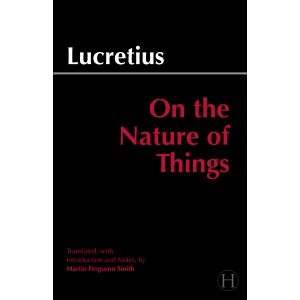
![]() On the Nature of Things (Smith Edition)
On the Nature of Things (Smith Edition)"Martin Ferguson Smith has for many years been one of the leading Lucretian scholars in the world. . . . We should expect from the beginning then that we are in the hands of a wise and learned guide as soon as we open his Lucretius, and this expectation is certainly borne out by the quality of this sensitive and thoughtful edition. . . . The Introduction . . . is excellent. Smith outlines in a highly accessible manner what little is known of Lucretius' life and times, the poem's position and status in the Epic and Didactic tradition, and the philosophy of Epicurus that Lucretius puts forward, but also manages to include some of the most up-to-date research, including recent scholarship on the Herculaneum papyri. . . . But of course, the translation is the most important part of the work . . . [and] it is streets ahead of the competition. . . . I can recommend this book unreservedly."
Learn More
—Gordon Campbell, Hermathena -
![]() Discourse on Method, Optics, Geometry, and Meteorology
Discourse on Method, Optics, Geometry, and MeteorologyThis volume preserves the format in which Discourse on Method was originally published: as a preface to Descartes’s writings on optics, geometry, and meteorology. In his introduction, Olscamp discusses the value of reading the Discourse alongside these three works, which sheds new light on Descartes’s method. Includes an updated bibliography.
Learn More -
![]() Roman Sports and Spectacles
Roman Sports and SpectaclesRoman Sports and Spectacles: A Sourcebook contains numerous translations from the Latin, including famous authors, such as Cicero, Seneca, Tertullian and Augustine, and the not so famous, including graffiti, advertisements and tombstones to paint a world view of what sports Romans played and what they thought of them. The world of Roman sports was similar in many ways to our own, but there were significant differences. For one thing Roman sports centered during religious festivals and the participants were most often slaves. Roman sports were not team sports, but individual competitions. And sports like chariot racing and gladiatorial competitions were very dangerous. Each document includes an introduction to the source material.
Learn More




















Filter
History
- 17th & 18th Century History
- 19th & 20th Century History
- African Studies
- American Intellectual History & Political Thought
- American Social History
- Ancient History
- Asian History
- History of Science
- Latin American & Caribbean Literature & History
- Medieval, Renaissance, & Reformation History
- Military History
- Middle Eastern History
- Modern European History
- Series in History
- Travel Literature