The Hackett Signature Editions Collection Featuring Premium Hardcovers of Hackett Classics - Learn More Here.

Literature




-
![]() Faust: The First Part of the Tragedy
Faust: The First Part of the Tragedy"Kirby reproduces in simple, clear English—and almost always line for line—the meaning of Goethe's German text, with metrical variations that evoke the shifting meters of the original."
Learn More
—Jane Brown, University of Washington -
![]() King Henry the Sixth: Parts I, II, and III
King Henry the Sixth: Parts I, II, and IIIGeorge Lyman Kittredge's insightful editions of Shakespeare have endured in part because of his eclecticism, his diversity of interests, and his wide-ranging accomplishments—all of which are reflected in the valuable notes in each volume. The plays in the New Kittredge Shakespeare series retain the original Kittredge notes and introductions, changed or augmented only when some modernization seems necessary. These new editions also include introductory essays by contemporary editors, notes on the plays as they have been performed on stage and film, and additional student materials.
Learn More -
![]() The Merry Wives of Windsor
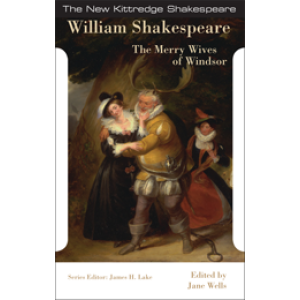
The Merry Wives of WindsorGeorge Lyman Kittredge's insightful editions of Shakespeare have endured in part because of his eclecticism, his diversity of interests, and his wide-ranging accomplishments—all of which are reflected in the valuable notes in each volume. The plays in the New Kittredge Shakespeare series retain the original Kittredge notes and introductions, changed or augmented only when some modernization seems necessary. These new editions also include introductory essays by contemporary editors, notes on the plays as they have been performed on stage and film, and additional student materials.
Learn More -
![]() King John & Henry VIII
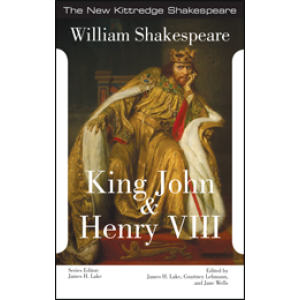
King John & Henry VIII"This is a terrific edition that really brings King John and Henry VIII to life. Consistently inviting student participation, the edition makes the plays wonderfully accessible, through explanations of the language, descriptions of context, topic guides, plot outlines, illustrations, and genealogies. A particular strength is the emphasis on performance. Thanks to the insightful histories provided, King John and Henry VIII are richly illuminated as stage and screen creations, allowing for genuinely imaginative engagement with these most fascinating Shakespearean dramas."
Learn More
—Ramona Wray, Reader in English at Queen's University, Belfast -
![]() Achilleid
Achilleid"One of the most entertaining short narratives of all time, the Achilleid is a stand-alone work of compelling contemporary interest that moves with great rapidity and clarity. Its compact narrative, which encompasses a brutish childhood, an overprotective mother, temporary gender bending, sexual violence, and a final coming to manhood with the promise of future military prowess, may be unparalleled in a single narrative of such brevity. . . . Until now, however, it has been virtually impossible to get a sense of the work if one did not know Latin—recent translations notwithstanding. Stanley Lombardo’s translation of the Achilleid is a dream: it’s sound, enthralling, and will fully engage readers with this enticing, perplexing, at times distressing, but ultimately rewarding work."
Learn More
—Marjorie Curry Woods, The University of Texas at Austin -
![]() Civil War
Civil War"Brian Walters has given us what too few translators of classical poetry do—an authorial presence. Here is Lucan himself in all his drastic modes—everything from his enraged indignation to his paradoxical aphorisms—recreating the ruptured Neronian world he lived in as he recounts the nefarious civil war that destroyed the Roman Republic."
Learn More
—Stanley Lombardo, University of Kansas -
![]() Haft Paykar
Haft Paykar"The Haft Paykar—Nizami's twelfth-century masterpiece, written in the Persian verse couplet form known as masnavi—has waited a long time for a translation like this: one that simultaneously captures its lightness and charm and plumbs its wealth of cultural detail. Julie Meisami's deft, accurate, seemingly effortless version (rendered in English tetrameter, an inspired choice) is a rare accomplishment."
Learn More
—Michael Beard, University of North Dakota -
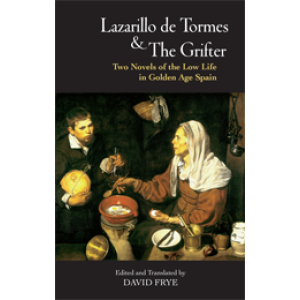
![]() Lazarillo de Tormes and The Grifter (El Buscon)
Lazarillo de Tormes and The Grifter (El Buscon)"An elegant, precise, and accessible modern-English rendering of the two best examples of the early modern picaresque genre: the paradigmatic Lazarillo de Tormes and Quevedo's mordant El Buscón. Frye's translations are triumphant, capturing the cadence of popular early modern speech while remaining faithful to the original texts; his notes illuminate the diverse contexts in which the texts were written. Frye gives careful attention throughout to the historical background that propelled these two parallel but different monuments of Golden Age Spanish literature."
Learn More
—Teofilo Ruiz, UCLA -
![]() Edward II
Edward II"This exciting new edition of Edward II is indeed reader friendly. Of particular distinction are the introductory sections which include a thorough account of Marlowe's biography, a fresh critical examination of the play, plus a bibliography for further reading; a wise consideration of the date and text; and extensive annotations, especially helpful to students who have difficulties with the language. Of special value to both students and scholars are the Related Texts that follow the text of the play: three sections of documentary evidence on historical sources; power and politics; and love, friendship, and homoeroticism—all vital to an understanding of the play. No previous edition of the play manages to encompass so much."
Learn More
—Robert A. Logan, University of Hartford -
![]() The Poetic Edda (1st Edition)
The Poetic Edda (1st Edition)"The poems of the Poetic Edda have waited a long time for a Modern English translation that would do them justice. Here it is at last (Odin be praised!) and well worth the wait. These amazing texts from a 13th-century Icelandic manuscript are of huge historical, mythological and literary importance, containing the lion's share of information that survives today about the gods and heroes of pre-Christian Scandinavians, their unique vision of the beginning and end of the world, etc. Jackson Crawford's modern versions of these poems are authoritative and fluent and often very gripping. With their individual headnotes and complementary general introduction, they supply today's readers with most of what they need to know in order to understand and appreciate the beliefs, motivations, and values of the Vikings." —Dick Ringler, Professor Emeritus of English and Scandinavian Studies at the University of Wisconsin–Madison
Audiobook: An audiobook edition, narrated by Jackson Crawford, is also available from Downpour, Audible, and other audiobook retailers.
Learn More -
![]() Le Morte D'Arthur
Le Morte D'Arthur"I've just finished reading Joseph Glaser's Le Morte D'Arthur. I'm very pleased with it: the introduction is helpful without becoming an extended essay, the suggested reading seems solid and diverse, and the index is VERY useful, even for someone who has read Malory before. At last, a reader can keep all the knights and ladies straight! A fine entry point to a grand text, and when I next have an occasion to teach a course involving chivalry, I'll plan to use this very affordable edition."
Learn More
—Craig Caldwell, Department of History, Appalachian State University -
![]() On the Genealogy of Morality
On the Genealogy of Morality"Hackett’s On the Genealogy of Morality (we now have even the correct title!) may very well change the entire climate for reading Nietzsche in English—especially if read in conjunction with their equally splendid Twilight of the Idols. . . . Competing translations of Nietzsche’s late, utterly influential masterpieces have often made them a chore, rather than a delight, to read; and their introductions generally obscure, rather than illuminate, the texts’ situations. Clark and Swensen (and Polt and Strong) have made the Genealogy and Twilight accessible and exhilarating—while leaving them, as they are, enigmatic and problematic. Finally, readers of Nietzsche in English can—begin!”
Learn More
—William Arctander O’Brien, University of California, San Diego -
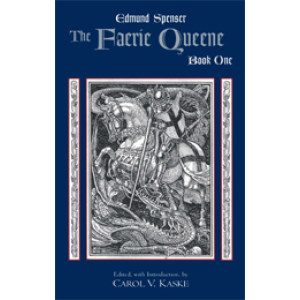
![]() The Faerie Queene, Book One
The Faerie Queene, Book OneFramed in Spenser's distinctive, opulent stanza and in some of the trappings of epic, Book One of Spenser's The Faerie Queene consists of a chivalric romance that has been made to a typical recipe—"fierce warres and faithfull loves"—but that has been Christianized in both overt and subtle ways. The physical and moral wanderings of the Redcrosse Knight dramatize his effort to find the proper proportion of human to divine contributions to salvation—a key issue between Protestants and Catholics. Fantastic elements like alien humans, humanoids, and monsters and their respective dwelling places are vividly described.
Learn More -
![]() Mengzi
Mengzi"The Mengzi is one of the richest philosophical texts in classical Chinese philosophy, and Van Norden's translation is among the few that do it justice. His translation is further distinguished by its accessibility and is unique in including substantial selections from later commentaries. As such it is both an essential scholarly resource and a great introduction to Confucian thought." —Justin Tiwald, San Francisco State University
Audiobook: An audiobook of Mengzi: With Selections from Traditional Commentaries, published by Ukemi Audiobooks, is available exclusively from Audible. Learn more about the Audible audiobook on Amazon.com.
Learn More -
![]() Troilus and Criseyde in Modern Verse
Troilus and Criseyde in Modern VerseThis fast-moving Modern English version of Chaucer's greatest tragic romance highlights the poem's rapid shifts in register and diction as well as its subtle and elusive characterizations, while preserving the enchanting rhyme-royal stanza of the Middle English original. Christine Chism's Introduction illuminates the work's historical context, poetic devices, first audiences, sources, and non-traditional re-conception of a traditional female protagonist "whose faults," as Criseyde says, "are rolled on every tongue."
Learn More -
![]() The Gaucho Juan Moreira
The Gaucho Juan Moreira"Chasteen conveys [the novel's] power and action, as well as the colorful language and humor of the gaucho found in the original text. Acree's astute introduction contextualizes the life and exploits of Argentina’s great 19th-century bandit hero. Moreira's humanity and heroism come through clearly to the modern reader. Thanks to Gutiérrez's skillful blending of fact and fiction about Moreira, readers today will learn a great deal about the social realities and folk customs of 19th-century gauchos. General readers will enjoy the action and pathos of this early work of ‘true crime.’ Instructors seeking to engage their students with a compelling tale of 19th-century Latin American class conflict and social injustice will want to assign the book in their courses."
Learn More
—Richard W. Slatta, North Carolina State University -
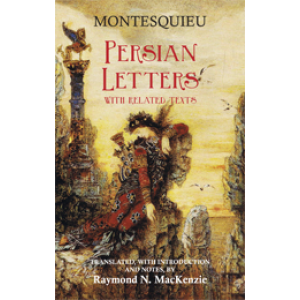
![]() Persian Letters (MacKenzie Edition)
Persian Letters (MacKenzie Edition)"An excellent edition that will give students a clean, well-translated text without too much clutter. The introduction is magisterial."
—Srinivas Aravamudan, Duke UniversityWith skill and artistry, Raymond MacKenzie’s stunning new translation accurately reflects the mood and character of the work. In his richly conceived Introduction, MacKenzie seamlessly weaves together an overview of the period with details of Montesquieu’s life, including the influences that inspired the Persian Letters, the character and power of the book, and its reception.
This edition also includes a Calendar of the Persian Letters, a Bibliography of Works in English, and a Bibliography of Works in French. Related texts provide insight into the legacy of the Persian Letters. They include selections from works by George Lyttelton, Voltaire, Oliver Goldsmith, and Maria Edgeworth. Learn More -
![]() Aristophanes and Menander: Three Comedies
Aristophanes and Menander: Three Comedies"No one, but no one, ever translated ancient comedy like Douglass Parker, and his death left a chasm in the landscape. This posthumous publication of three of Greek theatre's wildest plays, edited and presented by a scholar as eminent and learned as Timothy Moore, is not just something to welcome, it is something to celebrate."
Learn More
—William Levitan, Grand Valley State University -
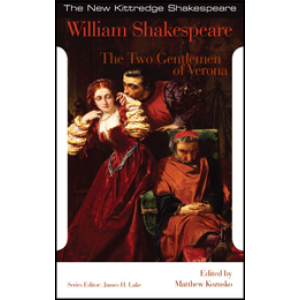
![]() The Two Gentlemen of Verona
The Two Gentlemen of Verona"Even as the New Kittredge Shakespeare series glances back to George Lyman Kittredge's student editions of the plays, it is very much of our current moment: the slim editions are targeted largely at high school and first-year college students who are more versed in visual than in print culture. Not only are the texts of the plays accompanied by photographs or stills from various stage and cinema performances: the editorial contributions are performance-oriented, offering surveys of contemporary film interpretations, essays on the plays as performance pieces, and an annotated filmography. Traditional editorial issues (competing versions of the text, cruxes, editorial emendation history) are for the most part excluded; the editions focus instead on clarifying the text with an eye to performing it. There is no disputing the pedagogic usefulness of the New Kittredge Shakespeare's performance-oriented approach."
Learn More
—Studies in English Literature, Tudor and Stuart Drama -
![]() Purgatorio (Simone Edition)
Purgatorio (Simone Edition)Designed to provide the modern student with access to this important work, Tom Simone's Purgatorio translation offers a text that is as close to Dante's meter and style as possible using modern English. It provides students with a feel for the structure and impact of the original, and it could also provide an easy segue to the original Italian. Also included is an extensive introduction, ample footnotes for references that may not be clear to the reader, and each Canto is preceded by a prose overview of the poetry.
Learn More -
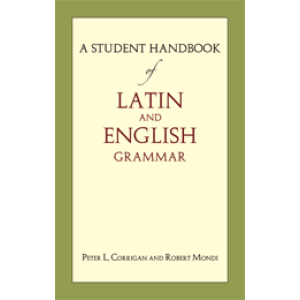
![]() A Student Handbook of Latin and English Grammar
A Student Handbook of Latin and English GrammarA Student Handbook of Latin and English Grammar offers a student-friendly comparative exposition of English and Latin grammatical principles that will prove a valuable supplement to a wide range of beginning Latin textbooks as well as a handy reference for those continuing on to upper-level courses.
Learn More -
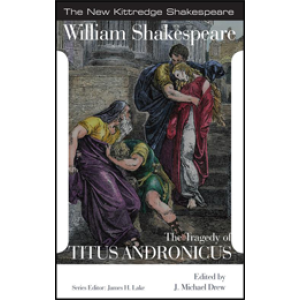
![]() Titus Andronicus
Titus Andronicus"J. Michael Drew's edition of Titus Andronicus in the New Kittredge Shakespeare series refreshes Kittredge's text with extensive and helpful explanatory notes as well as a thorough and enlightening introduction. A distinctive and attractive feature of Drew's edition is its generously illustrated focus on Julie Taymor's famous film adaptation. With its detailed and engaging questions for further study, this is an edition perfectly designed for classroom use."
Learn More
—Matthew Wikander, University of Toledo -
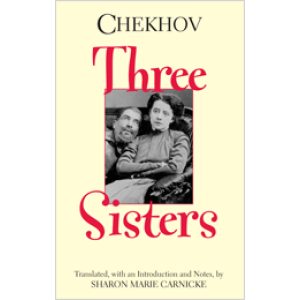
![]() Three Sisters
Three Sisters"This compact book combines a lively, colloquial transition of Chekhov's late play Three Sisters with an informative and insightful introduction. Actor-focuses but broad in coverage, this edition should be required reading for any ensemble producing the play in English. It is also highly recommended for a general reader and for classroom use. Although this is not a scholarly work, it has a lot to offer scholars and Chekhov veterans."
Learn More
—Carol Apollonio, Duke University, in The Russian Review -
![]() Philoctetes
Philoctetes"Peter Meineck has given us a superbly vivid rendering of the play, informed throughout by his practical experience in the theater. His is a Philoctetes that is supremely alive, from start to finish. . . . [I]deal for classroom use. . . . accompanied by a new and thoughtful introduction from philosopher and classicist Paul Woodruff. Woodruff anchors the play in the complex web of fears and anxieties of 409 BCE, as both Sophocles' life and Athens' imperial heyday drew to a close. . . . [A]n exceptionally fine work of translation and scholarship that will go far toward demolishing dismissals of the play as inaccessible or unengaging for the modern reader. Sophocles, Meineck and Woodruff eloquently remind us, speaks to every age, not least our own."
Learn More
—Thomas R. Keith, Loyola University Chicago in CJ-Online -
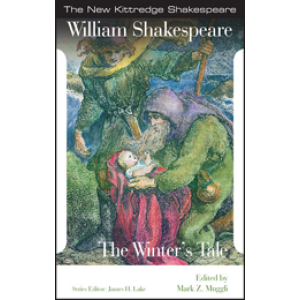
![]() The Winter's Tale
The Winter's Tale"The Winter's Tale is a kind of miracle play in which performance is of the essence of an exciting, imaginative, and inspiring plot embodied in visionary dialogue. In creating a course in Shakespeare Performed (2010) with his students staging an abridged Winter's Tale, Mark Muggli was in an ideal position to edit the play especially from the perspective of performance, as he did. This is a twenty-first-century edition up-to-date enough to include the Guthrie Theater's production of 2011 together with the solid twentieth-century scholarship of G. L. Kittredge. Kittredge's introduction, lightly edited, begins with Muggli's 'Spoiler Alert' about plot revelations the reader might prefer to experience first in the play itself. His notes are designed less to interpret than 'to facilitate the reader's interpretation,' and the reader and the play are primary in this presentation of The Winter’s Tale."
Learn More
—Tom Clayton, Regents Profesor, University of Minnesota -
![]() Persuasion: History, Theory, Practice
Persuasion: History, Theory, PracticeGeorge Pullman's lively and accessible introduction to the study of persuasion is an ideal text for use in courses where the understanding and practice of argumentation, rhetoric, and critical thinking are central.
"George Pullman's Persuasion has much to commend, not only in its direct engagement of the rich tradition of rhetoric, but also in its well-chosen range of readings (from the Greek tradition as well as contemporary pieces) and exercises in each chapter. In particular, I liked the way the introductory material invites experienced and newer students to consider the value of effective communication in professional settings. The exercises not only enable students to put into practice the key ideas highlighted in the chapter, but also promote digital literacies, which are fundamental in the twenty-first century. Students will find chapters three and four especially valuable for their clarity in explaining topics, issue types and use of evidence. Finally, this is an affordable and relevant classroom text that students will be able to consult long after the course of study has ended." —Cecilia Bonnor, Department of English, University of Houston
Title Support Website: Persuasion: History, Theory, Practice Title Support Site.
Learn More -
![]() A Student Handbook of Greek and English Grammar
A Student Handbook of Greek and English GrammarA Student Handbook of Greek and English Grammar offers a student-friendly comparative exposition of English and ancient Greek grammatical principles that will prove a valuable supplement to a wide range of beginning Greek textbooks as well as a handy reference for those continuing on to upper-level courses.
Learn More -
![]() The Romance of Tristan and Iseut
The Romance of Tristan and Iseut"This edition stands out because it is not a reworking of Belloc's version but a translation of Bédier's actual text. Gone are archaic spellings ("The Little Fakry Bell" becomes "The Enchanted Bell") and abstruse terms (the "Tintagel Minster" now reads as "the church at Tintagel"). Gallagher provides a brief, informative introduction, useful glossaries of proper names and specialized terms, and five well-selected texts about the Tristan legend, including a haunting scene Bédier composed but chose not to use. Beautifully written, this modern English translation proves once again that the love of Tristan and Iseut endures beyond all limits of time and space. Summing up: Highly recommended. Lower-division undergraduates and above."
Learn More
—C. B. Kerr, Vassar College, in CHOICE -
![]() The Orestes Plays
The Orestes PlaysFeaturing Cecelia Eaton Luschnig's annotated verse translations of Euripides' Electra, Iphigenia among the Tauri, and Orestes, this volume offers an ideal avenue for exploring the playwright's innovative treatment of both traditional and non-traditional stories concerning a central, fascinating member of the famous House of Atreus.
Learn More -
![]() The Alienist and Other Stories of Nineteenth-Century Brazil
The Alienist and Other Stories of Nineteenth-Century Brazil"An engaging entry point for students, readers who enjoy a well-crafted short story, or anyone interested in the legacy of slave-holding society in the Western Hemisphere. I attribute the success of [t]his volume to the way Chasteen highlights points of personal identification for an English-speaking readership, especially students, and the way he frames these short stories by Machado as relevant sources for a comparative history of racial politics in Brazil and the USA. . . . In my evaluations of Chasteen's translations, I am drawing from student reactions to their first exposure to Machado through this volume in a course about Brazilian culture taught at the University of California, Los Angeles. In short, they loved Machado and quickly made him their own. I credit this immediate embrace with the way Chasteen has selected, ordered, and framed the collection with a young student audience in mind. He introduces Machado with selections that reflect the concerns of an educated class through the eyes of a young university student." —Machado de Assis em linha, The Electronic Journal of Machado Studies
Learn More -
![]() The Golden Age of Folk and Fairy Tales
The Golden Age of Folk and Fairy Tales"Jack Zipes is back with a massive, beautifully produced volume. It is basically an anthology of mostly translated texts, but with a thirty-seven-page presentation and illuminating introductions to each of the eighteen thematic sections. At the end, we get fifteen pages of short biographies of the collectors of the tales and a twenty-eight-page bibliography of collections, reference works, and criticism. . . . A master in his field has to be congratulated on yet another achievement." —Hans Kuhn, Australian National University, in Journal of Folklore Research
Learn More -
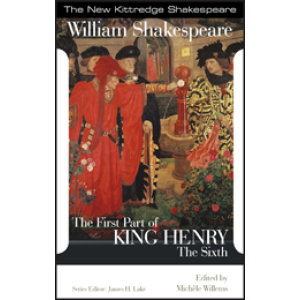
![]() The First Part of King Henry the Sixth
The First Part of King Henry the Sixth"Michèle Willems's edition of The First Part of King Henry the Sixth offers valuable insights into this little-known and puzzling play. Like G. L. Kittredge, on whose work this edition is based, she sees it as mainly Shakespearean. The play we are shown here is no simple exaltation of patriotic feeling, but, more tellingly, a somber and incisive account of a kingdom staggering under the effects of the death of Chivalry. Willems astutely sees an interaction of the play's two main plots that are centered around Lord Talbot and Joan of Arc. She rightly underscores the overwhelming presence in the play of ambivalence, contradiction, irony, and multiple angles of vision. Her account of the play in performance tells a similarly disillusioning story in theatrical terms. Illustrations from performance history help bring to life this underrated and fascinating historical saga."
Learn More
—David Bevington, University of Chicago -
![]() Discourse on Voluntary Servitude
Discourse on Voluntary Servitude"An excellent translation: clear, crisp and accurate. The introduction is also a helpful contextualization of the text, Boétie's relation to Montaigne, and a brief discussion of the history of this important text on non-cooperation in the 20th-Century. I highly recommend it for courses in the history of political theory and of non-cooperation as a means of regime change."
Learn More
—James Tully, Department of Political Science, University of Victoria -
![]() The Song of Roland
The Song of Roland"The true poetry of the most well-known French epic springs vividly to life here in an entirely new way. DuVal's unique translation captures the meter and assonance of the original at the same time that it conveys the breathless pace, as simple as it is complex, of one of the most moving tales of all time. One can hear—and feel—the singer of tales speaking to us today. I cannot wait to teach this text in the classroom." —Jody Enders, University of California, Santa Barbara
"This translation is a substantial improvement over what is otherwise available. . . . The editorial remarks provide a healthy perspective on the religious chauvinism of the poem. . . . I appreciate having the Old French version included. The narrative is clear and engaging and it effectively captures the fast-paced intensity of the original." —Linda Marie Zaerr, Boise State University
Learn More -
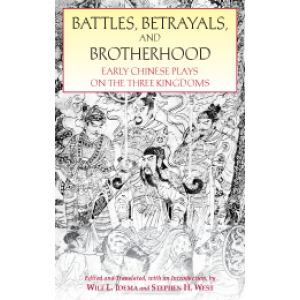
![]() Battles, Betrayals, and Brotherhood
Battles, Betrayals, and Brotherhood"Battles, Betrayals, and Brotherhood is a brilliant introduction to one of China’s best-loved heroic traditions. And of course the translations are wonderful—very lively!" —Katherine Carlitz, University of Pittsburgh
"[A] veritable treasure trove of materials in English for those interested in exploring the immediate predecessors of the Ming novel [The Romance of the Three Kingdoms]. The translations in Battles, Betrayals, and Brotherhood are, as is typical of Idema and West's work, colloquial and lively while simultaneously meticulously researched. This volume is a welcome addition to our resources on early drama and the Three Kingdoms story cycle alike, and will no doubt continue to inspire lively class discussions and productive research for some time to come." —CHINOPERL: Journal of Chinese Oral & Performing Literature
Learn More -
![]() Satires
Satires"This work will be a welcome addition to course reading lists, as it does justice to Horace's misleadingly simple verse. Svarlien’s rhythmic lines go down lightly and easily—as he renders Horace's phrase, he 'writes like people talk,' yet it is a talk that jars and provokes. Mankin's concise and highly readable notes will be as useful to scholars as to new readers of Horace: they are packed with cultural background, stylistic commentary, useful cross-references, and appealing suggestions on interpretation." —Catherine Keane, Department of Classics, Washington University in St. Louis
Learn More -
![]() The Arthaśāstra
The Arthaśāstra"The translations are the collaborative product of the two leading authorities today on the Arthaśāstra. . . . Their work is consistently, meticulously accurate throughout, yet written in the most straightforward and direct manner imaginable. The material prefatory to each translated section is, again, clear and accessible. . . . Complex matters are effectively distilled in plain language, and the key issues brought out. Superb on all counts. I have been awaiting such a volume for a long time." —Timothy Lubin, Washington and Lee University
"McClish and Olivelle's general Introduction to the Arthaśāstra is destined to become a classic in the field of South Asian studies; they have translated the text itself in an accessible style that students and general readers alike will comprehend and enjoy.” —James Frey, University of Wisconsin, Oshkosh
Learn More -
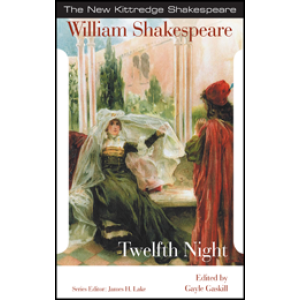
![]() Twelfth Night
Twelfth Night"Gayle Gaskill offers appropriate tribute to G.L. Kittredge by updating his classic edition with a mastery, thoroughness, and verve worthy of the original. This excellent edition is marked by impeccable scholarship that everywhere displays careful attention to detail and keen sensitivity to the needs of modern readers."
Learn More
—John W. Mahon, Senior Editor, The Shakespeare Newsletter, and Professor of English, Iona College -
![]() Rousseau: The Basic Political Writings (Second Edition)
Rousseau: The Basic Political Writings (Second Edition)This substantially revised new edition of Rousseau: The Basic Political Writings features a brilliant new Introduction by David Wootton, a revision by Donald A. Cress of his own 1987 translation of Rousseau’s most important political writings, and the addition of Cress’ new translation of Rousseau's State of War. New footnotes, headnotes, and a chronology by David Wootton provide expert guidance to first-time readers of the texts.
Learn More -
![]() Medieval Drama
Medieval DramaThis reprint (with updated 'Suggestions for Further Reading') of the Houghton Mifflin edition makes David Bevington's classic anthology of medieval drama available again at an affordable price.
Learn More -
![]() King Richard II
King Richard II"An extraordinary artistic achievement, Richard II remains one of Shakespeare's most satisfyingly ambiguous plays and expertly-penned exercises in shifting audience sympathies. Pendleton's even-handed introduction and judicious supplements to Kittredge's annotations lay out the play's issues in a way that make its delightful poignancy even more available to readers. Especially useful are Pendleton’s extensive in-text performance notes, which recount how film versions deal with the challenges and possibilities the play presents."
Learn More
—James Wells, Muskingum University -
![]() All's Well That Ends Well
All's Well That Ends Well"Adding entirely new annotations to the text, providing a lucid overview of the play's production history, concluding with an instructive essay on a theatrical understanding of reading plays, and illustrated with suggestive film stills throughout, Kathleen Kalpin Smith's All's Well that Ends Well is a welcome edition to the New Kittredge Shakespeare series, richly setting the play in the context of stage and screen performance."
Learn More
—W. B. Worthen, Barnard College, Columbia University -
![]() Coriolanus
Coriolanus"Professor Jeffrey Kahan's expertise in the history of Shakespearean acting complements Kittredge's lucid [introduction and text] to create an edition of Coriolanus that centers modern readers in the play’s performance. Kahan's introduction to the edition both recounts historical performances and carefully details recent directorial choices—choices that reappear in the course of his footnotes providing acting choices for key scenes. These notes, together with photographs of compelling performances, fix the reader's imagination firmly in the midst of Shakespeare’s chilling theatrical portrayal of Republican Rome. This highly accessible edition will prove invaluable for actors, students, and lovers of Shakespeare."
Learn More
—Cyndia Clegg, Pepperdine University -
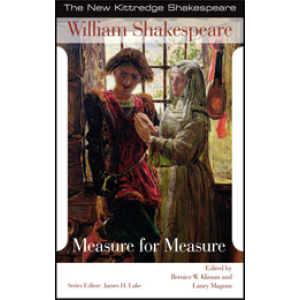
![]() Measure for Measure
Measure for Measure"This most problematic of Shakespeare's plays, a comedy filled with dark corners, has been beautifully presented by Laury Magnus and the late Bernice Kliman. Scholars will admire their editorial skill while students will benefit greatly from their ample notes, useful timeline of the play's plot, and cogent performance history. As the editors explain, the fiercely interlocked themes of the play—sex, money, justice, and religion—make this play a measure not only of Shakespeare's time but of our own."
Learn More
—Anthony DiMatteo, New York Institute of Technology -
![]() Prometheus Bound
Prometheus Bound“This is the best Prometheus Bound in English. Deborah Roberts’ translation is accurate, readable, and true to the original in idiom, imagery, and the combination of a high style with occasional colloquialism. The informative notes and perceptive Introduction will help readers to experience the play with heightened pleasure and understanding.” —Seth L. Schein, Professor of Comparative Literature, University of California, Davis
"This is an outstandingly useful edition of Prometheus Bound. The translation is both faithful and graceful, and the introduction to this difficult play is a model of clarity, intelligence, and a profound familiarity with the workings of Greek myth, Greek literature, and literature in general." —Rachel Hadas, Department of English, Rutgers University
"The language is rich and poetic without being overly stylized. The result is a beautiful rendition of the tragic language. . . . The Introduction provides everything one would want and expect to find for this play." —Kathryn Mattison, McMaster University, in Mouseion
Learn More -
![]() The True History of The Conquest of New Spain
The True History of The Conquest of New Spain"Bernal Díaz’s True History of the Conquest of New Spain, the chronicle of an ‘ordinary’ soldier in Hernando Cortés’s army, is the only complete account (other than Cortés’s own) that we have of the Spanish conquest of ancient Mexico. Although it is neither so ‘true’ nor so unassumingly direct as its author would have us believe, it is unmistakably the voice of the often unruly, undisciplined body of untrained freebooters who, in less than three years, succeeded against all apparent odds, in bringing down the once mighty ‘Aztec Empire.’ It makes for consistently fascinating reading, and Ted Humphrey and Janet Burke have provided the best, and the most engaging, translation ever to have appeared in English."
Learn More
—Anthony Pagden, UCLA -
![]() Montaigne: Selected Essays
Montaigne: Selected Essays"A superb achievement, one that successfully brings together in accessible form the work of two major writers of Renaissance France. This is now the default version of Montaigne in English." —Timothy Hampton, University of California, Berkeley
"Inspired. In every page—beginning with Atkinson's brilliant Introduction—this magical Montaigne betrays a lifetime of meditation on its subject." —Stephen G. Nichols, Johns Hopkins University
Learn More -
![]() The Battle over Free Will
The Battle over Free WillThis compilation of writings from Erasmus and Luther’s great debate—over free will and grace, and their respective efficacy for salvation—offers a fuller representation of the disputants’ main arguments than has ever been available in a single volume in English. Included are key, corresponding selections from not only Erasmus’ conciliatory A Discussion or Discourse concerning Free Will and Luther’s forceful and fully argued rebuttal, but—with the battle now joined—from Erasmus’ own forceful and fully argued rebuttal of Luther. Students of Reformation theology, Christian humanism, and sixteenth-century rhetoric will find here the key to a wider appreciation of one of early modern Christianity’s most illuminating and disputed controversies.
Learn More -
![]() Andromache, Hecuba, Trojan Women
Andromache, Hecuba, Trojan WomenDiane Arnson Svarlien’s translation of Euripides’ Andromache, Hecuba, and Trojan Women exhibits the same scholarly and poetic standards that have won praise for her Alcestis, Medea, Hippolytus. Ruth Scodel’s Introduction examines the cultural and political context in which Euripides wrote, and provides analysis of the themes, structure, and characters of the plays included. Her notes offer expert guidance to readers encountering these works for the first time.
Includes the unabridged text of Diane Arnson Svarlien's Hecuba, a translation featured in Patrick Wang's critically acclaimed film, A Bread Factory.
"Wang tracks a scene from a Bread Factory production of Hecuba from an uncertain rehearsal, to a breakthrough for its actors, to a searching discussion of the text and the characters, to a final performance so thrilling that I found myself wishing, while watching, that Wang would just shoot the whole play. Happily, he lets this Hecuba keep going." —Alan Scherstuhl, LA Weekly
To see Patrick Wang's article "Hecuba: A Film Record" in Didaskalia, click here. To see clips from the Arnson Svarlien Hecuba featured in A Bread Factory, click here.
Learn More -
![]() King Lear
King Lear"By adding comments on recorded performances to Kittredge's notes . . . [which] were fun and helpful to my early study of Shakespeare . . . Kenneth Sprague Rothwell gives students and researchers the means to explore how performance can elucidate 'the script' of King Lear."
Learn More
—Harry Keyishian, Fairleigh Dickinson University




















Filter
Literature
- 17th to 20th Century Literature
- Aesthetics & Literary Theory
- Asian Literature
- British Literature
- Classical Literature in Translation
- Drama
- Early English Literature
- Epic
- Folklore & Mythology
- French Literature in Translation
- German Literature in Translation
- Hispanic Literature in Translation
- Italian Literature in Translation
- Latin American & Caribbean Literature & History
- Medieval & Early Modern Literature
- Rhetoric & Composition
- Russian Literature in Translation
- Shakespeare
- Studies in Classical Language & Literature
- Travel Literature
- The Western Literary Tradition Anthologies