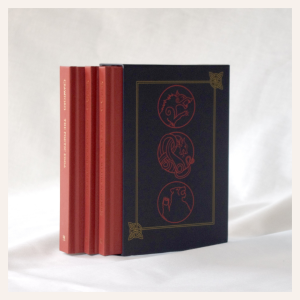
The Hackett Signature Editions Collection Featuring Premium Hardcovers of Hackett Classics - Learn More Here.

Literature





-
![]() Plato: Gorgias & Aristotle: Rhetoric
Plato: Gorgias & Aristotle: RhetoricBy pairing translations of Gorgias and Rhetoric, along with an outstanding introductory essay, Joe Sachs demonstrates Aristotles response to Plato. If in the Gorgias Plato probes the question of what is problematic in rhetoric, in Rhetoric, Aristotle continues the thread by looking at what makes rhetoric useful. By juxtaposing the two texts, an interesting "conversation" is illuminated—one which students of philosophy and rhetoric will find key in their analytical pursuits.
Learn More -
![]() Hamlet
Hamlet"Shakespeare scholars Bernice W. Kliman and James H. Lake have carried out the important task of not only bringing up to date the text of Hamlet as edited in the last century by the celebrated Shakespearean George Lyman Kittredge but also retaining its significant features. The editors' discerning analyses of performances by Mel Gibson, Kenneth Branah, Michael Almereyda, and Simon Russell Beale drive home the point that Hamlet today remains alive but restless and unpredictable. It exemplifies Ben Johnson's Shakespeare, who '. . . was not of an age, but for all time!'"
Learn More
—Kenneth Sprague Rothwell, (1921-2010), was Professor Emeritus, University of Vermont -
![]() Tartuffe
Tartuffe"The new Steiner Tartuffe offers welcome relief from all the rhymed translations that make Molière sound like a third-rate Restoration poet while creating the (false) impression that verbal dexterity and wit trump all other values in the great comic playwright's dramaturgy. Steiner's crisp, lucid prose—her adroitly balanced sentences are especially effective at conveying the slippery rhetoric of Tartuffe's seductions—unfolds the plot and characters of Molière's play with an unaccustomed clarity, presenting the ideological clashes of the play with a bluntness many other translations attenuate. Roger Herzel's Introduction is well-focused for those encountering Molière for the first time and informed throughout by his own excellent scholarship."
Learn More
—Jim Carmody, University of California, San Diego -
![]() Paris Spleen, and La Fanfarlo
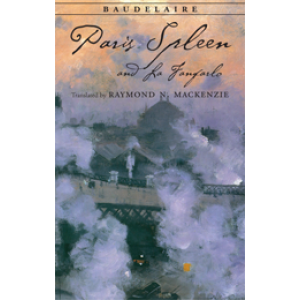
Paris Spleen, and La Fanfarlo"Attractively produced and presented, this useful edition of Paris Spleen and La Fanfarlo reads as both serious and engaging. The introduction is clear without being condescending. It seems to me very much to the point—as is Baudelaire as always."
Learn More
—Mary Ann Caws, Distinguished Professor of English, French, and Comparative Literature, Graduate School, CUNY -
![]() Le Morte Darthur: The Seventh & Eighth Tales
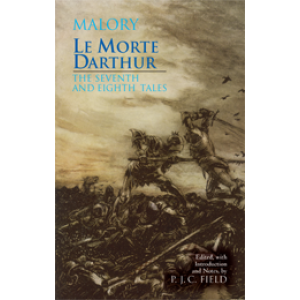
Le Morte Darthur: The Seventh & Eighth Tales"P. J. C. Field, the world's preeminent Malory specialist, has wisely chosen to offer here Malory's seventh and eighth tales, recounting the decline and end of Camelot. The authoritative text is accompanied by indispensable notes and preceded by a remarkably thorough and learned—but never obscure—Introduction sufficient to prepare students and other readers to profit fully from the texts. This book is ideal for those coming to Malory for the first time and a distinct pleasure for those who already know him well."
Learn More
—Norris J. Lacy, E. E. Sparks Professor of French and Medieval Studies, Penn State University -
![]() Deutsche Literatur im Kontext, 1750-2000
Deutsche Literatur im Kontext, 1750-2000"I find this an ideal introductory textbook for students of German literature. The material included provides an excellent overview of German literature since 1750 by embedding it in a cultural-historical context and clearly explaining the literary, cultural, and historical concepts involved. The copious exercises provide opportunities for students to organize their knowledge, engage in textual analysis, and expand their understanding of the interrelationships of literature and culture."
Learn More
—Margaret K. Devinney, Director, German Program at Temple University -
![]() Theogony & Works and Days (Caldwell & Nelson Edition)
Theogony & Works and Days (Caldwell & Nelson Edition)This edition includes an annotated translation, by Richard Caldwell, of Hesiod’s Theogony together with annotated translation, by Stephanie Nelson, of Hesiod’s Works & Days. Introductions by the translators are also included, as is an essay by Caldwell entitled “The Psychology of the Succession Myth."
Learn More -
![]() Electra
ElectraThis is an English translation of Sophocles' tragedy of Electra, and the vengeance that she and her brother Orestes take on their mother and step father for the murder of their father. This edition also includes an "afterlife" essay that discusses adaptations of the play, as well as touches on other ways Electra has had influence (Jung's identification of the Electra Complex, O'Neill's Mourning Becomes Electra). Focus Classical Library provides close translations with notes and essays to provide access to understanding Greek culture.
Learn More -
![]() Frogs (Henderson Edition)
Frogs (Henderson Edition)"Overall . . . I find this translation of the Frogs to be entertaining and very readable. Furthermore, Henderson's comprehensive introduction makes this translation quite useful for general readers or students at any level."
Learn More
—Erin K. Moodie, Bryn Mawr Classical Review -
![]() Medea (Svarlien Edition)
Medea (Svarlien Edition)"This is the Medea we have been waiting for. It offers clarity without banality, eloquence without pretension, meter without doggerel, accuracy without clumsiness. No English Medea can ever be Euripides', but this is as close as anyone has come so far, and a good deal closer than I thought anyone would ever come. Arnson-Svarlien has shown herself exceedingly skillful in making Euripides sound Euripidean." —David M. Schaps, Bryn Mawr Classical Review
"Fluid, lively, and accurate!" —Amy Vail, Department of Classics, Baylor University
Learn More -
![]() The Book of Her Life
The Book of Her LifeThe Hackett edition of Teresa of Avila's spiritual autobiography features Kieran Kavanaugh and Otilio Rodriguez's authoritative translation of The Book of Her Life with a new Introduction by Jodi Bilinkoff that will prove especially valuable to students of Early Modern Spain, the history of Christian spirituality, and classic women writers. A map, chronology, and index are also included.
Learn More -
![]() The Prince (Atkinson Edition)
The Prince (Atkinson Edition)"This edition of the The Prince has three distinct and disparate objectives: to provide a fresh and accurate translation; to analyze and find the roots of Machiavelli's thought; and to collect relevant extracts from other works by Machiavelli and some contemporaries, to be used to illuminate and explicate the text. The objectives are all reached with considerable and admirable skill. The reader senses Professor Atkinson's empathy and feeling for even the tiniest movements in Machiavelli's mind. Professor Atkinson has done a great service to students and teachers of Machiavelli, who should certainly welcome this as the most useful edition of The Prince in English. "
Learn More
—Mario Domandi, Italica, 1978 -
![]() Arthur Mervyn; or, Memoirs of the Year 1793
Arthur Mervyn; or, Memoirs of the Year 1793"This new edition of Arthur Mervyn far exceeds any previous version of this remarkable American novel. Through exhaustive archival research, the editors have produced a reliable text constructed within the intellectual, cultural, political, and religious contexts of a society informing Brown's efforts to capture and preserve the formation of the early republic for generations of readers and cultural historians. This vital text is essential reading for anyone interested in the origins of the United States."
Learn More
—Emory Elliott, University Professor, University of California-Riverside -
![]() Treatise on Slavery: Selections from De Instauranda Aethiopum Salute
Treatise on Slavery: Selections from De Instauranda Aethiopum Salute"Not only are the translations very well done; Von Germeten's notes and annotations are excellent, demonstrating a real sensibility for the African backgrounds of those to whom Sandoval ministered. . . she does a very fine job of addressing African histories and raising questions that emanate out of Africa, rather than seeing the enslaved simply as incipient Americans. Strongly recommended for Colonial Latin American surveys as well as for Atlantic History and African Diapora courses."
Learn More
—James Sweet, Department of History, University of Wisconsin -
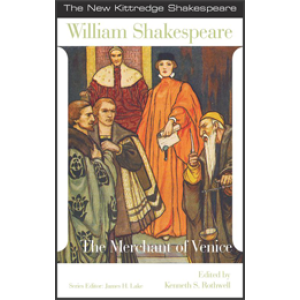
![]() The Merchant of Venice
The Merchant of Venice"Ken Rothwell does a splendid updating of Kittredge's Merchant of Venice with considerations of the play in performance. His essay on the play's stage history is lucid, his additions to Kittredge's notes are indicative of performance choices, and, as one would expect of the preeminent scholar of Shakespeare on film, his discussion of cinematic adaptations of Merchant is richly informative. This edition should prove useful to all levels of undergraduates."
Learn More
—James Bulman, Allegheny College -
![]() Plautus: Casina, Amphitryon, Captivi, & Pseudolus
Plautus: Casina, Amphitryon, Captivi, & Pseudolus"Christenson has offered readers a useful and informative edition of four Plautine plays in neutral, accessible English that, unlike some recent Plautus translations, reaches out to a wide modern audience, both classicist and general, both in Anglophone countries and elsewhere in the world. Within the range of Plautus translations as currently available, this is certainly a most welcome contribution. Christenson's thematical focus on some of Plautus' more serious plays, in which he seems almost like a social critic, is interesting and provides food for thought."
Learn More
—Vincent Hunink, in Bryn Mawr Classical Review -
![]() Romeo and Juliet
Romeo and Juliet"This splendid edition furnishes readers, students, and theater people alike with a marvelous set of tools for appreciating the many facets of Shakespeare's play: a freshly edited text from the authoritative 1599 quarto, trenchant explanatory notes, and–best of all–insightful performance notes detailing the various ways in which individual passages have been interpreted in important films and stage productions."
Learn More
—Eric Rasmussen, University of Nevada, Reno and co-editor of the RSC Shakespeare edition -
![]() The English Language
The English LanguageUpdated and expanded from one of the most popular grammar sites on the web, this book provides a modern guide to English usage for the 21st century. With topics arranged alphabetically and written in an enjoyable and readable tone, The English Language: A User's Guide will help students and writers understand the nature of the language, explaining the "why" of the rules as well as what constitutes good grammar and style. Going beyond the prescriptive wrong /right examples, Jack Lynch includes examples of weak/strong, good/better, disputed/preferred, and informal/formal usage.
Learn More -
![]() Alcestis, Medea, Hippolytus
Alcestis, Medea, HippolytusThis new volume of three of Euripides' most celebrated plays offers graceful, economical, metrical translations that convey the wide range of effects of the playwright's verse, from the idiomatic speech of its dialogue to the high formality of its choral odes.
"Many scholars translate the works of Euripides as they should be, but Diane Arnson Svarlien translates them as they are. . . . Arnson Svarlien shows admirable modesty and restraint in avoiding . . . pitfalls, and makes choices that reveal the meaning of the text she is translating with the least imposition of her own personality. The ambiguity of Euripides is transmitted to us but not imposed on us by [her] translation. . . . The translations are both readable and playable." —Edmond Chibeau, New England Theatre Journal
Learn More -
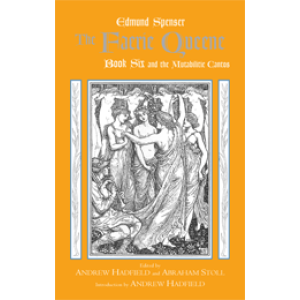
![]() The Faerie Queene, Book Six and the Mutabilitie Cantos
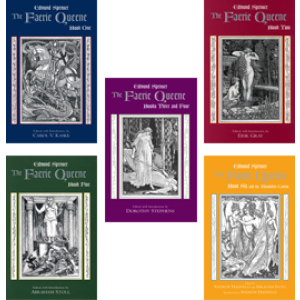
The Faerie Queene, Book Six and the Mutabilitie CantosBook Six and the incomplete Book Seven of The Faerie Queene are the last sections of the unfinished poem to have been published. They show Spenser inflecting his narrative with an ever more personal note, and becoming an ever more desperate and anxious author, worried that things were falling apart as Queen Elizabeth failed in health and the Irish crisis became ever more terrifying. The moral confusion and uncertainty that Calidore, the Knight of Courtesy, has to confront are symptomatic of the lack of control that Spenser saw everywhere around him. Yet, within such a troubling and disturbing work there are moments of great beauty and harmony, such as the famous dance of the Graces that Colin Clout, the rustic alter ego of the poet himself, conjures up with his pipe. Book Seven, the "Two Cantos of Mutabilitie," is among the finest of Spenser's poetic works, in which he explains the mythical origins of his world, as the gods debate on the hill opposite his Irish house. Whether order or chaos triumphs in the end has been the subject of most subsequent critical debate.
Learn More -
![]() Beowulf
Beowulf"Although an audience of enamored nonspecialists embraced Heaney's version . . . other scholars gave only grudging respect to the poet whose 'Heaneywulf' often seemed to represent an Anglo-Saxon world re-created in the Irish poet's own image. Since 2002, new and revised translations have come and gone, none attracting as much attention as Heaney's. That should change with Ringler's new translation, and not just because scholars such as Tom Shippey, Frederick Rebsamen, and John Niles vouch for it. The proof is in the reading, whether one does so silently or aloud. In his comprehensive, insightful introduction and rhythmic replication of Old English poetry, Ringler offers the specialist what Heaney did not; this is a performative translation that re-creates the world of Beowulf as accurately as may be possible. Accessible and exciting for specialists and nonspecialists alike, this is the edition professors should be using to introduce the venerable poem to a new audience. Summing up: Essential."
—A.P. Church, CHOICE
Learn More -
![]() An Introduction to Ancient Greek (Second Edition)
An Introduction to Ancient Greek (Second Edition)C.A.E. Luschnig's An Introduction to Ancient Greek: A Literary Approach prepares students to read Greek in less than a year by presenting basic traditional grammar without frills and by introducing real Greek written by ancient Greeks, from the first day of study. The second edition retains all the features of the first but is more streamlined, easier on the eyes, more gender-inclusive, and altogether more 21st century.
Companion Website: http://worldwidegreek.com/. Please note that the audio files originally found on the companion website are now available for free here on Soundcloud. Instructor resources: PDF-only answer keys to the even-numbered exercises are also available by request. If you are a course instructor please use this form to request the answer keys.
Learn More -
![]() The Comedies of Machiavelli (Bilingual Edition)
The Comedies of Machiavelli (Bilingual Edition)Though better known today as a political theorist than as a dramatist, Machiavelli secured his fame as a giant in the history of Italian comedy more than fifty years before Shakespeare's comedies delighted English-speaking audiences. This bilingual edition includes all three examples of Machiavelli's comedic art: sparkling translations of his farcical masterpiece, The Mandrake; of his version of Terence's The Woman From Andros; and of his Plautus-inspired Clizia—works whose genre afforded Machiavelli a unique vehicle not only for entertaining audiences but for examining virtù amid the twists and turns of fortuna.
Learn More -
![]() The Essential Odyssey
The Essential OdysseyThis generous abridgment of Stanley Lombardo’s translation of the Odyssey offers more than half of the epic, including all of its best-known episodes and finest poetry, while providing concise summaries for omitted books and passages. Sheila Murnaghan’s Introduction, a shortened version of her essay for the unabridged edition, is ideal for readers new to this remarkable tale of the homecoming of Odysseus.
Learn More -
![]() Sophocles: Four Tragedies
Sophocles: Four TragediesMeineck and Woodruff's new annotated translations of Sophocles' Ajax, Women of Trachis, Electra, and Philoctetes combine the same standards of accuracy, concision, clarity, and powerful speech that have so often made their Theban Plays a source of epiphany in the classroom and of understanding in the theatre. Woodruff's Introduction offers a brisk and stimulating discussion of central themes in Sophoclean drama, the life of the playwright, staging issues, and each of the four featured plays.
Learn More -
![]() The Golden Ass
The Golden Ass"This is easily the best English translation of The Golden Ass. I find that undergraduates with little or no knowledge of classical literature or the Greco-Roman world can readily read and enjoy it—as accessible as Graves or Ruden, but much more true to Apuleius's text and sensibility. Relihan's introduction is a great distillation of scholarly commentary—superb in all aspects." —Robin Walz, University of Alaska Southeast
"Relihan is an American Euphues. I like everything about this edition from the title page to the index. The translation is magnificent." —Stanley Lombardo, University of Kansas
Learn More -
![]() Macbeth
Macbeth"Seventy years after their publication, George Lyman Kittredge's editions of Shakespeare remain exceptional for the combination of learning, acuity, wit, and clarity he brings to his notes on the plays. Annalisa Castaldo makes Kittredge's Macbeth even more useful for modern readers by skillfully streamlining Kittredge's annotations and adding helpful analyses of the play and its film productions. There is no better edition of Shakespeare for students, beginning or advanced."
Learn More
—Dr. James Wells -
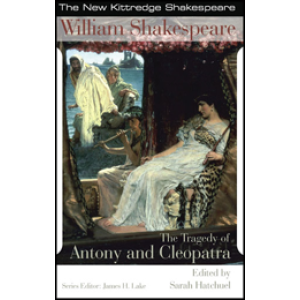
![]() Antony and Cleopatra
Antony and Cleopatra"The New Kittredge Series is both a delight and a steal. Kittredge's textual authority, updated by eminent scholars sensitive to classroom needs and alert to staging choices, is once again available in these slim, elegant, inexpensive, user-friendly volumes. With lucid notes and incisive introductions geared especially to popular film versions, the series also offers an overview of both stage and film performances of each play. A must for any Shakespeare class."
Learn More
—Laury Magnus -
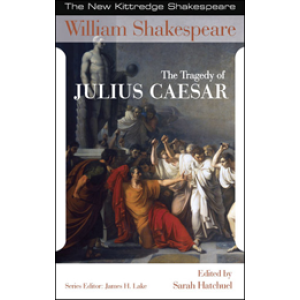
![]() Julius Caesar
Julius Caesar"The New Kittredge Series is both a delight and a steal. Kittredge's textual authority, updated by eminent scholars sensitive to classroom needs and alert to staging choices, is once again available in these slim, elegant, inexpensive, user-friendly volumes. With lucid notes and incisive introductions geared especially to popular film versions, the series also offers an overview of both stage and film performances of each play. A must for any Shakespeare class."
Learn More
—Laury Magnus -
![]() The Letters and Other Writings
The Letters and Other WritingsThe most comprehensive compilation of the works of Abelard and Heloise ever presented in a single volume in English, The Letters and Other Writings features an accurate and stylistically faithful new translation of both The Calamities of Peter Abelard and the remarkable letters it sparked between the ill-fated twelfth-century philosopher and his brilliant former student and lover—an exchange whose intellectual passion, formal virtuosity, and psychological drama distinguish it as one of the most extraordinary correspondences in European history. Thanks to this edition, Latin-less readers will be better placed than ever to see why this undisputed milestone in the intellectual life of medieval France is also a masterpiece of Western literature.
Learn More -
![]() Castle Rackrent
Castle RackrentSet in Ireland prior to its achieving legislative independence from Britain in 1782, Castle Rackrent tells the story of three generations of an estate-owning family as seen through the eyes—and as told in the voice—of their longtime servant, Thady Quirk, recorded and commented on by an anonymous Editor. This edition of Maria Edgeworth’s first novel is based on the 1832 edition, the last revised by her, and includes Susan Kubica Howard’s foot-of-the-page notes on the text of the memoir as well as on the notes and glosses the Editor offers "for the information of the ignorant English reader." Howard’s Introduction situates the novel in its political and historical context and suggests a reading of the novel as Edgeworth’s contribution to the discussion of the controversial Act of Union between Ireland and Britain that went into effect immediately after the novel’s publication in London in 1800.
Learn More -
![]() The Four Books: The Basic Teachings of the Later Confucian Tradition
The Four Books: The Basic Teachings of the Later Confucian TraditionIn this engaging volume, Daniel Gardner explains the way in which the Four Books—Great Learning, Analects, Mencius, and Maintaining Perfect Balance—have been read and understood by the Chinese since the twelfth century. Selected passages in translation are accompanied by Gardner's comments, which incorporate selections from the commentary and interpretation of the renowned Neo-Confucian thinker, Zhu Xi (1130-1200).
Learn More -
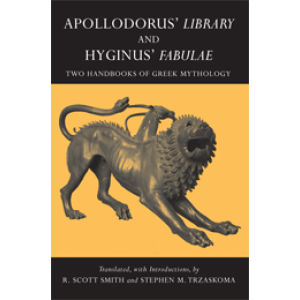
![]() Apollodorus' Library and Hyginus' Fabulae
Apollodorus' Library and Hyginus' Fabulae"To refer to this volume as just a translation is misleading, because Smith and Trzaskoma have provided much more, most notably the best short introduction to ancient mythography—and these particular authors—available in English. . . . The translations themselves are clear and accurate. [An] admirable volume. Smith and Trzaskoma are to be commended."
Learn More
—Kris Fletcher, Bryn Mawr Classical Review -
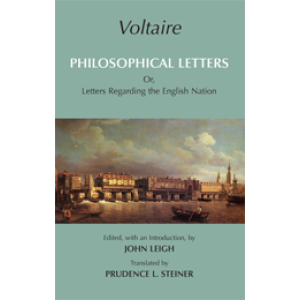
![]() Voltaire: Philosophical Letters
Voltaire: Philosophical Letters“This fluid new translation, with abundant explanatory notes and an insightful Introduction to Voltaire’s literary strategies, will make an excellent edition for students, as well as a useful resource for scholars.”
Learn More
—Ann Blair, Harvard University -
![]() Middle English Poetry in Modern Verse
Middle English Poetry in Modern VerseThis rich and lively anthology offers a broad selection of Middle English poetry from about 1200 to 1500 C.E., including more than 150 secular and religious lyrics and nine complete or extracted longer works, all translated into Modern English verse that closely resembles the original forms. Five complete satires and narratives illustrate important conventions of the period: Athelston, a historical romance; The Cock and the Fox, a beast fable by Robert Henryson; Sir Orfeo, a Breton lai; Saint Erkenwald, an alliterative saint's life; and The Land of Cockayne, a fantasy. The book concludes with substantial excerpts from longer narratives such as Piers Plowman and Confessio Amantis.
Learn More -
![]() The Faerie Queene, Books Three and Four
The Faerie Queene, Books Three and Four"Stephens's introduction to books 3 and 4 [offers] a guide to approaching the poem's grammar and syntax, meter, and significant theme's as well as a list of possible questions for discussion based on issues addressed in recent criticism. . . . Stephens addresses the nature and content of Spenser's poem from a modern perspective backward, rather than from a medieval or early modern perspective forward—an orientation that may be more comfortable for less sophisticated readership and which helps to ground The Faerie Queene in a broader literary tradition."
Learn More
—Rachel E. Frier, Sixteenth Century Journal -
![]() The Life of Henry V
The Life of Henry V"The New Kittredge Series is both a delight and a steal. Kittredge's textual authority, updated by eminent scholars sensitive to classroom needs and alert to staging choices, is once again available in these slim, elegant, inexpensive, user-friendly volumes. With lucid notes and incisive introductions geared especially to popular film versions, the series also offers an overview of both stage and film performances of each play. A must for any Shakespeare class."
Learn More
—Dr. Laury Magnus -
![]() Inferno (Simone Edition)
Inferno (Simone Edition)"Tom Simone's translation is simply superb. Of all the translations with which I am familiar, this is the one that is the most faithful to what's there in the Italian: no frills, no poetic sallies, no choosing a word because it brings the line closer to iambic pentameter—just unadulterated Dante with good old Anglo-Saxon words and in highly readable prose."
Learn More
—Peter Kalkavage, St. John's University -
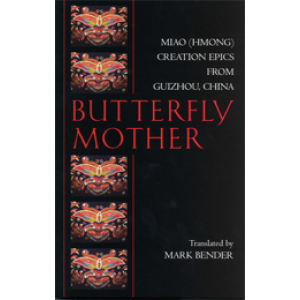
![]() Butterfly Mother
Butterfly Mother"Talk about 'persistent cultures'—this translation of the great epic, mythic tellings of the Miao/Hmong peoples is a window into a huge ancient soul of sustainable spirit and practice. Mark Bender's commentary provides context and details of places and singers that makes it even richer. This book provides new insights into how deeply oral recitation and performance can be embedded in a whole society, and some fresh, stunning stories."
Learn More
—Gary Snyder, author of Mountains and Rivers Without End -
![]() The Faerie Queene, Book Two
The Faerie Queene, Book Two"Teachers of Spenser will also welcome two more installments of the Hackett editions of separate books of The Faerie Queene under the general editorship of Abraham Stoll, this time on books 2 and on books 3 and 4. In my view, these are the most attractive, inexpensive, but also comprehensive editions to date, with far better (and easy to read) notes on mythology and name symbolism (matters increasingly foreign to our undergraduates) than almost all previous versions."
Learn More
—Catherine Gimelli Martin, Studies in English Literature 1500-1900 -
![]() Edgar Huntly; or, Memoirs of a Sleep-Walker
Edgar Huntly; or, Memoirs of a Sleep-Walker"This is now the edition of choice for those of us who teach Brown's fascinating Edgar Huntly. Barnard and Shapiro explore the relevant historical, cultural, and literary backgrounds in their illuminating Introduction; they skillfully annotate the text; they provide useful and up-to-date bibliographies; and they append a number of revealing primary texts for further cultural contextualization. This edition will help to stimulate new thinking about race, empire, and sexuality in Brown's prescient novel of the American frontier." —Robert S. Levine, University of Maryland
"The striking painting by a French artist on the cover of this American novel signals the editors' refreshing approach to Edgar Huntly through trans-Atlantic discourses of empire, radical-democratic social theory, sensibility, and sexuality. . . .This edition provides students with the tools to contextualize and analyze Edgar Huntly, including an extensive bibliography of relevant scholarship and footnotes that define unfamiliar words, give historical background, or refer the reader back to the introduction. Barnard and Shapiro's selection of related texts from works including William Godwin's Political Justice and Brown's essays gives students insight on Edgar Huntly's sources." —Yvette Piggush, Journal of the Early Republic
Learn More -
![]() A Tale of Two Melons
A Tale of Two Melons"Undergraduates will join specialists in enjoying this feast of melons. Schneewind's marvelous little book is at once a primer in some key aspects of China's traditional civilization and history, as well as a case study of an obscurely understood event that took place in 1372, in the reign of Taizu, founder of the Ming Dynasty (1368-1644). When two melons share a single stalk, and a local grower presents the anomaly to the emperor, the symbolism, the intentions of the giver, the reaction of the recipient, and the meaning of the whole act to observers and later commentators turn out to be anything but straightforward. Divergent interpretations began immediately, and continue to the present day."
Learn More
—John Dardess, University of Kansas -
![]() The Underdogs
The UnderdogsIn addition to a fresh translation of Los de Abajo, Azuela's classic novel of the Mexican Revolution, this volume offers both a general Introduction to the work and an extensive appendix setting the novel in its historical, literary, and political context. Related texts include contemporary reviews of Azuela's book, an excerpt from Anita Brenner's Idols Behind Altars (1929), and selections from John Reed's Insurgent Mexico (1914).
"Pellón's translation marks a clear improvement over the previous English versions of this seminal novel. Pellón captures the crisp, tense, and terse dialogue of Azuela's original, and I believe that his decision to leave some words in Spanish is a good one, given that most of the words involved are already well known to the non-Spanish speaking public. The retention of these Spanish words adds flavor to the translation without turning it into a 'Taco Bell' version of the novel. I am so enthusiastic about Pellón's translation that I believe it should become the standard edition of Los de Abajo read in America. . . In short, this new translation is worthy of the classic on which it is based. I will certainly use it in my courses, but more to the point, I will recommend it to my colleagues teaching courses on English literature, Comparative literature, and American studies." —Roberto González Echevarría, Sterling Professor of Hispanic and Comparative Literatures, Yale University
Learn More -
![]() Confessions (Sheed, Second Edition)
Confessions (Sheed, Second Edition)"This translation is already a classic. It is the translation that has guided three generations of students and readers into a renewed appreciation of the beauty and urgency of a masterpiece of Christian autobiography. This is largely because the translator has caught not only the meaning of Augustine’s Confessions, but a large measure of its poetry. It makes the Latin sing in English as it did when it came from the pen of Augustine, some sixteen hundred years ago. Deeply rooted in the tradition of which Augustine was himself a principal founder, this translation is not only modern: it is a faithful echo, in a language that has carried throughout the ages, of its author’s original passion and disquiet." —Peter Brown
"To my ears, Sheed’s translation is the most beautiful English translation available. The same electric current that runs through Augustine’s original can be felt in this translation, which combines a slightly elevated style (more elevated in direct prayers) combined with the immediacy and transparency of a street preacher (not that different from Augustine’s own style). The latest edition includes an introduction by Peter Brown, the best biographer of Augustine, and notes and commentary by Michael Foley, a truly excellent reader of Augustine." —Jared Ortiz, Hope College, in Catholic World Report
Learn More -
![]() Poetics (Sachs Edition)
Poetics (Sachs Edition)"I find the Introduction extremely convincing, lucid, learned, fair to past scholarship, and truly illuminating about the meaning of tragedy in general and about the very specific acceptions of hamartia, katharsis, ekplêxis, and thauma, in the context of an appropriate understanding of the Poetics. Another remarkable feature is the dexterity and ease with which it draws on all the relevant parts of the Aristotelian corpus to shed light on troublesome textual passages in the Poetics. Finally, the style of the Introduction is straightforward, free of unnecessary jargon, direct, and economical, the best interpretation of the Poetics I ever read." —Sabetai Unguru, Tel Aviv University
Learn More -
![]() Plato on Love
Plato on LoveThis collection features Plato's writings on sex and love in the preeminent translations of Stanley Lombardo, Paul Woodruff and Alexander Nehamas, D. S. Hutchinson, and C. D. C. Reeve. Reeve's Introduction provides a wealth of historical information about Plato and Socrates, and the sexual norms of classical Athens. His introductory essay looks closely at the dialogues themselves and includes the following sections: Socrates and the Art of Love; Socrates and Athenian Paiderastia; Loving Socrates; Love and the Ascent to the Beautiful; The Art and Psychology of Love Explained; and Writing about Love.
Learn More -
![]() The Royal Commentaries of the Incas and General History of Peru, Abridged
The Royal Commentaries of the Incas and General History of Peru, Abridged"Karen Spalding's abridgment of Livermore's translation is an excellent example of what a sourcebook for classroom use should be. It has a wonderfully enlightening Introduction and the texts are well selected, allowing students to grasp the breath, complexity, and importance of Garcilaso's work. This book enables teachers and professors to expose their students to a unique literary, historical, and artistic production by a mestizo who reflects on both conquest and miscegenation in early colonial Peru." —Tamar Herzog, Stanford University
"Abridging fifteen hundred pages to a concise two-hundred-page book, Karen Spalding has provided educators with a text that makes this important author accessible to undergraduates. . . . By publishing both parts of his history together . . . Spalding encourages students to compare the rational Inca state with the corruption anad deception of Spanish administrators—exactly as Garcilaso had intended. . . . Spalding's abridgment of Garcilaso carefully includes excerpts from the major issues detailed in Garcilaso's rich history." —R. Jovita Baber, (University of Illinois-Champaign), in The Sixteenth Century Journal
Learn More -
![]() A Sentimental Journey Through France and Italy and Continuation of the Bramine's Journal
A Sentimental Journey Through France and Italy and Continuation of the Bramine's Journal"Melvyn New's and W. G. Day's edition of Sterne's Sentimental Journey is the single best scholarly edition of that quirky but essential text available for student use. The notes are meticulous and hugely informative. The Introduction is lucid and useful, and the supplementary materials, including excerpts from Tristram Shandy and some of Sterne's sermons, provide essential background."
Learn More
—John Richetti, Department of English, University of Pennsylvania -
![]() The Essential Aeneid
The Essential AeneidStanley Lombardo's deft abridgment of his 2005 translation of the Aeneid preserves the arc and weight of Virgil's epic by presenting major books in their entirety and abridged books in extended passages seamlessly fitted together with narrative bridges. W. R. Johnson's Introduction, a shortened version of his masterly Introduction to that translation, will be welcomed by both beginning and seasoned students of the Aeneid, and by students of Roman history, classical mythology, and Western civilization.
Learn More





















Filter
Literature
- 17th to 20th Century Literature
- Aesthetics & Literary Theory
- Asian Literature
- British Literature
- Classical Literature in Translation
- Drama
- Early English Literature
- Epic
- Folklore & Mythology
- French Literature in Translation
- German Literature in Translation
- Hispanic Literature in Translation
- Italian Literature in Translation
- Latin American & Caribbean Literature & History
- Medieval & Early Modern Literature
- Rhetoric & Composition
- Russian Literature in Translation
- Shakespeare
- Studies in Classical Language & Literature
- Travel Literature
- The Western Literary Tradition Anthologies