The Hackett Signature Editions Collection Featuring Premium Hardcovers of Hackett Classics - Learn More Here.

Literature




-
![]() Writing a Successful Research Paper: A Simple Approach
Writing a Successful Research Paper: A Simple Approach"Writing a successful research paper is not easy, but Stanley Chodorow's book is so lucid and well organized that, with it as an aid, students will find the process less daunting—and perhaps even satisfying. The sixth chapter, on using evidence, is the best and most helpful thing I've ever read on that crucial topic."
Learn More
—Al Filreis, Kelly Professor of English, Faculty Director of the Kelly Writers House, and Director of the Center for Programs in Contemporary Writing, University of Pennsylvania -
![]() King Richard the Third
King Richard the Third"In this splendid edition, Jacquelyn Kilpatrick gives us a comprehensive primer on Shakespeare's performance craft and an ideal text for teaching Richard III, particularly to students new to Shakespeare. Her introductory materials make a century of scholarship and filmmaking both accessible to the newcomer and illuminating for the experienced student or performer. Her keen understanding of the original performance circumstances of Shakespeare's plays and insightful accounts of salient stage and film productions work together to open up the rich array of possibilities and choices in performance, both then and now."
Learn More
—Catherine S. Burriss, California State University, Channel Islands -
![]() Six Records of a Life Adrift
Six Records of a Life Adrift"Shen Fu’s Six Records of a Life Adrift is the most intimate document at our disposal of private life in late imperial China. Graham Sanders now provides us with a new translation for the 21st century, which is not only well researched but also highly readable." —Wilt Idema, Harvard University
Learn More -
![]() Sir Gawain and the Green Knight
Sir Gawain and the Green Knight“A dazzling recreation of the most memorable Middle English poem, and one that captures the original alliterative verse in all its dimensions: sense, sound, and rhythm.”—Ad Putter, Professor of Medieval English Literature, University of Bristol
"Nicely fills the gap between overly technical scholarly editions and too-simplified student editions. The translation and overview provide a solid introduction to the Middle English masterpiece and assures that future readers will be as willing as Glaser has been to devote the time and energy necessary to explore the poem's many facets. A worthy effort to bring the complex poem to modern students." —Ryan Naughton, Ohio University, in The Medieval Review
Learn More -
![]() The Essential Metamorphoses
The Essential MetamorphosesThe Essential Metamorphoses, Stanley Lombardo’s abridgment of his translation of Ovid’s Metamorphoses, preserves the epic frame of the poem as a whole while offering the best-known tales in a rendering remarkable for its clarity, wit, and vigor. While making no pretense of offering an experience comparable to that of reading the whole of Ovid’s self-styled history “from the world’s first origins down to my own time,” this practical and judicious selection of myths at the heart of Roman mythology and literature yet manages to relate many of the most fascinating episodes in that world-historical march toward the Age of Augustus—and is accompanied by an Introduction that deftly sets them in their cosmological, theological, and Augustan contexts.
Learn More -
![]() Germinal
Germinal“Raymond Mackenzie’s elegant new translation of Émile Zola’s Germinal captures the diction of the novel’s colorful characters and the restrained voice of a naturalist narrator. David Baguley’s introduction analyzes Zola’s personal background, his literary and scientific influences, and the historical circumstances of French workers in the 1860s as well as a spectrum of political acts and deeds in the 1880s when the novel was written. These features plus Zola’s notes on the town of Anzin that he studied prior to writing the novel, make this the edition of choice for course adoptions in history and literature." —Stephen Kern, Ohio State University
Learn More -
![]() Love's Labour's Lost
Love's Labour's Lost"This student-friendly edition of a difficult play includes a clear, helpful introduction and notes elucidating the complicated imagery and wordplay. Notes and illustrations refer the reader to various staging options enabling him or her to imagine Love’s Labour’s Lost in performance."
Learn More
—Katharine E. Maus, James Branch Cabell Professor of English Literature, University of Virginia -
![]() Electra, Phoenician Women, Bacchae, & Iphigenia at Aulis
Electra, Phoenician Women, Bacchae, & Iphigenia at AulisThe four late plays of Euripides collected here, in beautifully crafted translations by Cecelia Eaton Luschnig and Paul Woodruff, offer a faithful and dynamic representation of the playwright’s mature vision.
Learn More -
![]() The Epic of The Cid
The Epic of The Cid"Harney’s translation and literary panorama will become a standard reference for students and scholars throughout the English-speaking world for decades to come. Harney’s profound knowledge of the cultural and creative ferment that surrounded the birth of this masterpiece is unchallenged. . . . The complementary medieval texts that Harney assembles—all the bright fragments that make up this mosaic of a ferocious warrior, clan chieftain, family man, and hero—have never before been brought together in one place with reliable translations from the Arabic, Latin, and Spanish." —George Greenia, College of William & Mary
Learn More -
![]() The Book of John Mandeville
The Book of John Mandeville"The Book of John Mandeville, one of the most important medieval travel books, has been translated into English from the original Anglo-Norman French for the first time since the late fourteenth century. Iain Macleod Higgins's accurate, readable, and judiciously edited rendering now supersedes the modernizations of Middle English versions that have hitherto been the English-speaking world's chief access to a work second only to Marco Polo's Travels in its influence and the duration of its popularity. Higgins's copious annotation, detailed index, and inclusion of translated excerpts from Mandeville's sources and other relevant texts make this a historically important contribution to our knowledge of medieval travel literature and of Western perceptions of non-Western peoples. Impressive scholarship combines with skillful translation of a medieval work with great modern relevance." —Modern Language Association
Learn More -
![]() Much Ado About Nothing
Much Ado About Nothing"Kittredge's admirably full notes, supplemented by Peter Kanelos's user-friendly introduction and references to film and television versions of the play, add up to a very accessible edition. I particularly liked the discussion of 'How to read Much Ado as performance,' which opens up a lot of possibilities for the student and teacher."
Learn More
—Lois Potter, Ned B. Allen Professor Emeritus, University of Delaware -
![]() The Essential Petrarch
The Essential Petrarch“Hainsworth’s translations from the Italian are first-rate, both in terms of accuracy to the intent of the originals . . . and in terms of conveying the force of Petrarch’s imagery. The translations from the Latin read freshly and easily . . . they are sure-footed, managing to capture the mix of pride and playfulness which characterizes Petrarch’s composite prose style. The notes to the individual poems are well-judged, just enough to keep the reader on track without parading off-putting erudition.”
Learn More
—Jonathan Usher, Emeritus, University of Edinburgh -
![]() Othello, The Moor of Venice
Othello, The Moor of Venice"This is an edition of Othello whose conversational introduction and unobtrusive but thorough notes will make the first-time visitor to the text an expert on the play. By keeping her own focus on the issue of performance—including her nuanced descriptions of the major films—editor Gretchen Schulz not only helps readers see Othello in the theatre of the imagination, she helps them to direct it as well."
Learn More
—Ralph Alan Cohen, American Shakespeare Center, Co-founder and Director of Mission; Gonder Professor of Shakespeare, Mary Baldwin College -
![]() Pericles, Prince of Tyre
Pericles, Prince of Tyre"Kahan has presented the performance and printing issues with directness and clarity, leaving many technical details that might discourage some students to the footnotes. The result is a very readable "Introduction" to one of Shakespeare's late romances."
Learn More
—Stanley Stewart, Distinguished Professor of English, University of California, Riverside -
![]() As You Like It
As You Like It"Now, in the twenty-first century, Patricia Lennox broadens that understanding in her excellent edition of As You Like It where she draws on her knowledge of international film and television. She offers new meaning for modern readers who, while they savor Shakespeare’s language also understand visual signals from contemporary media."
Learn More
—Irene G. Dash, Hunter College, CUNY, retired -
![]() Metamorphoses (Lombardo Edition)
Metamorphoses (Lombardo Edition)"Stanley Lombardo successfully matches Ovid’s human drama, imaginative brio, and irresistible momentum; and Ralph Johnson’s superb Introduction to Ovid's 'narratological paradise' is a bonus to this new and vigorous translation that should not be missed. Together, Introduction and text bring out the delightful unpredictability of Ovid’s 'history of the world' down to his times."
—Elaine Fantham, Giger Professor of Latin, Emerita, Princeton University"Lombardo’s translation is the most readable I’ve seen. . . . Its language is modern, accessible, and unpretentious. . . . I can imagine reading all the way through this version with students. I also admire the catalog of transformations . . . and, as usual, an Introduction by Ralph Johnson is worth the price of the book." —Margaret Musgrove, University of Central Oklahoma
Learn More -
![]() Poems to Friends
Poems to Friends“A fugitive handprint in a bowl of cream, a bird tangled in the grapevines of a mural, holy women who clap their voices into prayers—this is a world of unexpected beauty, and Pucci as a translator deserves our respect and praise for having clapped these poems into songs.”
Learn More
—Joel C. Relihan, Wheaton College, Norton, MA -
![]() The Figaro Plays
The Figaro Plays“[Beaumarchais’] fame rests on Le Barbier de Seville (1775) and Le Mariage de Figaro (1784), the only French plays which his stage-struck century bequeathed to the international repertoire. But his achievement has been adulterated, for ‘Beaumarchais’ has long been the brand name of a product variously reprocessed by Mozart, Rossini, and the score or so librettists and musicians who have perpetuated his plots, his characters, and his name. The most intriguing question of all has centered on his role as catalyst of the Revolution. Was his impertinent barber the Sweeney Todd of the Ancien Régime, the true begetter of the guillotine? . . . Beaumarchais’ plays have often seemed to need the same kind of shoring up as his reputation, as though they couldn’t stand on their own without a scaffolding of good tunes. Yet, as John Wells’ lively and splendidly speakable translations of the Barber, the Marriage, and A Mother’s Guilt demonstrate, they need assistance from no one. [Beaumarchais] thought of the three plays as a trilogy. Taken together, they reflect, as John Leigh’s commentaries make clear, the Ancien Régime’s unstoppable slide into revolution.”
Learn More
—David Coward in The London Review of Books -
![]() The Cherry Orchard
The Cherry Orchard"Finding a decent Cherry Orchard which is not part of an anthology is valuable. Prof. Carnicke's introduction materials are highly helpful for teaching this in a theatre history or play analysis course." —Erith Jaffe-Berg, University of California, Riverside
Learn More -
![]() Mulan
MulanThis volume offers lively translations of the earliest recorded version of the legend and several later iterations of the tale (including the screenplay of the hugely successful 1939 Chinese film Mulan Joins the Army), illustrating the many ways that reinterpretations of this basic story reflect centuries of changes in Chinese cultural, political, and sexual attitudes.
"The plots and the elaborations of the Mulan narratives reproduced (and summarized) here demonstrate the many ways in which the Mulan figure has spoken to succeeding generations with differing heroic characteristics and in the idiom that each audience understood; they offer excellent texts for a deep background for any consideration of Mulan in contemporary culture. For scholars of European fairy tales, the narratives offer striking points of comparison with European crossdressing heroines of the sixteenth, seventeenth, and eighteenth centuries." —Ruth B. Bottigheimer, Stony Brook University
Learn More -
![]() Odysseus at Troy
Odysseus at TroyOdysseus at Troy is centered on the mythological Greek warrior, Odysseus, hero of the Trojan War. This book contains three plays: Sophocles' Ajax, Euripides' Hecuba, and Euripides' Trojan Women. The plays are complete, with notes and introductions for each. An additional introduction to the volume gives background on this popular theme, and on Ajax, one of the most written-about hero in Greek literature.
Learn More -
![]() Columbus on Himself
Columbus on Himself"Columbus had been the subject of many biographies, but the approach of Columbus on Himself is unique. Fernández-Armesto has created, as far as it is possible, an account of Christopher Columbus's life based on his own words. Columbus left far more potentially autobiographical writings than his contemporary explorers from the age of European expansion, but there are gaps in the record. Fernández-Armesto has arranged Columbus's writings chronologically so readers can see Columbus's development, and intersperses them with his insightful commentary. The translations are Fernández-Armesto's own. Recommended."
Learn More
—R. Fritze, Athens State University, in Choice -
![]() Three Shrew Plays
Three Shrew PlaysThis annotated collection of three early modern English plays allows readers to explore the relationship between Shakespeare's Shrew and two closely related plays of the same genre, the earlier of which, the anonymous The Taming of a Shrew (whether inspired by Shakespeare's play or vice-versa), once enjoyed a level of popularity that likely surpassed that of Shakespeare's play. The editors' Introduction brilliantly illuminates points of comparison between the three, their larger themes included, and convincingly argues that Shakespeare's Shrew is seen all the more vividly when the anonymous A Shrew and Fletcher's table-turning The Tamer Tamed are waiting in the wings.
Learn More -
![]() The Butterfly Lovers
The Butterfly Lovers“A judiciously chosen selection of the highlights of the famous Liang-Zhu story cycle with a particular focus on earlier and little-known redactions in a multiplicity of genres. Expertly translated with glosses on cultural items, this volume will prove a boon to the English reader with an interest in the riches of Chinese oral and vernacular culture. Scholars and students of Chinese literature and culture will value this volume for the insight it gives into the emergence and development of the story at key points in the tradition. Teachers of Chinese literature, history, and gender studies too will find much to draw inspiration from in the introduction, the translated stories and the background material presented in this book.”
Learn More
—CHINOPERL Papers -
![]() Classical Latin: An Introductory Course
Classical Latin: An Introductory CourseCompanion Website: A free Classical Latin companion website with exercises, audio, flashcards, and more is available here.
"To all my Latin colleagues: switch to this book! I have taught from half a dozen different Latin texts over the years, and have always wished there was something else I could be using. Finally that something else has arrived! I was pleasantly surprised at its accessibility, liveliness, and clarity. I have used it for two years now at the University of Delaware with great results. It fits extremely well into a two-semester elementary program. Each chapter features clear explanations of a manageable amount of material, with a variety of exercises ranging from simple to difficult, so the instructor can select what to give the students. The most capable students can do more difficult exercises, the average student is challenged but not overwhelmed, and the students with weaker language abilities are able to make it through the language requirement successfully. I have told all my friends in the field to try this book!" —Lynn Sawlivich, University of Delaware
Learn More -
![]() Two Novels from Ancient Greece
Two Novels from Ancient Greece"Since [Chariton's Callirhoe and Xenophon of Ephesos' An Ephesian Story] first found their way into the mainstream of Classics instruction twenty years ago, the need for new translations has become obvious, not only because of the textual and theoretical advances made in the interim, but because of demand for examining them in broader contexts. For both surveys of Greek and Roman literature and courses on the history of prose fiction, that demand has now been elegantly met. Trzaskoma's translation, based on greatly improved Greek texts, shows a sophisticated appreciation of the range in vocabulary and tone within Chariton, and similarities and differences in style between Chariton and Xenophon become easily apparent. . . . The Chariton and Xenophon I thought I knew have become much richer and more compelling texts. Any student of the ancient novel, and any teacher wanting to create more students of the ancient novel, needs to read this book."
Learn More
—Joel C. Relihan, Professor of Classics, Wheaton College (Norton, Mass.) -
![]() The Comedy of Errors
The Comedy of Errors"Laury Magnus's edition of The Comedy of Errors is a treasure—it gives us all the footnotes Kittredge never himself wrote along with a superb collection of production photographs of a wide variety of performances and extended production notes. The introduction is comprehensive in establishing the various ideas and dimensions of a play mistakenly thought to be the simple Roman farce of a young playwright. And teachers will find the extended list of assignments as suggestively fruitful as students reading the play for the first time. This combination is a real winner."
Learn More
—Arthur F. Kinney, University of Massachusetts, Amherst -
![]() The Lays of Marie de France
The Lays of Marie de France"With admirable sensitivity to the meaning and style of the originals, Edward J. Gallagher has skillfully rendered these charming Old French verse narratives from the late twelfth century into engaging and readable modern English prose. Gallagher includes a detailed commentary on each of the twelve lays, two useful glossaries, and a selection of lays in Old French. Readers will appreciate his substantial and informative introduction to the works of Marie de France and to the illustrious literary and cultural context within which these masterpieces in miniature took shape."
Learn More
—Donald Maddox, University of Massachusetts Amherst -
![]() A Midsummer Night's Dream
A Midsummer Night's Dream"This edition of A Midsummer Night's Dream is wonderfully lucid and thoughtful, offering supporting material that will appeal to readers from high school students to scholars. The introduction is especially thoughtful, offering, in addition to expected discussions of love, magic and imagination, an exploration of the theatrical history. The bibliography and filmography are both detailed and helpful, and the questions guide students to consider the play from many viewpoints without ever forcing an interpretation onto them."
Learn More
—Annalisa Castaldo, Widener University -
![]() The Taming of the Shrew
The Taming of the Shrew"Laury Magnus' edition of The Taming of the Shrew is much more than a revision of Kittredge. Her splendid introduction and appendices are sensitive to the play’s language and its paradoxical nuances of gender, and she understands that the play is, after all, a love story. Her explanatory notes are excellent, but most impressive and original is her emphasis on film, theater, and television performance."
Learn More
—Maurice Charney, Emeritus, Rutgers University -
![]() The Second Part of King Henry the Fourth
The Second Part of King Henry the Fourth"This is an exciting new edition, with a clear and lively introduction that succinctly captures the play's complexity and challenges. Wells' discussion of the play's relationship with Henry IV, Part One is especially thoughtful, and his attention to performance and film history is extremely valuable. The thorough and clear notes will be extremely helpful to students navigating Shakespeare's language for the first time, as well as for deepening the understanding of those who have some familiarity already. All in all, this is a valuable treatment of an often difficult play."
Learn More
—Tanya Pollard, Brooklyn College, CUNY -
![]() Tartuffe and the Misanthrope
Tartuffe and the MisanthropePrudence Steiner's lively prose translations remain close to the original French, giving us the speech of the characters in a slightly compressed and formalized language that echoes the effect created by Molière's verse. Roger Herzel's thoughtful Introduction discusses Molière's life; Tartuffe, The Misanthrope, and the comic tradition; and the setting, casting, and style of the plays.
Learn More -
![]() Four Plays and Three Jokes
Four Plays and Three JokesThis volume offers lively and accurate translations of Chekhov's major plays and one-acts (complete contents listed below) along with a superb Introduction focused on the plays' remarkably enduring power to elicit the most widely divergent of responses, the life of the playwright in its historical and aesthetic contexts, suggestions for reading the plays "under a microscope," and notes designed to bring Chekhov's world into immediate focus—everything needed to examine his drama with fresh eyes and on its own artistic terms. Three Jokes: The Bear, The Proposal, The Anniversary. The Major Plays: The Seagull, Uncle Vanya, Three Sisters, The Cherry Orchard.
Learn More -
![]() Ormond; or, the Secret Witness
Ormond; or, the Secret Witness"Philip Barnard and Stephen Shapiro have produced an awesome edition of Brown's Ormond by providing copious explanatory notes and helpful documentation of the essential historical context of feminist, radical, egalitarian, and abolitionist expression. Oh, ye patriots, read it and learn!" —Peter Linebaugh, University of Toledo
Learn More -
![]() Filial Piety and Its Divine Rewards
Filial Piety and Its Divine RewardsOf the many ballads, tales, and plays extolling filial piety (xiao)—the foundational virtue of imperial China—none was more popular in that era than the legend of Dong Yong and his heavenly helpmate, Weaving Maiden. Continually revised and embellished over a millennium, the tale's popularity remains, finding new expression in Chinese film and opera in the twentieth century. The five versions of the legend presented here, alongside a selection of related texts, illustrate changing perceptions of xiao from the tenth century through the first part of the twentieth in a variety of genres. An appendix traces the development of the related legend of Weaving Maiden and Buffalo Boy from myth to folktale.
Learn More -
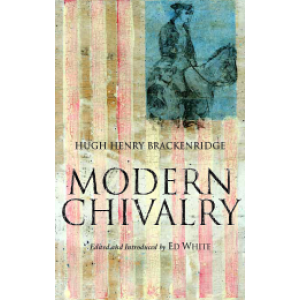
![]() Modern Chivalry
Modern Chivalry"Modern Chivalry is a singularly rich and undeniably important American novel, and Ed White's magnificent new edition does it superb credit. It is at once a bold literary experiment and an incisive social document; its formal adventurousness is matched by its searching political commentary. White's meticulous editing and annotation, and his superb Introduction and interpretive apparatus, make this an edition that will be greatly useful in the classroom as well as magnificently informative and challenging for scholars. Most important, it returns to print in beautiful form a deeply fascinating and wonderfully confounding early American literary masterpiece, one of the truly great American books. Henry Adams aptly called it 'a satire on democracy written by a democrat,' celebrated its 'genuine and original qualities,' and said it was 'more thoroughly American than any book yet published.' Modern Chivalry's capacious humor, epic ambition, and trenchant political satire make it not only intellectually fascinating but also wickedly enjoyable."
Learn More
—Christopher Looby, Department of English, UCLA -
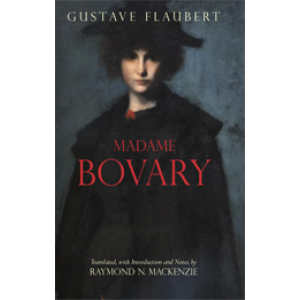
![]() Madame Bovary
Madame Bovary"After his beautiful translation of Baudelaire's Paris Spleen, Raymond N. MacKenzie now offers us a fresh, superb version of Madame Bovary by Flaubert. Impeccably transparent, this new translation captures the original's careful, precise language and admirably conveys the small-mindedness of nineteenth-century provincial French towns. MacKenzie's tour de force transports the reader to Yonville and compels him to look at Emma with Flaubert's calm, disenchanted eyes." —Thomas Pavel, University of Chicago
Learn More -
![]() The White Snake and Her Son
The White Snake and Her Son"Both by introducing the legend in such artfully rendered translations and showing its evolution over time, Idema has opened an extraordinary window on traditional Chinese popular culture. In keeping with his record, Idema's scholarship is outstanding. His ability to translate popular texts into comparably idiomatic English is an outstanding achievement. An extremely valuable text for teaching."
Learn More
—Hugh R. Clark, Ursinus College -
![]() Notes from the Underground
Notes from the UndergroundDostoevsky's disturbing and groundbreaking novella appears in this new annotated edition with an Introduction by Charles Guignon and Kevin Aho. An analogue of Guignon's widely praised Introduction to his 1993 edition of "The Grand Inquisitor," the editors' Introduction places the underground man in the context of European modernity, analyzes his inner dynamics in the light of the history of Russian cultural and intellectual life, and suggests compelling reasons for our own strange affinity for this nameless man who boldly declares, "I was rude and took pleasure in being so."
Learn More -
![]() The Mission of Friar William of Rubruck
The Mission of Friar William of Rubruck"[A] gem . . . Jackson's emendations are judicious, his translation reads well. . . . The exemplary work of Peter Jackson and David Morgan will remain indispensable to all interested in the wealth of information contained in Rubruck's report."
Learn More
—Denis Sinor, Journal of the Royal Asiatic Society -
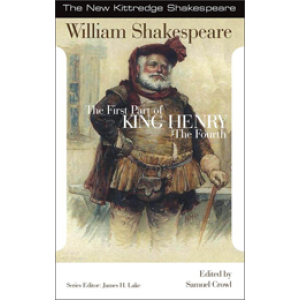
![]() The First Part of King Henry the Fourth
The First Part of King Henry the Fourth"Samuel Crowl's revision and updating of George Lyman Kittredge's edition of I Henry IV makes this useful text even more attractive to a contemporary audience of both general readers and students. Drawing on his extensive knowledge of and sensitivity to Shakespearean performance, Crowl provides a new Introduction,in addition to Kittredge's original, highlighting performance history, together with an essay on "How to Read The First Part of King Henry the Fourth as Performance," which pays particular attention to Orson Welles' Chimes at Midnight and two television productions of the play available on DVD. Crowl has lightly revised and extended Kittredge's annotations, and has added extensive performance notes where appropriate."
Learn More
—Michael Anderegg, University of North Dakota -
![]() Don Quixote
Don Quixote"James Montgomery's new translation of Don Quixote is the fourth already in the twenty-first century, and it stands with the best of them. It pays particular attention to what may be the hardest aspect of Cervantes's novel to render into English: the humorous passages, particularly those that feature a comic and original use of language. Cervantes would be proud." —Howard Mancing, Professor of Spanish, Purdue University and Vice President, Cervantes Society of America
"Fluent, unobtrusively modern, and attractively priced. Excellent notes add to the attractiveness of this very competent translation." —Alison Weber, University of Virginia, in Sixteenth Century Journal
Learn More -
![]() The Trials of Persiles and Sigismunda
The Trials of Persiles and Sigismunda"[The Persiles] could be thought to stand in the same relation to the Quixote as The Winter's Tale stands to Measure for Measure. . . . The present version really offers the Persiles for the first time in proper English dress. The translators have delicately balanced the formalities of its chronological age with the friskiness of its spirit: the finished version is just as much fun to read as it obviously was to make. A fine display of fireworks."
Learn More
—Robert M. Adams, The New Republic -
![]() The Tale of Cupid and Psyche
The Tale of Cupid and Psyche"Joel Relihan's playful and exuberant translation of Apuleius' Golden Ass has already won admiration for its ability to give an English-reading audience some sense of what it's like to experience this often astonishing writer in the original Latin. By presenting The Tale of Cupid and Psyche with its narrative frame and by supplementing it with key passages from other writers, he here provides the reader with the materials needed for an informed and complex engagement with this text; his carefully nuanced 'Afterthoughts' enrich that process further. This volume will appeal to anyone with interests in myth, religion, and folklore, and will surely find its place in a wide range of courses."
Learn More
—James B. Rives, University of North Carolina at Chapel Hill -
![]() The Electra Plays
The Electra Plays"Once again, Peter Meineck and Paul Woodruff team up (this time with Cecelia Eaton Luschnig) to produce a thoroughly engaging text with lively translations that prove to be of great value to the college classroom. . . . The clarity of the translations, the unburdensome thoroughness of the introduction, and the judicious selection of footnotes, however, combine to allow students both within and outside the pertinent disciplines to appreciate how The Electra Plays speak directly to the world."
Learn More
—Mitchell M. Harris, Augustana College -
![]() Readings from the Lu-Wang School of Neo-Confucianism
Readings from the Lu-Wang School of Neo-ConfucianismThis volume provides selected translations from the writings of Lu Xiangshan; Wang Yangming; and the Platform Sutra, a work which had profound influence on neo-Confucian thought. Each of these three sections is preceded by an introduction that sketches important features of the history, biography, and philosophy of the author and explores some of the main features and characteristics of his work. The range of genres represented—letters, recorded sayings, essays, meditations and poetry—provide the reader with insights into the philosophical and stylistic themes of this fascinating and influential branch of neo-Confucian thought.
Learn More -
![]() Inferno (Lombardo Edition)
Inferno (Lombardo Edition)"This new Inferno is very quickly going to become a favorite. The translation itself is unusually dynamic and returns to the poem a register of daily speech that increases clarity and energy. It never loses sight of the fact that the Inferno tells an intensely involving story. This volume also offers real help to the novice reader. The synopsis printed at the beginning of each canto; the detailed commentary on each canto, at the end of the book; and, most importantly, a really excellent Introduction—all these give the reader constant and multileveled guides to the journey."
Learn More
—F. Regina Psaki, The Giustina Family Professor of Italian Language and Literature, University of Oregon -
![]() Wieland; or the Transformation
Wieland; or the Transformation"An impressive edition . . . the most thoroughly satisfying historical and literary contextualization for the novel that I've ever encountered. Shapiro and Barnard offer a rich transatlantic artistic and ideological context that helps pull the whole novel into coherent focus. The footnotes to the novel are incredibly thorough, helpful, and interesting. . . . This Hackett edition of Wieland [is] the freshest and most topical of those now available."
Learn More
—Dana D. Nelson, Vanderbilt University -
![]() The Jew of Malta
The Jew of Malta"A provocative edition, one which belongs on the shelves of student and scholar alike."
Learn More
—Martha Oberle, Frederick Community College, Maryland, in The Sixteenth Century Journal





















Filter
Literature
- 17th to 20th Century Literature
- Aesthetics & Literary Theory
- Asian Literature
- British Literature
- Classical Literature in Translation
- Drama
- Early English Literature
- Epic
- Folklore & Mythology
- French Literature in Translation
- German Literature in Translation
- Hispanic Literature in Translation
- Italian Literature in Translation
- Latin American & Caribbean Literature & History
- Medieval & Early Modern Literature
- Rhetoric & Composition
- Russian Literature in Translation
- Shakespeare
- Studies in Classical Language & Literature
- Travel Literature
- The Western Literary Tradition Anthologies