The Hackett Signature Editions Collection Featuring Premium Hardcovers of Hackett Classics - Learn More Here.

Literature





-
![]() A Sentimental Journey Through France and Italy and Continuation of the Bramine's Journal
A Sentimental Journey Through France and Italy and Continuation of the Bramine's Journal"Melvyn New's and W. G. Day's edition of Sterne's Sentimental Journey is the single best scholarly edition of that quirky but essential text available for student use. The notes are meticulous and hugely informative. The Introduction is lucid and useful, and the supplementary materials, including excerpts from Tristram Shandy and some of Sterne's sermons, provide essential background."
Learn More
—John Richetti, Department of English, University of Pennsylvania -
![]() The Essential Aeneid
The Essential AeneidStanley Lombardo's deft abridgment of his 2005 translation of the Aeneid preserves the arc and weight of Virgil's epic by presenting major books in their entirety and abridged books in extended passages seamlessly fitted together with narrative bridges. W. R. Johnson's Introduction, a shortened version of his masterly Introduction to that translation, will be welcomed by both beginning and seasoned students of the Aeneid, and by students of Roman history, classical mythology, and Western civilization.
Learn More -
![]() Early Buddhist Discourses
Early Buddhist DiscoursesTwenty discourses from the Pali Canon—including those most essential to the study and teaching of early Buddhism—are provided in fresh translations, accompanied by introductions that highlight the main themes and set the ideas presented in the context of wider philosophical and religious issues. Taken together, these fascinating works give an account of Buddhist teachings directly from the earliest primary sources.
Learn More -
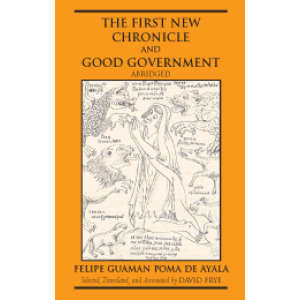
![]() The First New Chronicle and Good Government, Abridged
The First New Chronicle and Good Government, AbridgedDavid Frye's skillful translation and abridgment of Felipe Guaman Poma de Ayala's monumental First New Chronicle and Good Government (composed between 1600-1616) offers an unprecedented glimpse into pre-colonial Inca society and culture, the Spanish conquest of Peru (1532-1572), and life under the corrupt Spanish colonial administration. An Introduction provides essential historical and cultural background and discusses the author's literary and linguistic innovations. Maps, a glossary of terms, and seventy-five of Guaman Poma's ink drawings are also included.
Learn More -
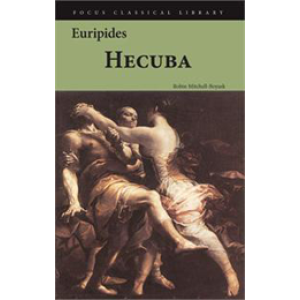
![]() Hecuba
HecubaEuripides Hecuba is one of the few tragedies that evoke a sense of utter desolation and destruction in the audience. The drama focuses on the status of women, those who are out of power and at the margins of society, by enacting the sufferings of Hecuba. With the city of Troy fallen, Hecuba and Polyxena, her daughter, are enslaved to Agamemnon. Hecuba is despondent with the news that Polyxena is chosen to be sacrificed at the tomb of Achilles. After the sacrifice, the body of her son Polydorus, already a ghost at the start of the drama, is discovered. Polymestor, a king in Thrace who Hecuba sent Polydorus to for safety reasons, murdered Polydorus for his gold. With the tacit complicity of Agamemnon, Hecuba plots her revenge against Polymestor. What transpires next has lasting implications for all involved, including a dramatic trial scene and Hecubas ultimate metamorphosis.
Learn More -
![]() The Mangy Parrot, Abridged
The Mangy Parrot, AbridgedDavid Frye’s abridgment of his 2003 translation of The Mangy Parrot captures all of the narrative drive, literary innovation, and biting social commentary that established Lizardi’s comic masterpiece as the Don Quixote of Latin America.
Learn More -
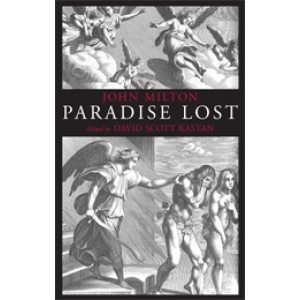
![]() Paradise Lost (Kastan Edition)
Paradise Lost (Kastan Edition)"Kastan is an exemplary editor, attuned to emerging critical currents, yet steeped in the scholarship of an earlier tradition, aware of the text's provenance and reception, alert to its topicality. His introduction, a model of theoretically informed, politically committed, historically grounded criticism, makes this edition of Paradise Lost all you would expect from one of the most erudite and perceptive figures in the field." —Willy Maley, Modern Language Review
"This is a superb edition, a model of careful editing and judicious annotation." —Leslie Brisman, Department of English, Yale University
"Thank you for sending this impressive edition. . . . Having edited Paradise Lost myself (Norton, 2005), I was curious and keen to see Professor Kastan's. I agree wholeheartedly with the claim (more diplomatically put) that the punctuation of the 17th century editions has no authority and that its proponents are avoiding the problem of syntax. The notes are learned and informative, without excess, and it's good to have the text of Edward Phillips' Life." —Gordon Teskey, Harvard University
Learn More -
![]() Homeric Hymns (Ruden Edition)
Homeric Hymns (Ruden Edition)"Sarah Ruden's translation is clear, lean, intelligent, and delightfully readable. The notes provide guidance without encumbering the text. This will be marvelous for classroom use, for reading aloud, or simply for reading for pleasure."
Learn More
—Pamela Gordon, Department of Classics, University of Kansas -
![]() Walden Two
Walden TwoThis fictional outline of a modern utopia has been a center of controversy ever since its publication in 1948. Set in the United States, it pictures a society in which human problems are solved by a scientific technology of human conduct.
Learn More -
![]() L'enfant noir
L'enfant noirThe Focus Student Editions are designed for French language courses in literature and culture. Prepared with non-native French speakers in mind, these editions include an introduction (in French), the complete work, and linguistic and cultural notes in French, a current bibliography and study questions. A masterwork of modern francophone African literature, L’enfant noir has the artistry of a novel and the authenticity of an autobiography. This prizewinning 1954 tale describes the narrator’s journey from childhood in Kouroussa, in northwestern Guinea, to France, and the conflict of sacred traditions with the ways of the modern world.
Learn More -
![]() El Burlador de Sevilla
El Burlador de SevillaEl burlador de Sevilla y convidado de piedra was first published in Spain around 1630 by Gabriel Tellez, a Spanish Baroque dramatist, poet and a Roman Catholic monk who used the name Tirso de Molina. The earliest adaptation of the legend of Don Juan, the personification of youthful indifference and all that is sinful, Tirso’s tale set in the 14th century confronts evil masquerading as honor. The Focus Student Editions are appropriate as introductory texts for Spanish language courses in literature and culture. They have been designed to help students approach the original Spanish text through an introductory essay, vocabulary and cultural notes, and study questions. All material is in Spanish, and complete in one volume.
Learn More -
![]() The Trojan Women
The Trojan WomenEnglish translation, with introduction, notes and appendices. The Trojan Women is a play on the consequences of war and the fate of those defeated in war and their victors.
Learn More -
![]() La casa de Bernarda Alba
La casa de Bernarda AlbaFederico García Lorca's 1945 drama is set in a small Spanish village, where the five daughters of a tyrannical mother struggle against her strict control. The play explores themes of repression, passion, and conformity, and the effects of love upon men upon women. This edition is designed to help students approach the original Spanish text through an introductory essay, vocabulary and cultural notes, and study questions. All material is in Spanish, and complete in one volume, appropriate as an introductory text for Spanish language courses in literature and culture.
Learn More -
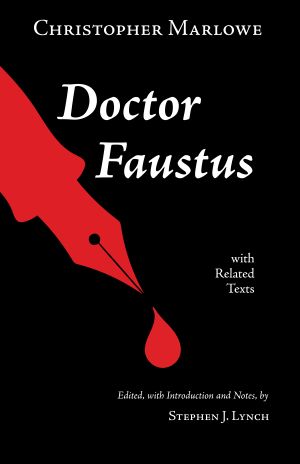
![]() Doctor Faustus: With The English Faust Book
Doctor Faustus: With The English Faust Book"This is an excellent edition; I really appreciate the clear Introduction and the exceptionally useful notes. I look forward to using this text with a freshman literature class who will really benefit from the helpful textual apparatus." —Charlotte England, Department of English, Salisbury University
"The inexpensive paperback will allow this student-friendly text to be added to the reading list of a variety of high-school and college courses. Teachers as well as students will find the Introduction here very useful." —Bibliothèque d'Humanisme et Renaissance
Learn More -
![]() Aeneid (Lombardo Edition)
Aeneid (Lombardo Edition)"Crisp, idiomatic, and precise, this is a translation for our era. The list of further reading, grounded in the writings of W.R. Johnson (who also wrote the Introduction) and Michael C. J. Putnam, suggests the context that informs the translation: here, as the translator says in the Preface, you will find an Aeneid that works more in the shadows than in the light. . . . This translation would be excellent for classroom use: not only would it incite fascinating discussions about issues of war and empire, but it also reads well aloud. . . . Together with Johnson's Introduction, this volume offers the Aeneid in terms that will resonate strongly with the general reader of today." —Sarah Spence, New England Classical Journal
"Adapting words of the ancient critic Longinus, [Lombardo] refers to the intense light of noon of the Iliad, the magical glow of the setting sun in the Odyssey, and the chiaroscuro of the Aeneid, a darkness visible. This latter phrase is the title of a famous interpretation of the Aeneid by W. R. Johnson, who contributes a splendid essay to the translation. Whether recited or read, the present volume stands as another fine performance on Lombardo's part. Summing up: Highly recommended."
—C. Fantazzi, CHOICE"Lombardo...tends to let Virgil be Virgil, and so avoids imposing unwarranted interpretation on the unwary reader. . . . [W.R. Johnson's] introduction is masterful and illuminating." —Hayden Pelliccia, The New York Review of Books
Learn More -
![]() Pensées
PenséesThis eloquent and philosophically astute translation is the first complete English translation based on the Sellier edition of Pascal’s manuscript, widely accepted as the manuscript that is closest to the version Pascal left behind on his death in 1662. A brief history of the text, a select bibliography of primary and secondary sources, a chronology of Pascal’s life and works, concordances between the Sellier and Lafuma editions of the original, and an index are provided.
Learn More -
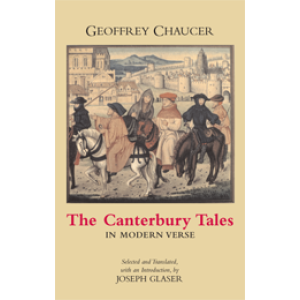
![]() The Canterbury Tales in Modern Verse
The Canterbury Tales in Modern Verse"This version of The Canterbury Tales is indeed 'fast-paced and entertaining'. It includes translations of most of the tales (certainly all of the most popular ones) and abridgments and summaries of a few others. Glaser's main innovation in this translation is a rather striking decision to render Chaucer's standard iambic pentameter line in iambic tetrameter. . . . Those who read his translation of The Canterbury Tales will likely be motivated to tackle a linguistically more challenging, yet more rewarding Middle English edition. Those who lack the time for such a task will still be able to appreciate the humor and variety of one of Chaucer's greatest works and will, through the basic and clear Introduction, get a sense of the historical and literary background of Chaucer, his times, and his works. The near conversational tone of the Introduction, furthermore, makes for an unintimidating encounter with a period of literature that, for many, is foreign and remote. As a kind of gateway text, therefore, Glaser's new translation of The Canterbury Tales will be much appreciated and valued by a non-specialist audience." —Jennifer A. Smith, Comitatus
Learn More -
![]() Doctor Faustus (Lake & Ribner Edition)
Doctor Faustus (Lake & Ribner Edition)An annotated version of Doctor Faustus, with modernized spelling and punctuation, of the 1616 B-text. James H. Lake's Introduction discusses the play’s historical and dramatic contexts, but focuses on its performance history from the Elizabethan era to our own, including film productions. Textual notes discuss variations between the A and B texts. Interviews with Ralph Alan Cohen of Shenandoah Shakespeare and Andreas Teuber (Mephistopheles in the Richard Burton production) as well as illustrations from theatre and film performances included.
Learn More -
![]() Metamorphoses (Ambrose Edition)
Metamorphoses (Ambrose Edition)This complete verse translation of Ovid's classical work is illustrated with extensive notes, an index, and glossary. To help the reader contend with Ovid's frequent leaps both ahead and back in time, the principle episodes are listed at the beginning of each book and the subsections and digressions marked with indentations. Some footnotes also refer to mythological material Ovid has derived from Greek epic or drama or, occasionally, from later sources. Specific authors referred to in these notes are briefly identified in the index and glossary.
Learn More -
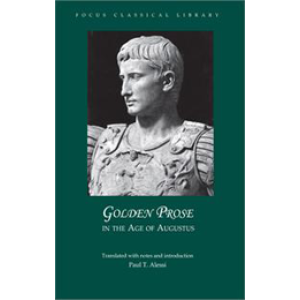
![]() Golden Prose in the Age of Augustus
Golden Prose in the Age of AugustusGolden Prose in the Age of Augustus is an anthology containing fresh, accurate and readable translations of the seven great prose writers from the Augustan period and covers a broad range of prose writing with introduction, maps, chronology, glossary, bibliography and notes.
Learn More -
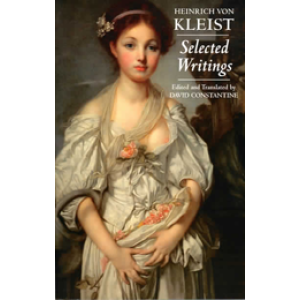
![]() Kleist: Selected Writings
Kleist: Selected Writings“If ever a literary work was a sleep of reason, bruised by menacing shapes, it is Kleist’s. He was one of the first of a line of German writers whose inwardness is so intense it seems to dissolve the weak bonds of his society. . . . Even as order and paternalism struggled to assert themselves in the private and public life of the nineteenth century, Kleist was introducing scenes of mob violence, cannibalism, and less than benevolent fathers. . . . David Constantine, a distinguished poet and Germanist, and a translator of Hölderlin, has taken pains to give us a literary Kleist, ‘a writer we cannot do without.’ . . . This book, containing all the stories and three key plays, provides a compelling view of a misfit genius who, in one of his last notes, remarked ‘the world is a strange set-up.’”
Learn More
—Iain Bamforth, The Times Literary Supplement -
![]() Republic (Reeve Edition)
Republic (Reeve Edition)"Reeve's new translation of Republic is the one to order for students. . . . Reeve draws on his thorough understanding of Plato's central work to provide an informed translation and properly brief supporting apparatus. A highlight is the concise, substantive Introduction that usefully encapsulates much of Reeve's own scholarship." —P.W. Wakefield, CHOICE
"Taking full advantage of S. R. Slings' new Greek text of the Republic, Reeve has given us a translation both accurate and limpid. Loving attention to detail and deep familiarity with Plato's thought are evident on every page. Reeve's brilliant decision to cast the dialogue into direct speech produces a compelling impression of immediacy unmatched by other English translations currently available." —Lloyd P. Gerson, University of Toronto
Learn More -
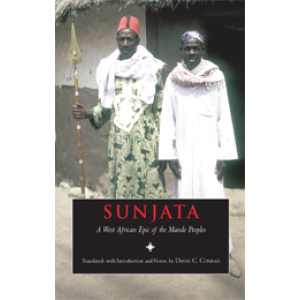
![]() Sunjata
Sunjata"Thanks to his careful editing and translating of Condé's narrative, Conrad offers a highly readable version of the epic that is about a third of its original length. The translation communicates not only the poetic qualities and the essential events of the Sunjata legend but also the master bard's performance values. Thus, this rendering will fascinate those who already know the story and culture and those coming to the epic for the first time. Conrad provides an excellent introduction to Mande oral tradition, the role of the griot, and the Manding belief system. Though he makes no claim for this as the complete scholarly edition, he does provide helpful scholarly notes, a glossary, and a good bibliography. . . . Summing up: Highly recommended." —L. W. Yoder, CHOICE
Learn More -
![]() The Mangy Parrot
The Mangy Parrot“Finally, an engaging, full-fledged rendition of the first Latin American novel ever—and still one of the savviest. José Joaquin Fernández de Lizardi invented Mexico . . . and David Frye shows us how.”
Learn More
—Ilan Stavans -
![]() Memorable Deeds and Sayings
Memorable Deeds and Sayings“The publication of Henry John Walker’s translation of Memorable Deeds and Sayings ensures a wider readership for Valerius’ great compendium of Greco-Roman lore. Of the many merits of Walker’s translation, I would cite especially its readability. Walker has produced a version of Valerius Maximus that reflects the original’s wide sweep, but in Walker’s hands Valerius tells a seamless story in multiple parts. This translation will be easily used by students in the classroom and by scholars. It is a substantial accomplishment: a superior new translation that renders a monument of Latin literature accessible in every way to multiple audiences.”
Learn More
—Joseph Pucci, Brown University -
![]() Five Russian Stories
Five Russian StoriesFive Russian stories (in English) from the post-Soviet era from among the best modern writers. The stories reflect cultural and political styles and concerns in Russian literature today. Translated with notes and introduction in English.
Learn More -
![]() Aeneid, A Prose Translation
Aeneid, A Prose TranslationAn exciting prose translation of the epic poem, beautifully illustrated by Merle Mianelli Poulton, with all the right pedagogical apparatus to make reading this important work a joy for any modern college or high school student. The text is complete with notes, introductory essay, glossary, and an appendix detailing the tabulation of the gods.
Learn More -
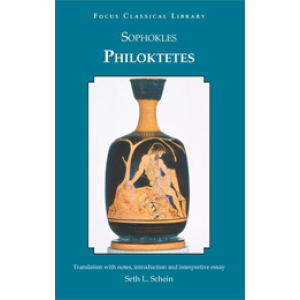
![]() Philoktetes
Philoktetes"Seth Schein's new translation of the Philoctetes will serve as a useful text for upper-year classical literature courses in translation. As is typical of the Focus Classical Library series, Schein's translation aims to give a faithful rendering of the Greek that is at the same time readable, if not poetic. It also situates the work in its historical context and generally provides the supplementary material required for readers new to Attic tragedy. . . . Given that it provides more contextual information and interpretive detail than the average translation, and that the translation itself strives for greater fidelity to the original, Schein's work will be most welcome in upper-year translation courses, where it will encourage students to develop a more detailed and subtle understanding of the play."
Learn More
—Brad Levett, Carleton University -
![]() Apology for Raymond Sebond
Apology for Raymond Sebond“Roger Ariew and Marjorie Grene, with the help of Hackett’s modest pricing scheme, have made this challenging, infuriating, ironic and hilarious classic readily available in a faithful and well-presented translation. . . . Scholars will find this volume a fine choice for introducing students to early modern philosophy. . . . This is a welcome publication.”
Learn More
—Craig Walton, Philosophy in Review -
![]() An Account, Much Abbreviated, of the Destruction of the Indies
An Account, Much Abbreviated, of the Destruction of the Indies“This is a splendid new translation of Brevísima Relación, the famous denunciation of the Spanish conquest of the Americas, written by Dominican friar Bartolomé de Las Casas (1483-1566). . . . The Hackett edition of Brevísima Relación . . . has a lot to offer to undergraduates. . . . Knight’s introduction to the text makes in fact for a compelling read. . . . Together with Knight’s ample annotations, which refer students to the most up-to-date secondary literature, it makes for a wonderful introduction to the history of Europe’s expansion into the Western Hemisphere.”
Learn More
—Martine van Ittersum, Journal of Early Modern History -
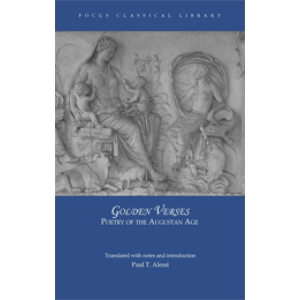
![]() Golden Verses: Poetry of the Augustan Age
Golden Verses: Poetry of the Augustan AgeAn anthology containing fresh and rhythmic translations of the great poets from the Augustan period, Golden Verses covers a broad range of verse with introduction, maps, chronology, glossary, bibliography and notes. Alessi's text is designed specifically for the college market, providing students with access to the thought and context at the roots of our culture. Designed to be read in conjunction with major works of the Augustan Age—Ovid's Metamorphosis and Vergil's Aeneid.
Learn More -
![]() Acharnians (Second Edition)
Acharnians (Second Edition)"Henderson has a real gift for capturing Aristophanes' voice, and does not hesitate to leap totally over the top, just like his author."
Learn More
—New England Classical Journal -
![]() Theban Plays (Woodruff & Meineck Edition)
Theban Plays (Woodruff & Meineck Edition)This volume offers the fruits of Peter Meineck and Paul Woodruff's dynamic collaboration on the plays of Sophocles' Theban cycle, presenting the translators' Oedipus Tyrannus (2000) along with Woodruff's Antigone (2001) and a muscular new Oedipus at Colonus by Meineck. Grippingly readable, all three translations combine fidelity to the Greek with concision, clarity, and powerful, hard-edged speech. Each play features foot-of-the-page notes, stage directions, and line numbers to the Greek. Woodruff's Introduction discusses the playwright, Athenian theatre and performance, the composition of the plays, and the plots and characters of each; it also offers thoughtful reflections on major critical interpretations of these plays.
Learn More -
![]() On the War for Greek Freedom
On the War for Greek FreedomDesigned for students with little or no background in ancient Greek language, history, and culture, this new abridgment presents those selections that comprise Herodotus’ historical narrative. These are meticulously annotated, and supplemented with a chronology of the Archaic Age, Historical Epilogue, glossary of main characters and places, index of proper names, and maps.
Learn More -
![]() Lysistrata (Ruden Edition)
Lysistrata (Ruden Edition)"Presents a readable, clear translation with the assistance students will need to understand this play and the society that produced it. . . . A worthy addition to Hackett's growing series of translations of classical literature in accessible editions."
Learn More
—Anne Mahoney, New England Classical Journal -
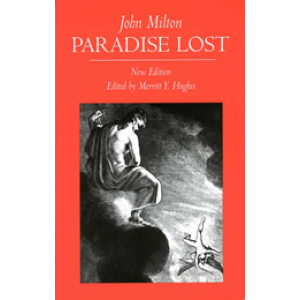
![]() Paradise Lost (Hughes Edition)
Paradise Lost (Hughes Edition)“Wonderful! Hughes’ edition is unexcelled!”
Learn More
—Carol V. Kaske, Cornell University -
![]() The People of Plato
The People of Plato"A treasure-house of vital information, exhaustively and meticulously researched, presented with clarity and verve. Students of Plato's dialogues—and other Socratic writings—will no longer be frustrated by wading through dispersed and difficult to use scholarly tomes to find out about Meno's family and career or Plato's brothers or uncles or who Thucydides son of Melesias was, and his relation to the historian. With philosophical readers foremost in mind, Nails tells all. From now on, anyone reading Plato will always have this book nearby."
Learn More
—John M. Cooper, Princeton University -
![]() Oidipous at Colonus
Oidipous at ColonusThis is an English translation of Sophocles' tragedy of Oedipus who is banished from Thebes and confronts an array of obstacles that stand between him and the death he craves. Focus Classical Library provides close translations with notes and essays to provide access to understanding Greek culture. Includes maps, essays and suggestions for further reading.
Learn More -
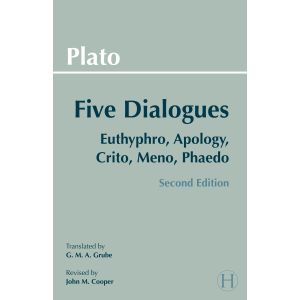
![]() Five Dialogues (Second Edition)
Five Dialogues (Second Edition)The second edition of Five Dialogues presents G. M. A. Grube’s distinguished translations, as revised by John Cooper for Plato, Complete Works. A number of new or expanded footnotes are also included along with an updated bibliography.
Learn More -
![]() Poems and Fragments
Poems and Fragments"I have long been an admirer of Stanley Lombardo's translations of Homer, and I was curious to see how he would adapt his fast-paced, lively style to Sappho. He has succeeded admirably. His translation of 73 poems of Sappho is clear, energetic, and close to the Greek. Pamela Gordon's Introduction gives a lucid and useful guide for the non-specialist to the last fifty years of scholarly debate on Sappho. This edition will be particularly useful for instructors of courses in translation seeking an introduction to Sappho for the Greekless student. It is also a pleasure to read."
Learn More
—Laurel Bowman, The Classical Bulletin -
![]() The Trials of Socrates
The Trials of SocratesLampooned in 406 B.C.E. in a blistering Aristophanic satire, Socrates was tried in 399 B.C.E. on a charge of corrupting the youth, convicted by a jury of about five hundred of his peers, and condemned to death. Glimpsed today through the extant writings of his contemporaries and near-contemporaries, he remains for us as compelling, enigmatic, and elusive a figure as Jesus or Buddha. Although present-day (like ancient Greek) opinion on "the real Socrates" diverges widely, six classic texts that any informed judgment of him must take into account appear together, for the first time, in this volume. Those of Plato and Xenophon appear in new, previously unpublished translations that combine accuracy, accessibility, and readability; that of Aristophanes' Clouds offers these same qualities in an unbowdlerized translation that captures brilliantly the bite of Aristophanes' wit. An Introduction to each text and judicious footnotes provide crucial background information and important cross-references.
Learn More -
![]() Georgics
Georgics"Chew's translation is, both in aesthetic and scholarly terms, an excellent piece of work. I find her approach refreshing and true to the spirit of the Georgics; her adventurousness strikes me as just the thing to rescue the poem from the appearance of blandness that a more straightforward style of translationese would inevitably, but misleadingly, impose upon it. This Georgics does not read much like any previous version of it. Chew helps the English reader to get a sense of Virgil's avant-garde poetics, which is the main thing that almost all translators of the Georgics work to eliminate, if indeed they are even aware of it.
Learn More
First-rate."
—Joseph Farrell, Professor of Classical Studies, University of Pennsylvania -
![]() Medea, Hippolytus, Heracles, Bacchae
Medea, Hippolytus, Heracles, BacchaeDrawn from four titles in the Focus Classical Library, this anthology includes four outstanding translations of plays by Euripides as well as a general introduction, extensive footnotes, and two interpretive essays. Included are Anthony J. Podecki’s translation of Medea, Michael R. Halleran's translation of Hippolytus and Heracles and Stephen Esposito’s translation of Bacchae.
Learn More -
![]() On the Nature of Things (Englert Edition)
On the Nature of Things (Englert Edition)"Englert's translation of the poem is indeed accurate and readable. He knows the poem as thoroughly as he knows the scholarship that bears on it . . . an admirable translation, admirably supported by scholarly tools."
Learn More
—W.R. Johnson, University of Chicago -
![]() King Oidipous
King OidipousThis is an English translation of Sophocles' famous tragedy of Oedipus and the fate he so much tries to avoid. Focus Classical Library provides close translations with notes and essays to provide access to understanding Greek culture.
Learn More -
![]() Theban Plays (Blondell Edition)
Theban Plays (Blondell Edition)This anthology includes English translations of three plays of Sophocles' Oidipous Cycle: Antigone, King Oidipous, and Oidipous at Colonus. The trilogy includes an introductory essay on Sophocles life, ancient theatre, and the mythic and religious background of the plays. Each of these plays is available from Focus in a single play edition. Focus Classical Library provides close translations with notes and essays to provide access to understanding Greek culture.
Learn More -
![]() Consolation of Philosophy
Consolation of Philosophy"Entirely faithful to Boethius' Latin; Relihan's translation makes the philosophy of the Consolation intelligible to readers; it gives equal weight to the poetry—in fact, Relihan's metrical translation of Boethius' metra are themselves contributions of the first moment to Boethian studies. Boethius finally has a translator equal to his prodigious talents and his manifold vision."
Learn More
—Joseph Pucci, Brown University -
![]() Antigone (Woodruff Edition)
Antigone (Woodruff Edition)"A lucid, well-paced translation, natural enough sounding in the dialogue to make a good acting version, and remarkably successful in making the choruses clear, lyrical, and yet part of the dramatic movement. Woodruff’s rendering of the choruses especially impresses me by the way he manages to render complex syntax and imagery of the original—often tangled and occasionally obscure in its allusiveness—into clear and genuinely poetic English." —Joseph Russo, Haverford College
Learn More -
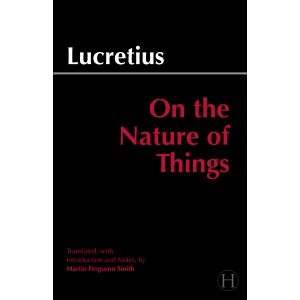
![]() On the Nature of Things (Smith Edition)
On the Nature of Things (Smith Edition)"Martin Ferguson Smith has for many years been one of the leading Lucretian scholars in the world. . . . We should expect from the beginning then that we are in the hands of a wise and learned guide as soon as we open his Lucretius, and this expectation is certainly borne out by the quality of this sensitive and thoughtful edition. . . . The Introduction . . . is excellent. Smith outlines in a highly accessible manner what little is known of Lucretius' life and times, the poem's position and status in the Epic and Didactic tradition, and the philosophy of Epicurus that Lucretius puts forward, but also manages to include some of the most up to date research, including recent scholarship on the Herculaneum papyri. . . . But of course, the translation is the most important part of the work . . . [and] it is streets ahead of the competition. . . . I can recommend this book unreservedly." —Gordon Campbell, Hermathena
Learn More -
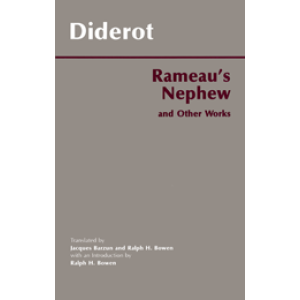
![]() Rameau's Nephew, and Other Works
Rameau's Nephew, and Other Works"It’s the best edition and the best translation available, one of Jacques Barzun’s most outstanding gifts to teachers. Bravo!”
Learn More
—William R. Everdell, St. Ann’s School























Filter
Literature
- 17th to 20th Century Literature
- Aesthetics & Literary Theory
- Asian Literature
- British Literature
- Classical Literature in Translation
- Drama
- Early English Literature
- Epic
- Folklore & Mythology
- French Literature in Translation
- German Literature in Translation
- Hispanic Literature in Translation
- Italian Literature in Translation
- Latin American & Caribbean Literature & History
- Medieval & Early Modern Literature
- Rhetoric & Composition
- Russian Literature in Translation
- Shakespeare
- Studies in Classical Language & Literature
- Travel Literature
- The Western Literary Tradition Anthologies