The Hackett Signature Editions Collection Featuring Premium Hardcovers of Hackett Classics - Learn More Here.

Philosophy








-
![]() Lectures on Ethics
Lectures on EthicsThese lively essays, transcribed by Kant's students during his lectures on ethics at Konigsberg in the years 1775-1780, are celebrated not only for their insight into Kant's polished and often witty lecture style but also as a key to understanding the development of his moral thought. As Lewis White Beck points out in the Foreword to this edition, those who know Kant only from his rigorous and abstract intellectual critiques may be surprised by the accessibility of these essays, which "put flesh on the bones of the critical ethics," while revealing Kant as a practical moralist, greatly concerned with the nuances of human conduct and the social effects of his moral teaching. The sharply focused discussions and definitions strengthen an interpretation of Kant's more mature speculative works and remain the riches document we have for understanding the history of the preeminent ethical theory of modern times.
Learn More -
![]() On the Advantage and Disadvantage of History for Life
On the Advantage and Disadvantage of History for Life(Part II of Thoughts Out of Season)
Learn More -
![]() Plato's Thought (Second Edition)
Plato's Thought (Second Edition)Plato's Thought offers an excellent introduction to Plato, guiding the reader through Plato's Theory of Forms, and examining his views on art, education and statecraft. This edition includes an introduction, bibliographic essay, and bibliography by Donald Zeyl.
Learn More -
![]() Challenges to Empiricism
Challenges to Empiricism". . . an admirably chosen set of selections, and the only anthology I know of which pulls together so many diverse strands of the recent attacks on traditional empiricist views."
—Richard Rorty, University of VirginiaNorth American rights only.
Learn More -
![]() Second Treatise of Government
Second Treatise of GovernmentThe Second Treatise is one of the most important political treatises ever written and one of the most far-reaching in its influence. In his provocative 15-page introduction to this edition, the late eminent political theorist C. B. Macpherson examines Locke's arguments for limited, conditional government, private property, and right of revolution and suggests reasons for the appeal of these arguments in Locke's time and since.
Learn More -
![]() Meno (Grube, Second Edition)
Meno (Grube, Second Edition)“Fine translation, good notes—inexpensive, too!”
Learn More
—D.A. Rohatyn, University of San Diego -
![]() Free Will and Determinism
Free Will and Determinism“Nicely conceived, very clearly written. . . . A high level of philosophic substance and sophistication.”
Learn More
—David M. Mowry, SUNY at Plattsburgh -
![]() Three Dialogues Between Hylas and Philonous
Three Dialogues Between Hylas and Philonous"A model of what an edition of a philosophic text for an introductory level should be. Introduction does an admirable job of putting Berkeley's thought in the intellectual context of its time."
Learn More
—Gary C. Hatfield -
![]() The Structure of Science (Second Edition)
The Structure of Science (Second Edition)"Ernest Nagel's work, The Structure of Science, has earned for itself the status of an outstanding standard work in its field. It offers an exceptionally thorough and comprehensive methodological and philosophical exploration encountered in those diverse fields. Nagel's discussion is distinguished by the lucidity of its style, the incisiveness of its reasoning, and the solidity of its grounding in all the major branches of scientific inquiry. The Structure of Science has become a highly influential work that is widely invoked in the methodological and philosophical literature. Recent controversies between analytics and historic-sociological approaches to the philosophy of science have not diminished its significance; in fact, it seems to me that the pragmatist component in Nagel's thinking may be helpful for efforts to develop a rapprochement between the contending schools."
Learn More
—Carl G. Hempel -
![]() A Companion To Plato's Republic
A Companion To Plato's RepublicA step by step, passage by passage analysis of the complete Republic. White shows how the argument of the book is articulated, the important interconnections among its elements, and the coherent and carefully developed train of though which motivates its complex philosophical reasoning. In his extensive introduction, White describes Plato’s aims, introduces the argument, and discusses the major philosophical and ethical theories embodied in the Republic. He then summarizes each of its ten books and provides substantial explanatory and interpretive notes.
Learn More -
![]() Companion To Lemmon's Beginning Logic
Companion To Lemmon's Beginning LogicThis brief volume supplements Lemmon’s classic introductory logic text with almost 200 new exercises, many of them solved, solutions to selected exercises in Beginning Logic itself, a helpful commentary on Lemmon’s use of key technical terms, alternative formulations, and advice to students.
Learn More -
![]() Ways of Worldmaking
Ways of Worldmaking“In a way reminiscent of Einstein, Goodman leads us to the very edge of relativism, only then to step back and to suggest certain criteria of fairness and rightness. More so than any other commentator, he has provided a workable notion of the kinds of skills and capacities that are central for anyone who works in the arts.”
Learn More
—Howard Gardner, Harvard University -
![]() Beginning Logic
Beginning Logic“One of the most careful and intensive among the introductory texts that can be used with a wide range of students. It builds remarkably sophisticated technical skills, a good sense of the nature of a formal system, and a solid and extensive background for more advanced work in logic. . . . The emphasis throughout is on natural deduction derivations, and the text’s deductive systems are its greatest strength. Lemmon’s unusual procedure of presenting derivations before truth tables is very effective.”
—Sarah Stebbins, The Journal of Symbolic LogicPublished by Van Nostrand Reinhold in the U.K. Available from Hackett in the U.S. only.
Learn More -
![]() On Liberty
On LibertyContents include a selected bibliography and an editor's Introduction broken into two sections. The first section provides a brief sketch of the historical, social, and biographical context in which Mill wrote and the second traces the central line of argument in the text to aid in the comprehension of the essay's structure, method, and major theses.
Learn More -
![]() A Dialogue on Personal Identity and Immortality
A Dialogue on Personal Identity and Immortality"Perry’s excellent dialogue makes a complicated topic stimulating and accessible without any sacrifice of scholarly accuracy or thoroughness. Professionals will appreciate the work’s command of the issues and depth of argument, while students will find that it excites interest and imagination." —David M. Rosenthal, CUNY, Lehman College
Learn More -
![]() Phaedo (Grube, Second Edition)
Phaedo (Grube, Second Edition)“A first rate translation at a reasonable price.”
Learn More
—Michael Rohr, Rutgers University -
![]() A History of Philosophy In America, Vol. 2 of 2
A History of Philosophy In America, Vol. 2 of 2This volume is part two of a two-volume set. It may be purchased separately or in conjunction with volume one. Vol. II: From the St. Louis Hegelians through C. I. Lewis. and G. H. Mead.
Learn More -
![]() Languages of Art
Languages of Art“Like Dewey, he has revolted against the empiricist dogma and the Kantian dualisms which have compartmentalized philosophical thought. . . . Unlike Dewey, he has provided detailed incisive argumentation, and has shown just where the dogmas and dualisms break down.”
Learn More
—Richard Rorty, The Yale Review -
![]() The Essential Plotinus
The Essential Plotinus“The Essential Plotinus is a lifesaver. For many years my students in Greek and Roman Religion have depended on it to understand the transition from antiquity to the Middle Ages. The translation is crisp and clear, and the excerpts are just right for an introduction to Plotionus’s many-layered view of the world and humankind’s place in it.”
Learn More
—F. E. Romer, University of Arizona -
![]() Plato on Knowledge and Reality
Plato on Knowledge and Reality"A complete and unified account of Plato’s epistemology . . . scholarly, historically sensitive, and philosophically sophisticated. Above all it is sensible. . . . White’s strength is that he places Plato’s preoccupation in careful historical perspective, without belittling the intrinsic difficulties of the problems he tackled. . . . White’s project is to find a continuous argument running through Plato’s various attacks on epistemological problems. No summary can do justice to his remarkable success . . . "
Learn More
—Ronald B. De Sousa, University of Toronto, in Phoenix -
![]() Republic (Grube, First Edition)
Republic (Grube, First Edition)"Those interested in the Republic primarily as a work of philosophy can not do better than Grube. . . . [He] renders Plato's arguments in unfussy, idiomatic English . . . sensitive to nuances of argument and the connection of philosophical ideas." —John M. Cooper, Princeton University
Learn More -
![]()
-
![]() Nicomachean Ethics (Irwin, Second Edition)
Nicomachean Ethics (Irwin, Second Edition)Out of print - replaced by the third edition (September 2019), click here for more information.
Building on the strengths of the first edition, the second edition of the Irwin Nicomachean Ethics features a revised translation (with little editorial intervention), expanded notes (including a summary of the argument of each chapter), an expanded Introduction, and a revised glossary.
Learn MoreOut of stock -
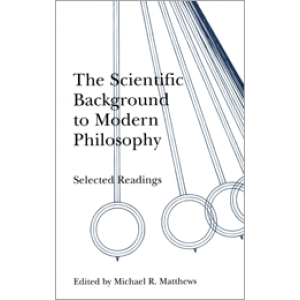
![]() The Scientific Background to Modern Philosophy
The Scientific Background to Modern PhilosophyThe first edition of The Scientific Background to Modern Philosophy is out of print and has been replaced by a new 2nd edition (released in November 2022). Click here for more information about the new 2nd edition.
Learn MoreOut of stock -
![]() The Letters
The Letters"Especially valuable is the very scholarly Introduction and commentary. Probably no Spinoza scholars are more knowledgeable about the man, his times, and his philosophy; and they provide what I find to be really helpful guidance."
Learn More
—Paul Eisenberg, Indiana University -
![]() Logic, Semantics, Metamathematics (Second Edition)
Logic, Semantics, Metamathematics (Second Edition)Contains the only complete English-language text of “The Concept of Truth in Formalized Languages.” Tarski made extensive corrections and revisions of the original translations for this edition, along with new historical remarks. It includes a new preface and a new analytical index for use by philosophers and linguists as well as by historians of mathematics and philosophy.
Learn More -
![]() Hegel's Ladder
Hegel's Ladder"[A] magnificent contribution to scholarship on the Phenomenology. What sets this book apart from the rest is Harris’s deep commitment to thinking Hegel in context, even when Hegel’s position runs counter to Harris’s own cultural and philosophical position. Thus Harris self-effacingly clears away the encrustations of ideology that distorted or undermined Hegel’s influence in the nineteenth century, and the contemporary biases that lead to piecemeal commentaries and salvagings of Hegel in the present day, and opens a window through which Hegel’s thought can appear with perhaps less distortion than at any previous time. This commentary on the Phenomenology is a landmark that will date Hegel scholarship by whether it appeared before or after Harris."
Learn More
—Robert R. Williams, The Review of Metaphysics -
![]() Reconceptions in Philosophy and Other Arts and Sciences
Reconceptions in Philosophy and Other Arts and Sciences"The authors argue against certain philosophical distinctions between art and science; between verbal and nonverbal meaning; and between the affective and the cognitive. The book continues Goodman's argument against one traditional mode of philosophizing which privileges the notions of 'truth' and 'knowledge'. Hence, the book is in a broadly pragmatic tradition. It also deals in detail with such topics as meaning in architecture and the concept of 'variation' in art, and contains a superb critique of some important views in contemporary epistemology. This work will be savored even by those who will not accept all aspects of Goodman and Elgin's approach. Essential for all undergraduate philosophy collections."
Learn More
—Stanley Bates, Choice -
![]() Truth, Vagueness, and Paradox
Truth, Vagueness, and Paradox“It is the only real treatise on truth in existence that takes full account of the liar paradox and other ‘semantical’ paradoxes and treats the sophisticated theories that have been developed in the last fifteen years. . . . The view of truth it expresses, the technical results obtained in working it out, and the general, self-contained treatment of the logical problems concerning truth combine to make this work a very important one.”
Learn More
—Charles Parsons, Harvard University -
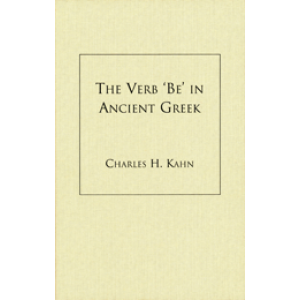
![]() The Verb 'Be' In Ancient Greek
The Verb 'Be' In Ancient Greek“It is great news that this book is available again. It deserves to be better known, both for its pioneering methods of linguistic analysis and for the results to which they lead. It transforms our understanding of the all-important Greek verb ‘to be.’”
Learn More
—Myles Burnyeat, All Souls College, University of Oxford -
![]() Buddhism as Philosophy
Buddhism as PhilosophyThe first edition of Buddhism As Philosophy is now out of print and has been replaced by a new second edition (October 2021). Click here for more information about the new second edition.
Learn MoreOut of stock -
![]() Philosophy in the Middle Ages (Third Edition)
Philosophy in the Middle Ages (Third Edition)The third edition builds on the strengths of the second by preserving its essential shape while adding several important new texts—including works by Augustine, Boethius, Pseudo-Dionysius the Areopagite, Anselm, al-Fārābī, al-Ghazālī, Ibn Rushd, Bonaventure, Thomas Aquinas, and John Duns Scotus—and featuring new translations of many others. The volume has also been redesigned and its bibliographies updated with the needs of a new generation of students in mind.
Learn More

















Filter
Philosophy
- 19th Century Philosophy
- 20th Century Philosophy
- Aesthetics & Literary Theory
- American Philosophy
- Ancient Philosophy
- Asian & Middle Eastern Philosophy
- Existentialism
- Focus Philosophical Library
- Introductory Texts & Dialogues
- Logic & Critical Thinking
- Medieval & Renaissance Philosophy
- Metaphysics & Epistemology
- Modern Philosophy
- Moral Philosophy
- Phenomenology & Related Texts
- Philosophy & History of Science
- Philosophy of Mind & Language
- Philosophy of Religion
- Series in Philosophy
- Social & Political Philosophy
- Critical Thinking Spotlight