The Hackett Signature Editions Collection Featuring Premium Hardcovers of Hackett Classics - Learn More Here.

Philosophy








-
![]() Prior Analytics
Prior Analytics“This volume is an impressive tour de force. It is state-of-the-art Aristotle: it employs the most recent philological, philosophical, and logical advances which since the 1970’s at least have rendered previous translations and commentaries obsolete. The translation is the first to take account of the recent epistemically orientated natural-deduction approach, which restores Aristotle’s reputation as a consummate logician and reveals much more of Aristotle’s method than previous approaches. Every page of Robin Smith’s commentary shows extensive learning, taste, imagination, and skill. . . . An important and lasting contribution, not only to Aristotle scholarship and to the history of logic, but also to the history of philosophy itself.”
Learn More
—John Corcoran, SUNY Buffalo -
![]() Symposium (Woodruff & Nehamas Edition)
Symposium (Woodruff & Nehamas Edition)"A model of the kind of text one needs for lecture courses: the translation is extremely readable and made even more accessible by intelligent printing decisions (on dividing the text, spacing for clarification, etc.); the notes are kept to a minimum but appear when they are really needed for comprehension and are truly informative. And the introduction admirably presents both basic information and a sense of current scholarly opinion." —S. G. Nugent, Princeton University
"A fantastic book. Translation is graceful and elegant yet uncannily accurate. Footnotes very useful, especially for teaching purposes, and the price is surprisingly low." —Eve Browning Cole, University of Minnesota
Learn More -
![]() Rationality
Rationality“In the years since I first read Bennett’s brilliant philosophical parable, it has often struck me as incredible that it never became part of the canon of what came to be known . . . as the Language of Thought. Bennett begins, like Mandeville, with honeybees . . . and he takes the reader step by compelling step across the distance that the bees would have to traverse to come abreast of us. The book in my view is a philosophical classic.”
Learn More
—Arthur Danto, Columbia University -
![]() Leibniz: Philosophical Essays
Leibniz: Philosophical EssaysAlthough Leibniz's writing forms an enormous corpus, no single work stands as a canonical expression of his whole philosophy. In addition, the wide range of Leibniz's work—letters, published papers, and fragments on a variety of philosophical, religious, mathematical, and scientific questions over a fifty-year period—heightens the challenge of preparing an edition of his writings in English translation from the French and Latin.
Learn More -
![]() Socrates in the Apology
Socrates in the Apology“Reeve’s book is an excellent companion to Plato’s Apology and a valuable discussion of many of the main issues that arise in the early dialogues. Reeve is an extremely careful reader of texts, and his familiarity with the legal and cultural background of Socrates’ trial allows him to correct many common misunderstandings of that event. In addition, he integrates his reading of the apology with a sophisticated discussion of Socrates’ philosophy. The writing is clear and succinct, and the research is informed by a thorough acquaintance with the secondary literature. Reeve’s book will be accessible to any serious undergraduate, but it is also a work that will have to be taken into account by every scholar doing advanced research on Socrates.”
Learn More
—Richard Kraut, Northwestern University -
![]() On Poetry and Style
On Poetry and StyleContains the Poetics and the first twelve chapters of the Rhetoric, Book III.
Learn More -
![]() Outlines of the History of Ethics
Outlines of the History of Ethics“The work of a master in the subject, who in a few pregnant pages has sketched out skillfully and judicially the history of Greek, of medieval, and of English reflections on the aims and laws of human conduct.”
Learn More
—William Wallace (at time of first publication) -
![]() Introduction to the Philosophy of History
Introduction to the Philosophy of History"An elegant and intelligent translation. The text provides a perfect solution to the problem of how to introduce students to Hegel in a survey course in the history of Western philosophy.
Learn More
—Graham Parkes, University of Hawaii -
![]() The Subjection of Women
The Subjection of Women“An excellent and affordable edition, with a pithy introduction by Okin that that contextualizes and summarizes the argument well. Mill’s work affords insight not only into the issue of women’s emancipation, but also into the world of 19th century liberalism: its views of history, of class, and of slavery.”
Learn More
—Peter C. Caldwell, Rice University -
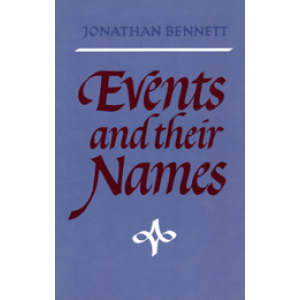
![]() Events and their Names
Events and their Names“This book is a breath of fresh, cleansing air; it blows away many pockets of unclarity that still exist in the current discussion of events and causation, and raises the debate on these issues to a new level of illumination and precision.”
Learn More
—Jaegwon Kim, Brown University -
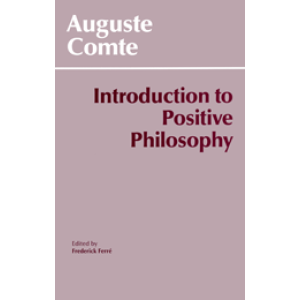
![]() Introduction to Positive Philosophy
Introduction to Positive PhilosophyIncludes an introduction, selected bibliography, works by Comte in English translation, and works about Comte in English - I. The Nature and Importance of the Positive Philosophy, II. The Classification of the Positive Sciences.
Learn More -
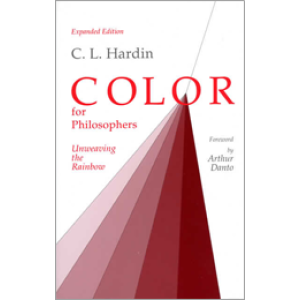
![]() Color for Philosophers
Color for Philosophers“Much the best philosophically orientated book about colour that has been written. . . . It has none of the philosophical crudity which mars scientific accounts of colour, and none of the scientific ignorance which makes so many philosophical accounts of colour worthless or worse. . . . Time and again I found myself unexpectedly convinced at a point whose opposite I had believed. I have in mind particularly the later sections on ‘Other colours, other minds’, language foci, and ‘boundaries and indeterminacy’. It is annoying, but also exhilarating, to be relieved of some stubborn and treasured opinions.”
Learn More
—Jonathan Westphal, Mind -
![]() Poetics (Janko Edition)
Poetics (Janko Edition)Richard Janko’s acclaimed translation of Aristotle’s Poetics is accompanied by the most comprehensive commentary available in English that does not presume knowledge of the original Greek. Two other unique features are Janko’s translations with notes of both the Tractatus Coislinianus, which is argued to be a summary of the lost second book of the Poetics, and fragments of Aristotle’s dialogue On Poets, including recently discovered texts about catharsis, which appear in English for the first time.
Learn More -
![]() Reflections on the Revolution in France
Reflections on the Revolution in France“Pocock is, without question, the leading historian of eighteenth-century British-American political thought. . . . All of his skills are brilliantly employed in the Introduction. . . . In addition to being the best treatment of Burke’s thought in context, it is . . . the best and most concentrated presentation of Pocock’s own view of the main contours of eighteenth-century political thought. . . . Finally, the Reflections and other texts by Burke are then woven into this rich fabric, thus providing the reader with an understanding of Burke’s thought which is deeper and more complex (and surely more historically sensitive) than any available in the secondary literature.”
Learn More
—James Tully, McGill University -
![]() Duns Scotus: Philosophical Writings
Duns Scotus: Philosophical WritingsThe philosophical writings of Duns Scotus, one of the most influential philosophers of the Later Middle Ages, are here presented in a volume that presents the original Latin with facing page English translation.
Learn More -
![]() The Vocation of Man
The Vocation of ManIncludes a translator's Introduction, selected bibliography, and note on the text.
Learn More -
![]() Critique of Judgment
Critique of Judgment“Pluhar maintains a fine, even tone throughout. . . . Those who have found the prospect of teaching the third Critique daunting will admire its clarity. . . . No one will be disappointed.”
Learn More
—Timothy Sean Quinn, The Review of Metaphysics -
![]() Gorgias (Zeyl Edition)
Gorgias (Zeyl Edition)“This is an excellent translation. It achieves a very high standard of accuracy and readability, two goals very difficult to attain in combination when it comes to such a master of prose and philosophical argument as Plato. Because of this the book is suitable for courses at all levels in philosophy, from introductory courses on Plato, or problems in Philosophy, to graduate seminars.” —Gerasimos Santas, Teaching Philosophy
Learn More -
![]() On Crimes and Punishments
On Crimes and PunishmentsIncludes a translator’s preface, note on the text, and suggestions for further reading.
Learn More -
![]() Reason and Human Good in Aristotle
Reason and Human Good in Aristotle“Reason and Human Good in Aristotle opens up issues of interpretation which are as alive today as when it originally appeared. After almost two decades of extraordinary influence, this succinct book remains a ‘must’ for any serious bibliography of Aristotle’s Ethics.”
Learn More
—Sarah Broadie, Princeton University -
![]() On the Musically Beautiful
On the Musically Beautiful"Like Hanslick, Professor Payzant is both musician and philosopher; and he has brought the knowledge and insights of both disciplines to this large undertaking."
Learn More
—Gordon Epperson, Journal of Aesthetics & Art Criticism -
![]() Wittgenstein Conversations, 1949-1951
Wittgenstein Conversations, 1949-1951“Gives an extraordinarily intimate insight into what Wittgenstein was like as a human being. . . . These notes . . . capture Wittgenstein’s outlook on morality and religion, and reveal some of his personal problems.”
Learn More
—Alice Ambrose Lazerowitz, Smith College -
![]() Principles of the Philosophy of the Future
Principles of the Philosophy of the FutureIncludes an introduction, selected bibliography, and index.
Learn More -
![]() Charmides (West & West Edition)
Charmides (West & West Edition)A literal translation, allowing the simplicity and vigor of the Greek diction to shine through.
Learn More -
![]() Selections from the Major Writings on Scepticism, Man, and God
Selections from the Major Writings on Scepticism, Man, and God“Judicious in every respect: selection, translation and structuring of the texts, footnotes, bibliography, and index. . . . The book of choice for undergraduate courses.”
Learn More
—Edward M. Galligan, University of North Carolina -
![]() Can Animals and Machines Be Persons?
Can Animals and Machines Be Persons?“Written in a lively and entertaining style, this little book, which deals with topics such as ‘personhood,’ animal rights, and artificial intelligence . . . makes some rather difficult philosophical points clear in an unpedantic fashion.”
Learn More
—M. E. Winston, Trenton State College -
![]() The Government of Poland
The Government of Poland"The Government of Poland is the only finished work in which Rousseau himself dons the mantle of legislator, applying the principles of the Social Contract to the real world around him. Poland teaches us much about the mysterious art of the Social Contract's 'legislator,' how he transforms each individual into part of a larger whole. Only in . . . Poland do we find what this crucial transformation entails and what it presupposes. But probably the greatest lesson to be learned from . . . Poland concerns Rousseau's understanding of the proper relationship between theory and practice. . . . Time and again we see Rousseau advising the Poles to do things which are in gross violation of the strict principles of political right he had elaborated in the Social Contract."
Learn More
—Richard Myers in Canadian Journal of Political Science -
![]() Three Treatises on the Nature of Science
Three Treatises on the Nature of ScienceIncludes an introduction, bibliography, On the Sects for Beginners, An Outline of Empiricism, On Medical Experience, an index of the persons mentioned in the text, and an index of the subjects mentioned in the texts.
Learn More -
![]() Philosophy of Material Nature
Philosophy of Material Nature"Ellington has made Kant's writings seem clear and elegant. Indeed, he has produced one of this most readable translations of any of Kant's works. His essay 'The unity of Kant's thought in his philosophy of corporeal nature' appearing after the main text is a masterly interpretation of the Foundations."
Learn More
—Choice, in review of Metaphysical Foundations of Natural Science -
![]() Metaphysics
Metaphysics“About as close to Aristotle’s Greek, syntax and all, as one can get in English.”
Learn More
—Arthur Madigan, S.J., Boston College -
![]() A Study of Spinoza's Ethics
A Study of Spinoza's Ethics“With an astonishing erudition . . . and in a direct no-nonsense style, Bennett expounds, compares, and criticizes Spinoza’s theses. . . . No one can fail to profit from it. Bennett has succeeded in making Spinoza a philosopher of our time.”
Learn More
—W. N. A. Klever, Studia Spinoza -
![]() The Meditations
The MeditationsIncludes a translator's Introduction, selected bibliography, note on the text, glossary of technical Terms, and a biographical index.
Learn More -
![]() Inquiry and Essays
Inquiry and EssaysReid’s previously published writings are substantial, both in quantity and quality. This edition attempts to make these writings more readily available in a single volume. Based upon Hamilton’s definitive two volume 6th edition, this edition is suitable for both students and scholars.
Learn More -
![]() An Introduction to Plato's Laws
An Introduction to Plato's LawsReading the Republic without reference to the less familiar Laws can lead to a distorted view of Plato's political theory. In the Republic the philosopher describes his ideal city; in his last and longest work he deals with the more detailed considerations involved in setting up a second-best 'practical utopia.' The relative neglect of the Laws has stemmed largely from the obscurity of its style and the apparent chaos of its organization so that, although good translations now exist, students of philosophy and political science still find the text inaccessible. This first full-length philosophical introduction to the Laws will therefore prove invaluable.
Learn More -
![]() Heidegger and the Problem of Knowledge
Heidegger and the Problem of Knowledge“The best book-length treatment of Heidegger with which I am familiar. . . . What Guignon does, very skillfully, is to use the problem of knowledge as a focus for organizing a discussion of Heidegger’s thought in its entirety. . . . Places him squarely within the philosophical tradition he struggled to overcome and provides an account of his development from Being and Time to the last writings, which make the changes in his thought continuous and intelligible.”
Learn More
—Harrison Hall, Inquiry -
![]() Predestination, God's Foreknowledge, And Future Contingents (Second Edition)
Predestination, God's Foreknowledge, And Future Contingents (Second Edition)Includes an introduction by Marilyn McCord Adams along with Notes and Appendices.
Learn More -
![]() A Letter Concerning Toleration
A Letter Concerning TolerationJohn Locke's subtle and influential defense of religious toleration as argued in his seminal Letter Concerning Toleration (1685) appears in this edition as introduced by one of our most distinguished political theorists and historians of political thought.
Learn More -
![]() An Enquiry Concerning the Principles of Morals
An Enquiry Concerning the Principles of Morals"A splendid edition. Schneewind's illuminating introduction succinctly situates the Enquiry in its historical context, clarifying its relationship to Calvinism, to Newtonian science, and to earlier moral philosophers, and providing a persuasive account of Hume's ethical naturalism."
Learn More
—Martha C. Nussbaum, Brown University -
![]() Two Comic Dialogues: Ion and Hippias Major
Two Comic Dialogues: Ion and Hippias MajorTogether these two dialogues contain Plato’s most important work on poetry and beauty.
Learn More -
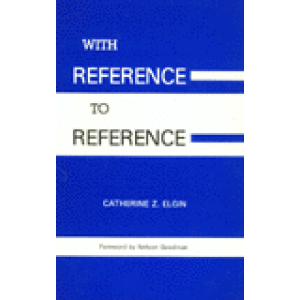
![]() With Reference To Reference
With Reference To Reference“Systematizes and develops in a comprehensive study Nelson Goodman’s philosophy of language. The Goodman-Elgin point of view is important and sophisticated, and deals with a number of issues, such as metaphor, ignored by most other theories.”
Learn More
—John R. Perry, Stanford University -
![]() A Treatise Concerning the Principles of Human Knowledge
A Treatise Concerning the Principles of Human KnowledgeKenneth Winkler's esteemed edition of Berkeley's Principles is based on the second edition (London, 1734), the last one published in Berkeley's lifetime. Like other members of Hackett's philosophical classics series, it features editorial elements found to be of particular value to students and their teachers: analytical table of contents; chronology of the author's life; selected bibliography; note on the text; glossary; and index.
Learn More -
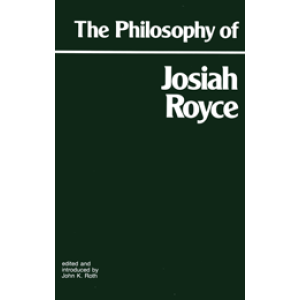
![]() The Philosophy of Josiah Royce
The Philosophy of Josiah Royce“There’s nothing available that I know of that comes as close to representing the range of
Learn More
Royce’s works. . . . ”
—John H. Lavely -
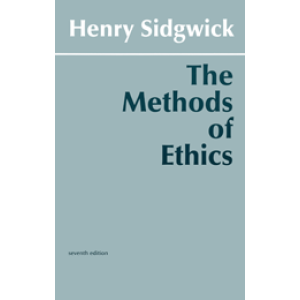
![]() The Methods of Ethics (Seventh Edition)
The Methods of Ethics (Seventh Edition)This Hackett edition is an unabridged and unaltered republication of the seventh (1907) edition as published by Macmillan and Company, Limited.
Learn More -
![]() Introducing The German Idealists
Introducing The German IdealistsMock interviews with Kant, Hegel, Fichte, Schelling, Reinhold, Jacobi, Schlegel, and a letter from Schopenhauer.
Learn More -
![]() Aesthetics (Second Edition)
Aesthetics (Second Edition)This second edition features a new 48-page "Afterword—1980" updating Professor Beardsley’s classic work.
"There is not much I could say to expand the reputation of this classic text, but it is a testament to Beardsley's deep insight that I am finding the book useful for the study of Chinese aesthetics—which Beardsley himself never intended to broach. There may still be no better introduction to thinking about art and beauty.” —Paul R. Goldin, University of Pennsylvania
Learn More -
![]()
























Filter
Philosophy
- 19th Century Philosophy
- 20th Century Philosophy
- Aesthetics & Literary Theory
- American Philosophy
- Ancient Philosophy
- Asian & Middle Eastern Philosophy
- Existentialism
- Focus Philosophical Library
- Introductory Texts & Dialogues
- Logic & Critical Thinking
- Medieval & Renaissance Philosophy
- Metaphysics & Epistemology
- Modern Philosophy
- Moral Philosophy
- Phenomenology & Related Texts
- Philosophy & History of Science
- Philosophy of Mind & Language
- Philosophy of Religion
- Series in Philosophy
- Social & Political Philosophy
- Critical Thinking Spotlight