The Hackett Signature Editions Collection Featuring Premium Hardcovers of Hackett Classics - Learn More Here.

Philosophy






-
![]() Writings of the Young Marx on Philosophy and Society
Writings of the Young Marx on Philosophy and Society“Lucid translations into idiomatic English. They are clearer than the original German version! Our students struggle with Marx and they will appreciate a more ‘user - friendly’ translation.”
Learn More
—John Brunn, Chabot College -
![]() On Art, Religion, and the History of Philosophy
On Art, Religion, and the History of PhilosophyThe famous introductory lectures collected in this volume represent the distillation of Hegel’s mature views on the three most important activities of spirit, and have the further advantage, shared by his lectures in general, of being more comprehensible than those works of his published during his lifetime. A new Introduction, Select Bibliography, Analytical Table of Contents, and the restoration in the section headings of the outline of Hegel’s lectures make this new edition particularly useful and welcome.
Learn More -
![]() Twilight of the Idols
Twilight of the IdolsTwilight of the Idols presents a vivid, compressed overview of many of Nietzsche’s mature ideas, including his attack on Plato’s Socrates and on the Platonic legacy in Western philosophy and culture. Polt provides a trustworthy rendering of Nietzsche’s text in contemporary American English, complete with notes prepared by the translator and Tracy Strong. An authoritative Introduction by Strong makes this an outstanding edition. Select Bibliography and Index.
Learn More -
![]() Plato: Complete Works
Plato: Complete Works"This is clearly the definitive edition in English of the Platonic writings. It replaces completely the Hamilton-Cairns collection. . . . The notes are at just the right level, and the index is very helpful. The translations are both readable and accurate." —Michael D. Rohr, Rutgers University
"The most important publishing event in Platonic translation is the Complete Works edited by Cooper and Hutchinson. . . . Hackett has lavished great care in the production of this volume: fine India paper, elegant typography, sewn binding, and cloth boards. . . . It should be in every library and on the shelves of all lovers of Plato." —Steven J. Willett, Syllecta Classica
Learn More -
![]() Selected Letters of Friedrich Nietzsche
Selected Letters of Friedrich NietzscheThis collection of more than two hundred of Nietzsche’s letters offers a representative body of correspondence on subjects of main concern to him—philosophy, history, morals, music and literature. Also included are letters of biographical interest which, in Middleton’s words, “mark the stresses and turnings of his life.” Among the addressees are Richard Wagner, Erwin Rohde, Jacob Burkhardt, Lou Salomé, his mother, and his sister Elisabeth. The “annihilating split” in Nietzsche’s personality that has been associated with his collapse on a street in Turin in 1889 is described in a moving letter from Franz Overbeck which forms the Epilogue. Index.
Learn More -
![]() Critique of Pure Reason
Critique of Pure Reason“The text rendered by Pluhar is the work of an expert translator . . . the virtues of his text are manifold; his translation exhibits an incontrovertible mastery of both English and German. Equally important is the fact that Pluhar has given the original a very close read during the act of translating. . . . Pluhar consistently resists the tendency to translate woodenly word-for-word. . . . In point of fact, accuracy of translation stands in no direct relation to literalness; it is much more a product of meticulous textual reading and skilful writing, and in this respect Pluhar has no modern equals in English Kant translation.”
Learn More
—James Jakob Fehr, Kant-Studien -
![]() Some Thoughts Concerning Education and of the Conduct of the Understanding
Some Thoughts Concerning Education and of the Conduct of the UnderstandingThis volume offers two complementary works, unabridged, in modernized, annotated texts—the only available edition priced for classroom use. Grant and Tarcov provide a concise introduction, a note on the texts, and a select bibliography.
Learn More -
![]() On Evolution
On Evolution“An excellent selection. There is nothing else like it available in print, and the price makes it very attractive for use in courses. . . . overall the editors did a superb job of choosing those excerpts from Darwin’s published works and his correspondence and notebooks that will give the reader a sense of the full range of his interests and the substance of his ideas. The editorial remarks are . . . perceptive and directly relevant to the content.”
Learn More
—Gene Cittadino, New York University -
![]() Essays in the History and Philosophy of Science
Essays in the History and Philosophy of Science“This volume assembles twelve texts published between 1892 and 1915 . . . . The editors allow one to see the genesis of the ideas of Duhem, philosopher and historian, of the variety of his styles, and sometimes also the limits of his work . . . . A useful index, probably unique in the field of Duhemian studies, completes the book . . . . The English-language public may be assured an exemplary translation and a reliable critical apparatus.”
Learn More
—Jean Gayon, Revue d’Histoire des Sciences -
![]() What Is Art?
What Is Art?Maude’s excellent translation of Tolstoy’s treatise on the emotionalist theory of art was the first unexpurgated version of the work to appear in any languages. More than ninety years later this work remains, as Vincent Tomas observed, “one of the most rigorous attacks on formalism and on the doctrine of art for art’s sake ever written.” Tomas’s Introduction makes this the edition of choice for students of aesthetics and anyone with philosophical interests.
Learn More -
![]() Aristotle: Introductory Readings
Aristotle: Introductory ReadingsDrawn from the translations and editorial aids of Irwin and Fine's Aristotle, Selections (Hackett Publishing Co., 1995), this anthology will be most useful to instructors who must try to do justice to Aristotle in a semester-long ancient-philosophy survey, but it will also be appropriate for a variety of introductory-level courses. Introductory Readings provides accurate, readable, and integrated translations that allow the reader to follow Aristotle's use of crucial technical terms and to grasp the details of his argument. Included are adaptations of the glossary and notes that helped make its parent volume a singularly useful aid to the study of Aristotle.
Learn More -
![]() An Essay Concerning Human Understanding
An Essay Concerning Human Understanding“This abridgment by Kenneth Winkler is the best that has ever been done. Winkler’s judgment as to what must be kept and what may be dropped is unerring, and his literary skill has enabled him to fashion a text that reads smoothly. An illuminating Introduction and comprehensive glossary enhance the value of this volume for students.” —Vere Chappell, University of Massachusetts, Amherst
Learn More -
![]() Justice
JusticeThe readings in Justice include the central philosophical statements about justice in society organized to illustrate both the political vision of a good society and different attempts at an analysis of the concept of justice.
Learn More -
![]() Gandhi: Selected Political Writings
Gandhi: Selected Political WritingsBased on the complete edition of his works, this new volume presents Gandhi’s most important political writings arranged around the two central themes of his political teachings: satyagraha (the power of non-violence) and swaraj (freedom). Dennis Dalton’s general Introduction and headnotes highlight the life of Gandhi, set the readings in historical context, and provide insight into the conceptual framework of Gandhi’s political theory. Included are bibliography, glossary, and index.
Learn More -
![]() Parmenides (Gill & Ryan Edition)
Parmenides (Gill & Ryan Edition)“Gill’s and Ryan’s Parmenides is, simply, superb: the Introduction, more than a hundred pages long, is transparently clear, takes the reader meticulously through the arguments, avoids perverseness, and still manages to make sense of the dialogue as a whole; there is a fine selective bibliography; and those parts of the translation I have looked at in detail suggest that it too is very good indeed.”
Learn More
—Christopher Rowe, Phronesis -
![]() Monologion and Proslogion
Monologion and Proslogion"Williams's translations are scrupulously faithful and accurate without being slavishly literal, and yet are lively and graceful."
Learn More
—Paul Vincent Spade, Indiana University -
![]() Parmenides (Whitaker Edition)
Parmenides (Whitaker Edition)"Keith Whitaker's insightful introduction to this notoriously daunting text is valuable for its clarity and sobriety. The lucid interpretation will be of interest to those versed in the text and will be of great help to any who encounter the dialogue for the first time. The engaging translation humanizes the discourse without compromising its precision-a notable achievement that will earn the gratitude of readers."
Learn More
—Joseph Cropsey, University of Chicago -
![]() Sophist (Brann, Kalkavage, & Salem Edition)
Sophist (Brann, Kalkavage, & Salem Edition)This is an English translation of Plato presenting a new conception of the Theory of Forms. Socrates and others discuss the epistemological and metaphysical puzzles of the Parmenides, with aims to define the meaning of the Sophist. The glossary of key terms is a unique addition to Platonic literature by which concepts central to each dialogue are discussed and cross-referenced as to their occurrences throughout the work. In such a way students are encouraged to see beyond the words into concepts.
Learn More -
![]() Ethical Writings
Ethical Writings“This volume is excellent. The introduction presents the readings in a clear manner, one that is direct and comprehensible. Similarly, the translation is highly readable. The notes are helpful without being intrusive. In short, this is a volume I have enjoyed using with graduate students and will certainly plan to use with undergraduates.” —Charles E. Butterworth, University of Maryland at College Park
Learn More -
![]() Ethical Philosophy (Second Edition)
Ethical Philosophy (Second Edition)This expanded edition of James Ellington's preeminent translations of Grounding for the Metaphysics of Morals and Metaphysical Principles of Virtue includes his new translation of Kant's essay "On a Supposed Right to Lie Because of Philanthropic Concerns," in which Kant replies to one of the standard objections to his moral theory, as presented in the main text of Grounding, that it requires us to tell the truth even in the face of harmful consequences.
Learn More -
![]() The Guide of the Perplexed
The Guide of the Perplexed“The reissue of Guttmann’s edition of Rabin’s translation is a welcome event. There has long been a need for a readable, judicious edition, for classroom use, of this large and complex work.”
Learn More
—Michael L. Morgan, Indiana University -
![]() A Disquisition On Government and Selections from The Discourse
A Disquisition On Government and Selections from The DiscourseThe only student edition of Calhoun’s writings available, this volume offers the Disquisition in its entirety along with two key selections from the Discourse: “Formation of the Federal Period” and “A Plural Executive Proposed.”
Learn More -
![]() Against the Academicians and The Teacher
Against the Academicians and The TeacherThese new translations of two treatises dealing with the possibility and nature of knowledge in the face of skeptical challenges are the first to be rendered from the Latin critical edition, the first to be made specifically with a philosophical audience in mind, and the first to be translated by a scholar with expertise in both modern epistemology and philosophy of language.
Learn More -
![]() Hegel: Phenomenology and System
Hegel: Phenomenology and System“This is an incredibly rich and provocative book for such a slim volume, and it will no doubt become a standard accompaniment to many classes on the Phenomenology, a kind of short, lucid skeleton key to the whole book.”
Learn More
—Terry Pinkard, Georgetown University -
![]() The Presocratics
The PresocraticsThis comprehensive account of the history of ancient Greek thought circa 600 to 400 B.C. offers an accessible, nontechnical introduction to Presocratic philosophy. Translations of the surviving fragments of Presocratic writings serve as a foundation from which the discussion proceeds. Also included are maps, notes, and an index of names and terms. (Co-published in the U.K. by Gerald Duckworth and Company, Ltd. HPC holds rights in North America and U.S. Dependencies)
Learn More -
![]() Neoplatonism
Neoplatonism“An admirable account of a very difficult subject, remarkable for the erudition that clearly lies behind it as well as for its lucidity and good sense.”
Learn More
—Times Literary Supplement -
![]() Aristotle: Selections
Aristotle: SelectionsSelections seeks to provide an accurate and readable translation that will allow the reader to follow Aristotle's use of crucial technical terms and to grasp the details of his argument. Unlike anthologies that combine translations by many hands, this volume includes a fully integrated set of translations by a two-person team. The glossary—the most detailed in any edition—explains Aristotle's vocabulary and indicates the correspondences between Greek and English words. Brief notes supply alternative translations and elucidate difficult passages.
Learn More -
![]() The Prince (Wootton Edition)
The Prince (Wootton Edition)"This is an excellent, readable and vigorous translation of The Prince, but it is much more than simply a translation. The map, notes and guide to further reading are crisp, to-the-point and yet nicely comprehensive. The inclusion of the letter to Vettori is most welcome. But, above all, the Introduction is so gripping and lively that it has convinced me to include The Prince in my syllabus for History of Western Civilization the next time that I teach it. . . . Great price, too! And lovely printing and layout."
Learn More
—Rachel Fulton, University of Chicago -
![]() Guide To Aesthetics
Guide To AestheticsCroce’s Guide presents one of the clearest and strongest defenses of the intuitive nature of art in Western philosophical thought.
Learn More -
![]() Phaedrus (Nehamas & Woodruff Edition)
Phaedrus (Nehamas & Woodruff Edition)"A superb translation that captures the rhetorical brilliance of the Greek. . . . The translation is faithful in the very best sense: it reflects both the meaning and the beauty of the Greek text. . . . The footnotes are always helpful, never obtrusive. A one-page outline is useful since there are no editorial additions to mark major divisions in the dialogue. An appendix containing fragments of early Greek love poetry helps the reader appreciate the rich, and perhaps elusive, meaning of eros. . . . The entire Introduction is crisply written, and the authors' erudition shines throughout, without a trace of pedantry. . . . this is an excellent book that deservedly should find wide circulation for many years to come."
Learn More
—Tim Mahoney, University of Texas at Arlington -
![]() Certainty
Certainty“The selections are well chosen . . . the Introduction and headnotes are extremely clear and well written . . . appropriately pegged for a very introductory audience.”
—Steven Gerrard, Williams CollegeNorth American rights only.
Learn More -
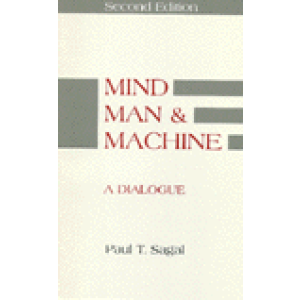
![]() Mind, Man, and Machine (Second Edition)
Mind, Man, and Machine (Second Edition)Explores the ideas of Turing, Lucas, Scriven, Putnam, and Searle, and renders the Gödel-Church-Lucas argument in terms intelligible to beginning students. Updated and expanded to take into account important arguments and developments in the ten years since its original publication, this provocative dialogue explores the ideas of Turing, Lucas, Scriven, Putnam, and Searle, and renders the complex Godel-Church-Lucas argument in transparent terms. It includes a new argument, based loosely on Tarski's work on truth and the liar paradox, and a new section dealing with the problem of qualitative features of experience, such as color properties.
Learn More -
![]() Women Philosophers of the Early Modern Period
Women Philosophers of the Early Modern Period“A very useful collection, welcome both for the intrinsic merit and historical significance of the ideas and arguments the volume contains, and for its pedagogical potential.”
Learn More
—Peter Loptson, Canadian Philosophical Reviews -
![]() Philosophy of Woman (Third Edition)
Philosophy of Woman (Third Edition)“I really like this text, especially the third edition which includes important contemporary feminist philosophers. It is just right for my Philosophy of Woman course.”
Learn More
—Ann Ferguson, University of Massachusetts, Amherst -
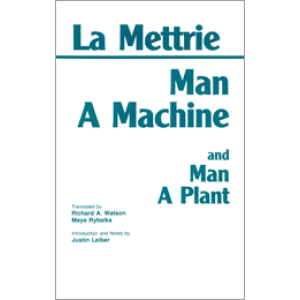
![]() Man a Machine and Man a Plant
Man a Machine and Man a PlantThe first modern translation of the complete texts of La Mettrie's pioneering L'Homme machine and L'Homme plante, first published in 1747 and 1748, respectively, this volume also includes translations of the advertisement and dedication to L'Homme machine.
Learn More -
![]() Who's To Say?
Who's To Say?“It is a perfect intro. book for our course on relativism. It hits all the major arguments clearly, concisely, persuasively, and at just the right level for undergraduates.”
Learn More
—Thomas J. Burke, Jr., Hillsdale College -
![]() Machiavelli: Selected Political Writings
Machiavelli: Selected Political Writings“The Introduction is vibrant, comprehensive and persuasive. Manages to address the needs of undergraduates while constituting an original contribution to contemporary scholarship. Bravo!” —Alan Houston, University of California, San Diego
“Wootton’s Introduction is an excellent piece of work that offers both scholars and students a valuable guide to Machiavelli’s texts.” —Maurizio Viroli, Princeton University
Learn More -
![]() Augustine: Political Writings
Augustine: Political Writings"[This volume] offers one-stop access to the political ideas of a major pre-modern thinker. The translations are fresh, accurate, supple, and clear, and the notes and comments are helpful. Ernest Fortin's excellent Introduction sets the central text, the City of God, in historical perspective and outlines problems Augustine faced in trying to reconcile Christian faith with the legitimate demands of civic life."
Learn More
—Alan R. Perreiah, Teaching Philosophy -
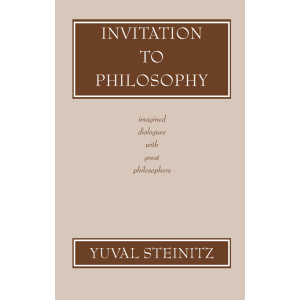
![]() Invitation To Philosophy
Invitation To Philosophy“For the undergraduates who have read little or no philosophy, Yuval Steinitz’s Invitation to Philosophy is quite possibly the best introduction to philosophy available.”
Learn More
—Justin Leiber, University of Houston -
![]() Introductions To The Wissenschaftslehre And Other Writings (1797-1800)
Introductions To The Wissenschaftslehre And Other Writings (1797-1800)“Daniel Breazeale is unquestionably the most erudite Fichte scholar now writing in English.”
Learn More
—Philosophical Review -
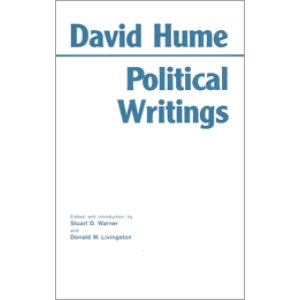
![]() Hume: Political Writings
Hume: Political WritingsThe first thematically arranged collection of Hume's political writings, this new work brings together substantive selections from A Treatise on Human Nature, An Enquiry Concerning the Principles of Morals, and Essays: Moral, Political and Literary, with an interpretive introduction placing Hume in the context of contemporary debates between liberalism and its critics and between contextual and universal approaches.
Learn More -
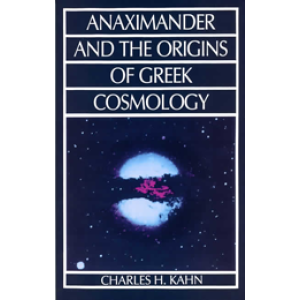
![]() Anaximander and the Origins of Greek Cosmology
Anaximander and the Origins of Greek CosmologyThrough criticism and analysis of ancient traditions, Kahn reconstructs the pattern of Anaximander’s thought using historical methods akin to the reconstructive techniques of comparative linguists.
Learn More -
![]() The Epicurus Reader
The Epicurus ReaderIncludes an introduction, the ancient biography of Epicurus, the extant letters, ancient collections of maxims, doxographical reports, the testimony of Cicero, the testimony of Lucretius, and the polemic of Plutarch. Short fragments and testimonia from known works: From On Nature, From the Puzzles, From On the Goal, From the Symposium, From Against Theophrastus, Fragments of Epicurus’ letters. Short fragments and testimonia from uncertain works: Logic and epistemology, Physics and theology, Ethics.
Learn More -
![]() Marx: Selected Writings
Marx: Selected WritingsFeaturing the most important and enduring works from Marx's enormous corpus, this collection ranges from the Hegelian idealism of his youth to the mature socialism of his later works. Organized both topically and in rough chronological order, the selections (many of them in the translations of Loyd D. Easton and Kurt H. Guddat) include writings on historical materialism, excerpts from Capital, and political works.
Learn More -
![]() Greek Popular Morality in the Time of Plato and Aristotle
Greek Popular Morality in the Time of Plato and Aristotle“A classic. It provides an invaluable aid to anyone seeking to understand Plato and Aristotle in their historical context. Dover uses a variety of literary sources to set out, with clarity and deep sensitivity, popular views on moral, political, and religious matters in fourth-century Greece.”
Learn More
—Michael Morgan, Indiana University -
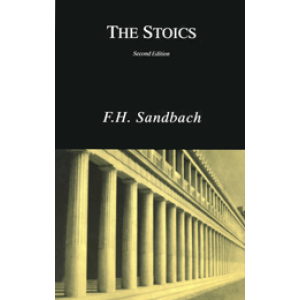
![]() The Stoics
The Stoics“Not only one of the best but also the most comprehensive treatment of Stoicism written in this century.”
Learn More
—Times Literary Supplement -
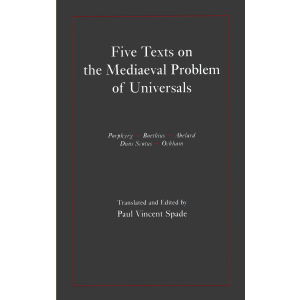
![]() Five Texts on the Mediaeval Problem of Universals
Five Texts on the Mediaeval Problem of Universals“The translations are exceptionally sound philosophically, and they are as readable as is consistent with linguistic accuracy and fidelity to content.”
Learn More
—Mathematical Reviews -
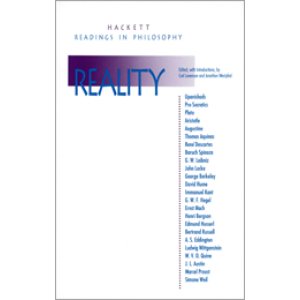
![]() Reality
RealityReality brings together philosophical and literary works representing the many ways—metaphysical, scientific, analytic, phenomenological, literary—in which philosophers and others have reflected on questions about reality. North American rights only.
Learn More -
![]() Philosophy In Play: Three Dialogues
Philosophy In Play: Three DialoguesIn this lively collection of dialogues, Bencivenga endeavors to be true to the nature of philosophical practice- its constant superseding of its own results, its open--endedness, its paradoxical turning of a position into its opposite--as he explores issues ranging from feminism to metaphysics, from the philosophy of science to aesthetics, as well as the intrinsically dialogic nature of philosophical activity itself.
Learn More -
![]() Leviathan
LeviathanDesigned to meet the needs of both student and scholar, this edition of Leviathan offers a brilliant introduction by Edwin Curley, modernized spelling and punctuation of the text, and the inclusion, along with historical and interpretive notes, of the most significant variants between the English version of 1651 and the Latin version of 1668. A glossary of seventeenth-century English terms, and indexes of persons, subjects, and scriptural passages help make this the most thoughtfully conceived edition of Leviathan available.
Learn More

























Filter
Philosophy
- 19th Century Philosophy
- 20th Century Philosophy
- Aesthetics & Literary Theory
- American Philosophy
- Ancient Philosophy
- Asian & Middle Eastern Philosophy
- Existentialism
- Focus Philosophical Library
- Introductory Texts & Dialogues
- Logic & Critical Thinking
- Medieval & Renaissance Philosophy
- Metaphysics & Epistemology
- Modern Philosophy
- Moral Philosophy
- Phenomenology & Related Texts
- Philosophy & History of Science
- Philosophy of Mind & Language
- Philosophy of Religion
- Series in Philosophy
- Social & Political Philosophy
- Critical Thinking Spotlight