The Hackett Signature Editions Collection Featuring Premium Hardcovers of Hackett Classics - Learn More Here.

Philosophy








-
![]() The Philosophy of Right
The Philosophy of RightDesigned for graduate and advanced undergraduate courses in philosophy and political science, this edition features a glossary keyed to the primary occurrences of important terms in the text and provides insights into the concepts beyond the translation—an especially useful pedagogical device for students coming to Hegel for the first time.
Learn More -
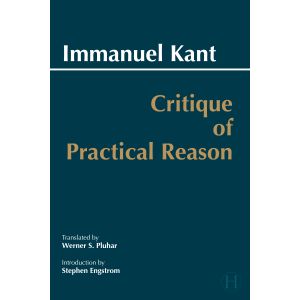
![]() Critique of Practical Reason
Critique of Practical ReasonWith this volume, Werner Pluhar completes his work on Kant’s three Critiques, an accomplishment unique among English language translators of Kant. At once accurate, fluent, and accessible, Pluhar’s rendition of the Critique of Practical Reason meets the standards set in his widely respected translations of the Critique of Judgment (1987) and the Critique of Pure Reason (1996). Stephen Engstrom's Introduction discusses the place of the second Critique in Kant's critical philosophy, its relation to Kant's ethics, and its practical purpose and provides an illuminating outline of Kant's argument.
Learn More -
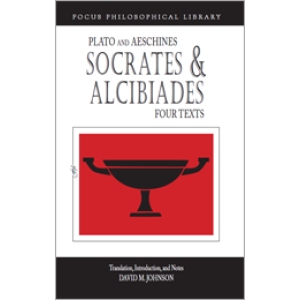
![]() Socrates & Alcibiades: Four Texts
Socrates & Alcibiades: Four TextsSocrates and Alcibiades: Four Texts gathers together translations our four most important sources for the relationship between Socrates and the most controversial man of his day, the gifted and scandalous Alcibiades. In addition to Alcibiades’ famous speech from Plato’s Symposium, this text includes two dialogues, the Alcibiades I and Alcibiades II, attributed to Plato in antiquity but unjustly neglected today, and the complete fragments of the dialogue Alcibiades by Plato’s contemporary, Aeschines of Sphettus. These works are essential reading for anyone interested in Socrates’ improbable love affair with Athens’ most desirable youth, his attempt to woo Alcibiades from his ultimately disastrous worldly ambitions to the philosophical life, and the reasons for Socrates’ failure, which played a large role in his conviction by an Athenian court on charges of impiety and corrupting the youth.
Learn More -
![]() Five Dialogues (Second Edition)
Five Dialogues (Second Edition)The second edition of Five Dialogues presents G. M. A. Grube’s distinguished translations, as revised by John Cooper for Plato, Complete Works. A number of new or expanded footnotes are also included along with an updated bibliography.
Learn More -
![]() The Book of Doctrines and Beliefs
The Book of Doctrines and Beliefs“Daniel Frank’s Introduction is excellent, not just for the undergraduate reader, but, indeed, for any reader, specialist or layperson. It manages to find just the right combination of philosophy and history; it sends the reader to the right places for further reading; its judgments are quite sound. And the reissue of the Altmann translation is a wonderful idea.”
Learn More
—Charles Manekin, University of Maryland -
![]() Essays on the Moral Philosophy of Mengzi
Essays on the Moral Philosophy of Mengzi"It is difficult to do justice to the richness of all the essays in this short review. . . . [T]he exceptionally rigorous and inspiring scholarship offered by this collection has laid the groundwork for future inquiries, and anyone interested in Chinese thought will benefit greatly from engaging with the authors' enlightening and rewarding reconstructions of Mengzi's moral philosophy. This is a remarkable achievement, especially given the fact that the Mengzi is an exceedingly difficult text."
Learn More
—Yang Xiao, Journal of the American Academy of Religion -
![]() Identity, Personal Identity and the Self
Identity, Personal Identity and the SelfThis volume collects a number of Perry’s classic works on personal identity as well as four new pieces, “The Two Faces of Identity,” “Persons and Information,” “Self-Notions and The Self,” and “The Sense of Identity.” Perry’s Introduction puts his own work and that of others on the issues of identity and personal identity in the context of philosophical studies of mind and language over the past thirty years.
Learn More -
![]() Utilitarianism (Sher, Second Edition)
Utilitarianism (Sher, Second Edition)This expanded edition of John Stuart Mill’s Utilitarianism includes the text of his 1868 speech to the British House of Commons defending the use of capital punishment in cases of aggravated murder. The speech is significant both because its topic remains timely and because its arguments illustrate the applicability of the principle of utility to questions of large-scale social policy.
Learn More -
![]() Ethics in the Confucian Tradition (Second Edition)
Ethics in the Confucian Tradition (Second Edition)"This enlightening book is a comparative study of the moral and metaphysical theories of these two luminaries of the Confucian tradition. . . . Ivanhoe draws in masterful strokes the trajectory of the Confucian image of the sage, from the semi-divine creator heroes revered by Kongzi, to Mengzi's human exemplars of perfected self-cultivation, to Wang Yangming's concept of the innate sagehood of every human."
Learn More
—Rene Goldman, Pacific Affairs -
![]() The Trials of Socrates
The Trials of SocratesLampooned in 406 B.C.E. in a blistering Aristophanic satire, Socrates was tried in 399 B.C.E. on a charge of corrupting the youth, convicted by a jury of about five hundred of his peers, and condemned to death. Glimpsed today through the extant writings of his contemporaries and near-contemporaries, he remains for us as compelling, enigmatic, and elusive a figure as Jesus or Buddha. Although present-day (like ancient Greek) opinion on "the real Socrates" diverges widely, six classic texts that any informed judgment of him must take into account appear together, for the first time, in this volume. Those of Plato and Xenophon appear in new, previously unpublished translations that combine accuracy, accessibility, and readability; that of Aristophanes' Clouds offers these same qualities in an unbowdlerized translation that captures brilliantly the bite of Aristophanes' wit. An Introduction to each text and judicious footnotes provide crucial background information and important cross-references.
Learn More -
![]() Beyond Freedom and Dignity
Beyond Freedom and DignityIn this profound and profoundly controversial work, a landmark of 20th-century thought originally published in 1971, B. F. Skinner makes his definitive statement about humankind and society. Beyond Freedom and Dignity urges us to reexamine the ideals we have taken for granted and to consider the possibility of a radically behaviorist approach to human problems—one that has appeared to some incompatible with those ideals, but which envisions the building of a world in which humankind can attain its greatest possible achievements.
Learn More -
![]() Three Philosophical Dialogues
Three Philosophical Dialogues"An excellent job. Williams's translation remains faithful to the Latin text while simultaneously proving clear and readable. I'm confident that both the introduction and the translation itself will motivate further study."
Learn More
—Christina Van Dyke, Calvin College -
![]() On the Nature of Things (Englert Edition)
On the Nature of Things (Englert Edition)"Englert's translation of the poem is indeed accurate and readable. He knows the poem as thoroughly as he knows the scholarship that bears on it . . . an admirable translation, admirably supported by scholarly tools."
Learn More
—W.R. Johnson, University of Chicago -
![]() Nicomachean Ethics (Sachs Edition)
Nicomachean Ethics (Sachs Edition)"Sachs's translations of Aristotle are truly exemplary. They combine a rare sensitivity to Aristotle's use of the Greek language with an English style that is straightforward and imaginative. But what makes Sachs's translations even more noteworthy is their attunement born of profound awareness of the untranslatability of this thought into modern philosophical concepts. For anyone seriously interested in Aristotle's philosophy, Sachs's translations are indispensable."
Learn More
—Burt Hopkins, Seattle University -
![]() Prolegomena to Any Future Metaphysics (Second Edition)
Prolegomena to Any Future Metaphysics (Second Edition)This edition of Prolegomena includes Kant’s letter of February, 1772 to Marcus Herz, a momentous document in which Kant relates the progress of his thinking and announces that he is now ready to present a critique of pure reason.
Learn More -
![]() Theological-Political Treatise (Second Edition)
Theological-Political Treatise (Second Edition)“Samuel Shirley is undoubtedly the most significant translator of Spinoza’s writings into English.”
Learn More
—Douglas Den Uyl, Bellarmine College -
![]() Women in the Academy
Women in the Academy"These compelling dialogues invite and inspire readers to engage in a reflective journey of discovery focusing on several key philosophical themes. They provide a unique and valuable resource ideal for an introduction to philosophy and to feminist theory."
Learn More
—Robin Wang, Loyola Marymount University -
![]() Existentialism (Second Edition)
Existentialism (Second Edition)"An invaluable source for undergraduate courses in continental philosophy."
—Giovanna Borradori, Vassar CollegeNorth American Rights only.
Learn More -
![]() Consolation of Philosophy
Consolation of Philosophy"Entirely faithful to Boethius' Latin; Relihan's translation makes the philosophy of the Consolation intelligible to readers; it gives equal weight to the poetry—in fact, Relihan's metrical translation of Boethius' metra are themselves contributions of the first moment to Boethian studies. Boethius finally has a translator equal to his prodigious talents and his manifold vision."
Learn More
—Joseph Pucci, Brown University -
![]() Pythagoras and the Pythagoreans
Pythagoras and the Pythagoreans“Kahn’s excellent knowledge of the texts is apparent and his familiarity with the scholarly literature is manifest. . . . The volume is attractively written and and produced, and will do a real service in making the Pythagorean tradition . . . accessible to non-specialists.”
Learn More
—Richard McKirahan, Philosophy in Review -
![]() Antigone (Woodruff Edition)
Antigone (Woodruff Edition)"A lucid, well-paced translation, natural enough sounding in the dialogue to make a good acting version, and remarkably successful in making the choruses clear, lyrical, and yet part of the dramatic movement. Woodruff’s rendering of the choruses especially impresses me by the way he manages to render complex syntax and imagery of the original—often tangled and occasionally obscure in its allusiveness—into clear and genuinely poetic English."
Learn More
—Joseph Russo, Haverford College -
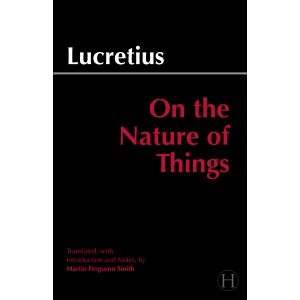
![]() On the Nature of Things (Smith Edition)
On the Nature of Things (Smith Edition)"Martin Ferguson Smith has for many years been one of the leading Lucretian scholars in the world. . . . We should expect from the beginning then that we are in the hands of a wise and learned guide as soon as we open his Lucretius, and this expectation is certainly borne out by the quality of this sensitive and thoughtful edition. . . . The Introduction . . . is excellent. Smith outlines in a highly accessible manner what little is known of Lucretius' life and times, the poem's position and status in the Epic and Didactic tradition, and the philosophy of Epicurus that Lucretius puts forward, but also manages to include some of the most up-to-date research, including recent scholarship on the Herculaneum papyri. . . . But of course, the translation is the most important part of the work . . . [and] it is streets ahead of the competition. . . . I can recommend this book unreservedly."
Learn More
—Gordon Campbell, Hermathena -
![]() The Older Sophists
The Older Sophists"Will be of interest both to those who know Greek and to those who do not, and, it is hoped, will provide a contribution to the serious study of the sophist movement. . . . Fascinating reading."
Learn More
—The Classical Review -
![]() Proslogion
Proslogion"Williams' translation is scrupulously faithful and accurate without being slavishly literal, and yet is lively and graceful to both the eye and the ear." —Paul Vincent Spade, Indiana University
Learn More -
![]() Discourse on Method, Optics, Geometry, and Meteorology
Discourse on Method, Optics, Geometry, and MeteorologyThis volume preserves the format in which Discourse on Method was originally published: as a preface to Descartes’s writings on optics, geometry, and meteorology. In his introduction, Olscamp discusses the value of reading the Discourse alongside these three works, which sheds new light on Descartes’s method. Includes an updated bibliography.
Learn More -
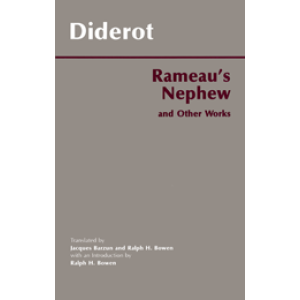
![]() Rameau's Nephew, and Other Works
Rameau's Nephew, and Other Works"It’s the best edition and the best translation available, one of Jacques Barzun’s most outstanding gifts to teachers. Bravo!”
Learn More
—William R. Everdell, St. Ann’s School -
![]() Spirit
Spirit"One problem in teaching Hegel’s Phenomenology of Spirit is the sheer size of the work, which makes it intractable within the time limits of the typical North American university semester course. The judicious instructor can use this pivotal Chapter Six of the book as a vehicle for summing up the themes that Hegel has been developing from the beginning, and for anticipating the conclusion to which they lead. Students are more likely to grasp the substance of the work by this method than by the usual practice of concentrating on the Preface and the first three Chapters. Most misunderstandings of Hegel are due to the limitations of precisely this practice. Chapter Six is a literary and philosophical masterpiece in its own right. I cannot think of any more perceptive synthetic view of the development of European culture than is contained here.”
Learn More
—George di Giovanni, McGill University -
![]() The Inner Chapters
The Inner Chapters"Graham’s study and translation of the Zhuangzi remains one of the most valuable and important sources for students of Zhuangzi’s thought. The Introduction is remarkably rich, and the combination of philological care and philosophical insight that Graham brings to the text make this the most philosophically revealing and productive translation available.”
Learn More
—Philip J. Ivanhoe, Boston University -
![]() Zeno's Paradoxes
Zeno's ParadoxesThese essays lead the reader through the land of the wonderful shrinking genie to the warehouse where the “infinity machines” are kept. By careful examination of a lamp that is switched on and off infinitely many times, or the workings of a machine that prints out an infinite decimal expansion of pi, we begin to understand how it is possible for Achilles to overtake the tortoise. The concepts that form the basis of modern science—space, time, motion, change, infinity—are examined and explored in this edition. Includes an updated bibliography.
Learn More -
![]() Kant's Theory of Knowledge
Kant's Theory of KnowledgeWhile most interpretive studies of the Critique of Pure Reason are either too scholarly or too superficial to be of practical use to students, Hartnack has achieved a concise comprehensive analysis of the work in a lucid style that communicates the essence of extraordinarily complex arguments in the simplest possible way. An ideal companion to the First Critique, especially for those grappling with the work for the first time.
Learn More -
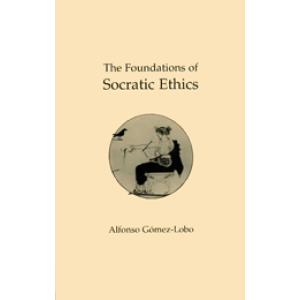
![]() The Foundations of Socratic Ethics
The Foundations of Socratic EthicsGómez-Lobo argues that behind the facade of Socratic irony lies a strictly deductive system of ethics suspended from two axioms—one governing practical rationality and the other specifying the ingredients of the good life. In the Gorgias, the author contends, Plato tries to found Socratic ethics on a metaphysical principle about goodness in general, from which the axiom concerning the good life can be derived.
Learn More -
![]() The Trial and Death of Socrates (Third Edition)
The Trial and Death of Socrates (Third Edition)The third edition of The Trial and Death of Socrates presents G. M. A. Grube’s distinguished translations, as revised by John Cooper for Plato, Complete Works. A number of new or expanded footnotes are also included along with a Select Bibliography.
Learn More -
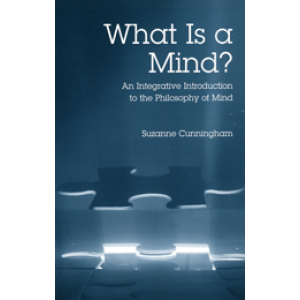
![]() What Is A Mind?
What Is A Mind?“Suzanne Cunningham has produced a wonderful primer on all the major foundational questions being discussed in contemporary philosophy of mind, cognitive science and cognitive neuroscience. The mind-brain relation, the self, knowledge of other minds, the nature of consciousness, the emotions, and the prospects for artificial intelligence, receive complete, even-handed treatment from this experienced teacher’s pen. Cunningham provides wonderful questions, exercises, research topics and bibliographical resources. I suspect many of her probing questions will engage professors as much as they will students. They did me.”
Learn More
—Owen Flanagan, James B. Duke Professor of Philosophy, Duke University -
![]() Readings In Modern Philosophy, Volume 2
Readings In Modern Philosophy, Volume 2This anthology offers the key works of Locke, Berkeley, and Hume in their entirety or in substantial selections, along with a rich selection of associated texts by other leading thinkers of the period.
Learn More -
![]() Readings In Modern Philosophy, Volume 1
Readings In Modern Philosophy, Volume 1This anthology offers the key works of Descartes, Spinoza, and Leibniz in their entirety or in substantial selections, along with a rich selection of associated texts by other leading thinkers of the period.
Learn More -
![]() Three Conversations about Knowing
Three Conversations about KnowingIn Jay Rosenberg’s lively and accessible introductory dialogue, four bright students explore a number of the central topics and problems of contemporary epistemology—skepticism and certainty, internalism and externalism, foundationalism and coherentism, and the nature and limits of justification. Their wide-ranging discussion highlights many of the vivid and imaginative thought-experiments that have shaped both classical and contemporary reflections on the scope and character of our knowledge of the world.
Learn More -
![]() Candide
Candide"Along with a brisk and very readable rendition of the text, this edition provides the material necessary for understanding the point of Voltaire’s satire. Wootton’s Introduction gives an excellent account of the dispute over optimism, and the supplementary texts show both the opposing points of view in this dispute, and its development on other texts of Voltaire."
Learn More
—Christopher J. Kelly, co-editor, The Collected Writings of Rousseau -
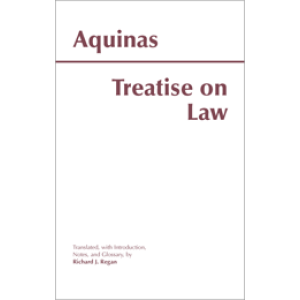
![]() Treatise on Law
Treatise on Law“A convenient one-volume translation of the essential texts from the Summa Theologiae on law. Regan’s translation is careful, idiomatic, and reliable. With its good Introduction and explanatory notes, this volume should prove to be a popular one among teachers and students of politics and ethics, not to mention those working in medieval philosophy.”
Learn More
—Brian Davies, author of The Thought of Thomas Aquinas, Oxford, 1992 -
![]() Philosophical and Theological Writings
Philosophical and Theological WritingsThis volume brings together Rosenzweig’s central essays on theology and philosophy, including two works available for the first time in English: the conclusion to Rosenzweig’s book Hegel and the State, and Rosenzweig’s famous letter to Rudolph Ehrenberg known as the “Urzelle of the Star of Redemption,” an essential work for understanding Rosenzweig, Weimar theology and philosophy, and German idealism and the existential reaction of the period. Additional selections are presented in new or revised translations. Introduction and notes by Franks and Morgan set Rosenzweig’s works in context and illuminate his role as one of the key thinkers of the period.
Learn More -
![]() Knowledge, Mind, and the Given
Knowledge, Mind, and the Given“Sellars’ s argument in EPM is enormously rich, subtle, and compelling. It is also, for the uninitiated, extraordinarily dense. Willem deVries and Timm Triplett’s comprehensive commentary Knowledge, Mind, and the Given provides a much needed guide. Beginning with a general overview to introduce some main themes and difficulties, deVries and Triplett take the reader step by step through the sixteen parts of the essay, providing at each stage necessary background, illuminating connections, and insightful clarifications of the main lines of argument. . . . deVries and Triplett have written a fine introduction to Sellars’s most important work.”
Learn More
—Danielle Macbeth, The Philosophical Review -
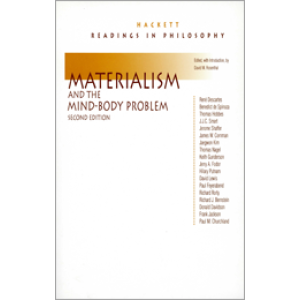
![]() Materialism and the Mind-Body Problem (Second Edition)
Materialism and the Mind-Body Problem (Second Edition)Expanded and updated to include a wide range of classic and contemporary works, this new edition of David Rosenthal's anthology provides a selection of the most important and influential writings on materialism and the mind-body problem.
Learn More -
![]() Democracy in America
Democracy in America"A handy paperback edition offered primarily to teachers and students who can make no pretense of reading the entirety of the large work, but who want to sample some of its chief delights. . . . [Grant gives us an] exemplary translation . . . marked above all by great accuracy and fidelity to Tocqueville’s text. . . . Kessler’s editor’s Introduction is a model introduction to a classic text for today’s students. It is clearly written, compact (without being too short or dense), and nicely structured. . . . A tour—and translation—well worth the price of admission." —Paul Seaton, Perspectives on Political Science
Learn More -
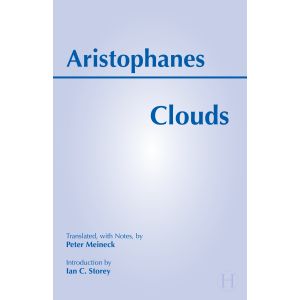
![]() Clouds (Meineck Edition)
Clouds (Meineck Edition)"Since the appearance of Sommerstein’s very successful literal translation less than twenty years ago, there have been at least five further new published attempts at rendering the play into English. It is certainly a bold enterprise to introduce yet one more translation onto the scene, but Peter Meineck has risen well to the challenge. The translation is straightforward and idiomatic, as well as well-paced and funny. . . Ian Storey’s Introduction is perfect for undergraduates.” —Max Nelson, Bryn Mawr Classical Review
Learn More -
![]() Philosophical Essays and Correspondence
Philosophical Essays and CorrespondenceA superb text for teaching the philosophy of Descartes, this volume includes all his major works in their entirety, important selections from his lesser known writings, and key selections from his philosophical correspondence. The result is an anthology that enables the reader to understand the development of Descartes’s thought over his lifetime. Includes a biographical Introduction, chronology, bibliography, and index.
Learn More -
![]() Readings in Classical Political Thought
Readings in Classical Political Thought“A distinctive and superior collection of texts suitable for both graduate and undergraduate courses. There is nothing like it elsewhere. Steinberger’s commentary is succint, accurate, and very useful.”
Learn More
—Dr. Melvin Kulbicki, York College of Pennsylvania -
![]() Virtue, Nature, and Moral Agency in the Xunzi
Virtue, Nature, and Moral Agency in the XunziThis volume collects some of the most accessible and important contemporary essays on the thought of Xunzi, with an Introduction that provides historical background, philosophical context, and relates each of the selections to Xunzi's philosophy as a whole and to the themes of virtue, nature, and moral agency. These themes are also discussed in relation to Western philosophical concerns.
Learn More -
![]() Between Kant and Hegel
Between Kant and HegelThis volume fills a lamentable gap in the philosophical literature by providing a collection of writings from the pivotal generation of thinkers between Kant and Hegel. It includes some of Hegel’s earliest critical writings—which reveal much about his thinking before the first mature exposition of his position in 1807—as well as Schelling’s justification of the new philosophy of nature against skeptical and religious attack. This edition contains George di Giovanni’s extensive corrections, new preface, and thoroughly updated bibliography.
Learn More -
![]() The Idea of Race
The Idea of RaceA survey of the historical development of the idea of race, this anthology offers pre-twentieth century theories about the concept of race, classic twentieth century sources reiterating and contesting ideas of race as scientific, and several philosophically relevant essays that discuss the issues presented. A general Introduction gives an overview of the readings. Headnotes introduce each selection. Includes suggested further readings.
Learn More -
![]() Timaeus (Zeyl Edition)
Timaeus (Zeyl Edition)“Donald Zeyl’s fresh and faithful translation and his lucid, comprehensive commentary will bring the sublime Timaeus to life for contemporary students of cosmology, metaphysics, history of science, and philosophy.”
Learn More
—Sarah Broadie, Princeton University






























Filter
Philosophy
- 19th Century Philosophy
- 20th Century Philosophy
- Aesthetics & Literary Theory
- American Philosophy
- Ancient Philosophy
- Asian & Middle Eastern Philosophy
- Existentialism
- Focus Philosophical Library
- Introductory Texts & Dialogues
- Logic & Critical Thinking
- Medieval & Renaissance Philosophy
- Metaphysics & Epistemology
- Modern Philosophy
- Moral Philosophy
- Phenomenology & Related Texts
- Philosophy & History of Science
- Philosophy of Mind & Language
- Philosophy of Religion
- Series in Philosophy
- Social & Political Philosophy
- Critical Thinking Spotlight