The Hackett Signature Editions Collection Featuring Premium Hardcovers of Hackett Classics - Learn More Here.

Philosophy





-
![]() Zhuangzi: The Complete Writings
Zhuangzi: The Complete WritingsBrook Ziporyn's carefully crafted, richly annotated translation of the complete writings of Zhuangzi—including a lucid Introduction, a Glossary of Essential Terms, and a Bibliography—provides readers with an engaging and provocative deep dive into this magical work.
"The importance of Ziporyn's translation of the complete Zhuangzi lies in its much-needed hermeneutic approach, which is attuned to the text’s multivocal structure and its resistance to interpretive closure. With its carefully crafted supporting material that provides context for various debates, addresses philological matters, and explains different possibilities of translation, Ziporyn's Zhuangzi is not only uncompromisingly rigorous but also accessible to students of early Chinese philosophy and literature. At the same time, in tune with the moods and quirks of this idiosyncratic classic, Ziporyn's aptly playful English renderings bring out the humorous and provocative tone of the text, making this book an utterly absorbing read. Ziporyn’s previous, abridged translation, Zhuangzi: The Essential Writings, presented with selected commentaries on the 'Inner Chapters,' has already replaced its predecessors and proved to be an indispensable resource for students and scholars alike. This new and unabbreviated translation will surely earn its place in no time as the authoritative translation of the complete Zhuangzi." —Sonya Özbey, University of Michigan
Learn More -
![]() Thinking Through Questions
Thinking Through Questions"Thinking Through Questions can be put to many good uses in the classroom. Weston and Bloch-Schulman have done an admirable job of creating a text which embodies a novel approach to the numerous pedagogical situations instructors might find themselves in across the academy, especially in humanities courses and any course centered on critical reasoning and writing." —Michael Gifford, Arizona State University, in Teaching Philosophy
"This small book holds big value for teachers of philosophy and teachers of critical thinking in any discipline. If you want your students to be more 'curious, critical, exploratory, and creative,' this book will serve well as a supplementary or core text. It offers appreciation for the power of questioning, opportunities to identify types of questions, and practice in questioning skills. The authors, both recognized as master teachers, bring their own considerable pedagogical experience and engaging style to encouraging better questioning in all of us." —Donna Engelmann, Alverno College
"Highly accessible, Thinking Through Questions guides students to greater freedom regarding how, why, when, and when not to ask or answer critical, expansive, and philosophical questions. It is an especially good choice for courses where critical thinking figures prominently, both because of its content and because of the practice exercises it contains. But more fundamentally, this book leaves readers more able to resist coercive questions, reconfigure false dilemmas, question more creatively, and diagnose embedded philosophical and other assumptions. It teaches how to profitably answer questions, do valuable things with questions other than answer them, ask better questions, and liberate oneself from cognitive traps many questions set." —David Concepción, Professor of Philosophy, Ball State University
Title support webpage: A title support page is available here for students and instructors who would like to submit comments directly to the authors about the book, and for students who would like to submit drawings completed for the exercise in chapter 4, page 74, to the authors. Submitted drawings will be considered for posting on the Thinking Through Questions website.
Learn More -
![]() Generation of Animals & History of Animals I, Parts of Animals ISeries: The New Hackett Aristotle
Generation of Animals & History of Animals I, Parts of Animals ISeries: The New Hackett Aristotle
"C.D.C. Reeve's annotated translation of Aristotle’s Generation of Animals provides novices and experts alike a much-needed modern and readable, yet accurate and technically rigorous, entry to this difficult text. By printing it together with translations of the methodologically prior works, History of Animals I and Parts of Animals I, readers now have access to what are arguably Aristotle's philosophically richest biological texts. The Introduction helpfully situates the project of Aristotle's biology into its metaphysical and (natural) scientific context, but it also does much more. It offers a panoramic, illuminating, and characteristically provocative interpretative picture of Aristotle’s philosophical endeavors as a whole—one that demands to be assessed in its entirety, and that is supported by a wealth of references to, and quotations from, mostly Aristotle himself. The book provides an invaluable resource for anyone trying to understand Aristotle’s fascination with living nature." —Mariska Leunissen, The University of North Carolina, Chapel Hill
Learn More -
![]() Thinking Through Utilitarianism
Thinking Through Utilitarianism"A wonderfully executed introduction to utilitarianism that is unlike anything else on the market. It begins with a set of structural issues facing any ethical theory and then carefully shows how utilitarianism fills in that structure by considering the choices it faces at each step. In the way the reader is led from one distinction to the next (as each structural issue is addressed) and in the accessible, conversational style of the prose, the book also has the feel of a philosophical dialogue. It sets out the leading commitments of the view and then breaks down precisely how each commitment might be challenged and defended. The book will be an excellent resource for students who have already been introduced to utilitarianism and want to get clearer—much clearer—on the implications of accepting the view." —Piers Norris Turner, Associate Professor of Philosophy and Director of the Center for Ethics and Human Values, The Ohio State University
Learn More -
![]() A Workbook for Arguments: A Complete Course in Critical Thinking (Third Edition)
A Workbook for Arguments: A Complete Course in Critical Thinking (Third Edition)David Morrow and Anthony Weston build on Weston’s acclaimed A Rulebook for Arguments to offer a complete textbook for a course in critical thinking or informal logic. The third edition of Workbook includes:
* The entire text of the recent fifth edition of the Rulebook, supplementing this core text with extensive further explanations and exercises.
* Updated and improved homework exercises ensure that the examples continue to resonate with today’s students. Roughly one-third of the exercises have been replaced with updated or improved examples.
* A new chapter on engaging constructively in public debates—including five new sets of exercises—trains students to engage respectfully and constructively on controversial topics, an increasingly important skill in our hyper-partisan age. Three new critical thinking activities offer further opportunities to practice constructive dialogue.
Additional Resources: Companion website for A Workbook for Arguments.
Download the complete Table of Contents (PDF)
Learn More -
![]() Nicomachean Ethics (Irwin, Third Edition)
Nicomachean Ethics (Irwin, Third Edition)Terence Irwin’s edition of the Nicomachean Ethics offers more aids to the reader than are found in any modern English translation. It includes an Introduction, headings to help the reader follow the argument, explanatory notes on difficult or important passages, and a full glossary explaining Aristotle’s technical terms. The Third Edition offers additional revisions of the translation as well as revised and expanded versions of the notes, glossary, and Introduction. Also new is an appendix featuring translated selections from related texts of Aristotle.
"The translation is absolutely reliable and is supplemented with notes that highlight any and all possible problems. Rich and easy to use. I love that 40 pages of supplementary texts from Aristotle are included. . . . Sometimes new editions seem pointless. This is worth it!" —James C. Klagge, Virginia Tech
Learn More -
![]() Modern Philosophy (Third Edition)
Modern Philosophy (Third Edition)The most widely read anthology for the study of modern philosophy, this volume provides key works of philosophers and other leading thinkers of the period, chosen to enhance the reader’s understanding of modern philosophy and its relationship to the natural sciences of the time. The third edition incorporates important contributions of women and minority thinkers into the canon of the modern period, while retaining all of the material of the previous edition. Included are works by Princess Elisabeth, Margaret Cavendish Duchess of Newcastle, Lady Anne Conway, Anton Wilhelm Amo, Lady Damaris Masham, Lady Mary Shepherd, and Emilie Marquise Du Châtelet.
"This is a wonderful text. . . . [T]he changes made for the 3rd edition are very welcome (especially the new selections from women and philosophers of color). I can't see using any other text, particularly at this very reasonable price point." —Steven Burgess, Benedictine University
Download the complete Table of Contents (PDF)
Learn More -
![]() On the Social Contract (Second Edition)
On the Social Contract (Second Edition)This new edition features a revision by Donald A. Cress of his bestselling 1987 translation of On the Social Contract together with Introduction, footnotes, and chronology by David Wootton, one of our leading historians of the Enlightenment.
Learn More -
![]() Confessions (Williams Edition)
Confessions (Williams Edition)"The best overall translation of Augustine's Confessions to date. . . . Williams captures the immediacy of Augustine's prayer, the playfulness of his language, and (without striving too hard) the properly elevated poetry of the text. As priest and philosopher and an Anglican with a good sense of English, Williams understands Augustine from the inside. For the foreseeable future, this will be my go-to translation for the Confessions."
Learn More
—Jared Ortiz, Hope College, in Catholic World Report -
![]() Charmides (Moore & Raymond Edition)
Charmides (Moore & Raymond Edition)"Moore and Raymond's Charmides is very impressive. The translation is excellent, and the Introduction and notes guide the reader into thorny problems in a way that renders them understandable: e.g., how to translate sôphrosunê, why we should care about self-knowledge, or how to seek to clarify important ethico-political concepts. The result provides almost all of what an instructor will need to introduce this unjustly neglected dialogue into a syllabus. Moreover, the volume is a wide-ranging resource for specialists. Students of the 'Socratic Dialogues' will profit greatly from this admirable contribution." —David J. Murphy is co-editor of Antiphontis et Andocidis Orationes (Oxford) and author of "The Basis of the Text of Plato's Charmides" (Mnemosyne) and many other contributions on the Charmides. He lives in New York City.
Learn More -
![]() Philosophers in the Classroom
Philosophers in the Classroom"Every philosopher who is a teacher (and even those who are not) ought to own or at least read a copy of this book. The joys and sorrows, obstacles and over-comings, as expressed in the 24 stories are, I wager, experiences that all teachers have had and will continue to experience. To hear such stories expressed by others is a breath of fresh air." —Jason Costanzo, Missouri Western State University, in Philosophy in Review
"This fabulous collection features two dozen thought-provoking, instructive, and inspiring essays about the vocation and aims of teaching philosophy, written by a diverse group of award-winning professors. Philosophy instructors do well to reflect often on their pedagogy; this volume provides access to the reflections of successful colleagues. Anyone who teaches philosophy will benefit from reading this marvelous book." —Robert B. Talisse, W. Alton Jones Professor of Philosophy, Vanderbilt University
"You will meet in these essays smart, experienced, reflective, and funny teachers. You will encounter a variety of creative perspectives on what people do in the classroom, covering everything from the 60,000 feet view about what the goals of a teacher are, to the micro quotidian ideas about assignments. There are accounts of great successes (and many an assignment you will want to try out for yourself), and a few rueful tales of (spectacular!) failures and how they shaped the next day, or week, or course. . . . One wonderful and distinctive thing about the volume is the deep mark of the personal on most of these pieces. These teachers struggle and stumble! They are sometimes filled with anxiety! But the love of what they do, and the constant careful attention to what works and what does not work propels them, and us, forward." —Katheryn Doran, Hamilton College
Read James Rocha's essay Teaching Value Theory to the Disenfranchised from Philosophers in the Classroom on The Hackett Colloquium blog.
Learn More -
![]() Dialogue on Consciousness: Minds, Brains, and Zombies
Dialogue on Consciousness: Minds, Brains, and ZombiesJohn Perry revisits the cast of characters of his classic A Dialogue on Personal Identity and Immortality in this absorbing dialogue on consciousness. Cartesian dualism, property dualism, materialism, the problem of other minds . . . Gretchen Weirob and her friends tackle these topics and more in a dialogue that exemplifies the subtleties and intricacies of philosophical reflection. Once again, Perry’s ability to use straightforward language to discuss complex issues combines with his mastery of the dialogue form. A Bibliography lists relevant further readings keyed to topics discussed in the dialogue. A helpful Glossary provides a handy reference to terms used in the dialogue and an array of clarifying examples.
Learn More -
![]() Rhetoric
RhetoricSeries: The New Hackett Aristotle
"The Rhetoric is, of course, a landmark in the history of rhetorical theory. It is also a major work of Aristotelian philosophy, which contains Aristotle's fullest discussion of the nature and value of dialectic, a pioneering treatment of non-conclusive but reputable argumentation and a wide-ranging examination of the emotions, among other things. Reeve's clear and accurate translation, with a meaty Introduction and copious notes, does justice to the Rhetoric in all its aspects as no English language translation has done before." —James Allen, University of Toronto
This new translation of Aristotle's Rhetoric, noteworthy for its consistency and accuracy, is the latest addition to the New Hackett Aristotle series. Fitting seamlessly with the others in the series, it enables Anglophone readers to read Aristotle’s works in a way previously impossible. Sequentially numbered endnotes provide the information most needed at each juncture, while a detailed Index of Terms guides the reader to places where focused discussion of key notions occurs.
Learn More -
![]() PhysicsSeries: The New Hackett Aristotle
PhysicsSeries: The New Hackett Aristotle
The Physics is a foundational work of western philosophy, and the crucial one for understanding Aristotle's views on matter, form, essence, causation, movement, space, and time. This richly annotated, scrupulously accurate, and consistent translation makes it available to a contemporary English reader as no other does—in part because it fits together seamlessly with other closely associated works in the New Hackett Aristotle series, such as the Metaphysics, De Anima, and forthcoming De Caelo and On Coming to Be and Passing Away. Eventually the series will include all of Aristotle's works. Sequentially numbered endnotes provide the information most needed at each juncture, while a detailed Index of Terms indicates places where focused discussion of key notions occurs. An illuminating general Introduction describes the book that lies ahead, explaining what sort of work it is and what sorts of evidence it relies on.
Learn More -
![]() A Rulebook for Arguments (Fifth Edition)
A Rulebook for Arguments (Fifth Edition)"This is the ultimate 'how-to' book for anyone who wants to use reasons and evidence in support of conclusions, to be clear instead of confusing, persuasive instead of dogmatic, and better at evaluating the arguments of others." —Debra Nails, Michigan State University
From academic writing to personal and public discourse, the need for good arguments and better ways of arguing is greater than ever before. This timely fifth edition of A Rulebook for Arguments sharpens an already-classic text, adding updated examples and a new chapter on public debates that provides rules for the etiquette and ethics of sound public dialogue as well as clear and sound thinking in general.
Learn More -
![]() The Nyāya-sūtra
The Nyāya-sūtra"Matthew Dasti and Stephen Phillips have done the philosophical world, and teachers and students of philosophy, a great favor in presenting this superb translation of major portions of the Nyāya-sūtra with selections from its most important commentaries. This text is central to the history of Indian epistemology and metaphysics, and was influential well beyond the world of Nyāya, and its most important philosophical passages are presented here. Dasti and Phillips’ translations of this often-technical text are fluent and clear, rendering it in accessible but precise philosophical English. Their explanatory notes are clear, accurate, and concise. The inclusion of substantial extracts of the commentaries of Vātsyāyana, Vācaspatimiśra, and Uddyotakara is especially welcome. Not only do these masterful commentaries extend and explain the philosophical ideas in the sūtra, but they demonstrate to the reader the importance of reading this text through the commentarial tradition it inspires and the vitality of that tradition. This will be a valuable resource to scholars as well as to teachers and students." —Jay Garfield, Professor of Philosophy, Smith College
Learn More -
![]() De Anima (Reeve Edition)
De Anima (Reeve Edition)Series: The New Hackett Aristotle
"This is C. D. C. Reeve's entirely new version of Aristotle's fascinating, and at the same time superbly difficult, text. The translation is faithful, concise, and extraordinarily thoughtful. Any student of the De Anima will no doubt greatly profit from it. Reeve's Introduction focuses on the place of the study of the soul in Aristotle's biology and—controversially—theology. With this he provides a refreshing and highly instructive counterpoint to an idea still very powerful in the secondary literature. This is the thought that the De Anima pertains to the province of 'the philosophy of mind.' Reeve shows that the De Anima is much more than this. A remarkable contribution." —Klaus Corcilius, University of California, Berkeley and The University of Tübingen
Learn More -
![]() Giving Reasons
Giving Reasons"David Morrow’s Giving Reasons is concise, lively, and accessible. Covering the essentials of critical thinking in clear, non-technical language, the book will be a welcome addition to introductory college courses as well as high school classes in any discipline. Giving Reasons is an excellent tool for teaching critical thinking across the curriculum." —Stephen Beck, The Evergreen State College
Visit the Giving Reasons title support webpage for supplemental online resources, including practice exercises, additional writing by David R. Morrow, and downloadable appendices (PDFs).
Learn More -
![]() Reframing Politics in the Hebrew Bible
Reframing Politics in the Hebrew BibleInspired by the Enlightenment readings of Hebrew biblical texts generated in the seventeenth through the nineteenth centuries, Mira Morgenstern's Reframing Politics in the Hebrew Bible goes beyond the pioneering interpretations of various biblical texts penned by such noted Bible students as Spinoza, Rousseau, and Angelina Grimké to present an introduction to the Hebrew Bible as a whole from the perspective of a modern-day political theorist. In doing so, it offers a brilliant thematic guide to the Hebrew Bible's most politically salient passages, complete with text and commentary. Morgenstern's account of the significance of these ancient yet strangely modern texts will fascinate students of both ancient and modern political theory—as well as all readers of the Hebrew Bible itself.
Learn More -
![]() Politics: A New Translation
Politics: A New TranslationSeries: The New Hackett Aristotle
"David Reeve's new translation of the Politics is certain to become the primary and indispensable tool for anyone undertaking a careful study of Aristotle's great work. Newcomers to this treatise as well as advanced scholars will learn enormously from the Introduction, extensive notes, and detailed index." —Richard Kraut, Northwestern University
Learn More -
![]() Utilitarianism (Eggleston Edition)
Utilitarianism (Eggleston Edition)"Eggleston has produced easily the best edition of Utilitarianism available. By conveniently including so many of the relevant passages from supplementary works, all organized for ease of reference, scholars and students alike will now have at their fingertips the materials needed to make sense of Mill's classic text. This is important not just for an accurate understanding of Mill's own moral and political philosophy, but for a proper appreciation of utilitarianism as a leading moral tradition." —Piers Norris Turner, Associate Professor of Philosophy, The Ohio State University
Learn More -
![]() Symposium or Drinking Party
Symposium or Drinking Party"I seriously believe this will be the finest edition of the Symposium ever to appear in English. May it enlighten many students and be a very valuable addition to current scholarship in this area." —Donald C. Lindenmuth, The Pennsylvania State University
"Brann, Kalkavage and Salem's translation is literal, but reads naturally in English. . . . Despite the high degree of linguistic accuracy that the authors maintain, they also convey the playful tone of the dialogue: they are alert to the humor and irony that pervade the text and they effectively handle the literary (mostly poetical) passages when they occur. In general, they do not provide restrictive interpretation; rather they open the text up to alternative readings. More importantly, the translation is accompanied by useful notes that either focus on the text itself (e.g. on the etymology and meaning of words) or go beyond it (e.g., they offer additional information about the characters of the dialogue and its intertexts). A well-produced edition, with a logical structure, clear objectives and a reasonable price. It is lucid and accessible and it should be counted among the best English translations of the Symposium." —Chara Kokkiou, University of Crete, in Bryn Mawr Classical Review
Learn More -
![]() Readings in Ancient Greek Philosophy (Fifth Edition)
Readings in Ancient Greek Philosophy (Fifth Edition)Soon after its publication, Readings in Ancient Greek Philosophy was hailed as the favorite to become "the 'standard' text for survey courses in ancient philosophy."* More than twenty years later that prediction has been borne out: Readings in Ancient Greek Philosophy still stands as the leading anthology of its kind. It is now stronger than ever: The Fifth Edition of Readings in Ancient Greek Philosophy features a completely revised Aristotle unit, with new translations, as well as a newly revised glossary. The Plato unit offers new translations of the Meno and Republic. In the latter, indirect dialogue is cast into direct dialogue for greater readability. The Presocratics unit has been re-edited and streamlined, and the pages of every unit have been completely reset.
* APA Newsletter for Teaching Philosophy
Learn More -
![]() The Treatise on Happiness • The Treatise on Human Acts
The Treatise on Happiness • The Treatise on Human ActsThe fifth volume of The Hackett Aquinas, a series of central philosophical treatises of Aquinas in new, state-of-the-art translations accompanied by a thorough commentary on the text.
Learn More -
![]() Observations upon Experimental Philosophy, Abridged
Observations upon Experimental Philosophy, Abridged"Margaret Cavendish's philosophical work is at last taking its rightful place in the history of seventeenth-century thought, but her writings are so voluminous and wide-ranging that introducing her work to students has been difficult—at least until this volume came along. This carefully edited abridgment of Observations upon Experimental Philosophy will be indispensable for making Cavendish's fascinating ideas accessible to students. Marshall's Introduction provides a helpful overview of themes in Cavendish's natural philosophy, and the footnotes contain useful background information about some of the texts and philosophers that Cavendish mentions. The additional selections from Descartes, Hobbes, Boyle, and Hooke also help contextualize Cavendish's views." —Deborah Boyle, College of Charleston
Learn More -
![]() The Essential Leviathan
The Essential LeviathanThis edition of Leviathan is intended to provide the reader with a modestly abridged text that is straightforward and accessible, while preserving Hobbes' main lines of argument and of thought. It is meant for those who wish to focus primarily on the philosophical aspects of the work, apart from its stylish but often daunting early modern prose. The editors have updated language, style, punctuation, and grammar throughout. Very long, complicated sentences have been broken into two or more sentences for enhanced readability. In some instances, terms within a sentence are rearranged for enhanced clarity. Occasionally, an equivalent contemporary word is substituted for an archaic one. Ellipses indicate omissions of more than one sentence. Care has been taken to maintain the strength, nuance, and flavor of the work, especially of Hobbes' most difficult arguments. In addition, the volume offers a general Introduction and concise headnotes to each chapter. Annotation is geared to the student or novice reader. A glossary of key terms is also included, as well as an index.
A free author's Companion to The Essential Leviathan for students is available to download (PDFs) on the title support page here.
Learn More -
![]() Lying and Truthfulness
Lying and TruthfulnessThis anthology provides a set of distinctive selections that explore both Western and Eastern views of lying and truthfulness, including selections from Augustine, Grotius, Aristotle, the Mahābhārata, Confucius, Kant, Plato, Sunzi, Han Feizi, Aquinas, the Lotus Sutra, Hobbes, Hume, Locke, Bacon, Nietzsche, and more.
Hackett Readings in Philosophy is a versatile series of compact anthologies, each devoted to a topic of traditional interest in philosophy or political theory. Selections are chosen for their accessibility, significance, and ability to stimulate thought and discussion.
Learn More -
![]() Metaphysics (Reeve Edition)
Metaphysics (Reeve Edition)Series: The New Hackett Aristotle
"C. D. C. Reeve adds to his already remarkable series of translations of Plato and Aristotle another stellar accomplishment: a full translation of Aristotle’s daunting Metaphysics. He has managed to present Aristotle’s often ungainly Greek into perfectly flowing English syntax without sacrificing the core meaning of the text. Any translator of Aristotle will recognize what an impressive achievement this is. All readers will benefit from the over 1,600 explicative notes accompanying the translation: Reeve has a discerning eye for determining what requires amplification for the purposes of understanding and an admirable gift for saying just as much as needs to be said in order to achieve it." —Christopher Shields, George N. Shuster Professor of Philosophy, University of Notre Dame
Learn More -
![]() Reason in the Balance (Second Edition)
Reason in the Balance (Second Edition)Unlike most texts in critical thinking, Reason in the Balance focuses broadly on the practice of critical inquiry, the process of carefully examining an issue in order to come to a reasoned judgment. Although analysis and critique of individual arguments have an important role to play, this text goes beyond that dimension to emphasize the various aspects that go into the practice of inquiry, including identifying issues and relevant contexts, understanding competing cases, and making a comparative judgment. Click here to view a PDF of the complete Table of Contents.
Learn More -
![]() Two Treatises of Government
Two Treatises of GovernmentDesigned to serve the needs of students confronting Locke’s political thought for the first time, Lee Ward’s edition offers a faithful text of Two Treatises of Government with modernized spelling and punctuation. Its Editor’s Introduction outlines the main arguments of these works, illustrates the conceptual thread uniting the less frequently read First Treatise with the far more famous Second Treatise, and locates Locke’s work amid the turbulent constitutional battles of 1690s England. Helpful notes at the foot of the page, a Thematic Index, and an up-to-date Bibliography are also provided.
Learn More -
![]() Timaeus (Kalkavage, Second Edition)
Timaeus (Kalkavage, Second Edition)"Kalkavage’s translation and commentary provide invaluable assistance to students of Plato’s Timaeus. The translation is accurate, but readable. And Kalkavage packs a great deal of relevant historical, musical, and mathematical information into his notes."
Learn More
—Catherine Zuckert, Nancy Reeves Dreux Professor of Political Science, University of Notre Dame -
![]() On Law, Morality, and Politics (Second Edition)
On Law, Morality, and Politics (Second Edition)The second edition of Aquinas, On Law, Morality, and Politics retains the selection of texts presented in the first edition but offers them in new translations by Richard J. Regan—including that of his Aquinas, Treatise on Law (Hackett, 2000). A revised Introduction and glossary, an updated select bibliography, and the inclusion of summarizing headnotes for each of the units—Conscience, Law, Justice, Property, War and Killing, Obedience and Rebellion, and Practical Wisdom and Statecraft—further enhance its usefulness.
Learn More -
![]() Hornbook Ethics
Hornbook Ethics"Teachers of introductory ethics and applied ethics classes will have a hard time resisting Charles Cardwell's Hornbook Ethics. I am a big fan. The author has a remarkable gift for briefly introducing the basics of moral philosophy, and his book is so clear and concise that any serious student will be able to learn much from it. Not every philosopher will share its views or priorities of course, but these are set forth with such clarity that it will be easy to use even disagreements as teaching moments. I am unaware of a better introduction to ethics whose brevity approaches this one's."
Learn More
—Peter Tramel, Department of Philosophy, Fort Hays State University -
![]() Asking Good Questions
Asking Good QuestionsAsking Good Questions moves beyond a traditional discussion of ethical theory, focusing on how educators can use these important frameworks to facilitate critical thinking about real-life ethical dilemmas. In this way, authors Nancy Stanlick and Michael Strawser offer students a theoretical tool kit for creatively addressing issues that influence their own environments. This text begins with a discussion of key ethical theorists and then guides the reader through a series of original case studies and follow-up activities that facilitate critical thinking, emphasize asking thought provoking questions, and teach the student to address the complexity of ethical dilemmas while incorporating the viewpoints of their peers. Click here to download the Asking Good Questions instructor's guide.
Learn More -
![]() Puzzled?!
Puzzled?!"A great, logical, introduction to the areas of philosophy. A student who is just starting in the path to 'philosophizing' will greatly appreciate this gem of a book."
Learn More
—Alberto Mendoza, Antelope Valley College -
![]() Introductory Readings in Ancient Greek and Roman Philosophy (Second Edition)
Introductory Readings in Ancient Greek and Roman Philosophy (Second Edition)This concise anthology of primary sources designed for use in an ancient philosophy survey ranges from the Presocratics to Plato, Aristotle, the Hellenistic philosophers, and the Neoplatonists. The Second Edition features an amplified selection of Presocratic fragments in newly revised translations by Richard D. McKirahan. Also included is an expansion of the Hellenistic unit, featuring new selections from Lucretius and Sextus Empiricus as well as a new translation, by Peter J. Anderson, of most of Seneca’s De Providentia. The selections from Plotinus have also been expanded.
Learn More -
![]() A Rulebook for Decision Making
A Rulebook for Decision Making"Pullman offers his readers essential insights into how humans reason and make decisions. Both concise and far-reaching, his work teaches us how to challenge intuitive logic and examine the processes for deliberative reasoning. This text will prove foundational for students in their intellectual journey toward the development of real skills in critical thinking. By pointing to simple yet profound examples, Pullman's text is both readable and provocative as it challenges us to consider the very mechanisms by which we understand our own cognitive biases."
Learn More
—Bradley A. Hammer, Department of English and Comparative Literature, University of North Carolina, Chapel Hill -
![]() Seneca: Selected Dialogues and Consolations
Seneca: Selected Dialogues and Consolations"Were I to include Seneca in a course on the Renaissance or on the Roman origins of our liberal arts ideal I would use Peter Anderson's new translation. The Introduction is excellent: readable and comprehensive. I especially like his discussion of the challenge of translating what he calls Seneca's six key words and their cognates. His lucid overview of the philosophical ideas that informed Seneca's thinking will help readers ponder nature and humanity, the cosmos and the polis, from within Seneca's mind and times. The translation can on occasion be nicely graphic, and thus likely to engage first-time readers, as for example in one of the opening lines of the Consolation to His Mother Helvia: '. . . I kept crawling along (reptare), trying to bind your wounds while I used one hand to keep pressure on mine (manu super plagam meam imposita).'" —Robert E. Proctor, Joanne Toor Cummings '50 Professor of Italian, Connecticut College
"An excellent tool for students and teachers of Latin literature and Stoic philosophy." —Aldo Dinucci, in Archai
Learn More -
![]() Mengzi
Mengzi"The Mengzi is one of the richest philosophical texts in classical Chinese philosophy, and Van Norden's translation is among the few that do it justice. His translation is further distinguished by its accessibility and is unique in including substantial selections from later commentaries. As such it is both an essential scholarly resource and a great introduction to Confucian thought." —Justin Tiwald, San Francisco State University
Audiobook: An audiobook of Mengzi: With Selections from Traditional Commentaries, published by Ukemi Audiobooks, is available exclusively from Audible. Learn more about the Audible audiobook on Amazon.com.
Learn More -
![]() Formal Logic (Fourth Edition): Its Scope and Limits
Formal Logic (Fourth Edition): Its Scope and Limits"Jeffrey’s text is a landmark in the history of logic textbooks. It covers elementary material (using tree rather than natural deduction) yet manages to also cover central material for an advanced undergraduate logic class, and it does so compactly and with finesse in barely over 150 pages. It is unique." —Paul McNamara, University of New Hampshire
Learn More -
![]() On the Genealogy of Morality
On the Genealogy of Morality"Hackett’s On the Genealogy of Morality (we now have even the correct title!) may very well change the entire climate for reading Nietzsche in English—especially if read in conjunction with their equally splendid Twilight of the Idols. . . . Competing translations of Nietzsche’s late, utterly influential masterpieces have often made them a chore, rather than a delight, to read; and their introductions generally obscure, rather than illuminate, the texts’ situations. Clark and Swensen (and Polt and Strong) have made the Genealogy and Twilight accessible and exhilarating—while leaving them, as they are, enigmatic and problematic. Finally, readers of Nietzsche in English can—begin!”
Learn More
—William Arctander O’Brien, University of California, San Diego -
![]() Meditations, Objections, and Replies
Meditations, Objections, and RepliesThis edition features reliable, accessible translations; useful editorial materials; and a straightforward presentation of the Objections and Replies, including the objections from Caterus, Arnauld, and Hobbes, accompanied by Descartes' replies, in their entirety. The letter serving as a reply to Gassendi—in which several of Descartes' associates present Gassendi's best arguments and Descartes' replies—conveys the highlights and important issues of their notoriously extended exchange. Roger Ariew's illuminating Introduction discusses the Meditations and the intellectual environment surrounding its reception.
Learn More -
![]() Morality's Critics and Defenders
Morality's Critics and Defenders"The risk, when teaching ethics to undergraduates, is that the issues may easily sound too abstract and bookish to them. Timm Triplett's Morality's Critics and Defenders: A Philosophical Dialogue is the best antidote. By adopting a dialogical form and setting the stage in a classroom, with four very credible students and one teaching assistant as the protagonists, this concise but very valuable book will engage students and stimulate great class discussions. Big issues such as the relationship between religion and morality, the possibility of ethical relativism, animal rights and the moral implications of racism are engagingly covered and so are the most relevant moral perspectives. Students and teachers will undoubtedly find this book very useful, deep, and entertaining."
Learn More
—Mario De Caro, Tufts University -
![]() Readings in Later Chinese Philosophy
Readings in Later Chinese PhilosophyAn exceptional contribution to the teaching and study of Chinese thought, this anthology provides fifty-eight selections arranged chronologically in five main sections: Han Thought, Chinese Buddhism, Neo-Confucianism, Late Imperial Confucianism, and the early Twentieth Century. The editors have selected writings that have been influential, that are philosophically engaging, and that can be understood as elements of an ongoing dialogue, particularly on issues regarding ethical cultivation, human nature, virtue, government, and the underlying structure of the universe. Within those topics, issues of contemporary interest, such as Chinese ideas about gender and the experiences of women, are brought to light.
Learn More -
![]() Aquinas: Basic Works
Aquinas: Basic WorksDrawn from a wide range of writings and featuring state-of-the-art translations, Basic Works offers convenient access to Thomas Aquinas' most important discussions of nature, being and essence, divine and human nature, and ethics and human action. The translations all capture Aquinas's sharp, transparent style and display terminological consistency. Many were originally published in the acclaimed translation-cum-commentary series The Hackett Aquinas, edited by Robert Pasnau and Jeffrey Hause. Others appear here for the first time: Eleonore Stump and Stephen Chanderbahn’s translation of On the Principles of Nature, Peter King’s translation of On Being and Essence, and Thomas Williams’ translations of the treatises On Happiness and On Human Acts from the Summa theologiae.
Learn More -
![]() Ideas for a Pure Phenomenology and Phenomenological Philosophy
Ideas for a Pure Phenomenology and Phenomenological Philosophy"Husserl's Ideas is one of the most important works of twentieth-century philosophy, offering a detailed introduction to the phenomenological method, including the reduction, and outlining the overall scope of phenomenological philosophy. Husserl's explorations of the a priori structures of intentionality, consciousness, perceptual experience, evidence and rationality continue to challenge contemporary philosophy of mind. Dan Dahlstrom's accurate and faithful translation, written in pellucid prose and in a fluid, modern idiom, brings this classic work to life for a new generation." —Dermot Moran, University College, Dublin
Learn More -
![]() Classical Logic and Its Rabbit-Holes
Classical Logic and Its Rabbit-Holes"Many students ask, 'What is the point of learning formal logic?' This book gives them the answer. Using the methods of deductive logic, Nelson Lande introduces each new element in exquisite detail, as he takes students through example after example, proof after proof, explaining the thinking behind each concept. Shaded areas and appendices throughout the book provide explanations and justifications that go beyond the main text, challenging those students who wish to delve deeper, and giving instructors the option of confining their course to the basics, or expanding it, when they wish, to more rigorous levels. Lande encourages students to think for themselves, while at the same time providing them with the level of explanation they need to succeed. It is a rigorous approach presented in a style that is informal, engaging, and accessible. Students will come away with a solid understanding of formal logic and why it is not only important, but also interesting and sometimes even fun. It is a text that brings the human element back into the teaching of logic."
Learn More
—Hans Halvorson, Princeton University -
![]() Persuasion: History, Theory, Practice
Persuasion: History, Theory, PracticeGeorge Pullman's lively and accessible introduction to the study of persuasion is an ideal text for use in courses where the understanding and practice of argumentation, rhetoric, and critical thinking are central.
"George Pullman's Persuasion has much to commend, not only in its direct engagement of the rich tradition of rhetoric, but also in its well-chosen range of readings (from the Greek tradition as well as contemporary pieces) and exercises in each chapter. In particular, I liked the way the introductory material invites experienced and newer students to consider the value of effective communication in professional settings. The exercises not only enable students to put into practice the key ideas highlighted in the chapter, but also promote digital literacies, which are fundamental in the twenty-first century. Students will find chapters three and four especially valuable for their clarity in explaining topics, issue types and use of evidence. Finally, this is an affordable and relevant classroom text that students will be able to consult long after the course of study has ended." —Cecilia Bonnor, Department of English, University of Houston
Title Support Website: Persuasion: History, Theory, Practice Title Support Site.
Learn More -
![]() What Is This Thing Called Science? (Fourth Edition)
What Is This Thing Called Science? (Fourth Edition)In addition to overall improvements and updates inspired by Chalmers’s experience as a teacher, comments from his readers, and recent developments in the field, this fourth edition features an extensive chapter-long postscript that draws on his research into the history of atomism to illustrate important themes in the philosophy of science. Identifying the qualitative difference between knowledge of atoms as it figures in contemporary science and metaphysical speculations about atoms common in philosophy since the time of Democritus offers a revealing and instructive way to address the question at the heart of this groundbreaking work: What is this thing called science? (Co-published with the University of Queensland Press. HPC holds rights in North America and U. S. Dependencies)
Learn More -
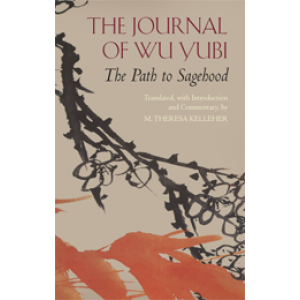
![]() The Journal of Wu Yubi
The Journal of Wu YubiIn this rare firsthand account of an individual's pursuit of sagehood, the early Ming dynasty scholar and teacher Wu Yubi chronicles his progress and his setbacks, as he strives to integrate the Neo-Confucian practices of self-examination and self-cultivation into everyday life. In more than three hundred entries, spanning much of his adult life, Wu paints a vivid picture, not only of the life of the mind, but also of the life of a teacher of modest means, struggling to make ends meet in a rural community.
Learn More







Filter
Philosophy
- 19th Century Philosophy
- 20th Century Philosophy
- Aesthetics & Literary Theory
- American Philosophy
- Ancient Philosophy
- Asian & Middle Eastern Philosophy
- Existentialism
- Focus Philosophical Library
- Introductory Texts & Dialogues
- Logic & Critical Thinking
- Medieval & Renaissance Philosophy
- Metaphysics & Epistemology
- Modern Philosophy
- Moral Philosophy
- Phenomenology & Related Texts
- Philosophy & History of Science
- Philosophy of Mind & Language
- Philosophy of Religion
- Series in Philosophy
- Social & Political Philosophy
- Critical Thinking Spotlight