The Hackett Signature Editions Collection Featuring Premium Hardcovers of Hackett Classics - Learn More Here.

Philosophy








-
![]() Persuasion: History, Theory, Practice
Persuasion: History, Theory, PracticeGeorge Pullman's lively and accessible introduction to the study of persuasion is an ideal text for use in courses where the understanding and practice of argumentation, rhetoric, and critical thinking are central.
"George Pullman's Persuasion has much to commend, not only in its direct engagement of the rich tradition of rhetoric, but also in its well-chosen range of readings (from the Greek tradition as well as contemporary pieces) and exercises in each chapter. In particular, I liked the way the introductory material invites experienced and newer students to consider the value of effective communication in professional settings. The exercises not only enable students to put into practice the key ideas highlighted in the chapter, but also promote digital literacies, which are fundamental in the twenty-first century. Students will find chapters three and four especially valuable for their clarity in explaining topics, issue types and use of evidence. Finally, this is an affordable and relevant classroom text that students will be able to consult long after the course of study has ended." —Cecilia Bonnor, Department of English, University of Houston
Title Support Website: Persuasion: History, Theory, Practice Title Support Site.
Learn More -
![]() What Is This Thing Called Science? (Fourth Edition)
What Is This Thing Called Science? (Fourth Edition)In addition to overall improvements and updates inspired by Chalmers’s experience as a teacher, comments from his readers, and recent developments in the field, this fourth edition features an extensive chapter-long postscript that draws on his research into the history of atomism to illustrate important themes in the philosophy of science. Identifying the qualitative difference between knowledge of atoms as it figures in contemporary science and metaphysical speculations about atoms common in philosophy since the time of Democritus offers a revealing and instructive way to address the question at the heart of this groundbreaking work: What is this thing called science? (Co-published with the University of Queensland Press. HPC holds rights in North America and U. S. Dependencies)
Learn More -
![]() The Journal of Wu Yubi
The Journal of Wu YubiIn this rare firsthand account of an individual's pursuit of sagehood, the early Ming dynasty scholar and teacher Wu Yubi chronicles his progress and his setbacks, as he strives to integrate the Neo-Confucian practices of self-examination and self-cultivation into everyday life. In more than three hundred entries, spanning much of his adult life, Wu paints a vivid picture, not only of the life of the mind, but also of the life of a teacher of modest means, struggling to make ends meet in a rural community.
Learn More -
![]() The Circle of Socrates
The Circle of SocratesIn addition to works by Plato and Xenophon, we know of dozens of treatises and dialogues written by followers of Socrates that are now lost. The surviving evidence for these writings constitutes an invaluable resource for our understanding of Socrates and his philosophical legacy. The Circle of Socrates presents new—sometimes the first—English translations of a representative selection of this evidence, set alongside extracts from Plato and Xenophon. The texts are arranged according to theme, with concise introductions that provide an overview of the topics and the main lines of thought within them.
Learn More -
![]() A Vindication of the Rights of Woman
A Vindication of the Rights of Woman"A thoughtful and useful abridgement of an essential historical, political, and philosophical text. [Barnard and Shapiro] have managed to preserve the tone and arguments of the original while shedding much of the redundancy and lengthy quotations of external sources that can be off-putting and cumbersome for today's readers. The explanatory footnotes added to the text are helpful without being overbearing."
Learn More
—Katrin Schultheiss, George Washington University -
![]() Freedom, Responsibility, and Determinism
Freedom, Responsibility, and Determinism"There has been a great deal of philosophical progress in the free will debate in the last two generations, and much of this progress has been complex and rather technical. In less than one hundred pages, John Lemos manages to introduce the reader to this debate, as well as to related debates about religion and science as they relate to free will—without dumbing down and in a pleasant, accessible dialogue form. This is an impressive achievement." —Saul Smilansky, Professor of Philosophy, University of Haifa
Learn More -
![]() Does God Exist? (Second Edition)
Does God Exist? (Second Edition)In this engaging introductory dialogue, Todd Moody maps the spectrum of philosophical arguments and counterarguments for the existence of God. Structuring colloquial conversations along classical lines, he presents a lively and accessible discussion of issues that are central to both theist and atheist thinking, including the burden of proof, the first cause, a necessary being, the natural order, suffering, miracles, experience as knowledge, and rationality without proof.
Learn More -
![]() Classics of Western Philosophy (Eighth Edition)
Classics of Western Philosophy (Eighth Edition)The Eighth Edition of Steven M. Cahn's Classics of Western Philosophy offers the same exacting standard of editing and translation that made earlier editions of this anthology the most highly valued and widely used volume of its kind. But the Eighth Edition offers exciting new content as well, including Plato's Laches (complete), new selections from Aristotle's Nicomachean Ethics (on courage), Descartes' Discourse on Method (complete), all previously omitted sections of Berkeley's A Treatise Concerning the Principles of Human Knowledge, and Kant's Prolegomena to Any Future Metaphysics (complete).
Learn More -
![]() Disputed Questions on Virtue
Disputed Questions on Virtue"Hause and Murphy are to be congratulated. [Their volume's] strong points are numerous and important. The translation is clear and faithful. A real advantage is using the as yet unpublished Leonine text, which is significantly superior to the Marietti edition. The translators retain the disputed question format. And the whole series is translated. Hause offers an extend commentary which is solid and helpful for beginning readers. . . . Even for Aquinas, who semper loquitur formalissime, first rate translations are hard to come by; and we have one here. . . . A gem."
Learn More
—R. E. Houser, University of St. Thomas (Houston, TX), in Notre Dame Philosophical Reviews -
![]() Discourse on Voluntary Servitude
Discourse on Voluntary Servitude"An excellent translation: clear, crisp and accurate. The introduction is also a helpful contextualization of the text, Boétie's relation to Montaigne, and a brief discussion of the history of this important text on non-cooperation in the 20th-Century. I highly recommend it for courses in the history of political theory and of non-cooperation as a means of regime change."
Learn More
—James Tully, Department of Political Science, University of Victoria -
![]() A Plato Reader
A Plato ReaderA Plato Reader offers eight of Plato's best-known works—Euthyphro, Apology, Crito, Meno, Phaedo, Symposium, Phaedrus, and Republic—unabridged, expertly introduced and annotated, and in widely admired translations by C. D. C. Reeve, G. M. A. Grube, Alexander Nehamas, and Paul Woodruff.
"These beautifully wrought student-friendly translations are a most welcome addition to the large literature by and about Plato."
Learn More
—Terence Ball, Arizona State University -
![]() Politics (Sachs Edition)
Politics (Sachs Edition)“Joe Sachs has an extraordinary ability to render ancient Greek into English sentences that are so clear and direct that they help readers to look past Aristotle's technical terminology and reflect on the philosophical issues in the text. For beginning students Sachs's translations are an ideal vehicle through which to engage Aristotle's philosophy. For those of us who are more advanced, they are sufficiently different from the traditional translations to open fresh ways of thinking about the texts. Sachs does a fine job with the Politics. The translation is very readable and accurate, and the notes and glossary are insightful. The introductory essay by Lijun Gu valuably emphasizes the importance of book IV."
Learn More
—Edward Halper, University of Georgia -
![]() Rousseau: The Basic Political Writings (Second Edition)
Rousseau: The Basic Political Writings (Second Edition)This substantially revised new edition of Rousseau: The Basic Political Writings features a brilliant new Introduction by David Wootton, a revision by Donald A. Cress of his own 1987 translation of Rousseau’s most important political writings, and the addition of Cress’ new translation of Rousseau's State of War. New footnotes, headnotes, and a chronology by David Wootton provide expert guidance to first-time readers of the texts.
Learn More -
![]() Statesman (Brann, Kalkavage, & Salem Edition)
Statesman (Brann, Kalkavage, & Salem Edition)"This will be the preferred edition of Plato’s Statesman for teachers and students who are serious not only about reading the text in good translation, but also about working through its arguments." —Dustin Gish, College of the Holy Cross
"Having taught Plato's dialogues in my classes over the past forty-three years to upper level undergraduates, I can especially appreciate the value of this new edition of Plato's Statesman. The three translators have paid very close attention to the amazing fecund versatility of the Greek text, producing a translation that is as accurate and lively as possible and the best currently available for classroom use. The interpretative essay is unique in its highlighting of all of the issues that a thoughtful reader should be led to consider concerning this work. As has been the case with other works by these translators, the glossary leads any Greek-less reader as close as possible to the interconnections of the major words that sustain the flow and eddies of this perennially fascinating work." —Donald Lindenmuth, The Pennsylvania State University
Learn More -
![]() Montaigne: Selected Essays
Montaigne: Selected Essays"A superb achievement, one that successfully brings together in accessible form the work of two major writers of Renaissance France. This is now the default version of Montaigne in English." —Timothy Hampton, University of California, Berkeley
"Inspired. In every page—beginning with Atkinson's brilliant Introduction—this magical Montaigne betrays a lifetime of meditation on its subject." —Stephen G. Nichols, Johns Hopkins University
Learn More -
![]() Human Nature: A Reader
Human Nature: A ReaderThis anthology provides a set of distinctive, influential views that explore the mysteries of human nature from a variety of perspectives. It can be read on its own, or in conjunction with Joel Kupperman’s text, Theories of Human Nature.
Learn More -
![]() Classics of Moral and Political Theory (Fifth Edition)
Classics of Moral and Political Theory (Fifth Edition)The fifth edition of Michael L. Morgan’s Classics of Moral and Political Theory broadens the scope and increases the versatility of this landmark anthology by offering new selections from Aristotle’s Politics, Aquinas’ Disputed Questions on Virtue and Treatise on Law, as well as the entirety of Locke’s Letter Concerning Toleration, Kant’s To Perpetual Peace, and Nietzsche’s On the Advantage and Disadvantage of History for Life.
Learn More -
![]() Philosophy Before Socrates (Second Edition)
Philosophy Before Socrates (Second Edition)The second edition of Philosophy Before Socrates has been updated and expanded to reflect important new discoveries and the most recent scholarship. Changes and additions have been made throughout, the most significant of which are found in the chapters on the Pythagoreans, Parmenides, Zeno, Anaxagoras, and Empedocles, and the new chapter on Philolaus. The translations of some passages have been revised, as have some interpretations and discussions. A new Appendix provides translations of three Hippocratic writings and the Derveni papyrus.
Learn More -
![]() A Presocratics Reader (Second Edition)
A Presocratics Reader (Second Edition)"Curd and McKirahan's A Presocratics Reader is by far the best sourcebook for the Presocratics I've ever used in forty years of teaching ancient philosophy. Pieces I used to have to translate myself, such as the Dissoi Logoi, and Gorgias' Encomium of Helen, are included in the text, in much more skilled translation. The enlarged 2nd edition made a good book better."
Learn More
—Samuel C. Wheeler III, University of Connecticut -
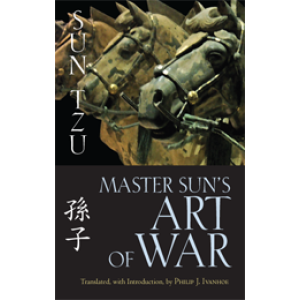
![]() Master Sun's Art of War
Master Sun's Art of War“P. J. Ivanhoe is one of the English-speaking world’s foremost translators and interpreters of classical Chinese philosophical texts. His translation of the Sunzi Bingfa reads beautifully, adorned only by sobering photographic plates of the famed terracotta army of the first Qin emperor that turn one back to the text in a properly reflective mood. The Introduction and endnotes are blessedly spare, providing just the right amount of interpretive scholarship to assist comprehension of the text, while not interfering with its intrinsic simplicity, clarity, and profundity.”
Learn More
—Sumner B. Twiss, Distinguished Professor of Human Rights, Ethics, and Religion, Florida State University -
![]() Introduction to Classical Chinese Philosophy
Introduction to Classical Chinese Philosophy"This book is an introduction in the very best sense of the word. It provides the beginner with an accurate, sophisticated, yet accessible account, and offers new insights and challenging perspectives to those who have more specialized knowledge. Focusing on the period in Chinese philosophy that is surely most easily approachable and perhaps is most important, it ranges over of rich set of competing options. It also, with admirable self-consciousness, presents a number of daring attempts to relate those options to philosophical figures and movements from the West. I recommend it very highly." —Lee H. Yearley, Walter Y. Evans-Wentz Professor, Religious Studies, Stanford University
"This book on philosophers who arose in the Eastern Zhou Dynasty is also an introduction to comparative ways of nonsuperficial thinking both within Chinese tradition and between Chinese tradition and the West. . . . The work is carefully detailed at every philosophically interesting turn, providing, e.g., a detailed discussion of mysticism that does not conflate traditions but sees distinctiveness. Throughout there are translations of technical terms, along with both pinyin and Chinese characters. Chapters conclude with well-crafted review questions. . . . Appendixes on hermeneutics, Chinese language, and the Kongzi are very useful. Summing up: Highly recommended." —F. J. Hoffman, West Chester University of Pennsylvania, in Choice
Learn More -
![]() Theories of Human Nature
Theories of Human Nature“A very fine book on human nature, both what it is and what philosophers have thought about it—philosophers in an inclusive sense, from Plato and Aristotle to Mengzi and Xunzi, from Hume and Kant to Ibn al-Arabi to Marx and Rousseau and including many others. The writing is lively and accessible, the philosophy insightful, and the sense of human possibilities conveyed admirable. It will fit nicely into many different sorts of classes.”
Learn More
—John Perry, Stanford University -
![]() De Anima (Shiffman Edition)
De Anima (Shiffman Edition)"Shiffman's fidelity both to Aristotle's text and to opening the complex thought contained therein to the contemporary reader is evident throughout this translation. It neither attempts to resolve difficulty nor drown the reader in obscurity; instead, it invites the reader to puzzle through this magnificent and difficult text herself. The wonderful introduction supplies any number of tools to do so and is a model of the rigorous and restrained articulation of essential themes and contemporary resonances. The glossary contains an indispensable and illuminating discussion of terms. Readable and thought-provoking, this translation is particularly well-suited for the classroom. Students at all levels will benefit from its lucidity and provocation to thought."
Learn More
—Sara Brill, Fairfield University -
![]() Socrates and the Sophists
Socrates and the SophistsThis is an English translation of four of Plato’s dialogues (Protagoras, Euthydemus, Hippias Major, and Cratylus) that explores the topic of sophistry and philosophy, a key concept at the source of Western thought. Includes notes and an introductory essay.
"Perhaps more than any other dialogue, the Cratylus has been in need of retranslation. Yet because it is a dialogue about words that is also replete with plays on words, with pretended etymologies, and perhaps with more comedy than any other dialogue, translating it is a daunting task. There is no one better suited for this task than Joe Sachs. His translations of Greek philosophical classics are widely acclaimed both for their truthfulness to the original Greek text and for their sensitivity to every nuance of the text. Sachs’s translation of the Cratylus is a rare achievement and no doubt will do much to restore to this dialogue its rightful status as one of the major Platonic dialogues." —John Sallis, Boston College
Learn More -
![]() Euthydemus (McBrayer & Nichols Edition)
Euthydemus (McBrayer & Nichols Edition)English translation of Plato's dialogue of Socrates with two prominent Sophists, Euthydemus and Dionysodorus, and their conflicting philosophical views, in which Plato satirizes the logical fallacies of the Sophists. With notes, introduction, interpretive essay, and a glossary of important words.
Learn More -
![]() Free Will (Second Edition)
Free Will (Second Edition)A unique anthology featuring contributions to the dispute over free will from Aristotle to the twenty-first century, Derk Pereboom's volume presents the most thoughtful positions taken in this crucial debate and discusses their consequences for free will's traditional corollary, moral responsibility. The Second Edition retains the organizational structure that made its predecessor the leading anthology of its kind, while adding major new selections by such philosophers as Spinoza, Reid, John Martin Fischer, Robert Kane, Galen Strawson, and Timothy O'Connor.
Learn More -
![]() The Essential Mengzi
The Essential MengziThe Essential Mengzi offers a representative selection from Bryan Van Norden's acclaimed translation of the full work, including the most frequently studied passages and covering all of the work's major themes. An appendix of selections from the classic commentary of Zhu Xi—one of the most influential and insightful interpreters of Confucianism—keyed to relevant passages, provides access to the text and to its reception and interpretation. Also included are a general Introduction, timeline, glossary, and selected bibliography.
"An excellent translation of one of the truly great philosophical texts in world literature. Van Norden also provides an invaluable running philosophical commentary, drawing primarily from Zhu Xi's tremendously influential reading of the text. This is a wonderful contribution." —Michael Puett, Harvard University
Learn More -
![]() Moral Philosophy: A Reader (Fourth Edition)
Moral Philosophy: A Reader (Fourth Edition)This collection of classic and contemporary readings in ethics presents sharp, competing views on a wide range of fundamentally important topics: moral relativism and objectivism, ethical egoism, value theory, utilitarianism, deontological ethics, virtue ethics, ethics and religion, and applied ethics. The Fourth Edition dramatically increases the volume’s utility by expanding and updating the selections and introductions while retaining the structure that has made previous editions so successful. (North American rights only)
Learn More -
![]() Notes from the Underground
Notes from the UndergroundDostoevsky's disturbing and groundbreaking novella appears in this new annotated edition with an Introduction by Charles Guignon and Kevin Aho. An analogue of Guignon's widely praised Introduction to his 1993 edition of "The Grand Inquisitor," the editors' Introduction places the underground man in the context of European modernity, analyzes his inner dynamics in the light of the history of Russian cultural and intellectual life, and suggests compelling reasons for our own strange affinity for this nameless man who boldly declares, "I was rude and took pleasure in being so."
Learn More -
![]() Zhuangzi: The Essential Writings
Zhuangzi: The Essential WritingsIdeal for students and scholars alike, this edition of Zhuangzi (Chuang Tzu) includes the complete Inner Chapters, extensive selections from the Outer and Miscellaneous Chapters, and judicious selections from two thousand years of traditional Chinese commentaries, which provide the reader access to the text as well as to its reception and interpretation. A glossary, brief biographies of the commentators, a bibliography, and an index are also included.
Learn More -
![]() Religion within the Bounds of Bare Reason
Religion within the Bounds of Bare ReasonWerner S. Pluhar's masterful rendering of Kant's major work on religion is meticulously annotated and presented here with a selected bibliography, glossary, and generous index. Stephen R. Palmquist's engaging Introduction provides historical background, discusses Religion in the context of Kant's philosophical system, elucidates Kant's main arguments, and explores the implications and ongoing relevance of the work.
Learn More -
![]() Readings from the Lu-Wang School of Neo-Confucianism
Readings from the Lu-Wang School of Neo-ConfucianismThis volume provides selected translations from the writings of Lu Xiangshan; Wang Yangming; and the Platform Sutra, a work which had profound influence on neo-Confucian thought. Each of these three sections is preceded by an introduction that sketches important features of the history, biography, and philosophy of the author and explores some of the main features and characteristics of his work. The range of genres represented—letters, recorded sayings, essays, meditations and poetry—provide the reader with insights into the philosophical and stylistic themes of this fascinating and influential branch of neo-Confucian thought.
Learn More -
![]() Modern Political Thought (Second Edition)
Modern Political Thought (Second Edition)The second edition of David Wootton's Modern Political Thought: Readings from Machiavelli to Nietzsche offers a new unit on modern constitutionalism with selections from Hume, Montesquieu, the Federalist, and Constant. In addition to a new essay by Wootton, this unit features his new translation of Constant's 1819 essay "On Ancient and Modern Liberty". Other changes include expanded selections from Machiavelli's Discourses on Livy and a new Hegel selection, all of which strengthen an already excellent anthology.
Learn More -
![]() Plato: Gorgias & Aristotle: Rhetoric
Plato: Gorgias & Aristotle: RhetoricBy pairing translations of Gorgias and Rhetoric, along with an outstanding introductory essay, Joe Sachs demonstrates Aristotles response to Plato. If in the Gorgias Plato probes the question of what is problematic in rhetoric, in Rhetoric, Aristotle continues the thread by looking at what makes rhetoric useful. By juxtaposing the two texts, an interesting "conversation" is illuminated—one which students of philosophy and rhetoric will find key in their analytical pursuits.
Learn More -
![]() The Stoics Reader
The Stoics ReaderThis volume gathers together the most important evidence about Stoic thought surviving from the ancient world. It is an expanded version of the section on Stoicism in Inwood and Gerson's Hellenistic Philosophy, consolidating related texts into larger, more continuous selections, adding material on the skeptical attack on Stoicism, and a short section that introduces the reader to some of the more interesting texts on Stoic ethics from the Roman imperial period.
Learn More -
![]() Medea (Svarlien Edition)
Medea (Svarlien Edition)"This is the Medea we have been waiting for. It offers clarity without banality, eloquence without pretension, meter without doggerel, accuracy without clumsiness. No English Medea can ever be Euripides', but this is as close as anyone has come so far, and a good deal closer than I thought anyone would ever come. Arnson-Svarlien has shown herself exceedingly skillful in making Euripides sound Euripidean." —David M. Schaps, Bryn Mawr Classical Review
"Fluid, lively, and accurate!" —Amy Vail, Department of Classics, Baylor University
Learn More -
![]() The Prince (Atkinson Edition)
The Prince (Atkinson Edition)"This edition of the The Prince has three distinct and disparate objectives: to provide a fresh and accurate translation; to analyze and find the roots of Machiavelli's thought; and to collect relevant extracts from other works by Machiavelli and some contemporaries, to be used to illuminate and explicate the text. The objectives are all reached with considerable and admirable skill. The reader senses Professor Atkinson's empathy and feeling for even the tiniest movements in Machiavelli's mind. Professor Atkinson has done a great service to students and teachers of Machiavelli, who should certainly welcome this as the most useful edition of The Prince in English. "
Learn More
—Mario Domandi, Italica, 1978 -
![]() Zen Sourcebook
Zen Sourcebook"This is an excellent book . . . to be commended for its wide coverage; the Korean material is especially hard to find. . . . The short introductions to the selections are lucid, informative and focused, providing a good framework through which to understand the readings. Anyone who wants to work directly with translations of the primary texts, rather than textbook summaries, will find this book the most convenient available."
Learn More
—Brook Ziporyn, Northwestern University -
![]() Discourse on Method (Kennington Edition)
Discourse on Method (Kennington Edition)This Focus Philosophical Library edition includes a new translation of Descartes' seminal discourse, with an original essay by Richard Kennington. This text is designed to provide the student with a close translation, notes, and a glossary of key terms, facilitating access to ideas as they originally were presented and helping to make the translator's work transparent.
Learn More -
![]() Alcestis, Medea, Hippolytus
Alcestis, Medea, HippolytusThis new volume of three of Euripides' most celebrated plays offers graceful, economical, metrical translations that convey the wide range of effects of the playwright's verse, from the idiomatic speech of its dialogue to the high formality of its choral odes.
"Many scholars translate the works of Euripides as they should be, but Diane Arnson Svarlien translates them as they are. . . . Arnson Svarlien shows admirable modesty and restraint in avoiding . . . pitfalls, and makes choices that reveal the meaning of the text she is translating with the least imposition of her own personality. The ambiguity of Euripides is transmitted to us but not imposed on us by [her] translation. . . . The translations are both readable and playable." —Edmond Chibeau, New England Theatre Journal
Learn More -
![]() Philosophical Inquiry
Philosophical InquiryThis meticulously edited anthology provides a comprehensive, problems-oriented entrée to philosophy. Substantial readings from major classical and contemporary thinkers—featuring many of Hackett's widely acclaimed translations—are supported by a general introduction, engaging introductions to each major topic, and a glossary of important philosophical terms. (North American rights only)
Learn More -
![]() An Introduction to Hegel's Logic
An Introduction to Hegel's Logic“One of the best short introductions to Hegel’s logic I know. It gives a comprehensive survey that is easy to understand.”
Learn More
—Michael Wolff, Universitat Bielefeld -
![]() The Letters and Other Writings
The Letters and Other WritingsThe most comprehensive compilation of the works of Abelard and Heloise ever presented in a single volume in English, The Letters and Other Writings features an accurate and stylistically faithful new translation of both The Calamities of Peter Abelard and the remarkable letters it sparked between the ill-fated twelfth-century philosopher and his brilliant former student and lover—an exchange whose intellectual passion, formal virtuosity, and psychological drama distinguish it as one of the most extraordinary correspondences in European history. Thanks to this edition, Latin-less readers will be better placed than ever to see why this undisputed milestone in the intellectual life of medieval France is also a masterpiece of Western literature.
Learn More -
![]() The Four Books: The Basic Teachings of the Later Confucian Tradition
The Four Books: The Basic Teachings of the Later Confucian TraditionIn this engaging volume, Daniel Gardner explains the way in which the Four Books—Great Learning, Analects, Mencius, and Maintaining Perfect Balance—have been read and understood by the Chinese since the twelfth century. Selected passages in translation are accompanied by Gardner's comments, which incorporate selections from the commentary and interpretation of the renowned Neo-Confucian thinker, Zhu Xi (1130-1200).
Learn More -
![]() Classical Arabic Philosophy
Classical Arabic Philosophy"This book will make a major impact on the study, and especially the teaching, of Arabic philosophy. A major difficulty with this field has been the lack of any adequate textbook of sources. . . . Reisman and McGinnis not only provide here a rich selection of texts that could be the basis for even a full-year course on Arabic thought, but also manage to translate several important works for the first time; they also include some standards that would probably be missed were they not here. It will no doubt become the standard anthology used in courses on Arabic philosophy, and I will use it this way myself. The team of McGinnis and Reisman is an ideal one. . . All in all, this project is to be greeted with immense enthusiasm."
Learn More
—Peter Adamson, King's College London -
![]() Commentary on Aristotle's Politics
Commentary on Aristotle's PoliticsOffering the first complete translation into modern English of Aquinas’ unfinished commentary on Aristotle’s Politics, this translation follows the definitive Leonine text of Aquinas and reproduces in English those passages of William of Moerbeke’s exacting yet elliptical translation of the Politics from which Aquinas worked. Bekker numbers have been added to passages from the Politics for easy reference. Students of the history of political thought will welcome this study of a great classic, a commentary by a student of Aristotle who is also a great political theorist in his own right.
Learn More -
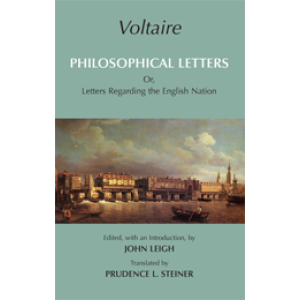
![]() Voltaire: Philosophical Letters
Voltaire: Philosophical Letters“This fluid new translation, with abundant explanatory notes and an insightful Introduction to Voltaire’s literary strategies, will make an excellent edition for students, as well as a useful resource for scholars.”
Learn More
—Ann Blair, Harvard University -
![]() Republic (Sachs Edition)
Republic (Sachs Edition)"Joe Sachs, known and respected for his excellent translations of Aristotle, deserves great praise for this new translation of Plato's Republic. Based on the latest definitive edition of the Greek text and guided by a sense that Greek in English need not read like an old, foreign tongue, Sachs' translation captures the flow of the conversation in an English that reads smoothly, even when the ideas expressed force one to pause and look again. Fluid, yet accurate, Sachs' translation allows the thoughtful reader deeper entry into this all-important book. The editorial guides and typographical signs to remind the reader of who has joined the argument most recently are all highly helpful and most welcome. I look forward to reading this with students." —Charles E. Butterworth, University of Maryland
Learn More -
![]() Hume: Moral Philosophy
Hume: Moral Philosophy"A genuine understanding of Hume's extraordinarily rich, important, and influential moral philosophy requires familiarity with all of his writings on vice and virtue, the passions, the will, and even judgments of beauty—and that means familiarity not only with large portions of A Treatise of Human Nature, but also with An Enquiry Concerning the Principles of Morals and many of his essays as well. This volume is the one truly comprehensive collection of Hume's work on all of these topics. Geoffrey Sayre-McCord, a leading moral philosopher and Hume scholar, has done a meticulous job of editing the texts and has provided an extensive Introduction that is at once accessible, accurate, and philosophically engaging, revealing the deep structure of Hume's moral philosophy."
Learn More
—Don Garrett, New York University












Filter
Philosophy
- 19th Century Philosophy
- 20th Century Philosophy
- Aesthetics & Literary Theory
- American Philosophy
- Ancient Philosophy
- Asian & Middle Eastern Philosophy
- Existentialism
- Focus Philosophical Library
- Introductory Texts & Dialogues
- Logic & Critical Thinking
- Medieval & Renaissance Philosophy
- Metaphysics & Epistemology
- Modern Philosophy
- Moral Philosophy
- Phenomenology & Related Texts
- Philosophy & History of Science
- Philosophy of Mind & Language
- Philosophy of Religion
- Series in Philosophy
- Social & Political Philosophy
- Critical Thinking Spotlight